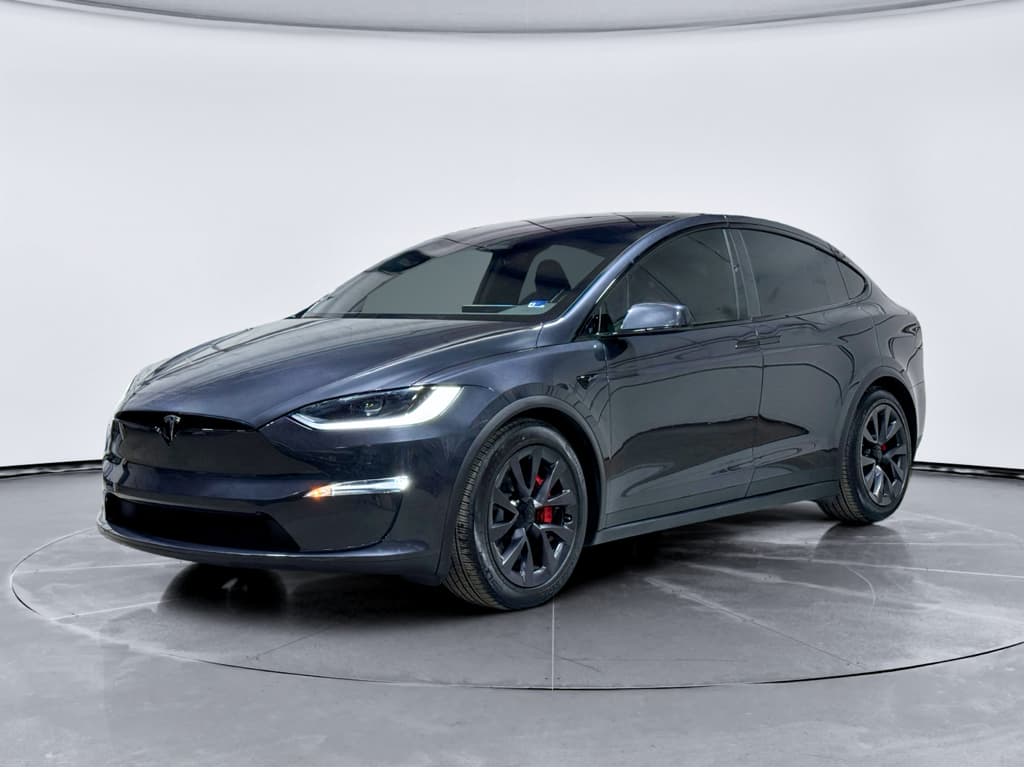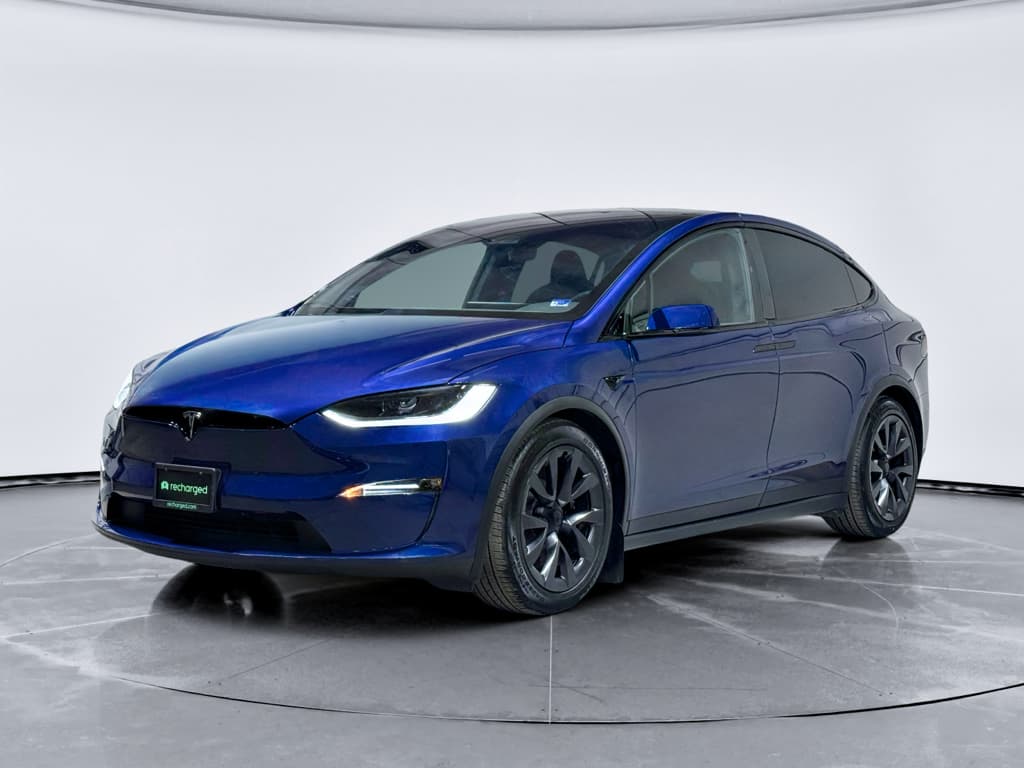
If you’ve ever watched a $110,000 Tesla Model X glide silently past and thought, “In five years that’ll be almost affordable,” you’re not wrong. Understanding how fast a Tesla Model X depreciates is the key to deciding whether you should buy new, buy used, or walk away from the big-winged spaceship entirely.
Depreciation vs. reality check
Tesla Model X depreciation at a glance
At-a-glance Model X depreciation snapshot
Those are broad real‑world ranges from the U.S. used market as of 2024–2025, not guarantees. But they answer the core question: the Tesla Model X depreciates quickly in dollars because it starts at a high price, yet it often retains value better than comparable luxury gas SUVs when you zoom out to 7–10 years and factor in fuel and maintenance savings.
Why luxury EV SUVs depreciate differently
Sticker shock on day one
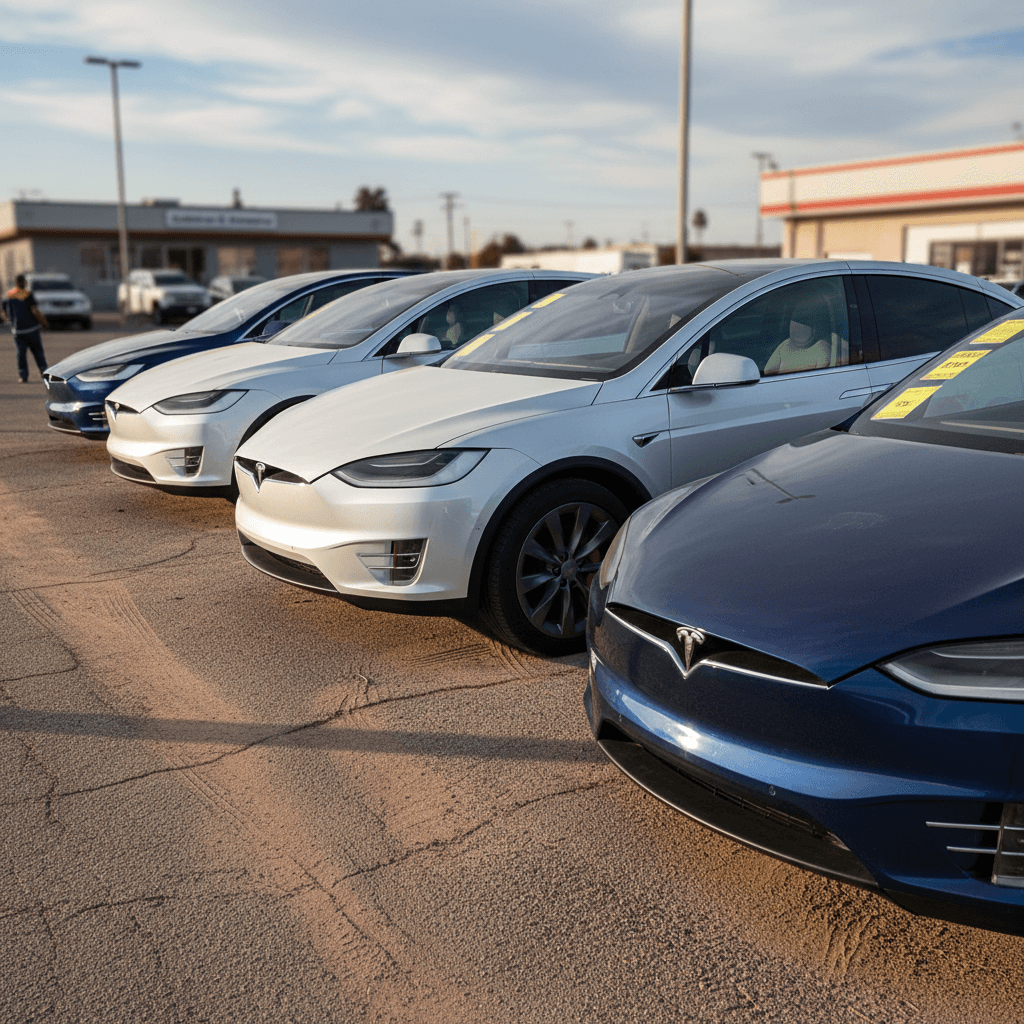
The Model X is a six‑figure luxury EV when new. That means even a “normal” 30–40% depreciation in the first few years translates into eye‑watering dollar amounts. A $110,000 Plaid that loses 35% of its value has shed nearly $40,000, more than some new compact cars cost, full stop.
Tech-cycle and software updates
Unlike a traditional SUV, a Model X lives on a consumer‑electronics refresh cycle. New motors, revised interiors, Autopilot hardware, and infotainment upgrades come fast. Each refresh makes the last one feel older, but over‑the‑air software updates also keep earlier cars surprisingly modern, which cushions long‑term depreciation.
On top of that, the Model X sits at the intersection of two brutal realities: luxury vehicles always depreciate faster than mainstream models, and SUVs are often purchased as status objects, which makes buyers fixate on the latest screen, the newest driver‑assist hardware, the freshest facelift. The upside for you is that depreciation turns an unapproachable new price into a reachable used price, especially around years 4–7.
Luxury EVs are not investments
3-, 5-, and 10-year Model X depreciation curve
Let’s translate “how fast does a Tesla Model X depreciate” into something more concrete. The numbers below are rounded snapshots drawn from real-world U.S. listing patterns; actual values will swing with incentives, location, spec, and timing.
Illustrative Tesla Model X depreciation timeline
Approximate retained value of a typical long-range Model X vs. original MSRP in the U.S.
| Age | Odometer (typical) | Approx. value vs. original MSRP | What’s happening |
|---|---|---|---|
| 1 year | 10,000–15,000 mi | 75–80% | Early adopters exit leases; Tesla price cuts can shift values overnight. |
| 3 years | 30,000–45,000 mi | 60–65% | Sweet spot: most of the steep drop is over, but tech still feels current. |
| 5 years | 60,000–75,000 mi | 45–55% | Curve begins to flatten; battery health and accident history start to dominate. |
| 7 years | 80,000–110,000 mi | 35–45% | Older Autopilot hardware, out-of-warranty repairs, and cosmetics weigh more heavily. |
| 10 years | 120,000–160,000 mi | 25–35% | Good examples still find buyers, but condition and pack health drive price. |
These are directional market ranges, not guaranteed trade-in values. Clean history, low mileage, and strong battery health can put a specific vehicle at the high end (or above) of each band.
Depreciation vs. Tesla price changes
How battery health really affects Model X depreciation
Under the floor of every Model X is a lithium‑ion battery pack that is both the heart of the vehicle and the dragon guarding your resale value. The good news: Tesla packs have proven resilient. Many owners see roughly 10–15% range loss by 100,000 miles, sometimes less, which is far better than skeptics predicted a decade ago.
Three ways battery health drives Model X value
Range on the screen translates directly into numbers on the window sticker.
1. Usable range
If a new Model X offered ~330 miles of rated range and a used one shows ~300 at 90%, that’s a normal, healthy pack. A car that’s lost 25–30% of its original range will be harder to sell and will need a discount.
2. Warranty coverage
Most Model X battery and drive‑unit warranties run 8 years with a mileage cap. A vehicle still under that umbrella commands a premium because buyers know a catastrophic battery issue is covered.
3. Recorded pack data
Objective health data, rather than guesswork from the dash, lets buyers and lenders price risk. That’s precisely what a Recharged Score battery report is designed to surface on each EV we sell.
Why third-party battery checks matter
Which Model X years and trims hold value best?
Not all Model X SUVs depreciate at the same rate. The market “votes” on certain combinations of year, range, and options. Some are future used‑market darlings; others are tomorrow’s showroom queens at auction day.
- Long‑range beats short‑range. All else equal, the bigger‑battery, longer‑range configurations almost always retain value better. Range is the one EV spec everyone understands.
- Conservative colors age better. White, black, gray, and dark blue Model X SUVs tend to sell faster and closer to asking price than loud colors, particularly in the luxury space.
- Seats and doors matter. Buyers with kids love the 6‑ or 7‑seat layouts and the Falcon Wing doors… right up until they imagine them out of warranty. Clean service history on doors and seats helps your resale story.
- Performance is an emotional buy. Plaid and earlier Performance trims can be depreciation roller coasters. Some hold a cult premium; others fall harder once the next big performance leap arrives.
- Fresh interiors win. Later refresh cars with the updated interior, heat pump, and newer infotainment tend to hold value better because they simply feel more current.
The used-market sweet spot
Should you lease or buy a Tesla Model X?
When a vehicle depreciates this fast in sticker‑price dollars, the lease‑vs‑buy question becomes unavoidable. In broad strokes, leasing a Model X shifts depreciation risk back to Tesla or the lender, at a price. Buying, especially buying used, lets you harness someone else’s depreciation instead of funding it yourself.
Leasing a new Model X
- Pros: You’re insulated from future tech leaps and resale swings. At the end of the term, you hand back the keys and walk away.
- Cons: You’re paying for the steepest years of depreciation, and you build no equity. High miles or damage can trigger end‑of‑lease penalties.
- Best for: Drivers who always want the latest hardware and can expense the payment, or who aren’t sure they want to live with an EV long‑term.
Buying new or used
- Pros: You own the upside if values stabilize, and you can keep the vehicle beyond the heavy‑depreciation years. Buying used lets you skip the worst of the curve.
- Cons: You carry long‑term repair and resale risk. Rapid tech changes can make your spec feel old before the loan is paid.
- Best for: Households planning to keep the Model X for 5–10 years, or shoppers targeting a 3–6‑year‑old used example with strong battery health.
Financing a depreciating luxury EV
Buying a used Model X without overpaying for depreciation
The real magic trick with the Model X isn’t dodging depreciation, it’s putting depreciation to work for you. If someone else has already taken the $40,000–$60,000 hit in the first five years, your job is to make sure you’re not inheriting their mistakes along with their discount.
Smart ways to ride the Model X depreciation curve
Let early adopters pay for the tech race; you buy what’s proven.
1. Target the right age
Shopping in the 3–6‑year window often balances modern features with a softened depreciation curve. Much older, and you may be trading price for looming big‑ticket repairs.
2. Study price history
Look at how asking prices for similar Model X builds have moved over the last 6–12 months. Sudden drops often line up with Tesla price changes, tax‑credit news, or major software updates.
3. Demand transparency
Battery diagnostics, service records, accident history, and high‑voltage repairs should be on the table. On Recharged, that’s baked in, every vehicle comes with a Recharged Score report that lays out battery health, pricing fairness, and more.
Be wary of “too cheap” Model X listings
Checklist: evaluating a used Tesla Model X
Pre‑purchase checklist for a used Model X
1. Verify battery health and range
Review recent range at high state of charge and any third‑party battery diagnostics. Look for consistent range and normal degradation for age and mileage, not sudden drops or unusual behavior.
2. Confirm warranty status
Check the in‑car menu and paperwork for remaining battery, drive‑unit, and basic warranty coverage. A vehicle with a few years of battery warranty left will generally depreciate more gently while you own it.
3. Inspect Falcon Wing doors and seals
Cycle the doors multiple times, listen for noises, and check for leaks, misalignment, or error messages. Repairs <em>can</em> be expensive, and history of repeated door work might justify a discount.
4. Check Autopilot and infotainment hardware
Note which Autopilot hardware version and screen configuration the vehicle has, and what features are activated. Some buyers pay more for specific software options; others see them as nice‑to‑have.
5. Pull complete history
Review Carfax or equivalent reports plus any service records. Look for structural damage, flood history, repeated high‑voltage repairs, and odometer inconsistencies.
6. Benchmark pricing
Compare the asking price with similar Model X listings by year, trim, mileage, and condition. Tools like a Recharged Score report highlight whether a vehicle is fairly priced relative to the market.
FAQ: Tesla Model X depreciation
Frequently asked questions about Model X depreciation
Bottom line: how fast does a Tesla Model X depreciate?
Strip away the hype and the memes and you’re left with a simple story: a Tesla Model X depreciates quickly in dollars because it starts expensive, but more gracefully in substance than many gas‑powered peers. The first 3–5 years are the steepest part of the curve; after that, values tend to flatten as long as the battery is healthy, the doors behave, and the software stays fresh.
If you’re buying new, walk in with clear eyes about those early‑year losses and structure your financing accordingly. If you’re buying used, focus less on the odometer and more on battery health, history, and pricing fairness. That’s exactly the gap Recharged was built to close, with verified battery diagnostics, transparent Recharged Scores, and EV‑specialist support from first search to delivery. Let someone else fund the depreciation experiment, you can just enjoy the spaceship.