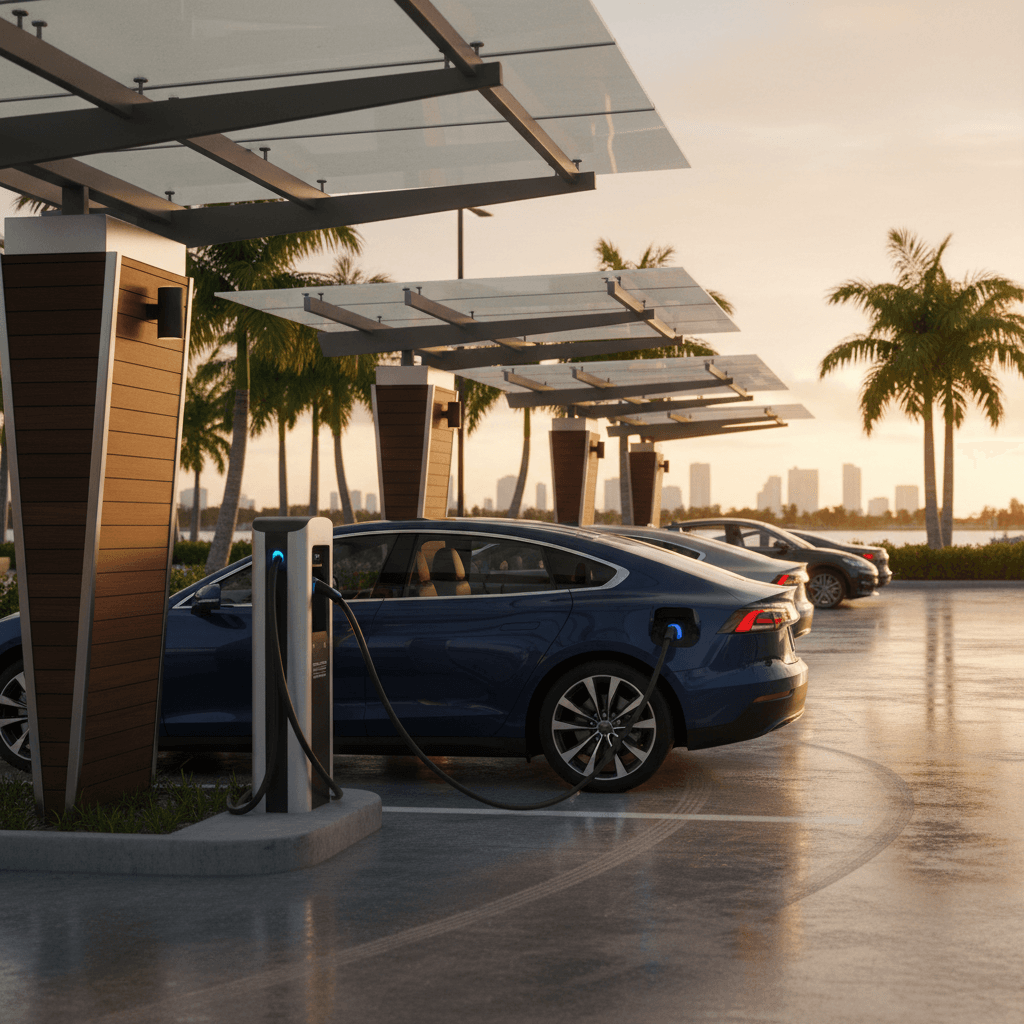
If you rely on public charging, you’ve almost certainly seen both ChargePoint and EVgo on the map. This ChargePoint vs EVgo comparison focuses on what actually matters in 2025: coverage, speed, cost, reliability, and ease of use for everyday EV drivers in the U.S.
The short version
Why this ChargePoint vs EVgo comparison matters
In early 2025, public charging is growing fast, but it’s still uneven. ChargePoint and EVgo are two of the biggest non‑Tesla brands you’ll see from grocery-store parking lots to highway plazas. Choosing where to create accounts, store payment methods, and maybe pay a monthly fee affects your total cost to own and use an EV just as surely as tire or insurance choices do.
We’ll walk through how ChargePoint and EVgo stack up on network size, charging speeds, pricing, reliability, and real-world use cases so you can decide which to prioritize, and when it makes sense to use both alongside networks like Tesla Supercharger or Electrify America.
At a glance: ChargePoint vs EVgo summary
ChargePoint vs EVgo: high‑level comparison (2025)
Key differences between ChargePoint and EVgo for U.S. drivers.
| Aspect | ChargePoint | EVgo |
|---|---|---|
| Primary focus | Massive Level 2 footprint plus some DC fast charging | DC fast charging in urban areas and highway corridors |
| Approx. U.S. locations* | ~18,000+ locations, hundreds of thousands of ports | ≈900–1,000 locations, several thousand ports |
| Typical DC fast power | 50–125 kW at most sites | 100–350 kW at many sites |
| Pricing model | Set by site host; mix of per kWh, per minute, and session fees | Network-wide plans; per kWh where allowed, per-minute elsewhere |
| Subscriptions | No universal plan; occasional host-specific memberships | Multiple EVgo plans with monthly fees for lower per‑kWh/minute rates |
| Best for | Daily top‑ups at work, shopping, or around town | Quick highway or urban fast‑charging when you’re short on time |
| App & payments | App, RFID, tap‑to‑pay (varies by site) | App, Autocharge+, credit card at many stations |
| Roaming access | Roaming with many partners via ChargePoint network | Roaming access to ChargePoint and others via EVgo app |
Overview of how ChargePoint and EVgo differ on coverage, speeds, pricing, and best use cases.
A note on numbers
Network size and coverage
When you’re planning road trips or figuring out whether you can live with street parking, coverage beats almost everything. You can’t charge at a station that doesn’t exist, no matter how cheap or fast it looks on paper.
How big are these networks in 2025?
Where you’re most likely to find each network
Different strengths depending on where, and how, you drive.
ChargePoint: everywhere you shop and work
ChargePoint built its business by selling hardware and software to host sites, office parks, employers, apartments, shopping centers, cities, and utilities. That means:
- Excellent Level 2 coverage in office parks and corporate campuses
- Lots of chargers at grocery stores, retail centers, and parking garages
- Growing DC fast presence, but usually fewer ports per site than EVgo
For daily life, ChargePoint is often the network you see most often.
EVgo: metro cores and travel corridors
EVgo designs and operates its own fast‑charging sites, often in:
- Downtown parking structures and urban shopping districts
- Busy suburban retail centers and transit hubs
- Highway plazas (including Pilot/Flying J sites co‑developed with GM)
If you drive in big metros or along interstates, you’re more likely to see EVgo in places where fast charging matters most.
How to check coverage for your life
Charging speeds and hardware
Not all public chargers are created equal. The logo on the pedestal doesn’t tell you how fast your particular car will charge, but there are useful patterns when you compare ChargePoint vs EVgo.
ChargePoint speeds
- Level 2: The vast majority of ChargePoint ports are Level 2 (typically 6–19 kW). Great for multi‑hour parking while you work, shop, or sleep.
- DC fast: Where available, ChargePoint DC fast chargers often range from about 50 to 125 kW. Some newer sites go higher, but many are modest compared with EVgo’s latest hardware.
- Connectors: CCS and CHAdeMO on legacy sites, CCS and newer NACS support rolling out as automakers transition.
EVgo speeds
- DC fast first: EVgo is heavily weighted toward DC fast charging, with many sites offering 100–350 kW cabinets.
- Level 2 at some locations: Select EVgo sites also have Level 2 posts, but the brand is known primarily for fast charging.
- Connectors: CCS on nearly every fast charger, CHAdeMO at some locations, and growing NACS support and adapters as the market shifts.
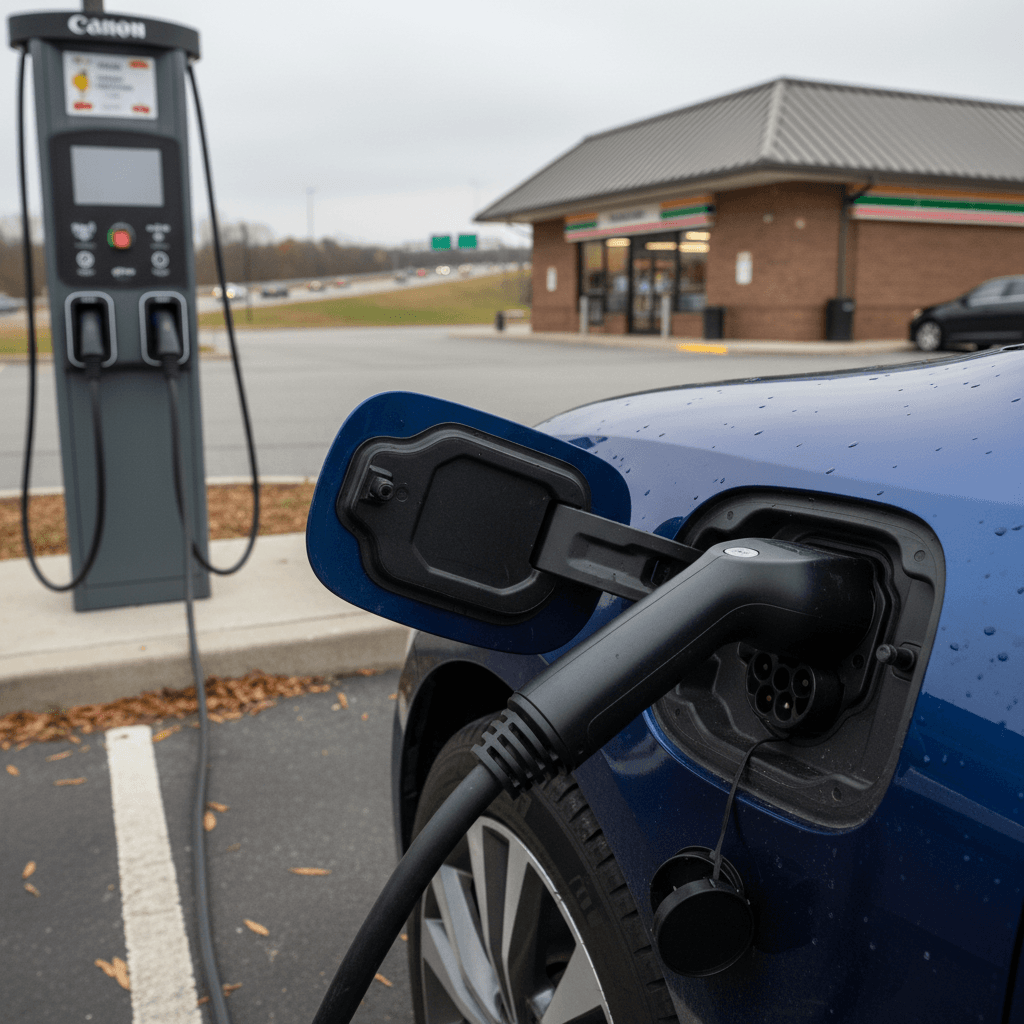
Real‑world charging speed reminder
Pricing, plans, and true cost per kWh
Pricing is where the two networks feel very different from behind the wheel. ChargePoint acts more like a marketplace; EVgo behaves more like a traditional utility or cell‑phone carrier with a unified menu of plans.
How ChargePoint and EVgo charge you
Per kWh versus per minute, session fees, and memberships.
ChargePoint pricing
- Set by the site host: Individual station owners, your utility, employer, landlord, or store, set their own rates.
- Mixed pricing methods: You’ll see per‑kWh, per‑minute, flat session fees, or even free charging, depending on local rules.
- Idle fees vary: Some hosts add idle fees to discourage lingering; others don’t. Always check the app before plugging in.
- No universal subscription: There’s no single ChargePoint membership that lowers prices everywhere, though hosts can run their own programs.
EVgo pricing
- Network‑wide plans: EVgo sets pricing centrally, with region‑specific rates and Time‑of‑Use (TOU) pricing where energy markets allow it.
- Per‑kWh where legal: In most states that allow it, you pay per kWh, with off‑peak discounts. In a handful of states, EVgo still charges per minute.
- Membership options: Plans like EVgo Plus and PlusMax trade a monthly fee for lower per‑kWh or per‑minute rates and no session fees.
- Credit card at station: At many sites you can pay with a card reader (with a small transaction fee) if you don’t want to use the app.
Typical DC fast charging cost comparison
Approximate average public DC fast charging prices across major U.S. networks in 2025.
| Network | Average cost (DC fast) | Approx. cost for 75 kWh |
|---|---|---|
| Tesla Supercharger | $0.30/kWh | $22.50 |
| ChargePoint | ≈$0.33/kWh (host‑set) | ≈$24.75 |
| EVgo | ≈$0.40/kWh (before discounts) | ≈$30.00 |
| Electrify America | ≈$0.35/kWh | ≈$26.25 |
Actual prices vary by region, time of day, and membership, but this gives you a ballpark for planning.
How to cut your charging bill
Reliability and user experience
Every EV driver eventually discovers that uptime can matter more than raw kilowatts. A 350 kW charger that’s offline is worth exactly zero. Recent data and owner reports show real differences between networks.
Reported reliability in 2025
Reality check on any uptime metric
- ChargePoint strengths: Lots of Level 2 posts; simple tap‑to‑charge routines; many stations in well‑lit, familiar retail settings.
- ChargePoint weaknesses: Quality varies because individual site hosts maintain equipment; DC fast sites can be undersized for modern high‑range EVs.
- EVgo strengths: High‑power DC fast chargers in places where you actually need them; good urban coverage; strong partnerships with automakers and travel centers.
- EVgo weaknesses: Fewer total locations; some older sites have limited stalls; per‑minute pricing in a few states can penalize slower‑charging vehicles.
Apps, payment experience, and features
Good hardware can still deliver a bad experience if the app is clunky or payment fails. Both ChargePoint and EVgo have matured a lot here, but the details differ in ways you’ll notice on a cold night with 12% remaining.
User experience highlights
How it feels to actually use each network day to day.
ChargePoint app
- Shows station availability, pricing details, and port types.
- Lets you start and stop sessions, get notifications, and filter by power level or connector.
- RFID cards and some tap‑to‑pay options at stations add flexibility.
EVgo app & Autocharge+
- Maps stations, shows live status, and handles payments and subscriptions.
- Autocharge+: On compatible EVs, you can simply plug in and EVgo automatically recognizes your car, no app tap required after setup.
- In‑app tools to estimate session costs and find off‑peak pricing windows.
Payment flexibility
- Both support major credit cards through their apps.
- EVgo offers more on‑site card readers, though there’s usually a small transaction fee.
- ChargePoint pricing, discounts, and access rules can change from site to site because hosts control them.
Roaming: a hidden advantage
Which network is better for you?
The most honest answer is: neither network wins for everyone. Your driving pattern, home‑charging situation, and vehicle all tilt the scales. Use the scenarios below as a shortcut.
Best‑fit network by driver type
Apartment or street‑parking driver (little or no home charging)
Lean on <strong>ChargePoint</strong> if your building, workplace, or nearby grocery uses it for Level 2. You’ll want predictable spots you can leave the car for hours.
Add <strong>EVgo</strong> for quick top‑ups when you mis‑time a session or suddenly need more range before a trip.
Look for utility‑run ChargePoint sites; they often have the lowest prices for regular use.
Suburban commuter with occasional road trips
Use <strong>home charging</strong> for most miles; treat public charging as backup and for road trips.
Favor <strong>EVgo</strong> on the highway when you need a fast, 20–40 minute stop that gets you back on the road.
Keep a <strong>ChargePoint</strong> account for opportunistic Level 2 charging at work or while shopping.
Rideshare or delivery driver
Run the math on <strong>EVgo membership plans</strong>; lower per‑kWh rates can save significant money if you DC fast charge several times a week.
Use <strong>ChargePoint</strong> Level 2 while waiting between trips or during longer meal breaks to keep battery temps and costs in check.
Prioritize locations with restrooms, lighting, and amenities you’ll appreciate at odd hours.
Long‑distance road‑tripper
Start with <strong>Tesla Supercharger access</strong> if your EV supports NACS or has a compatible adapter; then layer in EVgo and ChargePoint for gaps.
Favor <strong>EVgo</strong> when you need higher‑powered highway stops, especially at Pilot/Flying J locations.
Use <strong>ChargePoint</strong> when it’s the only option on a given leg or for an overnight hotel stop with Level 2.
Don’t pick just one
Tips to save money and avoid hassle on either network
Practical tips for using ChargePoint and EVgo
1. Always check pricing in the app first
Before you plug in, open the network app and confirm how you’ll be billed, per kWh vs per minute, session fees, idle fees, and any off‑peak discounts. That 10‑second check can easily save you a few dollars per session.
2. Watch your state’s billing rules
Some states still require per‑minute billing on DC fast chargers. If you drive a slower‑charging EV, avoid per‑minute sites when you can, or charge only up to about 60–70% to keep your average power (and value) high.
3. Don’t camp on fast chargers
Both networks may apply idle fees once your charge stops. Move your car promptly to avoid surprise charges and to keep the station available for the next driver, especially important at busy EVgo highway sites.
4. Keep adapters and cables simple
Most networks, including EVgo, explicitly ban third‑party high‑power extension cables or oddball adapters for safety reasons. Use only automaker‑approved adapters, especially when DC fast charging.
5. Test new stations before you really need them
If you discover a brand‑new ChargePoint or EVgo site on your route plan, consider trying it for a short top‑up on a low‑stakes day. That way you’re not discovering a flakey card reader or blocked driveway at 2 a.m. with 5% remaining.
6. Combine networks for the best routes
Use multi‑network planning tools (PlugShare, A Better Routeplanner, or your car’s nav if it supports multiple networks) to see ChargePoint, EVgo, Tesla, and others together. You’ll often find a better combination than sticking with one brand.
FAQ: ChargePoint vs EVgo
Frequently asked questions about ChargePoint vs EVgo
How this decision fits into buying a used EV
Choosing between ChargePoint and EVgo isn’t just a matter of which app you download; it’s part of choosing the right used EV and charging strategy for your lifestyle. A car with a healthy battery, efficient fast‑charging curve, and the right connector can dramatically change how often you need networks like ChargePoint and EVgo, and how much you pay when you use them.
At Recharged, every used EV comes with a Recharged Score Report that verifies battery health and gives you a clear picture of expected range and charging behavior. That makes it much easier to plan whether you’ll mostly sip electrons from home and workplace Level 2, or whether you’ll be leaning on public fast chargers like EVgo and ChargePoint every week.
If you’re shopping for a used EV today, factor local ChargePoint and EVgo coverage into your decision right alongside price, range, and features. Use both networks where they shine, ChargePoint for everyday Level 2 convenience, EVgo for fast highway and metro charging, and let the car’s battery health and charging capability, not just the logo on the pedestal, guide your final choice.