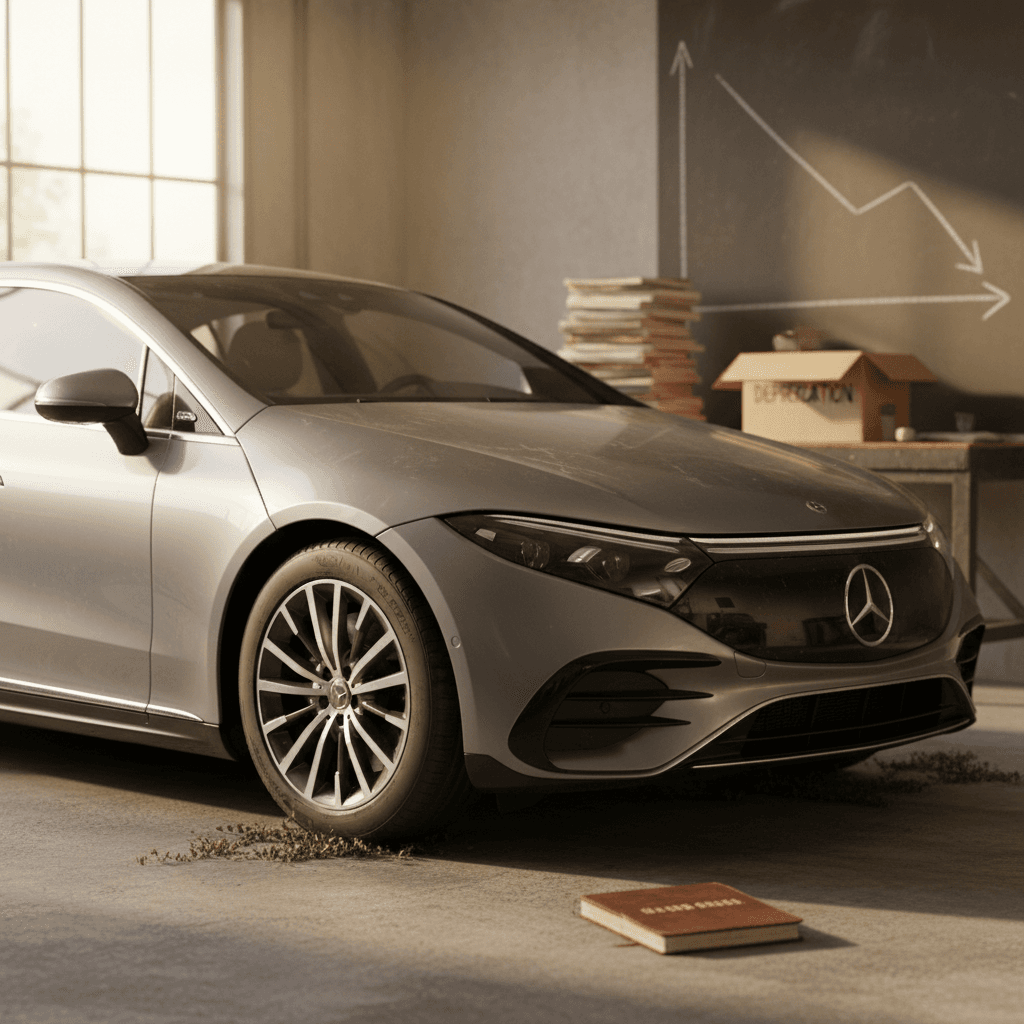
If you’re eyeing a Mercedes EQE, you’re probably wondering, how fast does the Mercedes EQE depreciate and when does it become a smart used buy. Luxury EVs can lose value quickly on paper, but for a used buyer, that drop can turn into a major opportunity if you understand what’s going on underneath the sticker price.
Quick Take
Overview: How Fast Does the Mercedes EQE Depreciate?
The Mercedes EQE is still a relatively new model, so we don’t have decades of resale history. But based on current used listings, asking prices versus original MSRPs, and broader luxury EV trends, a realistic picture is emerging of how fast it tends to depreciate.
Mercedes EQE Depreciation Snapshot (Early Market)
Important Context
Mercedes EQE vs Other EVs and Gas Mercedes Models
EQE vs Other Luxury EVs
- Similar first‑year hit: Like many high‑end EV sedans, the EQE tends to lose a sizable chunk of value in year one as early adopters cycle out and new tech appears.
- Brand helps: The Mercedes badge and cabin quality support values over time, especially compared with less established brands.
- Battery confidence matters: Shoppers cross‑shopping EQE against cars like the Tesla Model S or BMW i5 put heavy weight on battery condition and usable range.
EQE vs Gas Mercedes E‑Class
- Steeper early depreciation: Historically, EVs, especially luxury EVs, lose value faster in the first few years than comparable gas sedans.
- Tech cycle is faster: The E‑Class evolves, but the EQE competes in a world where range and charging speed improve quickly, nudging used values down faster at first.
- Running costs offset: Lower fuel and maintenance costs can partially offset the EQE’s steeper paper depreciation when you look at total cost of ownership.
Who Actually Benefits From EQE Depreciation?
What looks bad for first owners can look great for you as a used buyer.
Value‑Focused Used Buyers
High‑Mileage Drivers
Cash Buyers
6 Key Factors That Drive Mercedes EQE Depreciation
Depreciation is never just one thing. With the EQE, value is a mix of technology, luxury, and battery confidence. Here are the biggest levers that move prices up or down.
- Original MSRP and equipment: High‑spec EQE models with big wheels, advanced driver assist, and premium audio cost more new, but they don’t always retain dollar‑for‑dollar premiums on the used market.
- Range and efficiency: Trims with stronger real‑world range and better efficiency typically hold value better, especially in colder regions where winter performance matters.
- Battery health and warranty: A healthy pack still covered by Mercedes’ battery warranty is a huge confidence booster for second owners.
- Charging experience: How well the EQE works with major DC fast‑charging networks and, increasingly, NACS adapters, affects demand among road‑trip drivers.
- Market incentives and discounts: Heavy new‑car discounts, tax credits, and lease deals can push used values down faster as shoppers anchor to those lower transaction prices.
- Macro EV sentiment: News cycles about EV adoption, charging infrastructure, and long‑term reliability influence how cautious buyers feel about owning an electric luxury sedan.
Look Beyond the Sticker
Battery Health, Range Loss, and the Recharged Score
With EVs like the EQE, battery health is the single biggest wild card in depreciation. A car that looks great on the surface can be worth far less if it’s lost significant usable range or has a history of frequent DC fast‑charging at high states of charge.
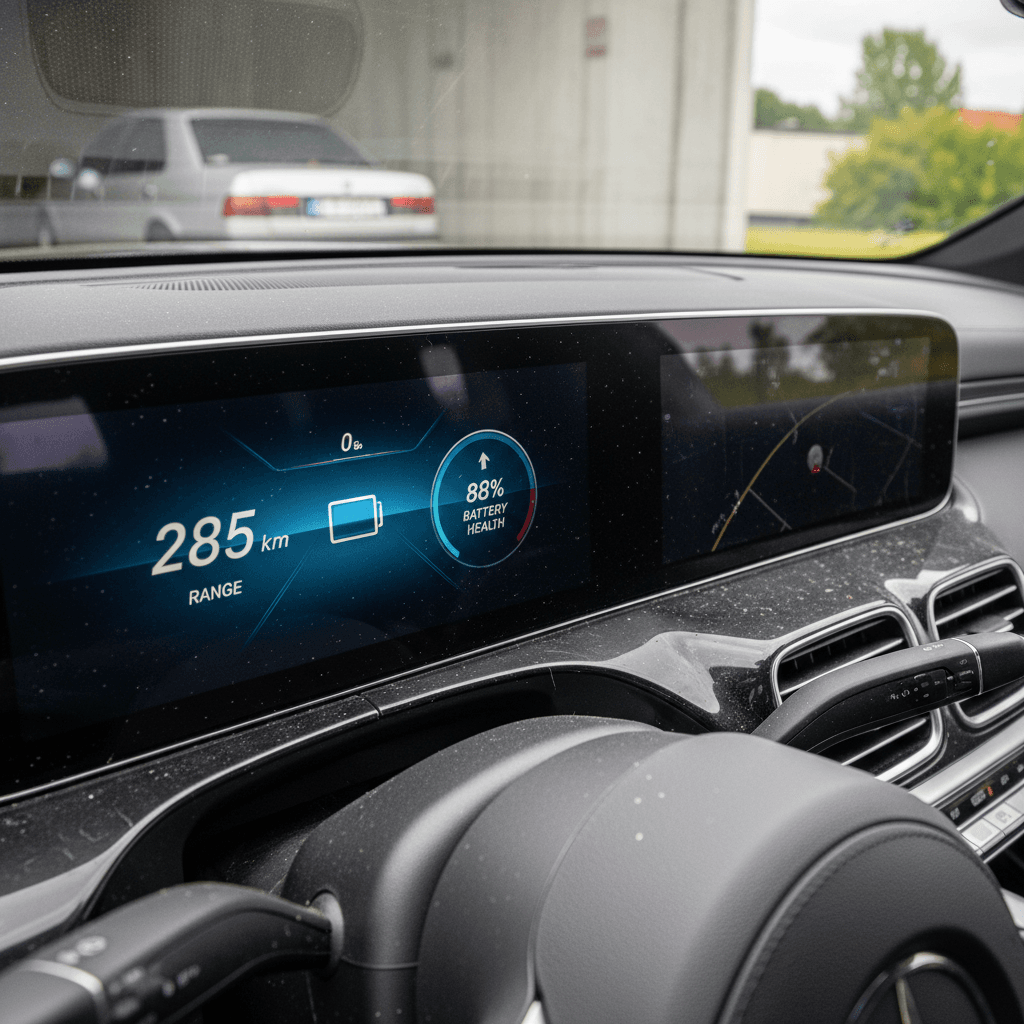
Every used EV sold through Recharged includes a Recharged Score Report, which goes well beyond a standard vehicle history check. We pull data directly from the car and our own diagnostics to give you a clear picture of the EQE’s battery and how that should factor into price.
How the Recharged Score Helps You Judge EQE Value
Turning a big unknown, battery health, into a clear number you can use when negotiating.
Battery Health & Range
Charging & Usage Patterns
Fair Market Pricing
Ready to find your next EV?
Browse VehiclesWhy This Matters for Depreciation
Should You Lease or Buy a Mercedes EQE?
When depreciation is front of mind, the lease‑versus‑buy decision looks different for an EV like the EQE than it does for a traditional gas sedan.
Leasing vs Buying a Mercedes EQE With Depreciation in Mind
How each approach handles risk, flexibility, and long‑term cost.
| Factor | Leasing New EQE | Buying New EQE | Buying Used EQE |
|---|---|---|---|
| Who takes most depreciation risk? | Leasing company | You | First owner (before you) |
| Upfront cash needed | Generally lower | Higher (down payment, taxes) | Flexible (finance or cash) |
| Tech obsolescence worry | Low, hand it back at lease end | Higher, tech could age faster than expected | Moderate, big tech hit already priced in |
| Best if you… | Like the latest tech every 3 years | Plan to keep 7–10 years | Want maximum value per dollar spent |
| Battery confidence | Backed by full new warranty | Backed by full new warranty | Depends on age, mileage, and diagnostics |
Use this as a starting framework; the best choice depends on how long you’ll keep the vehicle and how comfortable you are with evolving EV tech.
Where Used EQE Shines
What to Look For in a Used Mercedes EQE
Used Mercedes EQE Buying Checklist
1. Compare Asking Price to Original MSRP
Look up the original window sticker or build price for that EQE’s trim and options. A car that’s already 35–45% off MSRP within three years lines up with typical luxury EV depreciation; a smaller discount needs to be justified by rare options or mileage.
2. Get Objective Battery Health Data
Don’t settle for “it seems fine.” Ask for a recent battery health report. If you’re shopping through Recharged, review the battery portion of the Recharged Score to understand remaining capacity and expected range.
3. Verify Remaining Warranty Coverage
The EQE’s high‑voltage battery usually carries a separate, longer warranty than the basic vehicle warranty. Confirm what’s left in years and miles, this can meaningfully support future resale value.
4. Review Charging History and Hardware
Ask how the car was typically charged (home Level 2 vs frequent DC fast‑charging). Confirm that all charging equipment, including any adapters, is present and undamaged.
5. Inspect Tires, Brakes, and Suspension
Luxury EVs are heavy and torquey. Uneven tire wear, brake issues, or tired suspension components can hint at hard use that may not show up just from the odometer.
6. Check for Software Updates and Features
Make sure the EQE is up to date on critical software updates and that driver‑assist features, infotainment, and connectivity all function correctly. Tech problems can hurt resale and be costly to sort out.
Red Flags to Treat as Price Negotiation Fuel
7 Smart Ways to Protect Your EQE’s Resale Value
If you’re buying an EQE new or nearly new, you can influence how it depreciates from here. You can’t control the market, but you can control how desirable your particular car will be when it’s time to sell or trade.
- Charge thoughtfully: Favor home Level 2 charging and avoid frequent DC fast‑charging to 100%. Keeping the pack in a mid‑range state of charge is usually easier on long‑term health.
- Stay on top of software updates: Many issues, especially around charging compatibility and driver‑assist systems, are addressed via updates. Prospective buyers value a car that’s current.
- Document everything: Keep records of maintenance, software updates, tire rotations, and any warranty work. A thick folder of documentation reassures used buyers and lenders.
- Protect the interior: The EQE’s cabin is a major selling point. Avoid harsh cleaners on leather and screens; use floor mats in harsh climates.
- Think twice about extreme wheels and tires: Oversized wheels can hurt range and ride quality, and their look may not appeal to every buyer. Factory‑correct sizes generally help resale.
- Mind the miles: High mileage isn’t fatal for an EV, but it amplifies any battery degradation that’s already there. If you’ll drive 20,000+ miles a year, buying at a steeper discount matters more.
- Plan your exit: If you know you’ll sell in 3–4 years, time your sale before a major model refresh or range bump is announced, when buyers are less focused on “the next big thing.”
Sample Depreciation Scenarios for the Mercedes EQE
To make the depreciation question more concrete, here are simplified, hypothetical scenarios. They’re not predictions, but they show how different choices can change your real‑world cost of ownership.
Scenario 1: Buying New and Keeping 8 Years
- You buy a well‑equipped EQE at $90,000 out the door.
- After 8 years, market conditions and mileage put its value around, say, $35,000–$40,000.
- On paper, you’ve eaten roughly half the car’s value in depreciation, but spread over 8 years, that may be acceptable if you value owning one car for a long time.
- Your fuel and maintenance savings versus a gas luxury sedan can offset part of that paper loss.
Scenario 2: Buying Used at 3 Years Old
- Original price was $90,000; you buy the same EQE at 3 years old for around $50,000, with a strong battery report.
- You keep it for 5 more years and sell around year 8 for $35,000–$40,000.
- Your depreciation hit is now closer to $10,000–$15,000 over your ownership period, because the first owner absorbed the steep initial drop.
- This is why value‑oriented drivers often target the 2–4‑year‑old sweet spot in the EQE’s life cycle.
How Recharged Fits In
FAQ: Mercedes EQE Depreciation and Used Buying
Frequently Asked Questions
Bottom Line: Is the Mercedes EQE a Good Used Buy?
The Mercedes EQE depreciates quickly in its early years, faster than a comparable gas E‑Class and broadly in line with other luxury EV sedans. But what feels painful for first owners can be a major advantage for used buyers willing to dig into the details. If you focus on battery health, realistic pricing, and remaining warranty, a 2–4‑year‑old EQE can deliver flagship‑level comfort, tech, and refinement for the price of a new mainstream sedan.
That’s exactly where a platform like Recharged shines. With transparent, fair‑market pricing, a Recharged Score battery‑health report on every vehicle, EV‑savvy specialists, and nationwide delivery, you can step into EQE ownership with a clear view of how much value is left in the car, and how its depreciation will really affect your total cost of ownership.