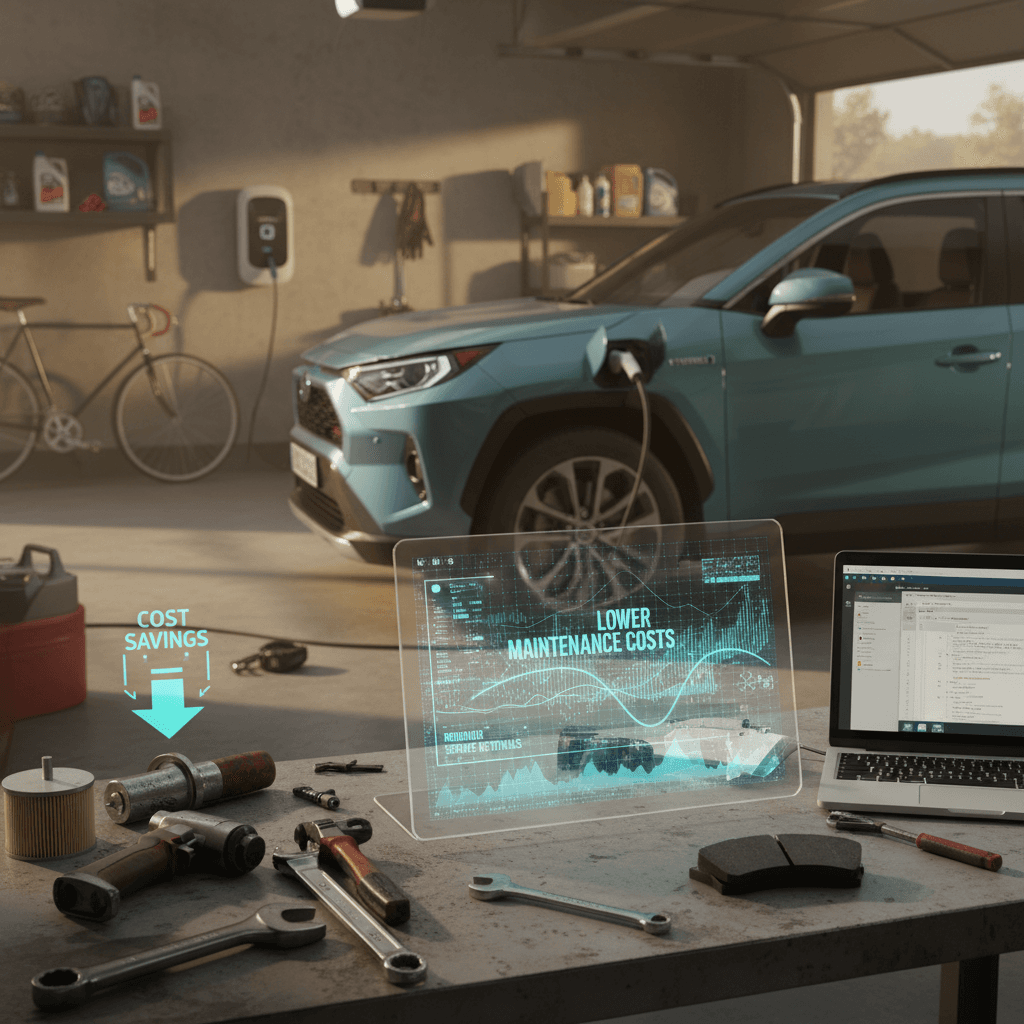
If you’re comparing a plug-in hybrid to a traditional gas car, it’s natural to ask: how do PHEVs help reduce maintenance costs, and where is that just marketing spin? The short answer is that PHEVs can cut your routine maintenance bills substantially, especially if you plug in often, but they won’t erase every expense, and there are a few long-term risks you should understand before you buy, particularly in the used market.
Quick takeaway
Why PHEVs Can Lower Maintenance Costs
On paper, a plug-in hybrid sounds like the worst of both worlds: you get an electric drive system and a gasoline engine. In practice, the opposite can be true for many drivers. When you plug in regularly, the electric side takes over a big chunk of your daily miles, letting the gas engine and many wear items sit on the bench instead of playing every down.
What the Numbers Say About Maintenance Costs
Different studies present slightly different cents-per-mile figures, but they tell a consistent story: plug-in vehicles, including PHEVs, generally cost about half as much to maintain and repair as comparable gas vehicles over the long haul. That advantage comes from using the electric side of the powertrain as much as possible.
Core Reasons PHEVs Can Need Less Maintenance
Electric miles protect the gas engine and brakes
Less engine run time
Regenerative braking
Simplified load
How to unlock the savings
Where the Maintenance Savings Actually Come From
Let’s unpack the specific line items where a PHEV can save you real money versus a comparable gasoline vehicle. The pattern is simple: wherever the electric system can substitute for traditional mechanical work, your costs usually go down.
Maintenance Line Items: Gas Car vs. PHEV That’s Regularly Plugged In
Typical maintenance needs over time. Exact intervals vary by brand, but the trends are consistent.
| Item | Gas-Only Vehicle | Plug-In Hybrid (Driven Mostly on Electric) | Why the PHEV Can Be Cheaper |
|---|---|---|---|
| Engine oil & filter | 3–4 changes per year for many drivers | 1–2 changes per year (engine runs less) | Electric miles mean fewer engine hours between oil changes. |
| Brakes (pads/rotors) | Service often at 30,000–50,000 miles | Service often 60,000 miles and beyond | Regenerative braking does more of the slowing, reducing friction-brake wear. |
| Spark plugs/ignition | Replacements around 60,000–100,000 miles | Same mileage, but calendar time is longer between replacements | Lower engine use stretches the time to reach those miles. |
| Transmission service | Fluid changes at manufacturer interval | Same interval, but less stress | Electric assist can reduce heat and load in many driving situations. |
| Exhaust & emissions | Potential issues with catalytic converter, O2 sensors, etc. | Same components, but less runtime | Less engine operation can delay some age-related failures. |
| Cooling system | Radiator, hoses, water pump wear from constant use | Same hardware, but often fewer high-heat events | Electric miles can reduce time spent at high engine load. |
PHEVs don’t eliminate all maintenance, but they can stretch key service intervals and reduce wear-intensive driving on the gas engine.
None of this means a PHEV is maintenance-free. It does mean that a PHEV driven as intended, as a part-time EV, can push expensive engine-related work farther into the future, especially if most of your mileage is local commuting rather than high-speed highway runs.
Don’t ignore the engine just because you charge
How Much Can PHEVs Save vs. Gas Cars?
You’ll see a lot of different numbers tossed around, but a few solid data points help frame the opportunity. Analyses of real-world maintenance costs over a full vehicle lifetime show that plug-in vehicles, including PHEVs, average about three cents per mile in maintenance and repair costs, while traditional gas vehicles average about six cents per mile.
Back-of-the-envelope math
If a gas car costs roughly $0.06 per mile to maintain and a PHEV comes in around $0.03 per mile, here’s what that looks like:
- 15,000 miles per year: About $900/year for gas vs. $450/year for a PHEV.
- Over 10 years (150,000 miles): Roughly $9,000 vs. $4,500 in maintenance and repairs.
Those are averages, not guarantees, but they illustrate how meaningful the gap can be over a decade of ownership.
Why the gap varies so much
Your personal savings can be higher or lower depending on:
- How often you plug in (electric miles vs. gas miles).
- Driving style (gentle vs. aggressive, city vs. highway).
- Climate (extreme heat or cold can stress both systems).
- Brand and model (some PHEVs are simply engineered more robustly).
Think of the “three cents vs. six cents” figure as a national average, not a promise for any one car.
Good news for commuters
Maintenance Items PHEVs Still Share With Gas Cars
It’s important not to romanticize PHEVs as maintenance-free. Because they still have an internal-combustion engine, they share many of the same service needs as any gas vehicle, you just might hit those intervals later in the odometer.
- Oil and filter changes: Even if you rarely use the engine, time-based oil change intervals still apply.
- Engine air filter and cabin air filter: These don’t care what’s powering the car; they still need periodic replacement.
- Coolant service: Most PHEVs have engine coolant and often separate coolant loops for the battery and power electronics.
- Transmission or e-CVT service: Check the manual, some units are “lifetime fill,” others require fluid changes.
- Belts, hoses, and gaskets: Rubber and seals age with time and temperature, no matter the power source.
- Tires and alignments: A PHEV is usually heavier than the non-hybrid version, so tire wear can actually be higher if pressures and alignment aren’t maintained.
The one thing PHEVs don’t dodge
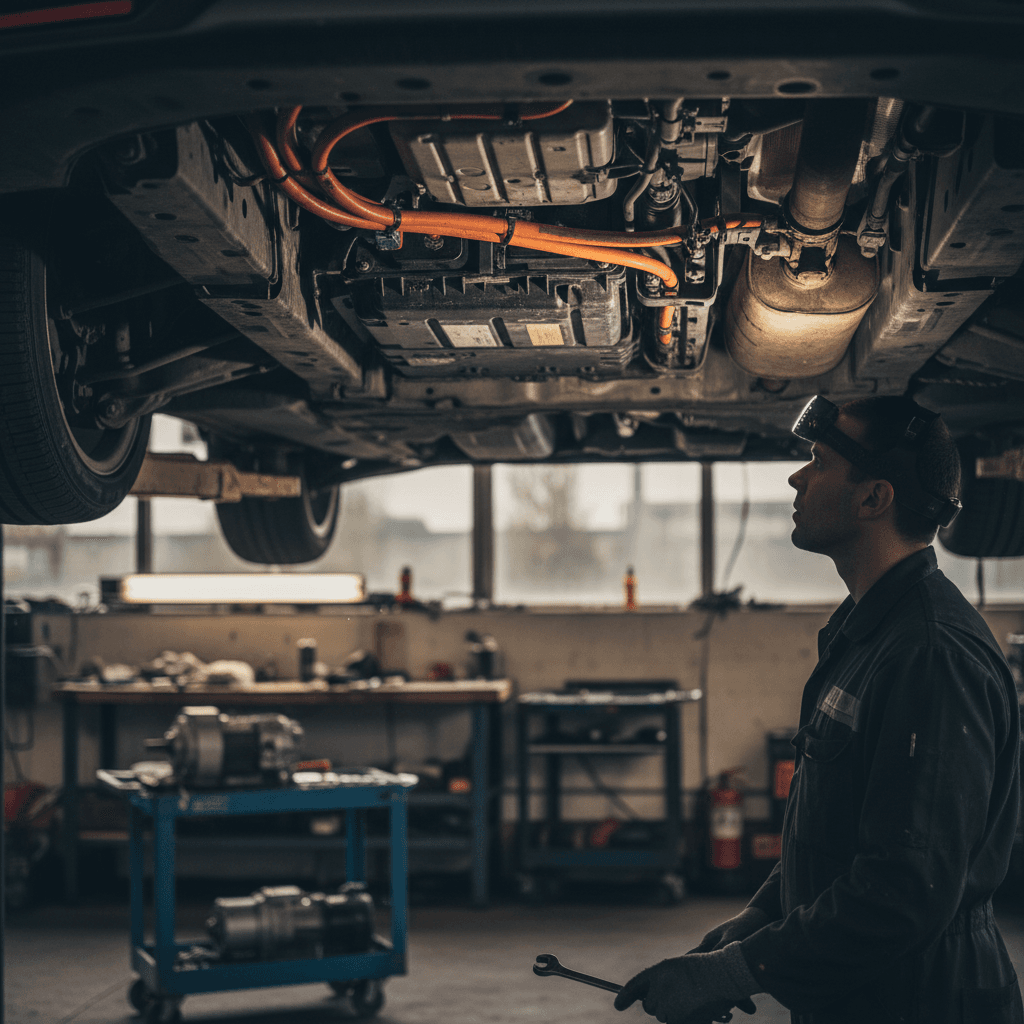
Long-Term Reliability and Battery-Related Costs
No conversation about PHEV maintenance costs is complete without talking about reliability and the high-dollar items that might show up at 8–15 years of age. Routine servicing is one side of the coin; rare but expensive repairs are the other.
Big-Ticket PHEV Components to Understand
Most owners never replace these, but you should know what they are.
High-voltage battery
Power electronics
Engine & hybrid hardware
The key to making a plug-in hybrid pay off is simple: plug it in. If you treat it like a regular gas car, you’re carrying around a complex battery pack and electric motor without getting the cost benefits.
About reliability headlines
Used PHEV Buying Checklist to Avoid Costly Surprises
A new PHEV’s lower routine maintenance needs are one thing; buying used is where your homework really pays off. A well-chosen used PHEV can deliver EV-like running costs at a used-car price. A neglected one can hand you a four-figure repair bill you weren’t counting on.
7 Essential Checks Before You Buy a Used PHEV
1. Confirm remaining battery warranty
Look for documentation of the original in-service date and battery warranty terms. Many PHEVs carry 8–10 year battery coverage, which can dramatically limit your downside risk.
2. Review service history for both engine and hybrid system
You want consistent oil changes, coolant service, and any hybrid-system campaigns or recalls completed. Long gaps in maintenance are a red flag, even if the car feels fine on a short test drive.
3. Check how the car was used day-to-day
Ask the seller how often they charged it and what their commute was like. A PHEV that lived mostly on electric miles often shows less engine wear than one that was used like a regular gas car and rarely plugged in.
4. Get a high-voltage battery health report
Whenever possible, have a shop with hybrid/EV expertise pull battery diagnostics. With Recharged’s <strong>Score battery health report</strong>, for example, pack condition is independently measured and explained in plain English.
5. Test both powertrains thoroughly
Drive in EV mode and in hybrid mode. Listen for engine noises, feel for shuddering transitions between gas and electric, and make sure there are no warning lights related to the hybrid system.
6. Inspect tires, brakes, and suspension closely
PHEVs can be heavier than their gas counterparts, so worn tires or tired shocks are common on higher-mileage examples. Factor those costs into your budget.
7. Use total cost of ownership, not just price, to compare
A slightly higher purchase price can still be the smarter move if the PHEV has better battery health, stronger maintenance records, and more warranty coverage remaining.
How Recharged fits in
Ready to find your next EV?
Browse VehiclesWhen a Full EV May Be Cheaper to Own Than a PHEV
So far we’ve focused on PHEVs vs. gas cars. But if you’re cross-shopping PHEVs and full battery-electric vehicles (BEVs), the story changes a bit. BEVs eliminate the engine entirely, so they do away with oil changes, exhaust systems, multi-speed transmissions, and many other moving parts that still exist in a PHEV.
Situations where a BEV often wins
- Reliable home charging: You have a driveway or garage with Level 2 charging and rarely need public stations.
- Predictable daily driving: Your normal day fits easily within the EV’s real-world range, even in winter.
- You keep cars a long time: Fewer moving parts means fewer things to maintain over 8–12 years.
In these scenarios, a BEV’s generally lower maintenance needs can easily offset its more complex battery pack.
When a PHEV still makes more sense
- Limited charging access: You live in an apartment or rely on shared parking where charging is inconsistent.
- Frequent road trips: You want EV smoothness around town but don’t want to plan every highway stop around public fast chargers.
- Cold or hot climate: Extreme temperatures chip away at EV range; gas backup can be a comfort and a cost hedge.
In these cases, a PHEV’s blend of electric running costs and gas flexibility can still be the more practical, lower-stress option.
FAQ: PHEV Maintenance Costs
Frequently Asked Questions About PHEV Maintenance
Bottom Line: When Do PHEVs Really Help Your Wallet?
Plug-in hybrids occupy a useful middle ground. They don’t deliver the rock-bottom routine maintenance costs of a well-designed full EV, but when used as intended, charged often and driven mostly on electricity, they can cut your maintenance spending roughly in half compared with a similar gas-only vehicle, and do it without asking you to bet your life on public charging.
If you’re considering a PHEV, focus on your real-world use: access to charging, daily mileage, local climate, and how long you tend to keep vehicles. Then look carefully at battery health, remaining warranty, and service history, especially when buying used. That’s where a transparent platform like Recharged, with its Recharged Score battery report, financing options, trade-in support, and EV-savvy guidance, can turn a complex decision into a confident one.