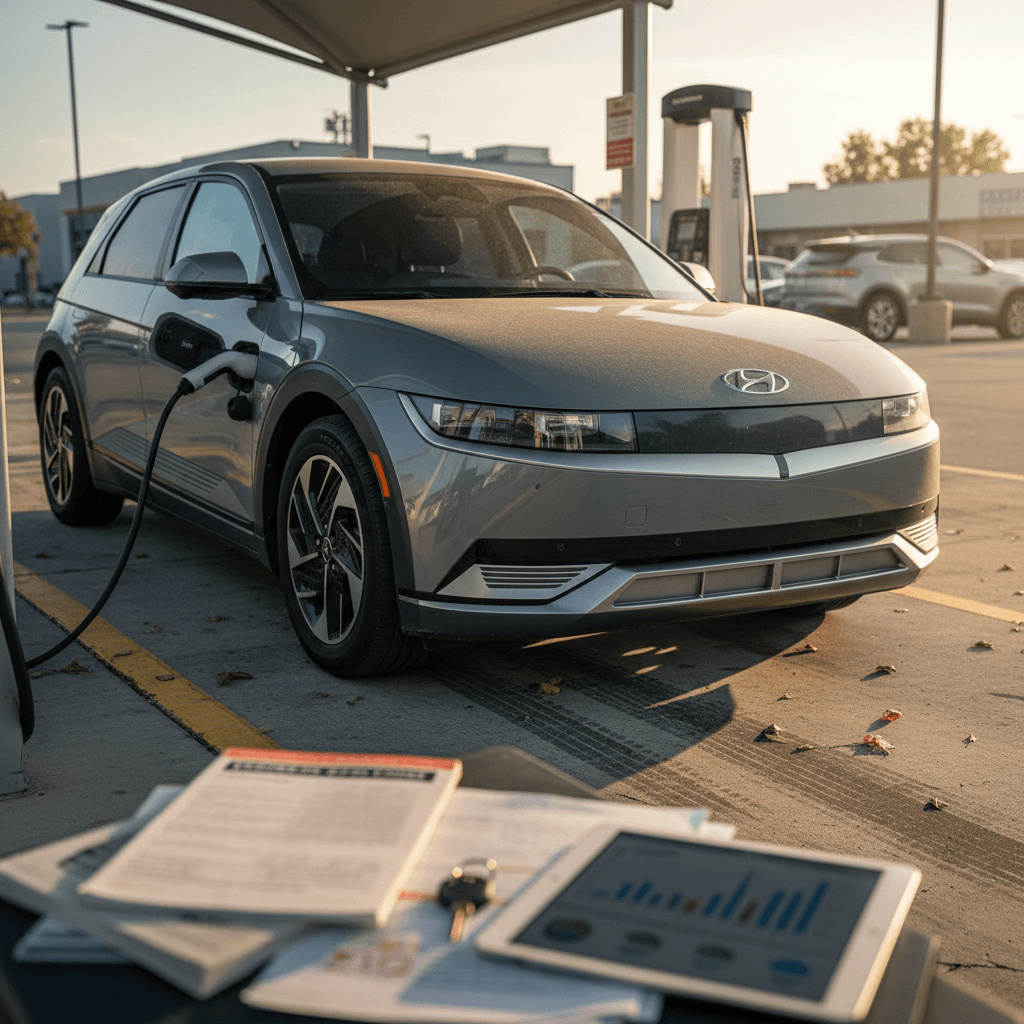
If you’re eyeing a Hyundai IONIQ 5, especially on the used market, you’ve probably seen the headlines: eye-popping fast‑charging, retro‑cool styling, and a lounge-like interior. All true. But live with one for a year and a half, and a different list starts to form in your head: all the things you wish you’d known before you signed.
Who this guide is for
Why the Hyundai IONIQ 5 Is Worth a Closer Look
Let’s set the stage. The Hyundai IONIQ 5 is one of the most important EVs of this decade: ultra‑fast 800‑volt charging, family‑friendly space, and a price that undercuts many rivals when you factor in incentives or used pricing. Real‑world owners praise its comfort and efficiency, especially models with the heat pump and larger battery. But as with any modern EV, the experience you get depends heavily on how and where you drive, and how well you understand the car’s quirks.
Hyundai IONIQ 5 at a Glance
Quick Take: Things I Wish I Knew About the IONIQ 5
The 15 Biggest “I Wish I’d Known…” Lessons
What surprises owners after the honeymoon period
Charging is nuanced
Winter changes everything
Trim & options matter
Software has moods
Cabin is a lounge
Security & updates
1. Charging Curve & Preconditioning Aren’t As Simple As the Brochure
On paper, the Hyundai IONIQ 5 is a fast‑charging rock star: up to around 235–240 kW on a capable DC fast charger. In practice, many new owners pull up to a “350 kW” station and see 40, 60, maybe 90 kW, and start wondering what’s wrong. Most of the time, nothing is broken. The car, the battery temperature, and the charger just aren’t on the same page.
- The IONIQ 5 has a very steep charging curve: it can spike high, then settle in the 130–180 kW range before tapering.
- You rarely, if ever, see that headline number on a cold battery, a crowded station, or a station with a weak transformer.
- Plenty of 350 kW posts in the real world simply can’t deliver full power, regardless of what the label says.
Preconditioning: the hidden key to fast charging
Preconditioning is also a little fussy: you may need to navigate to a charger the car thinks you can’t quite reach on your current charge so it automatically adds a charging stop and starts warming the pack. Once you plug in, the preconditioning icon disappears, that’s normal, but the battery is already at a better temperature to accept higher power.
If you skip this, you’re leaving time on the table
2. Real-World Range, Especially in Winter
The EPA window sticker might say 256–303 miles, but what you care about is: what does the IONIQ 5 actually do at 70 mph, with people and cargo, in February? Owners in cold regions routinely report efficiency dropping from around 3.2–3.8 mi/kWh in mild weather to the low‑2s in deep winter with the cabin heater running.
Mild weather expectations
- On the highway at 70 mph, many long‑range RWD owners see 220–260 real miles on an 80–90% charge.
- Around town, gentle driving and one‑pedal regen can stretch that comfortably.
- 19‑inch wheels help; 20‑inch wheels look great but cost you some efficiency.
Cold weather reality
- Below freezing, plan on 20–30% less usable range, even more on short trips where the cabin keeps reheating from cold.
- Independent testing suggests IONIQ 5s with a heat pump keep roughly 80–85% of their rated range in freezing temps, better than many EVs without one.
- Short hops are the worst case: the car never really warms up, so efficiency plummets.
Heat pump vs. resistive heater
The bottom line: if you buy an IONIQ 5 with a 300‑mile rating and expect 300 miles at 75 mph in January with the cabin at 72°F, you’re setting yourself up for disappointment. If you plan around realistic winter range and use preconditioning, the car becomes far more predictable.
3. Trim, Battery, and AWD vs RWD: Choices Matter More Than You Think
On a spec sheet, the differences between SE, SEL, and Limited, or RWD versus AWD, can blur together. In your driveway, they shape your daily experience: range, traction, comfort, and even how easy the car is to resell later.
Hyundai IONIQ 5: Key Configuration Tradeoffs
Simplified overview; exact equipment and availability vary by model year and region.
| Choice | Pros | Cons | Best For |
|---|---|---|---|
| RWD (single motor) | Longest range, slightly lighter, smoother and more efficient on the highway. | Less traction in snow or on steep, slick driveways. | Mild climates, commuters, range‑focused drivers. |
| AWD (dual motor) | Stronger acceleration, better traction in snow and rain, more confident feel. | Slightly less range and higher tire wear if driven hard. | Snow‑belt drivers, families, performance‑minded owners. |
| Standard battery | Lower upfront cost, fine for short commutes and second‑car duty. | Less cushion for winter, road trips, or high‑speed driving. | Urban drivers, predictable daily routines, lots of home charging. |
| Long‑range battery | More flexibility for trips, winter, and years of degradation. | Higher price; if you only drive 30 miles a day, you may not use it all. | One‑car households, frequent road‑trippers, used‑value conscious buyers. |
| 19" wheels | Better efficiency, softer ride, cheaper tires. | Less aggressive look. | Efficiency and comfort first. |
| 20" wheels | Sharpler look and handling response. | Range penalty and pricier tires to replace. | Style‑seekers who accept the tradeoff. |
When buying used, don’t just pick by color, pick by battery, drivetrain, and features.
Think like a future buyer
4. Tech and Software: Lovable but Occasionally Flaky
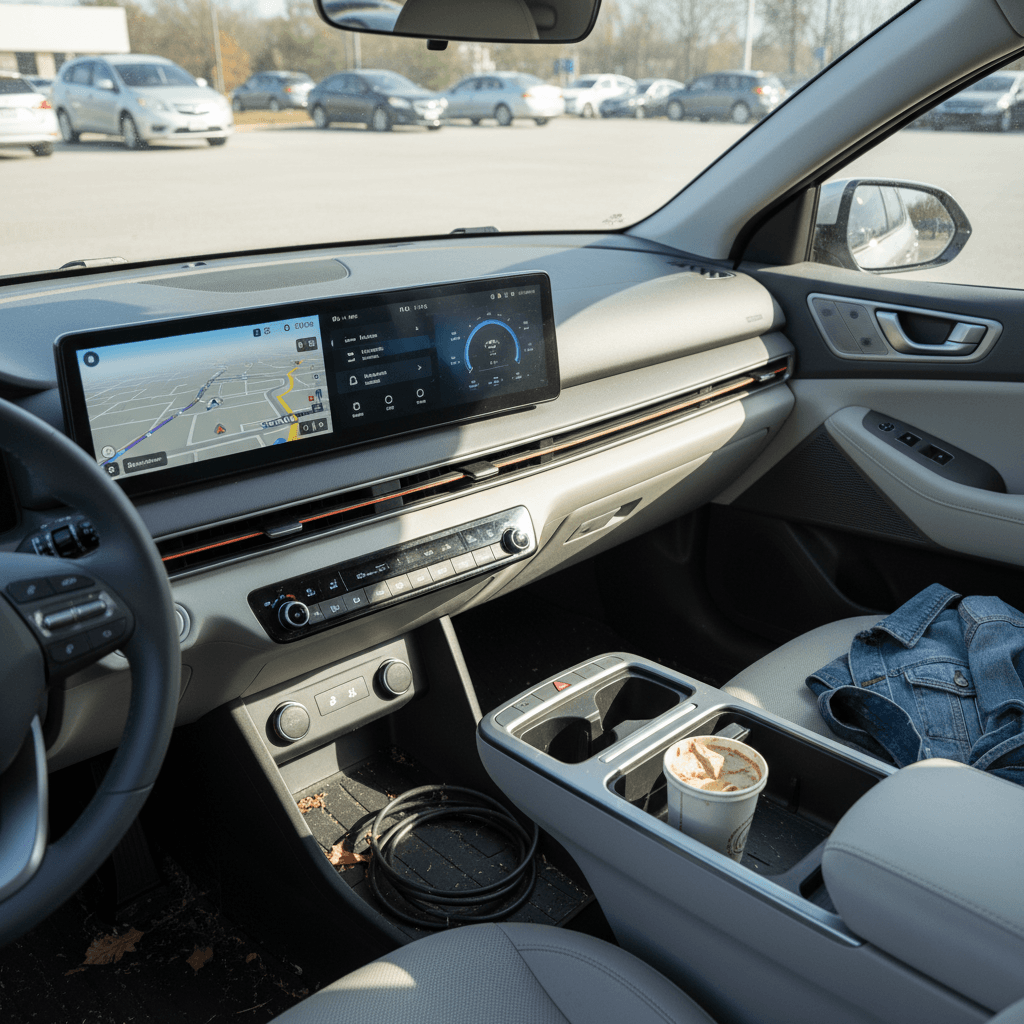
The Hyundai IONIQ 5’s tech suite is generous: twin 12.3‑inch screens, standard Apple CarPlay/Android Auto, robust driver‑assist, and (on newer models) more over‑the‑air update capability. In day‑to‑day use, it’s mostly a pleasure, but you’ll also hear familiar refrains from owners about infotainment freezes, random reboots, and navigation quirks.
- The built‑in nav is decent but occasionally misroutes or lags voice commands.
- Full‑screen CarPlay/Android Auto isn’t available on earlier model years; some owners find the split‑screen layout clunky.
- Occasional software glitches, from blank screens to temporarily unresponsive touch input, are usually solved with a quick restart but can be unnerving at first.
- Certain EV‑specific features (battery preconditioning, charging stops) only work when you use Hyundai’s native navigation.
The good news on tech
“It’s like owning a smartphone on wheels, you reboot it now and then, but when it’s behaving, it does everything you need and then some.”
5. Comfort, Cargo, and Family Duty
Forget the spec sheet for a moment. What wins people over to the IONIQ 5 is how it feels: wide, airy, and relaxed. The long wheelbase gives you SUV‑like rear legroom, the flat floor helps with kid seats and adults alike, and the sliding center console and reclining rear seats make road trips feel like business class, at least up front.
Where the IONIQ 5 Shines, and Where It Doesn’t
Everyday usability from a family perspective
Passenger space
Cargo flexibility
Car seats
Relax mode
Noise & ride
Ingress/egress
Pay attention to the hatch area in used cars
6. Security and Recalls: What New and Used Buyers Should Know
The downside of a connected, keyless EV is that it’s part computer, part car. The Hyundai IONIQ 5 has drawn scrutiny for keyless-entry security vulnerabilities in some markets, where thieves have used sophisticated key‑emulating devices to unlock and drive away cars in seconds. Hyundai has begun rolling out software and, in some regions, hardware upgrades to harden the system, but not always as a free recall.
- Ask the seller for documentation of any security or keyless‑entry updates performed under warranty or as a dealer campaign.
- Check the VIN against Hyundai’s recall look‑up to see if any open campaigns exist for instrument cluster display, electrical, or safety systems.
- Confirm that the owner has both original keys and that they work properly, replacement keys can be expensive and require dealer programming.
Don’t ignore security updates
7. Maintenance, Tires, and Running Costs
EVs are famous for low maintenance, and the IONIQ 5 follows that pattern: no oil changes, fewer moving parts, and strong regeneration that’s kind to the friction brakes. But there are still a few running‑cost surprises you’ll want to budget for, especially on AWD and higher‑trim cars.
Costs IONIQ 5 Owners Don’t Always See Coming
1. Tire wear on AWD models
Dual‑motor IONIQ 5s are quick off the line and heavy. Driven enthusiastically, they can chew through performance‑oriented tires sooner than you expect. Inspect tire wear patterns closely on a used car.
2. Windshield and glass
The large, upright windshield and panoramic glass mean a bigger target for chips and cracks. Make sure your insurance covers glass replacement reasonably.
3. Cabin air filters
Easy to overlook, but crucial for keeping the HVAC efficient and the interior fresh. On a used car, assume you’ll replace them unless there are recent receipts.
4. Brake service intervals
Regenerative braking means pads and rotors can last a long time, but they can also rust if the friction brakes rarely engage. A good EV‑savvy shop will check and clean them periodically.
5. DC fast‑charging habits
Frequent 100% DC fast‑charging isn’t ideal for long‑term battery health. When buying used, cars that mostly charged at home and stayed around 80–90% state of charge are generally a better bet.
How Recharged can help on the maintenance front
8. Resale Value and Buying a Used IONIQ 5
The IONIQ 5 has benefited from strong reviews but also from generous new‑car incentives and evolving tax‑credit rules. That combination has pushed more cars into the used market earlier than you might expect, and created some excellent deals for second owners who know what to look for.
Why used IONIQ 5s can be a smart buy
- Early depreciation and shifting incentives mean you can often get a low‑mileage example for far less than MSRP.
- The big-ticket item, the battery, has an 8‑year/100,000‑mile warranty for defects, and real‑world degradation has generally been modest so far.
- Plenty of lease returns and early trades mean good inventory and choice of trims.
What hurts resale on rough examples
- Sporadic software updates and ignored recalls can signal a car that hasn’t been well cared for.
- Heavy DC fast‑charging use (rideshare, high‑mileage commuters) can show up in reduced range and more wear elsewhere.
- Visible interior wear, scratched plastics, stained seats, hurts value more in EVs where buyers expect a near‑tech product experience.
Why marketplaces like Recharged matter here
Used IONIQ 5 Checklist: What to Look For
11 Things to Check Before You Buy a Used Hyundai IONIQ 5
1. Battery health and real‑world range
Ask the seller for recent range numbers at highway speeds from 80–90% down to 10–20%, in both mild and cold weather if possible. If you’re shopping through Recharged, review the Recharged Score battery report to see objective health data.
2. DC fast‑charge history
If possible, learn how often the car has been fast‑charged to 100%. Occasional road trips are fine, but daily 0–100% DC sessions aren’t ideal for longevity.
3. Software and recall status
Run the VIN through Hyundai’s recall tool, and ask a Hyundai dealer to confirm all open campaigns and critical software updates have been completed, especially for instrument cluster, charging system, and security updates.
4. Keyless entry and key fobs
Confirm that both key fobs work reliably and that any security upgrade campaigns have been performed. Watch for intermittent locking/unlocking or starting issues during your test drive.
5. Charging behavior
Test both Level 2 and, if you can, DC fast‑charging before buying. You’re looking for consistent plug‑in behavior, secure locking of the connector, and charge rates that match what other owners see at similar state of charge.
6. Heat pump and HVAC performance
On a cold or hot day, confirm the cabin reaches temperature quickly and quietly. Listen for unusual compressor noises and verify defrost performance. If you live in a cold climate, verify whether the car actually has the heat pump.
7. Driver‑assist systems
Check adaptive cruise, lane‑keep assist, and blind‑spot monitoring on your test drive. Any pull, ping‑ponging, or incorrect alerts may indicate calibration or sensor issues.
8. Suspension and steering
Over bumps and during parking maneuvers, listen for clunks or rattles. Excessive play or pulling could indicate alignment or suspension wear that needs attention.
9. Tires, wheels, and brakes
Inspect for uneven tire wear, curb rash on wheels, and rusty or heavily grooved brake rotors. These can hint at hard use, or just deferred maintenance.
10. Interior wear and water leaks
Check the headliner, door seals, and cargo area for water stains or musty smells. Make sure carpets under the floor mats are dry, especially in rainy or snowy regions.
11. Charging cable and accessories
Confirm the car comes with its portable charge cable (if originally equipped), wheel‑lock keys if fitted, and any cargo‑area accessories. Replacing these adds up quickly.
FAQ: Hyundai IONIQ 5 Things Owners Ask Later
Hyundai IONIQ 5: Frequently Asked Questions
Is the Hyundai IONIQ 5 Right for You?
The Hyundai IONIQ 5 is one of those rare EVs that feels both futuristic and familiar. Live with it a while, and you discover that its strengths, fast charging, comfort, design, are very real, and its quirks are manageable once you know where they hide. If you walk in expecting gasoline‑car habits to translate one‑for‑one, you might be frustrated. If you walk in armed with the things current owners wish they’d known, you’ll likely end up wondering why you didn’t switch sooner.
If you’re ready to start shopping for a Hyundai IONIQ 5, take your time: compare trims, check battery health, and make sure software and security updates are current. A marketplace built around EVs, like Recharged, can help you sort the great cars from the merely okay, line up financing, consider a trade‑in, and even arrange nationwide delivery. Get those details right, and the IONIQ 5 can be an excellent long‑term partner, winter, road trips, charging quirks and all.