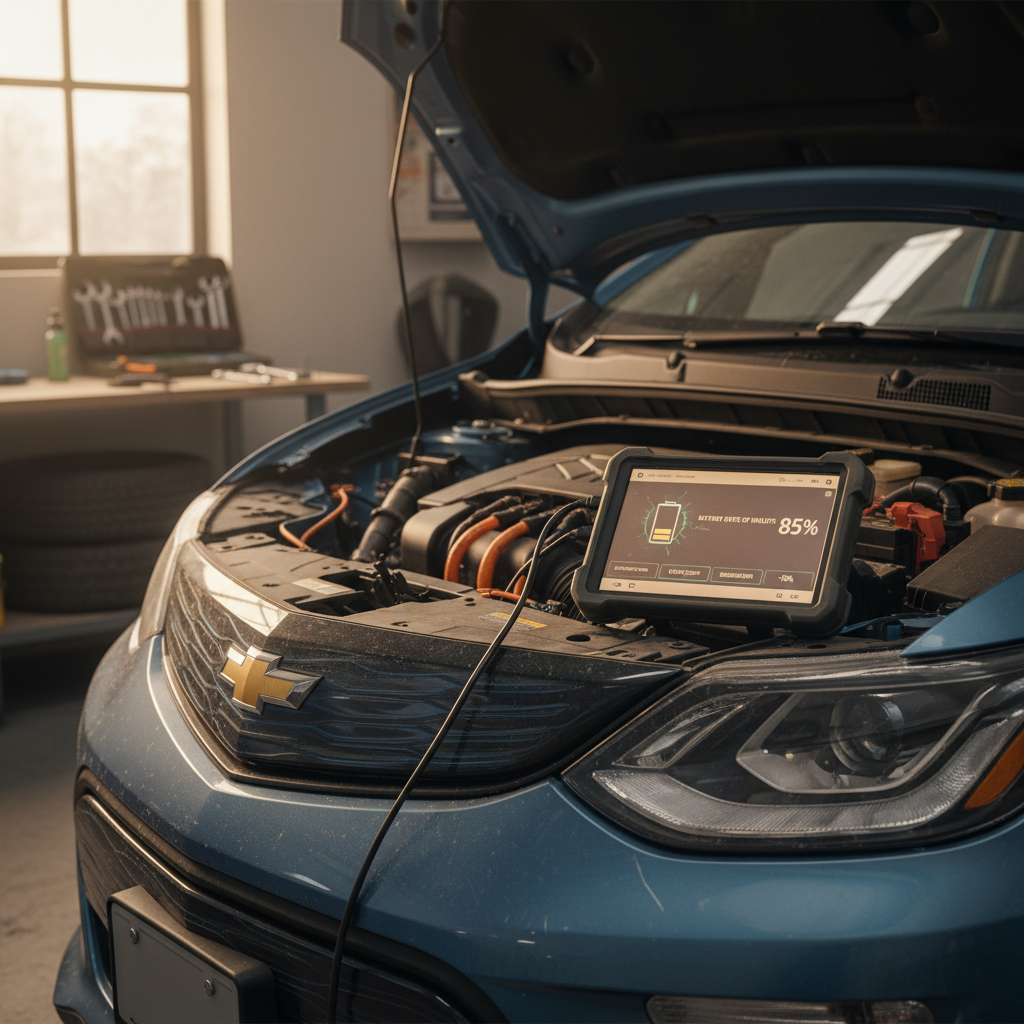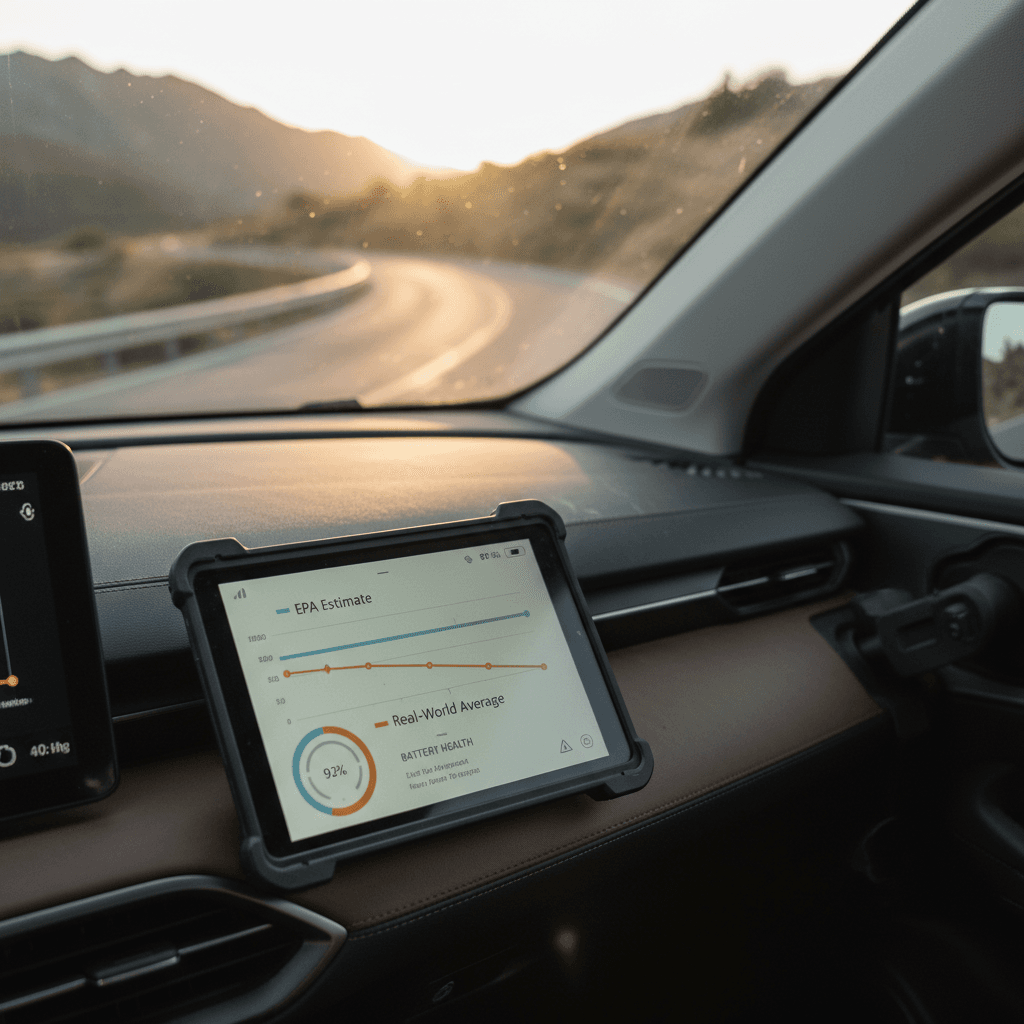
You buy an electric car with a 310‑mile EPA range rating, charge it to 100%, hop on the highway, and the dash quietly suggests you’ll get 230 miles instead. Now you’re wondering: how accurate is this EV range estimate, really, and can you trust it on a cold night, in a headwind, with kids in the back and the heater blasting?
What this guide will actually tell you
Why EV range estimates often feel “wrong”
Two different "range" numbers shape your expectations: the official rating (EPA, WLTP, CLTC) and the number your car shows while you drive. Both are built on lab tests and math, not clairvoyance. They don’t know a storm is rolling in or that you always drive 78 mph in the left lane.
EV range: ratings vs. reality at a glance
The headline: your EV isn’t lying to you, but it is working with an incomplete script. Ratings are based on controlled cycles; your car’s computer is constantly guessing based on recent behavior and conditions. Once you understand that dance, the numbers start to make sense, and become a whole lot more useful.
Lab tests vs. real world: EPA, WLTP, and beyond
Start with the sticker. In the U.S., electric vehicles carry an EPA combined range. Europe uses WLTP. China uses CLTC. All three are lab procedures that run the car on a dynamometer through set speed patterns and temperatures until the battery is depleted, then convert that energy use into a distance number.
Range standards compared
Why the number on the sticker almost never matches your real‑world EV range.
| Standard | Where used | Typical optimism vs. real world | What it’s best for |
|---|---|---|---|
| EPA | U.S. | Often within about ±10–15% for mixed driving | Comparing U.S.‑market EVs on the same scale |
| WLTP | Europe, many global markets | Commonly ~10% higher than real mixed driving | Quick cross‑shopping in Europe |
| CLTC | China | Can be 15–25% higher than real‑world range | Upper‑bound comparison, not expectation |
Use these as comparison tools between cars, not as guarantees of your personal road‑trip distance.
Don’t treat lab numbers as promises
So when you ask, "How accurate is an EV range estimate?" you first need to decide which estimate you mean. The laboratory rating is usually in the ballpark for average driving. The number on your dashboard is trying to predict your next few hours, which is a much harder job.
Dashboard range gauge vs. battery percentage
Miles (or km) remaining
This is the car’s range estimate, its best guess at how far you can go before the pack reaches 0%. It’s usually based on:
- Your recent energy use (last few dozen miles)
- Outside temperature
- Elevation changes and route (if navigation is set)
- Climate control and accessory loads
Think of it as a smart weather forecast: sometimes spot‑on, sometimes surprised by a sudden storm.
Battery % remaining
This is your EV’s state of charge (SoC). It’s a measurement, not a prediction. The car knows how much energy it has stored with reasonable precision; the trick is translating that into miles.
For long trips, many experienced EV drivers watch percentage first, then ask: "At my current consumption, how many miles per 10% am I getting?" That mental math is often more trustworthy than the raw miles number.
Pro move: drive by percentage
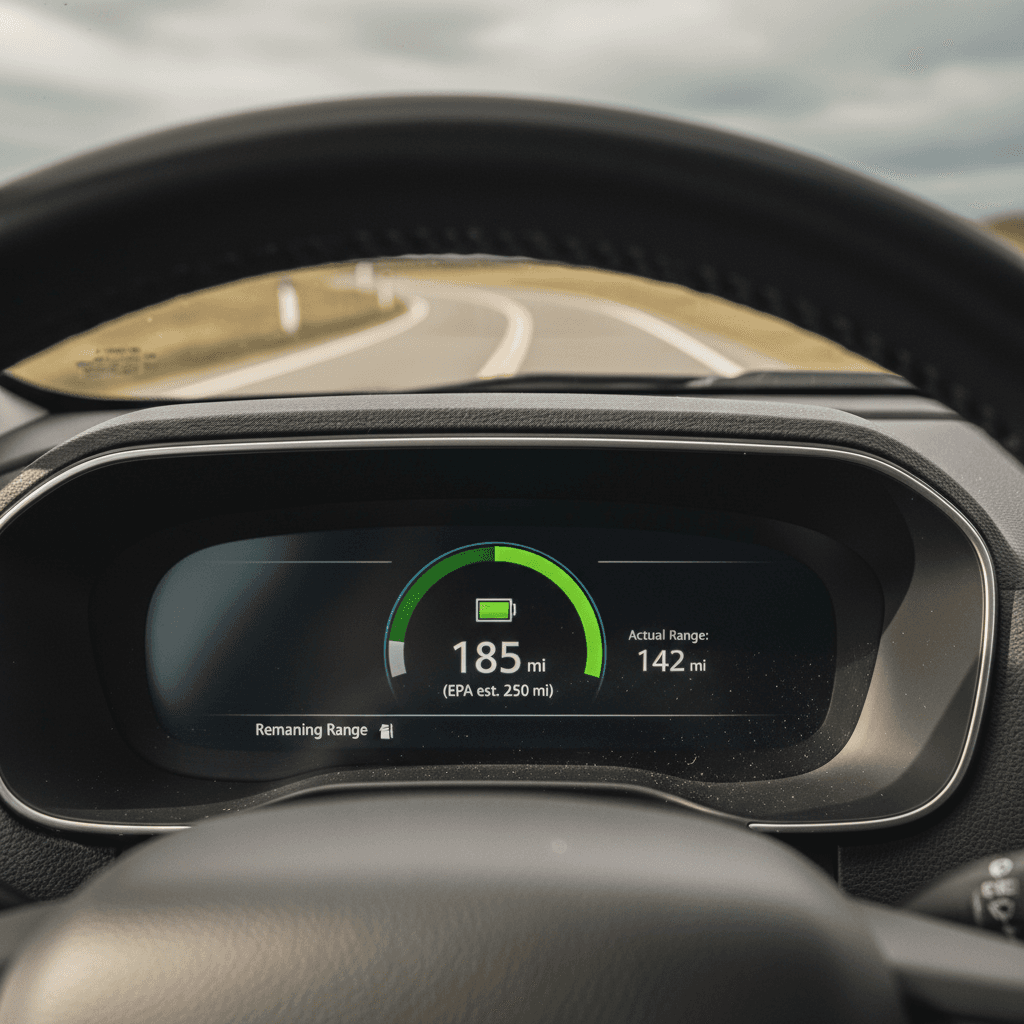
How accurate is your EV’s range estimate day to day?
In normal, mixed driving, city and highway, moderate temperatures, most modern EVs do a decent job. Over a week of commuting, you’ll likely see your car deliver 80–100% of its EPA range. On mild days at moderate speeds, some models even beat their ratings.
Typical EV range accuracy patterns
These are patterns we see across many models; your exact numbers will vary.
Daily commuting
Mild weather, mix of speeds: Many EVs land close to their EPA number over a full charge, especially if you’re not doing long, fast highway stints.
Pure highway driving
70–80 mph cruising: Expect something like 70–90% of EPA combined range, depending on aerodynamics and speed. Boxy SUVs pay the biggest penalty.
Winter, short trips
Cold starts and cabin heat: Range can drop 20–40% on repeated short hops because you’re reheating the car every time.
The other half of accuracy is stability. Some cars update the estimate slowly, so it changes gently as you drive. Others react quickly to a short burst of fast driving or a big hill, swinging the number up and down in ways that feel dramatic even if you’ll still reach your destination comfortably.
Eight factors that throw EV range off course
Every EV driver eventually learns that range isn’t just about battery size. It’s about physics. Here are the biggest culprits when your estimate suddenly looks wrong.
Major range “wreckers” to watch for
1. Speed above 65–70 mph
Aerodynamic drag rises sharply with speed. Many EVs that look fine at 65 mph lose 10–20% more range when you creep into the high‑70s or low‑80s, even in perfect weather.
2. Cold temperatures
Below freezing, the battery and cabin heating both gobble energy. Expect 15–40% less real‑world range in a Midwest or Northeast winter unless you precondition while plugged in.
3. Strong headwinds or crosswinds
A headwind makes the car feel like it’s going faster than it is, aerodynamically speaking. Range estimates set on a calm day will be too optimistic into a stiff wind.
4. Hills and elevation gain
Climbing burns extra energy that the EPA cycle does not fully capture, even though regen recovers some of it on the way down. Mountain drives can devour range faster than you expect.
5. Big wheels and sticky tires
Upsized wheels and aggressive tires look great, but they often reduce efficiency vs. the base wheel/tire combo your EPA rating was calculated on.
6. Heavy loads and roof racks
Passengers, cargo, bikes, and boxes on the roof all add weight or drag. Your EV’s computer can’t always see that extra kayak you just strapped on.
7. Climate control habits
Blasting cabin heat, max A/C, or constantly defogging the windshield adds a steady drain. Heated seats and wheel are more efficient than turning the cabin into a sauna.
8. Stop‑and‑go vs. steady traffic
In city traffic, regen recovers energy and EVs can beat their highway range. On a long, uninterrupted highway slog, there’s little regen, so your car leans harder on the pack.
The cold‑weather trap
Highway vs. city: why EPA numbers mislead road‑trippers
Most U.S. drivers care less about a laboratory "combined" number and more about a simple question: "How far can I go at 75 mph on the interstate before I need a charge?" That’s where EPA ratings get slippery.
- EPA combined range mixes city and highway driving; EVs tend to be more efficient in the city, so the combined number is rose‑tinted for highway‑only trips.
- Many carmakers optimize for the test cycle itself, gear ratios, software tuning, even how they choose the wheel and tire combo.
- There is a separate EPA highway value, but it’s hidden in the data tables and not printed on the window sticker, so shoppers rarely see it.
Rule of thumb for road trips
This is exactly why many modern EVs now offer a trip‑aware range estimate in the navigation system. When you punch in a route, the car can factor in speed limits, terrain, and charging stops, then show your expected battery percentage on arrival. That prediction is almost always more useful than the generic miles‑to‑empty number on the main gauge.
How to make your EV’s range estimator more reliable
You can’t rewrite the laws of physics, but you can feed your car’s brain better information and stack the deck in your favor. Think of it as coaching the estimator to understand your driving.
Four habits that tame range anxiety
Each of these makes your EV’s predictions calmer and closer to reality.
Use built‑in navigation on trips
When you set a destination, most EVs switch from a simple average to a route‑aware model. They know your planned speed, elevation changes, and distance, so the arrival % estimate becomes much more trustworthy.
Give the car a few drives to learn
New EVs, or those recently reset, may start with a generic efficiency assumption. After a week or two of normal driving, the estimator usually settles down as it learns your style and conditions.
Precondition while plugged in
In hot or cold weather, use the app or car’s timer to heat or cool the cabin while you’re still on the charger. That gets the pack and cabin to a happy temperature without chewing into your driving range as much.
Watch your mi/kWh (or kWh/100 mi)
Keep an eye on the efficiency readout on your trip meter. Over a long drive, that number is the best summary of how you’re doing. Multiply it by your usable battery size and you’ve got a realistic real‑world range figure.
Simple planning checklist for longer drives
1. Start with a conservative target
Take your EPA range and mentally knock off 20–25% for fast highway travel, then see if your planned stretch fits into that buffer.
2. Verify chargers along your route
Use apps like PlugShare, A Better Routeplanner, or your car’s native planner to confirm working stations. If you buy or sell through Recharged, our team can help you understand how that model behaves on your typical routes.
3. Aim to arrive with a buffer
Plan to reach each charger with at least <strong>10–15% battery</strong>, more in winter or in remote areas. If the estimate starts slipping below that, slow down a few mph and watch it recover.
4. Re‑check after the first 30–40 miles
Once you’re settled into steady speeds and conditions, look at the revised arrival estimate. If it’s holding steady or climbing, you’re in good shape.
When your EV is “better than advertised”
Used EVs: what range estimates reveal about battery health
If you’re shopping used, range accuracy is tied to a second question: how much battery capacity has this car lost? A three‑year‑old EV can still be wonderfully useful even if it no longer hits its brand‑new EPA number, as long as you understand the new baseline.
What a quick drive can tell you
- State of charge vs. miles: Reset a trip meter, drive 20–30 miles, and note how much % you used. If you used 10% for 25 miles, that suggests roughly 250 miles for a full charge at that efficiency.
- Estimator behavior: Wild swings with gentle driving can indicate outdated software, recent resets, or (less commonly) pack issues that need a deeper look.
Why a real battery report matters
Dashboard range estimates are a noisy proxy for actual battery health. That’s why Recharged includes a Recharged Score Report with verified pack diagnostics on every EV we sell. Instead of guessing from the range readout, you see:
- Measured usable capacity vs. when new
- Charging and temperature history indicators
- How that translates into realistic range for your driving
Buying used? Look beyond the sticker range
EV range myths you can safely ignore
- “EV range estimates are random.” They’re not. They’re just reacting to inputs you don’t always notice, temperature, wind, speed, and terrain. Once you understand those, the numbers start to feel logical.
- “You’ll constantly run out of juice.” In practice, most EV owners charge at home and rarely go below 10–20% except on road trips. Day‑to‑day, real‑world range matters less than you think as long as the car comfortably covers your routine.
- “Range always collapses in a few years.” Modern packs generally lose capacity slowly after an initial small drop. It’s normal for a three‑ or four‑year‑old EV to show a modest reduction vs. new, but catastrophic range loss is the exception, not the rule, especially if the car was cared for.
- “You must hit the EPA number or something’s wrong.” No. A 300‑mile rating doesn’t mean something’s broken if you’re seeing 230–250 miles at 75 mph in winter. That’s physics, not a failing battery.
FAQ: EV range estimates and real‑world driving
Frequently asked questions
Bottom line: how much should you trust your EV’s range?
EV range estimates are estimates, not promises. The EPA number on the window sticker is a lab‑tested benchmark; the miles‑to‑empty readout in your car is a constantly updated prediction based on how and where you’re driving. In good conditions, modern EVs can come surprisingly close to both. In harsh weather, at high speeds, or in hilly country, the physics of drag, heat, and gravity take their cut.
Once you learn to read battery percentage, understand what really eats range, and let your car’s navigation system do its job, that nervous "will I make it?" feeling fades into the background, replaced by the quiet confidence of a car that always wakes up with a full "tank." And if you’re thinking about a used EV, pairing that knowledge with a transparent battery health report, like the Recharged Score that comes with every vehicle on Recharged, turns range from a worry into just another spec you can shop with a clear head.