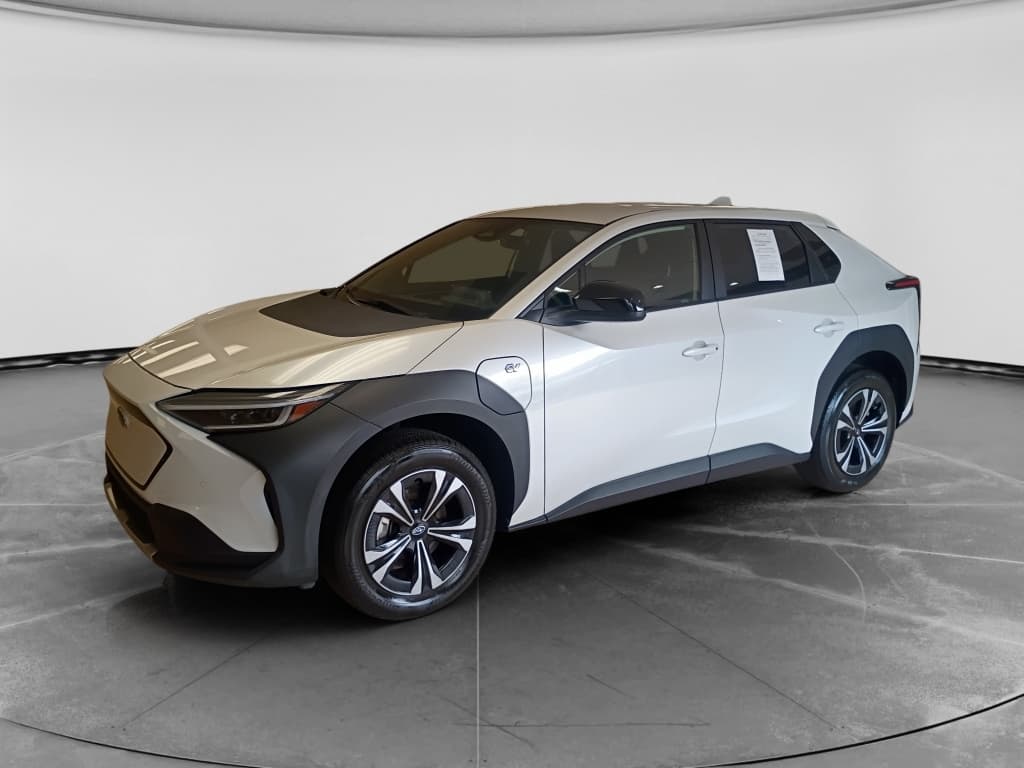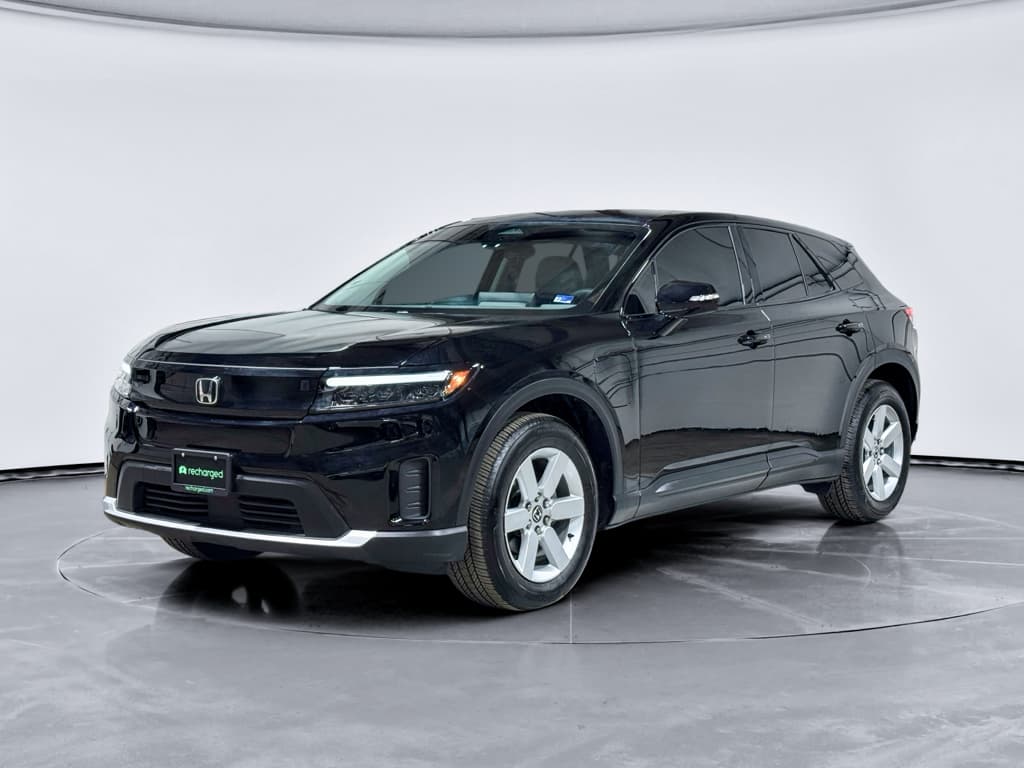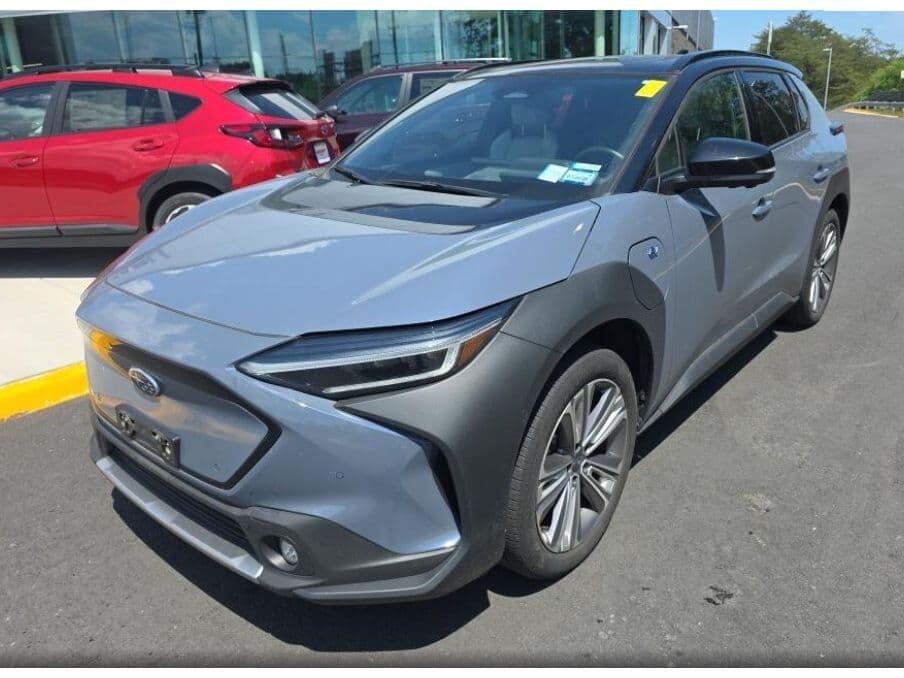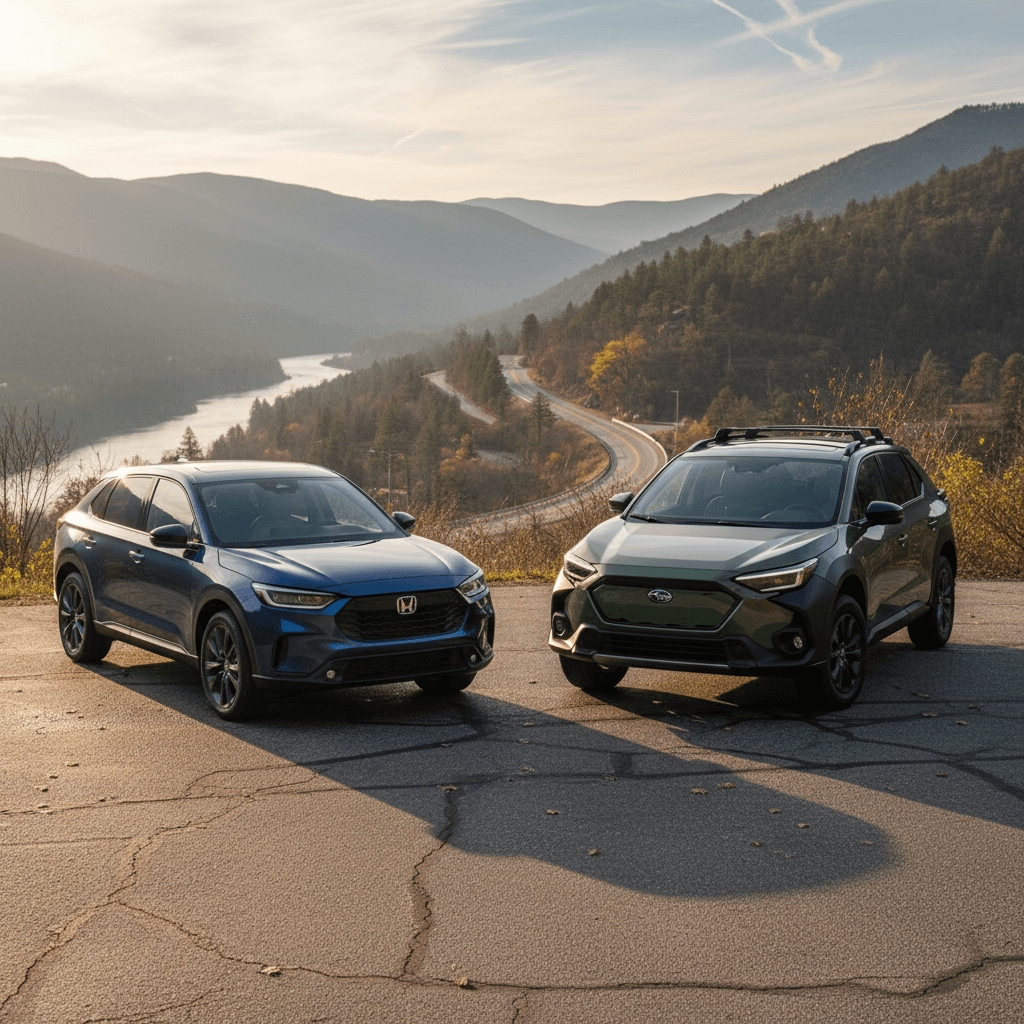
If you’re cross-shopping the Honda Prologue vs Subaru Solterra, you’re probably trying to balance range, all-weather confidence, and long-term ownership costs in a family-size electric SUV. Both are new-nameplate EVs from mainstream brands, but they’re not created equal, and the better choice depends heavily on how and where you drive.
Big picture
Overview: Honda Prologue vs Subaru Solterra
On paper, both vehicles occupy the same space: two-row, compact-to-midsize electric crossovers with roughly similar footprints. Underneath, though, they’re very different. The Prologue rides on GM’s Ultium platform and prioritizes range and refinement. The Solterra is Subaru’s first EV, co-developed with Toyota, and keeps the brand’s trademark standard all-wheel drive and X-MODE off-road system.
- Honda Prologue: Larger, longer range, available FWD or AWD, DC fast charging up to roughly 150 kW, Google built-in, more upscale interior feel in higher trims.
- Subaru Solterra: Smaller battery, standard dual-motor AWD, 8.3 inches of ground clearance and X-MODE off-road modes, DC fast charging up to 150 kW but with more real-world variability.
Think about your primary use case first
Key specs comparison at a glance
Honda Prologue vs Subaru Solterra: core specs
Approximate U.S. specs for current model years. Always confirm final numbers on a specific vehicle before you buy, especially in the used market, where trim and wheel size matter.
| Spec | Honda Prologue | Subaru Solterra |
|---|---|---|
| Drivetrain | FWD or AWD | Standard dual-motor AWD |
| Battery (approx usable) | ~85 kWh pack | ~72-73 kWh pack |
| Max EPA range | Up to ~296 miles (FWD) and ~281 miles (AWD) | Up to ~227 miles |
| Max DC fast charge power | ~150 kW | Up to 150 kW (on paper) |
| 0–60 mph (est.) | Mid-6s (AWD) | Low-7s |
| Ground clearance | Around 7+ inches (varies by market/wheels) | 8.3 inches |
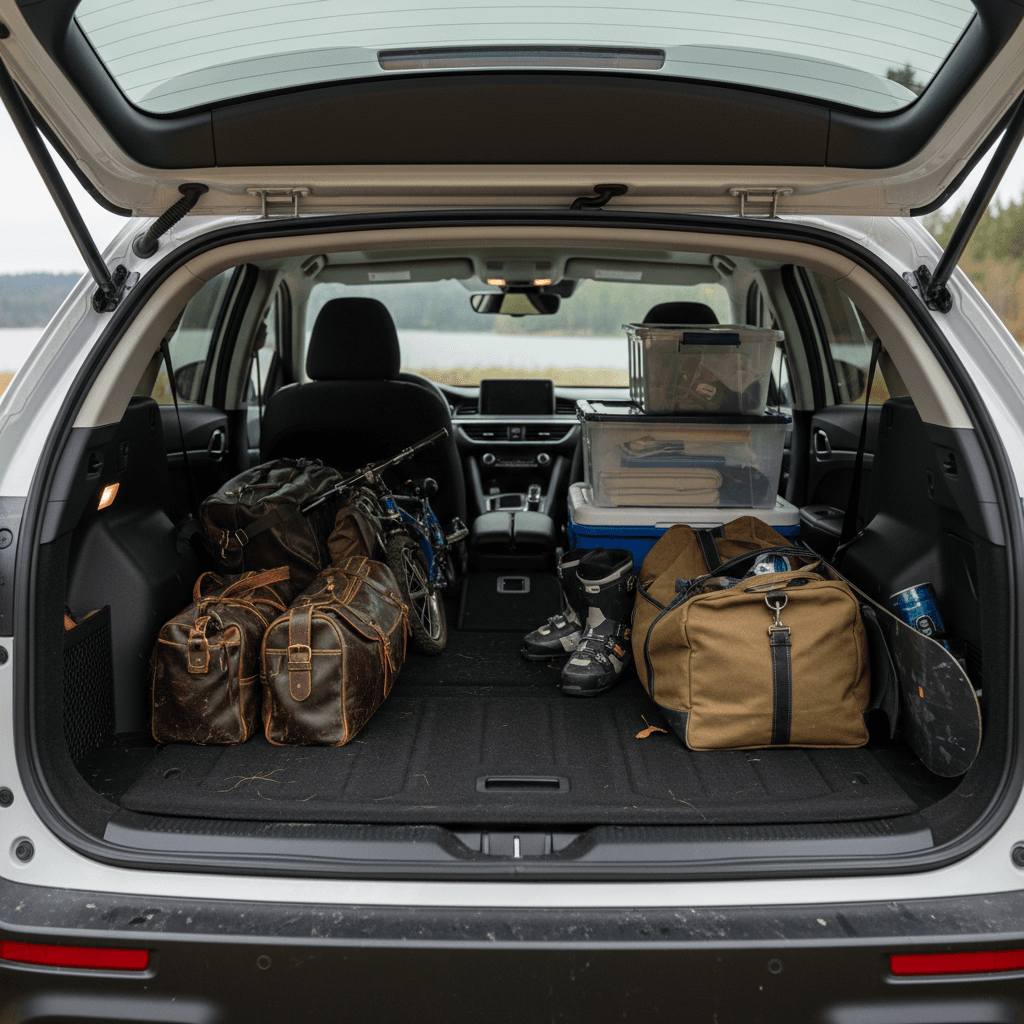
| Cargo space (rear seats up) | Mid-20s cu ft; over 60 cu ft seats folded (varies by trim) | About 29 cu ft; up to ~63.5 cu ft seats folded |
| Infotainment | 11.3-inch screen, Google built-in | 12.3-inch screen, Subaru/Toyota interface |
| Key positioning | Range-focused, tech-forward | Adventure and all-weather focused |
Specs focus on what affects everyday ownership: range, charging, space, and drivetrain.
Spec sheet vs real life
Range and efficiency: daily driving and road trips
If you care about how far you can go on a charge, especially on the highway, the Honda Prologue has a clear advantage over the Subaru Solterra.
Range comparison: Honda Prologue vs Subaru Solterra
Why the Prologue is the better road-trip partner for most drivers
Honda Prologue range
The Prologue’s ~85 kWh battery delivers:
- Up to around 296 miles of EPA range on FWD models.
- Roughly 273–281 miles on AWD trims, depending on wheels.
That’s competitive with other modern EV SUVs and gives you realistic 200+ mile highway legs even in less-than-ideal conditions.
Subaru Solterra range
The Solterra offers:
- EPA range up to ~227 miles (model-year and wheel-size dependent).
- Real-world highway range often closer to ~170–190 miles, especially in cold weather or at higher speeds.
It’s usable for commuting and regional trips, but road trippers will need more frequent stops and more planning.
Who wins on range?
Charging performance: how fast can they recharge?
Both the Honda Prologue and Subaru Solterra advertise DC fast charging up to roughly 150 kW, but they don’t behave the same in the real world. Charging curves, battery conditioning, and thermal management matter just as much as the peak number.
Honda Prologue charging
- Ultium-based pack supports ~150 kW peak DC fast charging.
- Honda quotes roughly 60–65 miles of range added in about 10 minutes under ideal conditions.
- Real-world owner reports commonly see strong speeds early in the session, especially when the pack is preconditioned and the charger is healthy.
- Onboard AC charging supports typical Level 2 home charging that can comfortably fully recharge overnight.
For most owners, the Prologue feels competitive with other modern EV SUVs at public fast chargers.
Subaru Solterra charging
- Officially supports up to 150 kW DC fast charging.
- In practice, many owners see much lower sustained speeds, especially on older infrastructure or in colder temps.
- Charging behavior has improved with software updates, but the car is still relatively sensitive to conditions.
- Level 2 charging at home is straightforward, but long road trips can take more patience and planning.
If your life involves frequent DC fast charging, the Solterra is workable but not class-leading.
Plan your charging setup early
Space, comfort, and in-car tech
Size and usability often matter more than 0–60 times. Both of these EVs seat five, but the Honda Prologue feels more like a midsize SUV inside, while the Subaru Solterra is closer to a compact footprint with a smartly packaged cargo area.
Interior and cargo highlights
Honda Prologue interior
- Feels upscale in Touring and Elite trims, with leather, Bose audio, and available head-up display.
- Google built-in provides native Google Maps (with EV routing), Google Assistant, and the Play Store alongside Apple CarPlay and Android Auto.
- Cabin is quiet and tuned more for comfort than sport, with a familiar Honda control layout.
Families who want a calm, tech-forward daily driver will likely prefer the Prologue’s cabin.
Subaru Solterra interior
- More utilitarian design with Subaru-style controls and a high-mounted digital gauge cluster.
- Lots of usable storage nooks and a cargo area shaped for outdoor gear.
- Subaru’s driver-assistance tech and infotainment feel similar to the brand’s ICE models, which is good news if you’re already a Subaru owner.
Adventurous households and existing Subaru fans will feel right at home here, even if the tech doesn’t feel quite as slick as Honda’s Google-based system.
Performance, AWD, and driving experience
Neither the Prologue nor the Solterra is trying to be a performance EV. They’re tuned for confident, predictable driving with enough power for merging and passing, not quarter-mile times. That said, there are meaningful differences.
How they drive: on-road character
Power, ride quality, and refinement compared
Honda Prologue
- FWD models use a single motor (~212 hp) and feel smooth and efficient for everyday use.
- AWD versions add a rear motor for total output near 288 hp, with brisk, confident acceleration.
- Ride quality leans comfortable; steering is light but accurate.
- Feels planted and composed on the highway, ideal for long drives.
Subaru Solterra
- Standard dual-motor AWD setup around 215 hp, tuned for traction more than outright speed.
- Acceleration is adequate rather than quick; feels similar to a traditional Subaru compact SUV.
- Suspension is on the firmer side but controlled, giving you confidence on broken pavement and gravel.
- Standard AWD traction is excellent in bad weather.
Everyday drivability
Off-road and winter capability
This is where the Subaru Solterra leans into the Subaru playbook. If you regularly deal with unplowed driveways, dirt roads, or trailhead parking lots, it has clear advantages.
Capability comparison: snow, dirt, and bad weather
Subaru Solterra: built-in adventure bias
With standard dual-motor AWD, 8.3 inches of ground clearance, and dual-function X-MODE with settings for snow, dirt, and deep snow/mud, the Solterra is one of the more trail-friendly small EV SUVs. It’s not a rock crawler, but it’s comfortable going where many EVs tap out.
Honda Prologue: competent, not hardcore
AWD Prologue models offer solid traction and a sophisticated stability control system, but ground clearance and approach/departure angles are closer to a typical street-focused crossover. Great for snow and rain, less ideal for heavily rutted trails.
Tires and wheels matter more than badges
A Solterra on all-season eco tires will struggle in deep snow compared with a Prologue on quality winter tires. If winter driving is a concern, budget for a proper tire package no matter which EV you choose.
Check underbody protection
If you plan regular dirt-road use, crawl under the vehicle (or have a shop do it) to examine underbody panels and battery protection. The Solterra’s extra clearance helps, but either EV can benefit from careful line choice off pavement.
Know your limits off-road
Pricing, trims, and overall value
New-vehicle pricing moves quickly, but as of 2024–2025 model years, the Honda Prologue and Subaru Solterra start in a broadly similar band. Differences show up once you factor in standard AWD, range, and feature content.
Approximate new-vehicle pricing bands
MSRPs shift with model year and incentives; always confirm current numbers. This table focuses on relative positioning, not exact transaction prices.
| Model/Trim idea | Drivetrain | Positioning (approx) |
|---|---|---|
| Honda Prologue EX | FWD standard, AWD optional | Value entry trim; strong standard tech and range |
| Honda Prologue Touring | FWD/AWD | Sweet spot mix of features and price for many shoppers |
| Honda Prologue Elite | AWD only | Top trim with bigger wheels, HUD, more luxury feel |
| Subaru Solterra Premium | AWD | Entry Solterra with adventure hardware at the lowest price |
| Subaru Solterra Limited | AWD | More comfort and tech features, still outdoorsy |
| Subaru Solterra Touring | AWD | Top trim with more amenities and appearance upgrades |
Subaru includes AWD standard; Honda charges extra for it on most trims but delivers more range.
Value snapshot
Used market outlook and long-term ownership
Because both the Honda Prologue and Subaru Solterra are relatively new, the used market is still maturing. That said, early data and broader brand behavior offer clues about how they’ll behave as pre-owned EVs.
What to know before buying used
Battery health, depreciation, and support
Battery and range over time
Both vehicles use modern liquid-cooled battery packs. Prologue’s larger pack gives it more headroom, losing a few percent of capacity hurts less when you start near 300 miles. Solterra’s smaller pack means degradation stings more on long trips.
Depreciation and incentives
EVs that launch with modest range often see steeper early depreciation. That could turn Solterra into a value play on the used market, especially if you mostly drive in-town and don’t need big range.
Service, recalls, and support
Both Honda and Subaru have large dealer networks, but EV expertise varies store to store. When you’re shopping used, ask for service history, recall completion, and whether the selling dealer has EV-certified technicians.
Let battery data guide your used-EV decision
Honda Prologue vs Subaru Solterra: Which is better for you?
There isn’t a single winner here, there’s a better fit for specific types of drivers. To decide whether the Honda Prologue or Subaru Solterra is better, you need to plug your own driving pattern into the equation.
Choose your EV SUV: quick recommendations
Choose the Honda Prologue if…
You regularly drive long distances or do multi-stop road trips and want <strong>stronger range and charging performance</strong>.
You value a quiet, refined highway ride and a more <strong>tech-forward interior</strong> with Google built-in.
You’re okay choosing between FWD and AWD rather than having AWD standard.
You want a vehicle that feels sized closer to a midsize SUV for family duty.
You plan to road-trip in regions with sparse fast charging and want more buffer in the battery.
Choose the Subaru Solterra if…
You live in a snowbelt area, drive unpaved or poorly maintained roads, and want <strong>standard AWD and 8.3 inches of ground clearance</strong>.
Your typical daily driving fits well within ~150–180 miles of real-world range, with home Level 2 charging available.
You’re a long-time Subaru owner who values the brand’s driving feel and adventure-focused packaging.
You’re shopping the used market and find a Solterra priced attractively compared with higher-range rivals.
You care more about getting to the trailhead than shaving 10–15 minutes off a long DC fast-charging stop.
How Recharged can help
Ready to find your next EV?
Browse VehiclesFAQ: Honda Prologue vs Subaru Solterra
Frequently asked questions
When you strip away the marketing, the Honda Prologue is the stronger all-around electric SUV for most shoppers: more range, calmer highway manners, and modern Google-based tech. The Subaru Solterra, meanwhile, carves out a niche as an adventure-leaning, standard-AWD EV with real ground clearance, even if it asks you to live with shorter range and fussier DC fast charging. The right answer to “Honda Prologue vs Subaru Solterra, which is better?” comes down to your roads, your weather, and how far from home you like to roam. If you’d rather not make that call alone, Recharged can help you compare real vehicles, not just spec sheets, and back your choice with verified battery health data and EV-specialist support from start to finish.