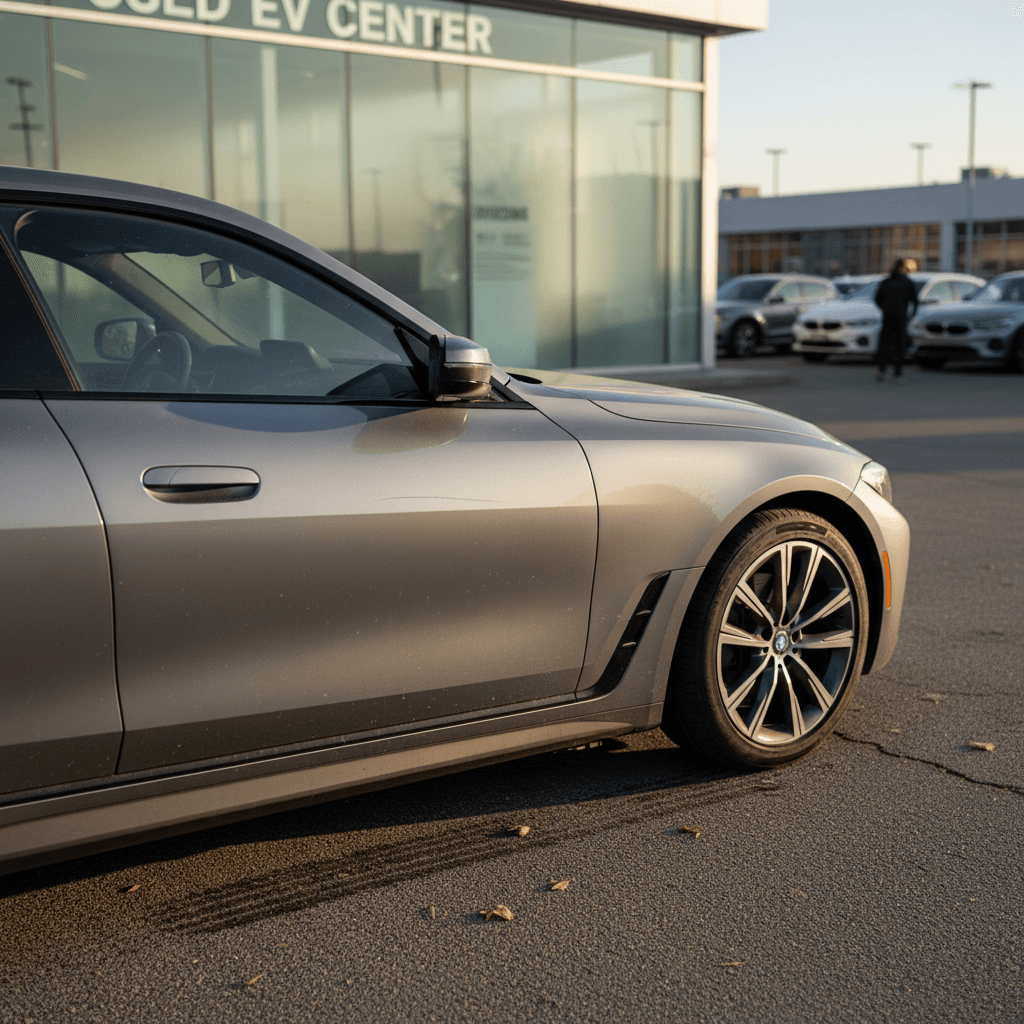
If you’re eyeing a BMW i4, you’ve probably heard that electric cars can depreciate hard in the first few years. So how fast does the BMW i4 actually depreciate, and what does that mean for you as a buyer or current owner? In this guide we’ll use current market data to break down 3‑, 5‑, 7‑, and 10‑year BMW i4 depreciation, why it happens, and how to turn that curve to your advantage, especially if you’re shopping used.
Key takeaway
BMW i4 depreciation at a glance
Typical BMW i4 depreciation curve (eDrive40/eDrive35)
The exact numbers vary by trim, incentives at the time of sale, and how the car was used. But across multiple data sources and BMW’s own lease residuals, the pattern is consistent: the BMW i4 takes its biggest hit in the first three years, then the curve flattens.

How fast does the BMW i4 depreciate?
To pin down how fast the BMW i4 depreciates, it helps to look at several lenses: market resale data, model‑year‑specific examples, and 3‑, 5‑, and 10‑year projections. Think of the numbers below as typical U.S. market behavior for well‑kept, average‑mileage cars, not worst‑case auction outcomes.
Illustrative BMW i4 depreciation over time
Approximate value retention for a BMW i4 eDrive40/eDrive35 in the U.S. market, assuming ~12,000 miles per year and no major damage. Percentages are rounded for clarity, based on a blend of public depreciation tools, lease residuals, and recent used‑market transactions.
| Ownership Age | Approx. Value vs. Original MSRP | Total Depreciation | What That Means on a $60,000 i4 |
|---|---|---|---|
| 1 year | ~90% | ~10% | Worth about $54,000 |
| 3 years | ~65–70% | ~30–35% | Worth about $39,000–$42,000 |
| 5 years | ~45–50% | ~50–55% | Worth about $27,000–$30,000 |
| 7 years | ~35–40% | ~60–65% | Worth about $21,000–$24,000 |
| 10 years | ~25–30% | ~70–75% | Worth about $15,000–$18,000 |
Use these figures as directional guidance, not a guaranteed resale value for any specific car.
Don’t treat this as a quote
If you zoom in on specific model years, the pattern holds. For example, one detailed analysis of the 2022 BMW i4 eDrive40 shows it retaining around 91% of MSRP after one year, 67% after two years, and roughly 61% by year three. That’s nearly a 40% haircut in three years for the first owner, but a much shallower slope for the second owner once the market has repriced the car.
- In dollar terms, a well‑optioned i4 that stickered near $60,000 new might be trading in the high $30,000s to low $40,000s after three years.
- By year five, many i4s are expected to sit in the high‑$20,000s, roughly half of original sticker.
- Beyond year five, the curve typically flattens as long as the battery remains healthy and major tech features still feel current.
BMW i4 depreciation versus Tesla and gas BMWs
BMW i4 vs. Tesla Model 3/Y
- Tesla’s volume and brand pull still support stronger 3–5 year resale in most markets.
- The Model 3 traditionally retains closer to ~60% of its value at year five in many data sets, while the i4 is more often projected in the mid‑40s to ~50% range.
- Frequent Tesla price cuts and inventory dumps have compressed used values across the segment, but BMW’s smaller EV footprint hasn’t insulated the i4.
BMW i4 vs. gas BMW 3 Series/4 Series
- Historically, a well‑specced 3 Series might lose ~45–50% of its value in five years, depending on miles and incentives, not far off where the i4 is trending.
- The difference is that the i4’s steepest drops are packed into the first 3–4 years, while gas cars sometimes have a more gradual curve.
- As EV adoption normalizes and charging infrastructure matures, the i4’s long‑term curve should begin to resemble other premium BMWs more closely.
So is the i4 a depreciation disaster?
Why does the BMW i4 depreciate so fast?
If you’ve looked at used BMW i4 listings and thought “how is that already down that much?”, you’re not imagining things. A few structural forces are pushing early‑life depreciation for most modern EVs, and the i4 sits right in the crosshairs.
Four big drivers of BMW i4 depreciation
These forces hit the first owner hardest, and create bargains for the second owner.
1. Incentives and subvented leases
Between federal tax credits (often baked into leases), state rebates, and aggressive captive financing, many i4s were effectively discounted from day one. When a $60,000 car was really a mid‑$40,000 experience after stacked incentives, the used market prices the car against that net, not the window sticker.
2. Fast‑moving tech
Battery chemistry, driver‑assist suites, infotainment, and charging speeds all evolve quickly. Even if the hardware is still solid, an older i4 competes with newer EVs touting better range, faster DC charging, and slicker software. That perception drag shows up as steeper early depreciation.
3. Charging anxiety & education
For buyers just crossing the EV chasm, charging concerns and lack of familiarity make a gasoline 3 Series feel like the “safer” used bet. That narrows the audience for second‑hand i4s and softens prices, especially in regions where public charging is thin.
4. Luxury‑segment math
High‑MSRP luxury cars have always been depreciation machines. The i4’s curve looks brutal partly because you’re starting from a relatively high MSRP. Once you normalize for price and segment, it’s behaving like a typical premium BMW, just with EV‑specific volatility stacked on top.
The trap for first owners
How trim, options, and mileage change i4 depreciation
“BMW i4” covers a family of cars, from the more efficiency‑oriented eDrive35 to the punchy M50. Not all of them depreciate at the same pace. The market tends to reward compelling specs and mainstream configurations, and punish oddball builds or thirsty trims.
What tends to hold value best?
Patterns we see repeatedly in used‑EV and BMW data.
Balanced trims (eDrive40)
The rear‑drive eDrive40 hits a sweet spot on price, performance, and range. It’s often easier to resell than the short‑range base spec or the very expensive M50, which narrows your future buyer pool.
Normal mileage
Used‑car shoppers still think in gas‑car terms. 12,000–15,000 miles per year feels normal. Cars that are far above that range, especially on early‑production EVs, can see an extra depreciation penalty.
Popular packages
Driver‑assist, premium audio, and key comfort options tend to support resale because they align with what second owners want. Very niche options or loud colors can make the right buyer love the car and scare everyone else away.
Spec for your future buyer, not just for you
Lease residuals: what they reveal about future value
One of the simplest ways to understand how fast a BMW i4 is expected to depreciate is to look at BMW’s own lease residuals, the percentage of MSRP the finance arm assumes the car will be worth at the end of a lease.
Typical BMW i4 lease residuals (recent U.S. programs)
These are representative residual values quoted on 36‑month leases for recent BMW i4 model years, mainly at 7,500–12,000 miles per year. Programs change monthly; treat this as directional.
| Trim & Term | Residual % of MSRP (approx.) | Implied Depreciation in 3 Years | Example on $60,000 MSRP |
|---|---|---|---|
| eDrive35 / 36 mo | ≈53–54% | ≈46–47% | Residual around $31,800–$32,400 |
| eDrive40 / 36 mo | ≈50–53% | ≈47–50% | Residual around $30,000–$31,800 |
| M50 / 36 mo | ≈50–52% | ≈48–50% | Residual around $30,000–$31,200 |
Residuals are set to protect BMW Financial first. They’re a strong signal of expected depreciation, but not a promise of resale value in your specific market.
In plain English, BMW is often assuming that roughly half the i4’s MSRP is gone by the end of a typical 36‑month lease. Sometimes the real‑world used‑car market ends up slightly above that (good for lessors, neutral for lessees); other times the market underperforms and BMW eats the difference on turn‑ins.
When lease residuals are higher than market prices
Strategies to beat BMW i4 depreciation
You can’t change macro forces like tax policy or the pace of battery innovation, but you can absolutely decide where you want to sit on the i4’s depreciation curve. The core principle is simple: avoid paying for miles and years someone else already absorbed, and protect the battery and body from avoidable dings.
Smart ways to minimize BMW i4 depreciation pain
1. Let the first owner take the big hit
From a pure economics standpoint, buying a BMW i4 when it’s 2–4 years old is often the sweet spot. You capture a large chunk of that 30–40% early depreciation, while still getting modern range, tech, and warranty coverage.
2. Prioritize battery health documentation
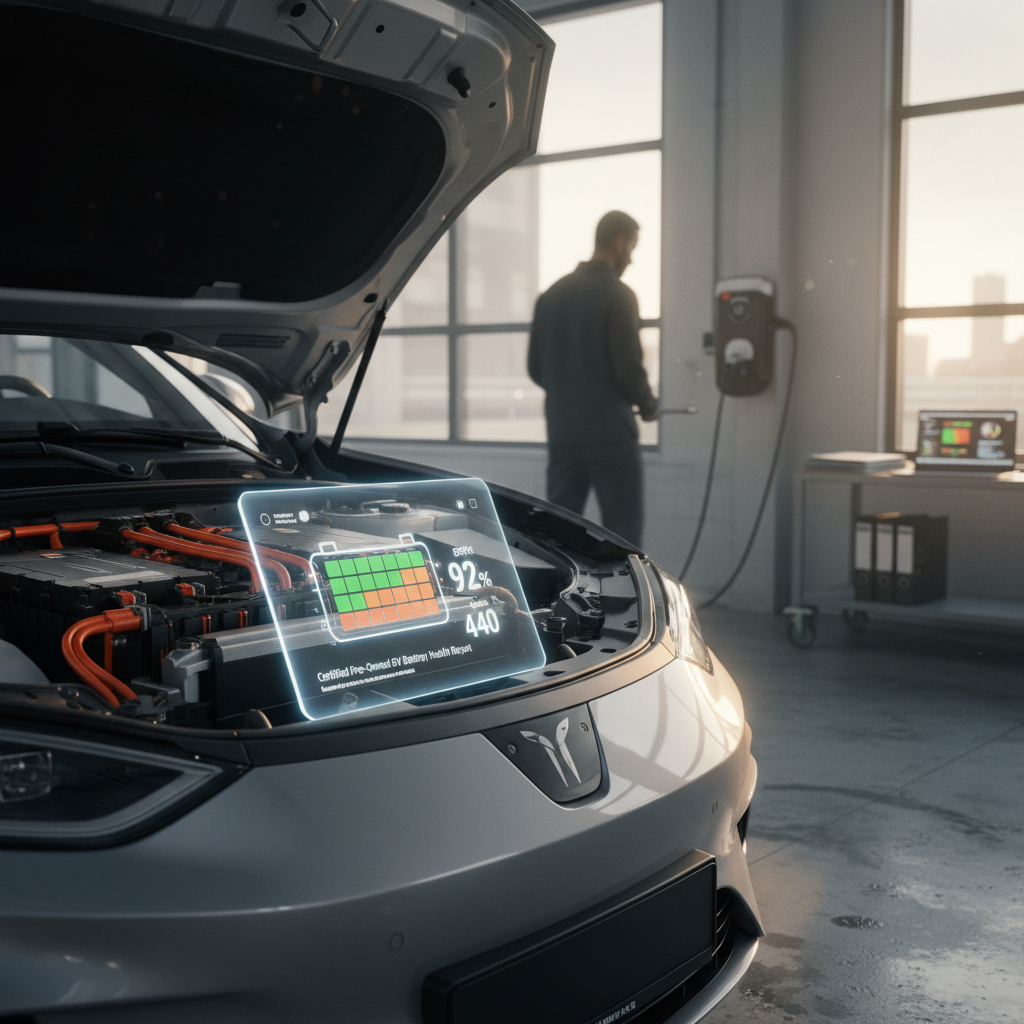
Battery uncertainty is one of the biggest fear factors for used‑EV shoppers. Look for cars with verifiable battery diagnostics, like a <strong>Recharged Score Report</strong>, so you aren’t guessing about pack health.
3. Avoid overpaying for rare specs
Unless you’re planning to keep the car long term, be wary of paying a big premium for unusual paint, heavy option loads, or ultra‑performance setups. The market won’t always reward those extras dollar‑for‑dollar on resale.
4. Keep mileage reasonable and usage predictable
High‑mileage EVs are still a tougher sell, even though electric drivetrains handle miles well. If you’re putting on huge annual mileage, assume your depreciation curve will be steeper and price that into your decision.
5. Maintain cosmetic condition
Curb rash, interior wear, and collision repairs all hit resale harder on a premium EV. Fix small cosmetic issues and keep detailed service records so your i4 stands out positively when it’s time to sell or trade.
6. Think hard about lease vs. buy
If your time horizon is under four years and you value payment predictability more than long‑term cost, leasing and walking away from residual risk can make sense. If you want to benefit from the flatter years 5–10 of the curve, buying a used i4 outright is usually better.
Where Recharged fits in
Ready to find your next EV?
Browse VehiclesBuying a used BMW i4 with confidence
For used‑EV shoppers, the i4’s fast early depreciation is a feature, not a bug. It means you can step into a genuinely premium EV, strong performance, BMW build quality, usable range, for roughly half of its original MSRP within five years, as long as you’re selective.
What to scrutinize on a used i4
- Battery health – Look for diagnostic reports, not just a dashboard range estimate.
- DC fast‑charging history – Occasional fast charging is normal; heavy, daily DC use can age the pack faster.
- Software and recalls – Confirm the car is up to date on BMW campaigns and software versions.
- Charging behavior – Test both AC (home‑style) and DC (fast‑charging) sessions if possible.
How Recharged helps
- Recharged Score battery diagnostics – Independent battery health data, not just seller claims.
- Fair‑market pricing – Vehicles priced against real depreciation data, not fantasy book values.
- EV‑specialist guidance – Talk to people who live and breathe EVs, not just options packages.
- Digital buying + delivery – Browse BMW i4 listings online, arrange financing or trade‑in, and get the car delivered nationwide.
Depreciation is the “silent line item” in any BMW i4 ownership story. The car loses value fastest in the first three years, then settles into a slower, more predictable decline. If you buy new and flip quickly, you’re effectively subsidizing that curve. If you buy thoughtfully on the used market, ideally with clear battery health data and realistic pricing, you can capture the best part of the i4 experience while letting someone else pay for the steepest drop.