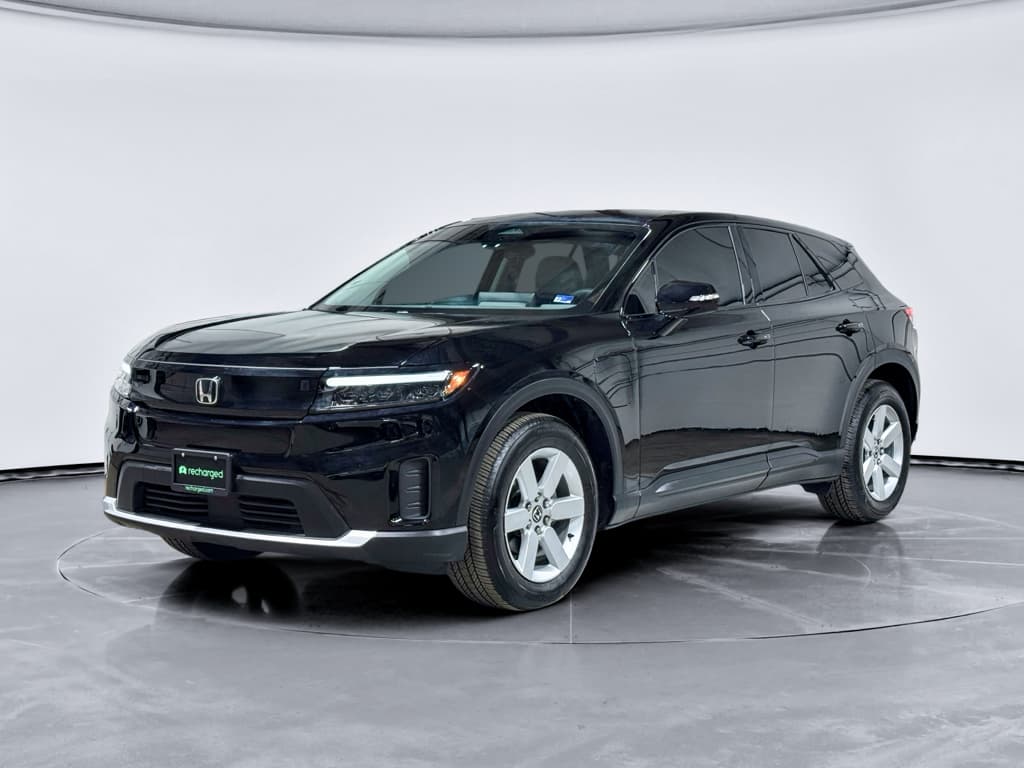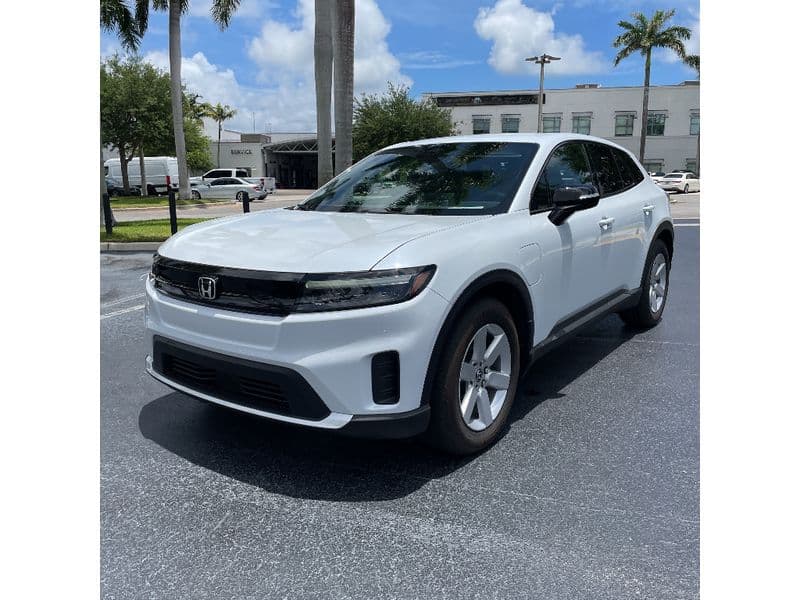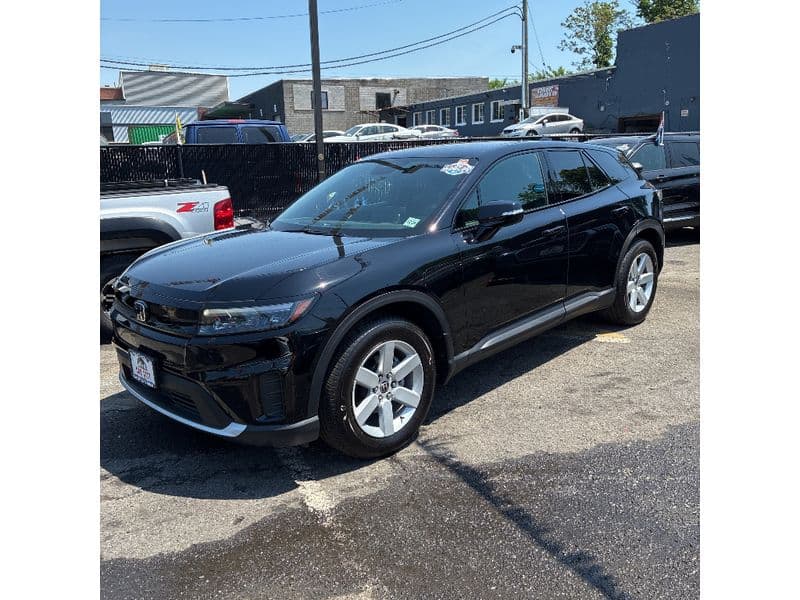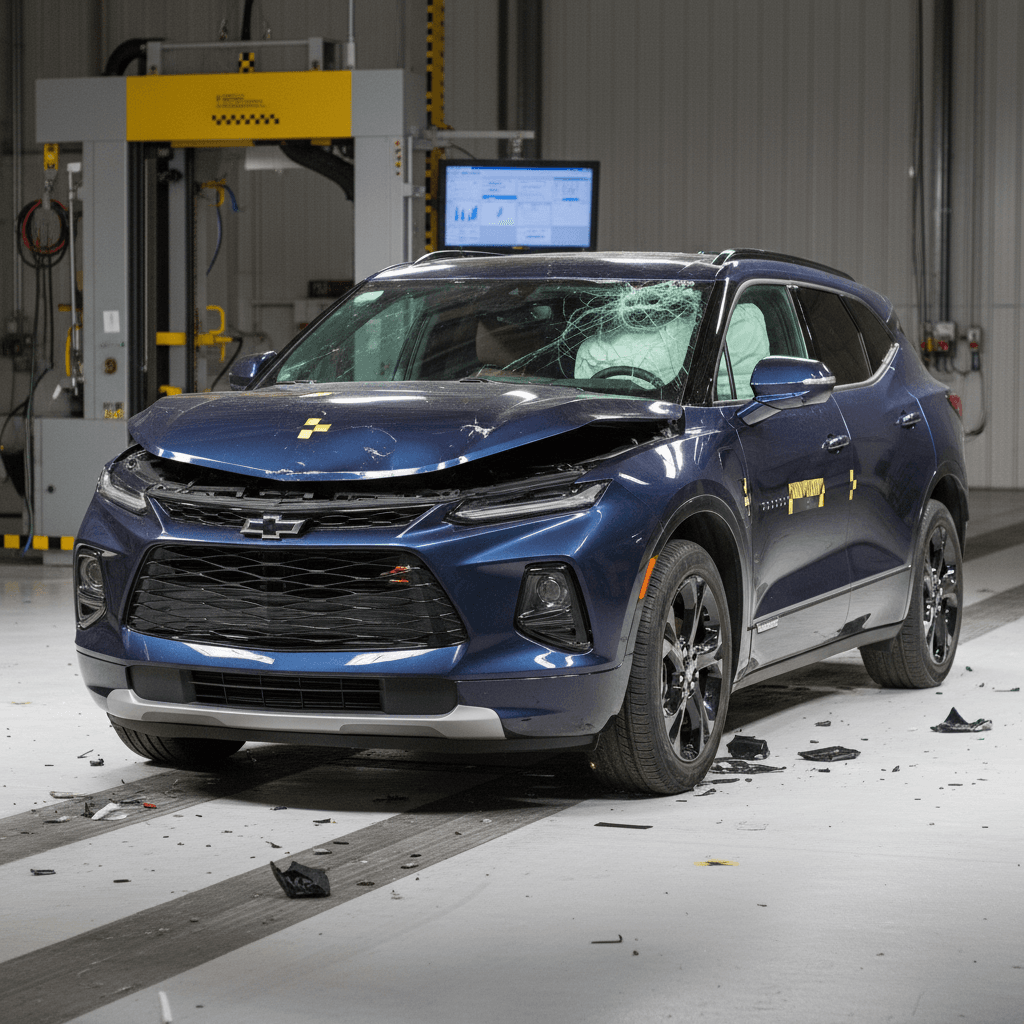
If you’re looking at the Honda Prologue, you’re probably wondering not just how far it will go on a charge, but how well it will protect your family in a crash. The phrase you’ve likely typed into a search bar, “Honda Prologue safety rating crash test”, boils down to one question: is this new electric SUV as safe as it looks?
Quick safety snapshot
Honda Prologue safety overview
The Honda Prologue is Honda’s first long-range, fully electric SUV for North America, introduced for the 2024 model year. Structurally, it rides on GM’s Ultium EV platform, but it’s tuned and equipped with Honda’s own safety philosophy and Honda Sensing driver-assistance tech. That combination gives you a very modern safety package: a rigid battery skateboard floor, a robust crash structure, and the kind of automated braking and lane-keeping that are quickly becoming table stakes in family SUVs.
Because the Prologue is still relatively new, crash-test data has been rolling out in stages. The Insurance Institute for Highway Safety (IIHS) has now evaluated the Prologue and applies its results to 2024–2026 model years. NHTSA’s 5-Star ratings, on the other hand, are still pending as of February 2026, even though the Prologue is on NHTSA’s testing roadmap. Until those arrive, you’ll want to lean on IIHS data and the Prologue’s long list of standard safety equipment.
Honda Prologue crash-test & safety highlights
Official crash test ratings: IIHS and NHTSA
IIHS ratings for the Honda Prologue (2024–2026)
The IIHS has tested the 2024 Honda Prologue EX 4-door all-wheel-drive model and applies those results to the 2024–2026 Prologue. Here’s how it performs in the major categories you’ll see on the IIHS report card:
Honda Prologue IIHS crashworthiness & crash-avoidance ratings
Summary of IIHS ratings for the 2024–2026 Honda Prologue midsize SUV.
| Category | Subtest / detail | Rating |
|---|---|---|
| Crashworthiness | Moderate overlap front (updated) | G (Good) |
| Crashworthiness | Side impact (updated) | G (Good) |
| Crashworthiness | Small overlap front (overall) | A (Acceptable) |
| Crashworthiness | Side structure & safety cage | G (Good) |
| Crashworthiness | Rear passenger injury measures | G (Good) |
| Crash avoidance | Front crash prevention: vehicle-to-vehicle 2.0 | G (Good) |
| Crash avoidance | Front crash prevention: pedestrian | A (Acceptable) |
| Crash avoidance | Headlights (all trims) | A (Acceptable) overall |
| Occupant protection | Seat-belt reminders | G (Good) |
| Child safety | LATCH ease of use | G (Good) |
IIHS uses G (Good), A (Acceptable), M (Marginal), and P (Poor).
Translating that alphabet soup into plain English: in the big, violent crashes that keep parents up at night, frontal, side, and updated moderate-overlap tests, the Prologue’s structure performs very well, and injury measures for both front and rear occupants are comfortably in the green. The one notable ding is that small-overlap front protection is “Acceptable” rather than “Good”. That’s still a strong score, but it’s a notch below the leaders that nail every subtest.
What about a Top Safety Pick?
NHTSA 5-Star Safety Ratings status
NHTSA’s familiar 5-Star Safety Ratings, the ones that show up on window stickers, cover overall protection in front, side, and rollover crashes. The agency announced its list of model-year 2025 vehicles scheduled for testing, including several new EVs. The Prologue sits inside that wave of new electric SUVs, but as of February 26, 2026, NHTSA has not yet published a star rating specifically for the Honda Prologue on its public database.
Don’t confuse platform with rating
How the Prologue compares to other electric SUVs
Versus other midsize EV SUVs
On safety, the Honda Prologue lands right where you’d hope: near the front of the pack. A mix of Good and Acceptable IIHS ratings, standard advanced driver-assistance features, and decent headlights put it in the same conversation as EV stalwarts like the Hyundai Ioniq 5, Kia EV6, and Ford Mustang Mach‑E.
Some rivals earn slightly more consistent top scores in every small-overlap and pedestrian test, but the gap isn’t dramatic. For most shoppers, the Prologue’s ratings are more than strong enough to make it a short‑list contender based on safety alone.
Versus gas-powered midsize SUVs
If you’re cross-shopping the Prologue against gasoline midsize SUVs, think Honda Passport, Hyundai Santa Fe, or Toyota Highlander, the Prologue feels thoroughly modern. Electric SUVs typically benefit from low centers of gravity and stout battery enclosures, which can help in certain crashes.
The Prologue’s active safety suite also meets or beats what you’ll find in many gas models, with automatic emergency braking, lane centering, blind‑spot monitoring, and rear cross‑traffic braking standard from day one.
The short answer
Standard safety features on the Honda Prologue
One advantage Honda baked into the Prologue is a deep roster of standard safety and driver-assistance tech on every trim. You don’t have to play the options-game just to get the basics. Here’s what that looks like in practice.
Core safety and driver-assistance tech on every Prologue
Highlights from Honda’s Prologue feature and safety guides.
Automatic emergency braking
The Prologue includes an Enhanced Automatic Emergency Braking system that can detect vehicles, pedestrians, and cyclists ahead and apply the brakes if you don’t react in time.
Lane keeping & centering
With Lane Keep Assist and lane departure warning, the Prologue can gently steer to help keep you in your lane on the highway and alert you if you drift without signaling.
Blind-zone & rear alerts
Standard blind-spot monitoring, lane-change alerts, and rear cross-traffic alert with rear automatic braking help watch the spots you can’t see, especially in parking lots.
Surround & rear vision
Every Prologue gets a rearview camera, and upper trims add a surround-view system to make tight maneuvers much easier and safer.
Child-seat friendly cabin
LATCH anchor points in the second-row outboard seats, plus a top tether on all three positions, earn a Good ease-of-use rating from IIHS for car-seat installation.
Airbag coverage
Front, side, and curtain airbags, plus driver and front-passenger knee airbags, create an airbag envelope for all outboard seating positions.
Honda Sensing, tuned for an EV
Crash tests explained: what the ratings really mean
Crash-test jargon can feel a little like alphabet soup. To make sense of the Honda Prologue’s safety ratings, it helps to understand what each test is trying to simulate, and where this SUV shines.
- Moderate overlap front (updated): This test drives most of the front of the vehicle into a deformable barrier at 40 mph, mimicking a common head‑on or front‑corner collision. The Prologue earns a top “Good” rating here, which means the cabin holds its shape and sensor dummies show low injury risk.
- Small overlap front: Only part of the front corner hits the barrier, like clipping a tree or pole with one side. It’s a tougher test for the structure. The Prologue is rated “Acceptable,” which is still solid, but not quite as bulletproof as the very best performers.
- Side impact (updated): A heavier, taller barrier slams into the driver’s side, standing in for a large SUV or pickup. The Prologue earns “Good” scores overall and “Good” readings for both driver and rear passenger injuries.
- Front crash prevention: IIHS uses stationary and moving targets, cars, pedestrians, and even a motorcycle, to see whether the Prologue’s automatic braking avoids a crash or dramatically cuts speed. The Prologue does very well in vehicle-to-vehicle scenarios and is strong but not perfect in pedestrian tests.
- Headlights: Good headlights help you avoid the crash in the first place. The Prologue’s A (Acceptable) rating means its headlight performance is decent across trims, but there’s room for improvement in beam reach and glare control.
How to use ratings when you shop
Real-world safety: consumer complaints and EV-specific factors
Laboratory tests are one piece of the safety puzzle. Real‑world ownership fills in the rest. Because the Honda Prologue is new, its long‑term record is still taking shape, but we can already see some patterns in early owner feedback and EV‑specific safety considerations.
Early owner complaints
Early complaint data filed with NHTSA for the 2024 Prologue shows a cluster of issues around noises, warning lights, and some powertrain concerns. The majority are nuisance or drivability issues, not directly crash-safety problems. That said, persistent warning lights or EV power-delivery quirks can be distracting, and distraction is a safety issue in its own right.
Treat warning lights as safety signals
EV-specific safety strengths
Why electric architecture can help in a crash
Design traits baked into the Honda Prologue’s EV platform.
Low center of gravity
The Prologue’s heavy battery pack sits low between the axles. That helps reduce rollover risk and makes the SUV feel planted in emergency maneuvers.
Rigid battery enclosure
Protecting the battery from intrusion is a design priority. The side and floor structures are reinforced around the pack, which can also stiffen the safety cage around occupants.
Smooth torque delivery
Instant torque is fun, but the flip side is that an EV can get you into trouble quickly if you’re ham‑footed. Honda’s traction and stability control systems are tuned to help keep that punch under control.
Thermal management & fire safety
High-voltage components are sealed and monitored. In a severe crash, automatic shut‑off systems are designed to isolate the battery and reduce fire risk.
Is the Honda Prologue a safe used EV buy?
If you’re looking at the Prologue on the used market, where Recharged specializes, safety becomes a mix of original engineering and how that particular vehicle has been treated. The good news is that the Prologue’s underlying crash performance and standard safety tech don’t evaporate just because the odometer creeps up. A 2024 Prologue with 35,000 miles still has the same basic crash structure and airbag coverage as one on the showroom floor.
Where used EVs differ is in what you can’t see in a quick walk‑around: battery health, software history, and prior damage repairs. That’s why Recharged includes a Recharged Score Report with every vehicle, giving you verified battery diagnostics, an inspection of key safety systems, and fair‑market pricing. If a Prologue has been in a significant crash, you’ll want detailed documentation of the repairs and a careful look at how advanced safety systems have been recalibrated.
How Recharged helps
Ready to find your next EV?
Browse VehiclesSafety checklist when shopping for a used Prologue
Used Honda Prologue safety checklist
1. Review crash-test ratings first
Before you drive anything, get familiar with the IIHS scores for the Prologue so you know its baseline strengths and where compromises, like the Acceptable small-overlap rating, sit.
2. Pull a full history report
Look for any prior accidents, especially those involving front or side impacts. Multiple airbag deployments or structural repairs warrant a professional inspection before buying.
3. Inspect for panel gaps and paint mismatch
Uneven gaps, overspray, or mismatched paint can indicate past collision repairs. That doesn’t automatically make a Prologue unsafe, but it’s a flag to ask more questions.
4. Test every safety system
On your test drive, confirm that lane-keeping, adaptive cruise, blind-spot monitoring, parking sensors, and automatic braking warnings behave consistently and without random fault messages.
5. Check tires, brakes, and alignment
A high-torque EV is tough on tires and suspension. Uneven tire wear or wandering steering can undermine all that fancy crash engineering, especially in emergency maneuvers.
6. Verify software and recall status
Ask the seller or dealer to confirm that all software updates and safety recalls have been completed. For a used Prologue, that’s as important as a fresh oil change on an old-school SUV.
Honda Prologue safety FAQ
Frequently asked questions about Honda Prologue safety
Bottom line on Honda Prologue safety
Taken as a whole, the Honda Prologue is a well-engineered, thoroughly modern electric SUV with safety credentials to match its styling. IIHS crash tests show a strong structure and solid occupant protection, the standard safety-tech list is long, and EV design fundamentals like a low center of gravity work quietly in your favor every time you drive.
If you’re considering a Prologue, especially on the used market, arm yourself with both the lab data and vehicle‑specific information: crash-test ratings, history reports, software and recall status, and a clear picture of battery and system health. When you shop through Recharged, much of that homework is baked into the process via the Recharged Score Report and EV-specialist support, so you can focus on finding the Prologue that best fits your budget and your family’s needs without second‑guessing what’s hiding under the skin.