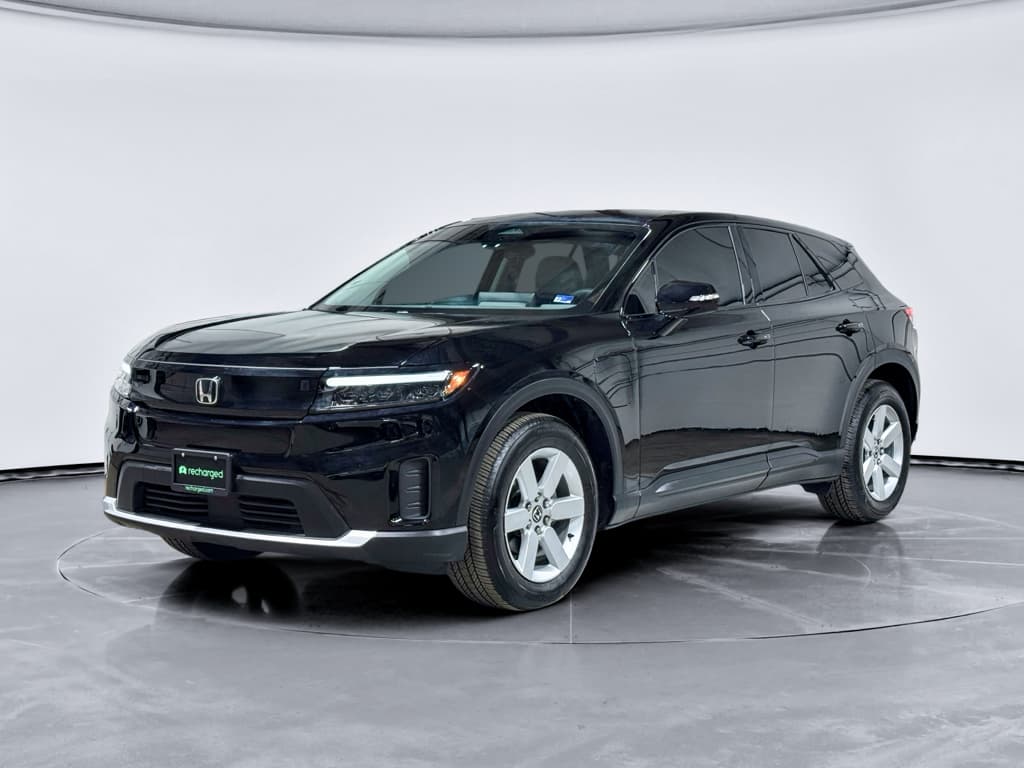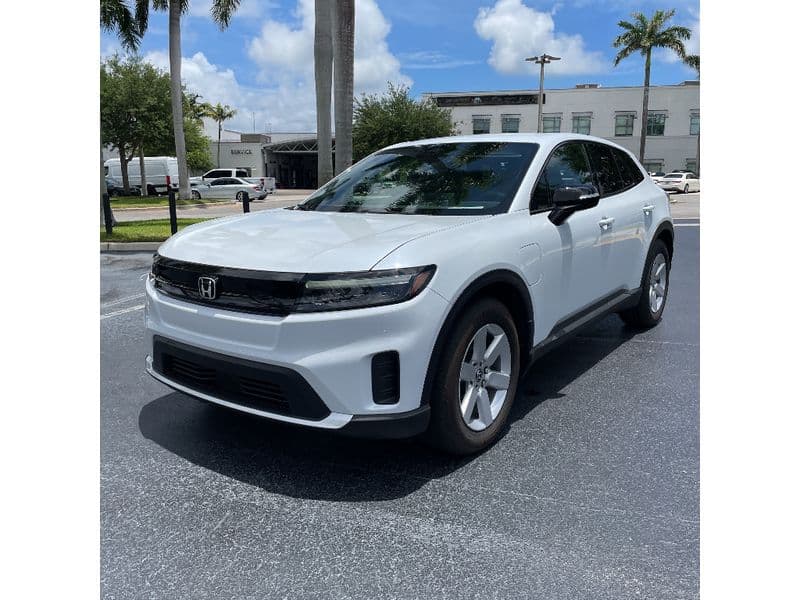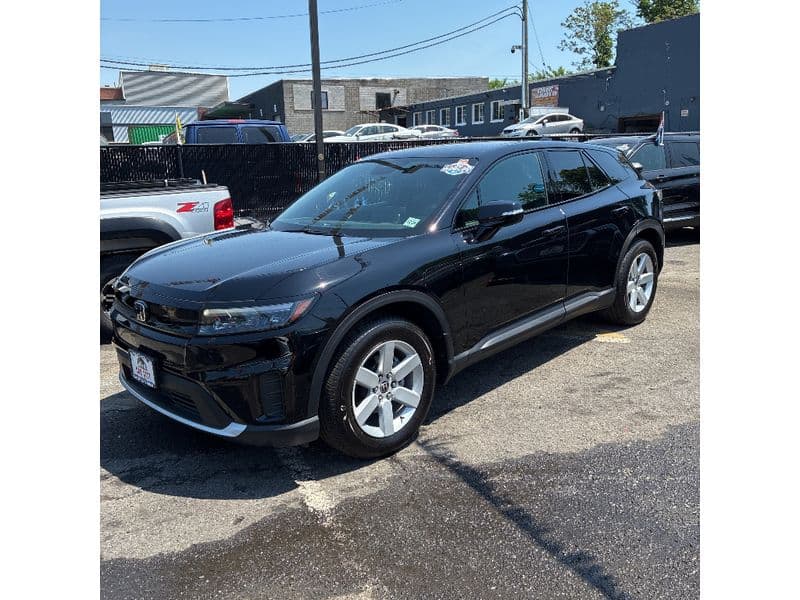
If you’ve been watching the early EV market, the Honda Prologue depreciation rate in 2026 probably looks a little shocking. This is Honda’s first mass‑market electric SUV, yet barely two years in, you can already find low‑mile Prologues for tens of thousands less than their original sticker price. Let’s unpack what’s happening, how steep the drop really is, and what it means if you’re thinking about buying or selling a Prologue in 2026.
Quick context
Honda Prologue depreciation rate in 2026: the short version
Honda Prologue value snapshot in 2026 (US market)
Put simply, early numbers suggest the Honda Prologue is depreciating faster than a typical gas Honda SUV, but roughly in line with other new‑generation EVs launched into a choppy market. A 2024 Prologue that stickered around $52,000 has already been valued in the low‑$20,000s by 2026, a loss on the order of 55–60% from MSRP in about two years of calendar time. Current five‑year cost‑to‑own forecasts for the 2025 model point to around $32,000 of total depreciation over five years, or roughly $6,400 per year on average, with the steepest hit in the first 24–36 months.
Big caveat on the numbers
What we already know from 2024–2025 pricing
To understand the 2026 depreciation rate, you have to rewind to how the Prologue launched. For 2024, Honda priced the EX trim in the high‑$40Ks and the Elite near $60,000 with destination. Within the first couple of years, market data and guide books were already showing big drops:
- A typical 2024 Prologue with an original MSRP of about $51,850 has been valued in the low‑$20,000s by early 2026, a loss of roughly $29,000 and around 55–57% from the original price over roughly two model years.
- Trim‑specific guides for the EX, Touring, and Elite show used “Fair Purchase” prices in the mid‑$20Ks for Touring and under $30K for Elite not long after launch, almost half of original MSRP.
- For the 2025 Prologue, major cost‑to‑own calculators estimate total five‑year depreciation at roughly $32,000 on a mid‑$50K vehicle, with the sharpest drop in the first two to three years.
At the same time, Honda has already responded to market pressure by cutting new‑car prices. By 2025–2026, some trims had MSRP reductions on the order of several thousand dollars compared with original launch pricing. That’s great if you’re buying new now, but it amplifies early depreciation for people who paid those higher 2024 stickers.
Why price cuts matter for depreciation
How fast is the Honda Prologue depreciating in 2026?
Illustrative Honda Prologue value curve (launch‑era pricing)
These ballpark figures show how a typical early Prologue might depreciate from its 2024–2025 MSRP, assuming average miles and condition. Your specific vehicle may differ.
| Model year & timing | Odometer (approx.) | Typical original MSRP* | Estimated market value in 2026 | Approx. depreciation |
|---|---|---|---|---|
| 2024 Prologue EX/Touring in early 2026 | 20,000–30,000 miles | $50,000–$52,000 | $22,000–$26,000 | ≈50–60% in ~2 years |
| 2024 Prologue Elite in early 2026 | 20,000–30,000 miles | $58,000–$60,000 | $26,000–$30,000 | ≈50–55% in ~2 years |
| 2025 Prologue mid‑2026 (1 year old) | 10,000–15,000 miles | $47,000–$55,000 | $34,000–$40,000 | ≈25–35% in ~1 year |
Numbers rounded for clarity; based on guide data plus broader EV trends, not a guarantee of future value.
For 2026 specifically, you can think of the Prologue’s trajectory in two phases:
- Launch shock (2024–2025 model years): Early 2024 buyers who paid the highest MSRPs and saw subsequent price cuts plus a cooling EV market absorbed the biggest percentage losses, often north of 50% on paper within two calendar years.
- Stabilization (late 2025 into 2026): As transaction prices on new Prologues come down and the used market finds a floor, the year‑over‑year depreciation rate is likely to moderate into something closer to 12–15% per year for well‑kept examples, rather than another free‑fall.
Where the averages hide opportunity
Why the Prologue is dropping faster than a typical Honda
1. It launched into a soft EV market
Electric vehicle sales growth in the U.S. slowed in 2024–2025 just as a wave of new models, including the Prologue, hit dealer lots. Incentives piled up, lease specials exploded, and used values slid as buyers realized they often didn’t need to pay anywhere near MSRP.
That macro shift would have hurt any new EV. For the Prologue, which arrived at premium pricing without a decades‑long EV reputation, it was especially harsh.
2. Big discounts and price corrections
Honda and its dealers responded the only way they could: lower prices and aggressive lease programs. While that helped move metal, it also reset shoppers’ expectations of what a Prologue should cost.
Once enough late‑model used examples started appearing at deep discounts, earlier retail customers suddenly found themselves sitting in a vehicle worth far less than the number on their window sticker.
Two more ingredients pushed the 2026 Honda Prologue depreciation rate higher than you’d expect from, say, a CR‑V or Pilot:
- Platform quirks and brand trust. The Prologue rides on GM’s Ultium architecture, and shoppers who follow EV news know GM has had its share of early‑EV software and charging‑network headaches. Even if Honda’s tuning is solid, that association can make used‑buyers cautious.
- Changing charging standards and infrastructure. With the North American Charging Standard (NACS) rolling out and many automakers shifting away from CCS‑only setups, shoppers sometimes worry that today’s charging solution might feel outdated in a few years. Even if adapters and software updates mitigate that, perceived risk affects resale.
Perception matters as much as reality
Honda Prologue depreciation vs other EVs
Zoom out, and the Prologue isn’t an outlier so much as a poster child for what’s happening to many new‑generation EVs. Recent national studies suggest that EVs are losing close to 60% of their value over five years on average, compared with around 45% for all vehicles. Larger electric SUVs, especially those with high MSRPs and rapidly improving competition, tend to be on the steeper end of that curve.
Where the Honda Prologue likely sits on the 5‑year depreciation ladder
Generalized rankings based on current EV and SUV trends, not exact percentages.
Gas compact SUVs (CR‑V, RAV4)
Historically some of the best resale vehicles on the road. It’s not unusual to see well‑equipped gas Hondas and Toyotas retain 55–60% of their value after five years.
Mainstream EV crossovers (Ioniq 5, EV6)
Most currently land in the high‑40s to low‑50s retained value range after five years, depending on incentives and regional demand.
Newer large EV SUVs (Prologue, Blazer EV, Lyriq)
Early signs suggest these will fall roughly in line with the broader EV average, losing around 55–60% of MSRP in five years, though great lease deals and tax credits can cushion that hit for original owners.
In that landscape, the Prologue’s projected five‑year outcomes actually look pretty typical for a brand‑new EV nameplate. Where it hurts is comparing it to Honda’s own gas lineup, which has built a reputation for exceptional resale. A Pilot or CR‑V buyer is used to seeing strong equity after three years; an early Prologue buyer may instead be staring at break‑even or negative equity if they try to exit early.
Trim & configuration: which Prologues hold value better?
Trims and options matter more on a niche EV than on a mass‑market gas SUV. With the Prologue, depreciation will likely sort out along a few predictable lines:
- EX vs Touring vs Elite. The EX is the price leader, the Touring is the sweet‑spot comfort trim, and the Elite piles on equipment and AWD. On the used market, fully loaded Elites may still command a premium, but percentage‑wise they often depreciate more, because their MSRPs started so high.
- FWD vs AWD. In snow states, AWD will help resale. In warm climates, front‑drive Prologues that get more range and were cheaper to begin with may represent the best value per mile for used buyers.
- Range and wheel choices. Bigger wheels look great but typically shave a few miles off range and cost more to replace. Long‑term, Prologues with the more efficient wheel/tire combo may prove more attractive to pragmatic used‑EV shoppers.
The likely resale sweet spot
Mileage, battery health & warranty: how condition impacts value
For any EV, including the Prologue, depreciation stops being a purely age‑based equation pretty fast. Condition, mileage, and battery health can swing value by thousands of dollars between two otherwise identical SUVs.
Key condition factors that move Honda Prologue value
1. Verified battery health
A Prologue with documented strong battery health will always be easier to sell and worth more than one with an unknown or questionable pack. Independent diagnostics, like the battery‑health data in a Recharged Score report, give buyers confidence and support higher pricing.
2. Odometer & driving pattern
20,000 highway miles is not the same as 20,000 stop‑and‑go miles with frequent DC fast‑charging. Shopping in 2026, look for Prologues with consistent service records and moderate annual mileage (10,000–12,000 a year).
3. Warranty status
Honda’s EV powertrain and battery warranties are long enough that most 2024–2025 Prologues sold in 2026 will still have substantial coverage left. A car that’s close to aging out of its battery warranty will typically be worth less than one with years of coverage remaining.
4. Accident and repair history
EVs with structural damage, airbag deployment, or unclear high‑voltage repair history are harder to resell and tend to depreciate faster. A clean history report and documented repairs from EV‑certified shops make a real difference.
5. Charging and software behavior
Because Prologue shares hardware with other Ultium‑based vehicles, shoppers may ask about charging reliability and software updates. A car that’s had all available updates and charges reliably at home and on road trips will be easier to sell for stronger money.
How Recharged helps here
Projected 5‑year resale values for the Honda Prologue
Let’s translate all this into something more concrete. Based on 2025 cost‑to‑own forecasts and broader EV depreciation studies, a reasonable 5‑year projection for a Prologue bought new around $50,000–$55,000 might look like this:
Illustrative 5‑year depreciation projection for a Honda Prologue bought new
Assumes typical MSRP around $52,000, average annual mileage, normal wear and tear, and no major accidents. Actual numbers will vary by trim, incentives, and local market conditions.
| Ownership year | Expected value range | Approx. % of original price | What’s happening |
|---|---|---|---|
| End of Year 1 | $34,000–$40,000 | ≈65–75% | Early‑EV adjustment + initial new‑car depreciation; steepest single‑year drop. |
| End of Year 2 | $26,000–$30,000 | ≈50–60% | Market finds a used‑value floor; price cuts on new models filter through. |
| End of Year 3 | $23,000–$27,000 | ≈45–55% | Depreciation slows as Prologue becomes just another used EV SUV in listings. |
| End of Year 5 | $22,000–$26,000 | ≈40–50% | Total 5‑year depreciation on the order of $30,000–$32,000, roughly in line with many electric SUVs. |
Numbers rounded; intended as a planning tool, not an appraisal.
Notice how most of the pain is front‑loaded. The difference between year‑three and year‑five value isn’t nearly as dramatic as the cliff between the original sticker and what a 2‑year‑old Prologue commands in 2026. That’s exactly why someone buying used in 2026 can come out looking very smart, while someone trying to trade out of a 2024 retail purchase may feel the opposite.
How to shop smart for a used Honda Prologue in 2026
If you’re considering a Prologue in 2026, you’re in a rare sweet spot: a nearly new Honda SUV with big incentives already baked into the price. To make that work in your favor long‑term, focus less on finding the cheapest Prologue and more on finding the right Prologue at the right discount.
Smart 2026 strategies for Prologue shoppers
Use depreciation to your advantage instead of letting it surprise you later.
Target 1–3‑year‑old examples
Most early depreciation has already happened, but you still get modern tech, warranty coverage, and relatively low miles. A 2024 or 2025 Prologue in 2026 can give you "new car" experience at a "used car" payment.
Insist on battery health data
Don’t guess. Ask for a recent battery‑health report or shop through platforms like Recharged that provide independent diagnostics. A strong pack today lowers your risk of major value surprises tomorrow.
Buy well below original MSRP
Because depreciation is based on original sticker, the lower your purchase price, the less you stand to lose in absolute dollars. Look for pricing that reflects the 50–60% drop many early Prologues have already seen.
Pre‑purchase checklist for a used Honda Prologue
1. Compare pricing to guides, not just stickers
Check multiple valuation tools plus real‑world listings to confirm that the asking price lines up with current market reality. A "deal" should look like a deal on paper, not just compared to MSRP.
2. Review warranty start date and coverage
Ask the seller to show you the in‑service date and remaining battery and powertrain warranty. Those dates matter for resale when you go to sell later.
3. Examine charging behavior
On the test drive, charge the vehicle if possible, at least on Level 2, ideally DC fast‑charge. Watch for error messages, inconsistent charging rates, or apps that refuse to start a session.
4. Look for software updates and campaigns
Ask whether the vehicle has had all available software updates and any service campaigns completed. This is especially important for a first‑generation EV platform.
5. Plan to keep it at least 4–5 years
The Prologue’s numbers make the most sense if you’re spreading that early depreciation over more years of ownership. Flipping after one or two years may mean absorbing another sharp hit.
How Recharged fits into your search
Selling or trading your Prologue: how to minimize losses
If you already own a Prologue and you’re staring down those depreciation charts in 2026, you’re not powerless. You probably can’t turn it into a profit machine, but you can make some smart moves to reduce the damage.
If you must sell in 2026
- Get multiple offers. Don’t stop at a single dealer trade‑in quote. Request online offers, instant‑cash tools, and EV‑specialist marketplaces.
- Fix easy cosmetic issues. A detail, paintless dent repair, and fixing curb rash can easily pay for themselves in resale value.
- Document software and service. Bring proof of recent updates, tire rotations, brake service, and any EV‑specific inspections.
If you can wait a bit longer
- Extend ownership beyond the “cliff” years. Once a Prologue hits year three or four, annual depreciation usually slows. Stretching your ownership can lower your cost per year dramatically.
- Keep miles reasonable. Staying close to 10,000–12,000 miles per year keeps your Prologue competitive with other listings.
- Stay current on EV care. Healthy tires, proper alignment, gentle DC fast‑charging habits, and regular software updates all help support value.
Consider consignment or EV‑focused platforms
Ready to find your next EV?
Browse VehiclesFAQ: Honda Prologue depreciation and resale
Common questions about Honda Prologue depreciation in 2026
Bottom line: is the Honda Prologue a good used buy?
The Honda Prologue depreciation rate in 2026 tells two stories at once. For first‑wave buyers who paid early‑adopter prices, it’s a painful reminder that even a Honda badge can’t fully protect a brand‑new EV from a rocky market. But for used‑EV shoppers, it’s an opportunity: a roomy, well‑equipped electric SUV that’s already shed a huge chunk of its MSRP, with years of battery warranty still on the clock.
If you shop carefully, focusing on battery health, pricing relative to current guides, and how long you plan to keep the vehicle, the Prologue can be a smart, long‑term buy in 2026. And if you’re looking to buy or sell, working with an EV‑focused platform like Recharged can tilt the odds even more in your favor, with transparent pricing, verified battery diagnostics, expert guidance, and nationwide delivery that brings the right Prologue to your driveway, not just the nearest one on a lot.