If you’re Googling “Honda Leaf”, you’re not alone, and you’re not wrong so much as early to the party. Honda has built a few quirky electric hatchbacks, but the car you almost certainly mean is the Nissan Leaf, the OG mass‑market EV and now a major player in the used‑EV market. This guide untangles the Honda/Nissan confusion and walks you through how to shop a used Leaf wisely in 2025.
Quick truth: there is no Honda Leaf
Why You’re Searching for a “Honda Leaf”
Language lags behind technology. For a lot of people, “Leaf” has become shorthand for “small electric hatchback”, the way “Prius” once meant “hybrid” and every facial tissue is a “Kleenex.” If you’re picturing a compact, friendly-looking EV for city duty and short commutes, it’s natural to mash up brands and arrive at “Honda Leaf.”
- You’ve seen a Nissan Leaf and assumed it was a Honda.
- You’ve heard about Honda’s small EVs (Fit EV, Honda e) and mixed the names.
- You’re searching for a generic, affordable small EV and Leaf is the name that stuck.
- You already drive a Honda and want an EV with similar size and vibe.
How to search smarter
Meet the Real Star: The Nissan Leaf
The Nissan Leaf launched back in 2010 as one of the first modern, mass‑market EVs. It’s a five‑door hatchback about the size of a Honda Fit or Civic hatch, built for city life, short hops, and the sort of errand‑running that used to belong to humble subcompacts.
Nissan Leaf at a Glance
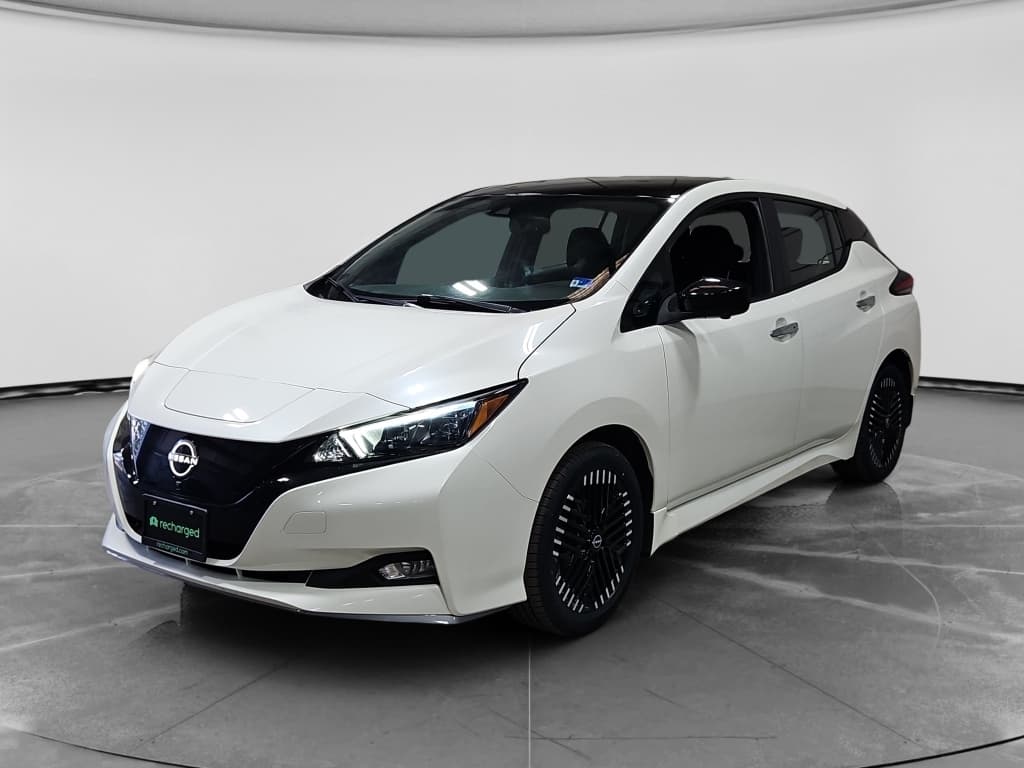
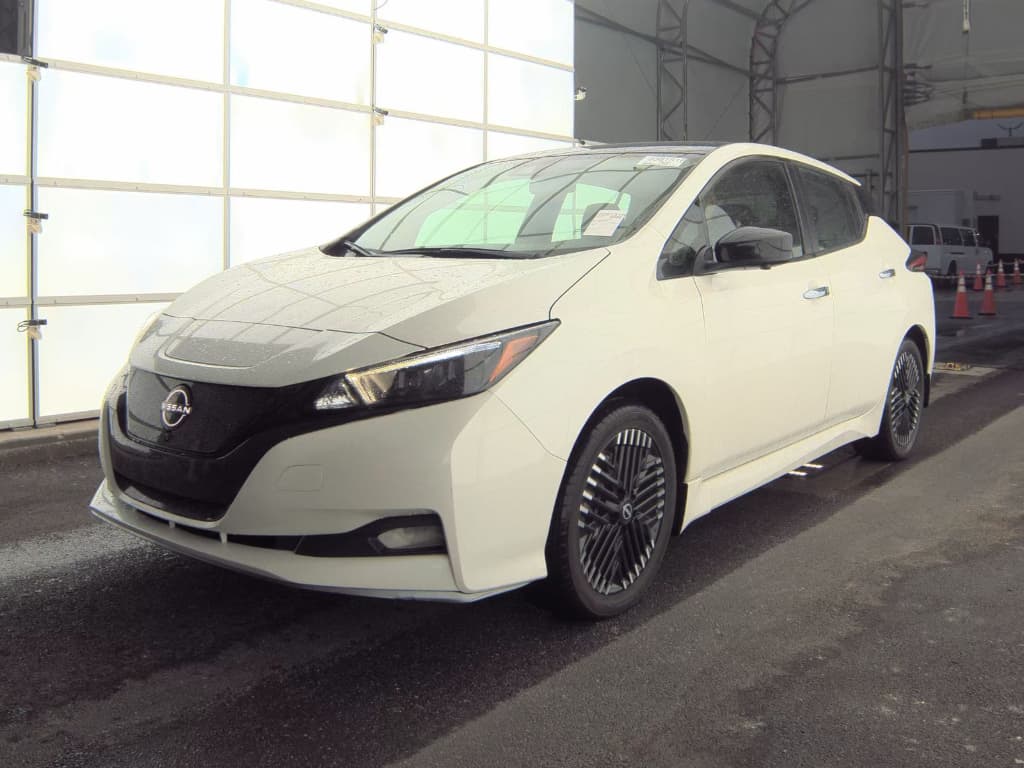
The car most people mean when they say “Honda Leaf.”
Body & mission
Compact 5‑door hatchback designed for urban and suburban commuting, school runs, and errands.
All‑electric power
Lithium‑ion battery with various sizes over the years, from ~24 kWh in early cars to 75 kWh in the latest generation.
Charge and go
Level 1 and Level 2 AC charging everywhere; DC fast charging on most trims for road‑trip top‑ups.
How Honda Actually Did EVs: Fit EV and Honda e
While there’s no Honda Leaf, Honda has flirted with EVs in ways that make the confusion understandable. The short version: Honda built excellent electric hatchbacks, but kept them rare, leased, or outside the U.S.
Honda’s Small EVs vs Nissan Leaf
Why the Honda Leaf mix‑up happens.
| Model | Years sold | Where | Body style | Battery size (approx.) | Notes |
|---|---|---|---|---|---|
| Honda Fit EV | 2012–2014 | Limited U.S. lease + Japan | Subcompact hatchback | ~20 kWh | Tiny production run; ultra‑efficient; never widely sold used. |
| Honda e | 2020–2024 | Europe & Japan | Retro‑style hatchback | 35.5 kWh | Cult favorite; never sold in the U.S. |
| Nissan Leaf | 2011–present | Global, including U.S. | Compact hatchback/crossover | 24–75 kWh | The car you can actually buy used in volume. |
None of these Hondas are called Leaf, but they live in the same mental neighborhood.
So can you buy a “Honda Leaf” used?
Nissan Leaf Generations and Which Years to Target
Shopping a used Leaf is like browsing the history of the modern EV in fast‑forward. The car evolved a lot, and the year you pick matters more than it would with a conventional compact.
Three Eras of the Nissan Leaf
- Early cars (2011–2015, 24 kWh): Now bargain‑basement if you only need a short‑range city car. Battery health is everything here.
- 30 kWh era (some 2016, all 2017): Better on paper, but this battery has a reputation for rapid degradation in some climates.
- 40 kWh Leaf (2018–2022): The sweet spot for many shoppers, more usable range when healthy, still relatively affordable.
- 62 kWh Leaf Plus (2019–2024): Genuine road‑trip range when new and more power, but used prices are higher.
- New 75 kWh crossover Leaf (2025+): Too new to dominate the used market yet, but it sets the template: 250–300+ miles of range and liquid‑cooled batteries.
Watch the 30 kWh cars
The Big Issue: Battery Health and Degradation
Here’s where the Leaf differs most from the theoretical “Honda Leaf.” Honda’s tiny EVs were limited‑run experiments. The Leaf became a high‑volume commuter appliance. In early years, Nissan treated the battery like it lived in a laptop, not Phoenix. There was no active liquid cooling on first‑ and second‑generation Leafs, and that has consequences on the used market.
“The reality is that the Leaf is a primitive battery design with a complete lack of thermal management… The lesson is nobody should buy a used Leaf without being able to check the battery health.”
- Hot‑climate cars age faster. Leafs that spent years in Arizona, Nevada, Texas, or inland California often show more degradation.
- DC fast‑charging abuse matters. A car that lived on CHAdeMO quick charging may have a more tired pack.
- Time hurts too. Even with low miles, a 2013 pack has simply lived a life.
- Not all packs are equal. The later 40 and 62 kWh batteries tend to hold up better than early 24/30 kWh packs.
Recent safety recalls
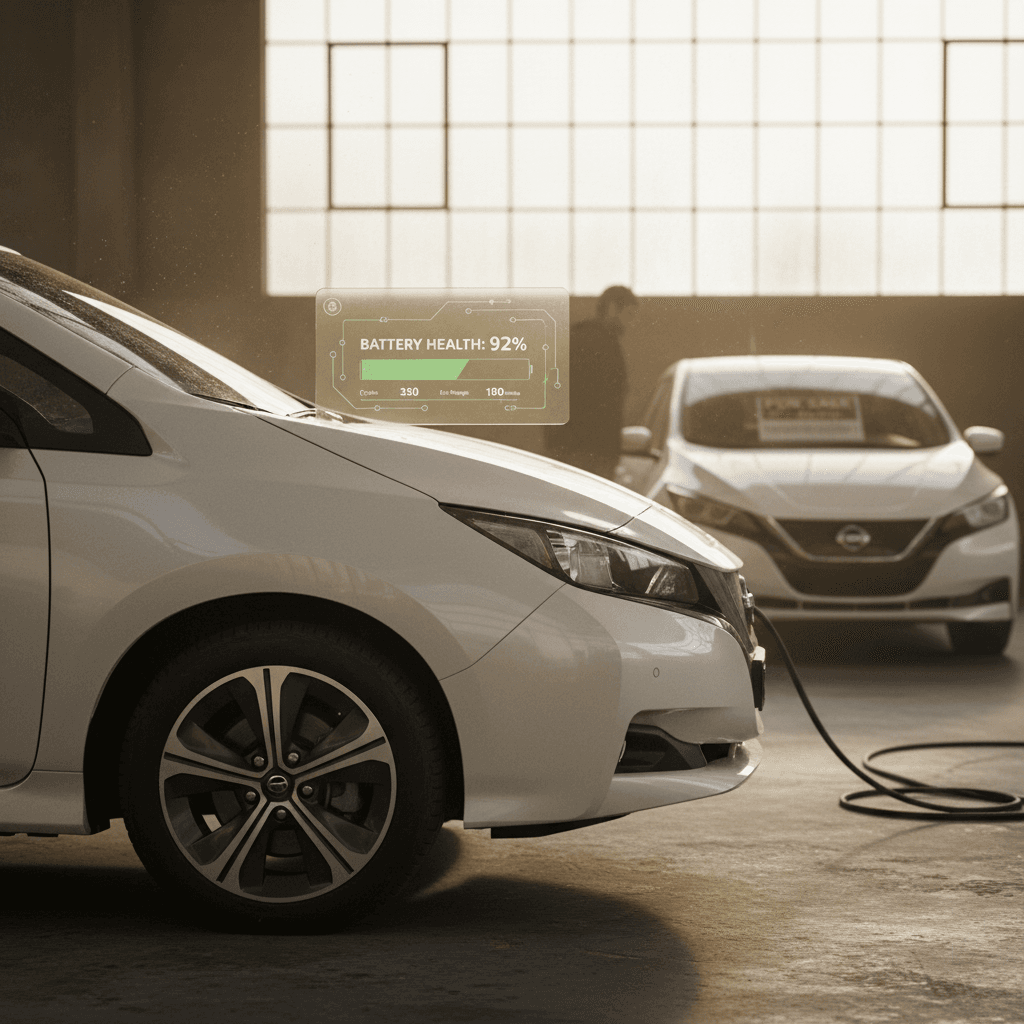
How to Judge a Used Leaf’s Battery
1. Look beyond the 12 bars
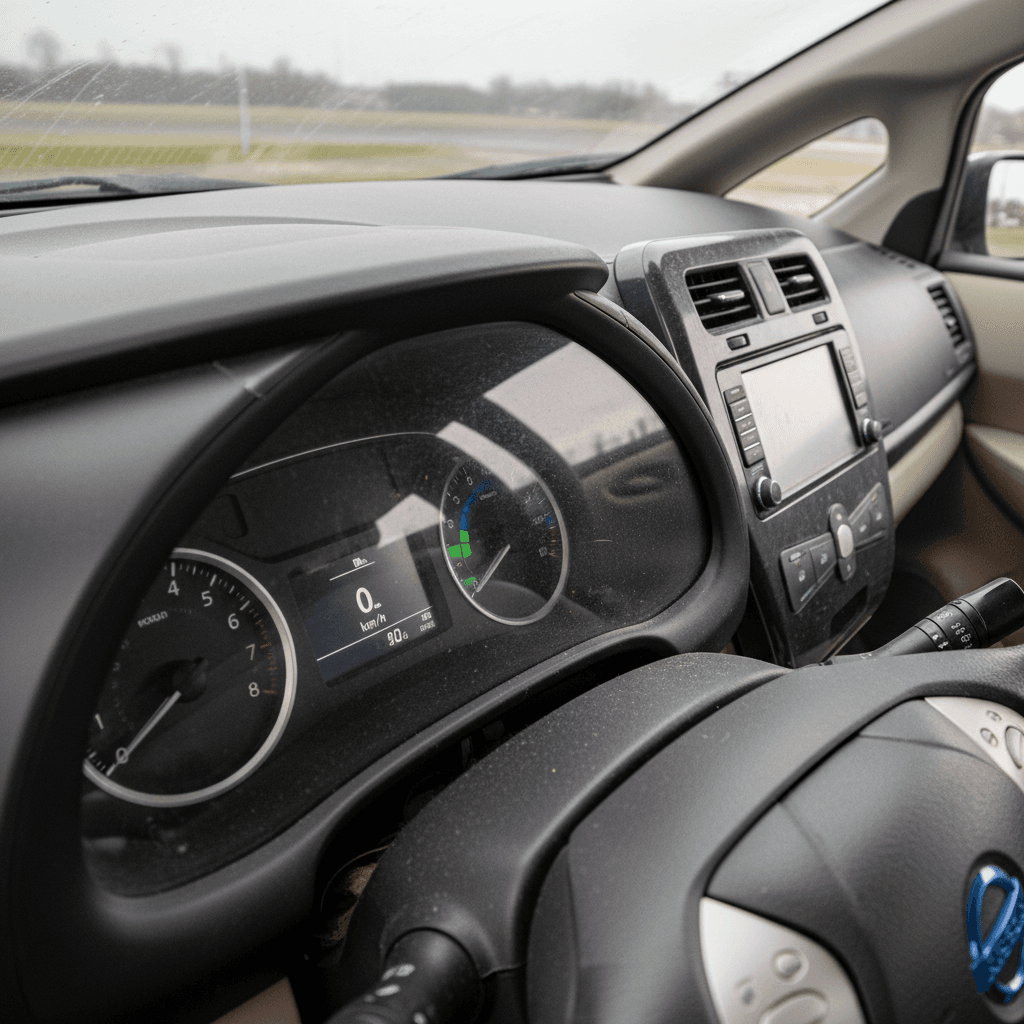
The dash’s 12‑bar graphic is a blunt instrument. Losing one bar can mean a big drop in capacity. You want both bars and real numbers if possible.
2. Use a scan tool when you can
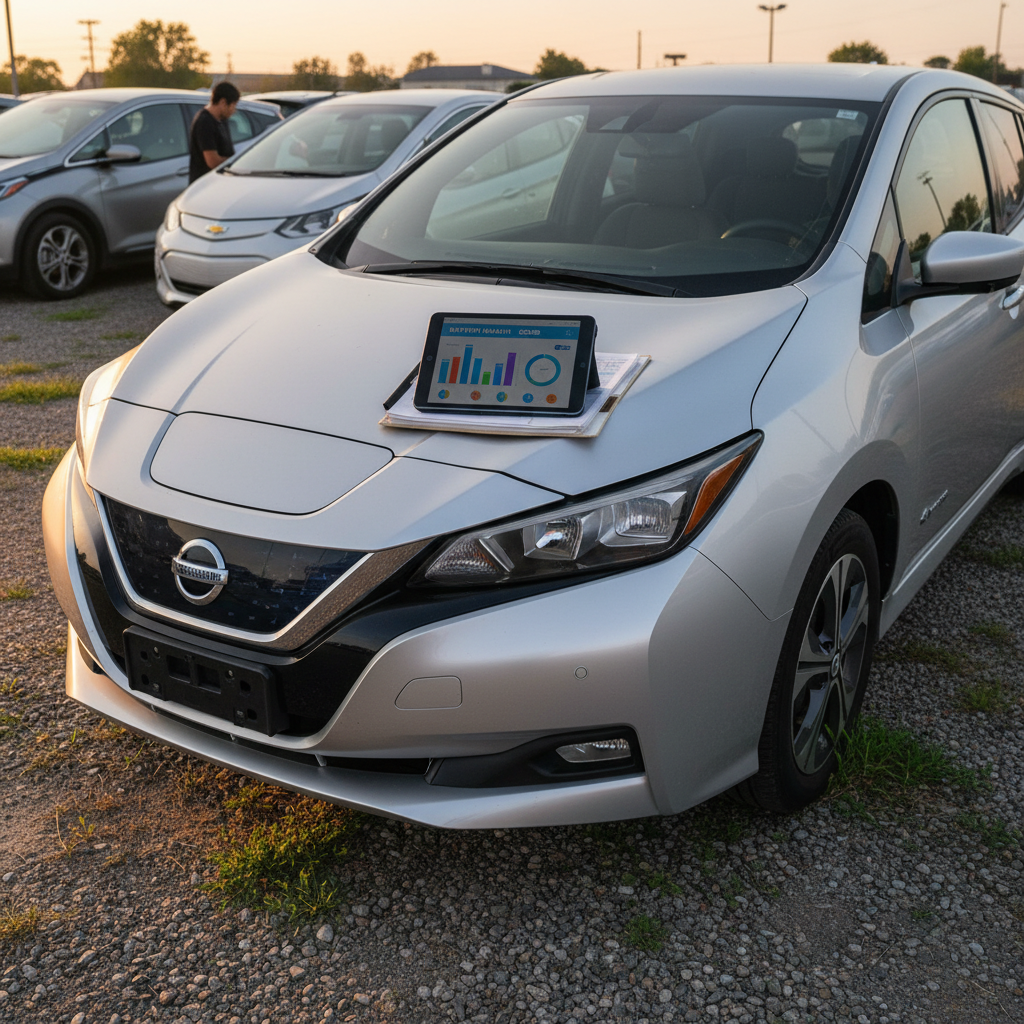
An inexpensive Bluetooth OBD2 reader plus a Leaf‑specific app can show State of Health (SoH) and cell balance. If the seller won’t allow it, that’s a data point in itself.
3. Ask about climate history
Where has the car lived? A used Leaf that spent its life in Seattle is a different beast than the same‑year car from Phoenix.
4. Check for battery replacement paperwork
Some Leafs have had packs replaced under warranty or upgraded. Documentation here can turn a sketchy model year into a smart buy.
5. Test a full‑to‑low drive
On a long test drive, watch how quickly the guess‑o‑meter shrinks. If the predicted range collapses in mixed driving, the pack may be on its way out.
Range Reality: What a Used Leaf Can Really Do
Official EPA numbers are optimistic, and they assume a fresh battery. A 10‑year‑old Leaf in 2025 is not a fresh battery. What matters is what the car will do on your commute, in your climate, at highway speeds.
City & suburban errands
If you mostly do short hops, school runs, groceries, a 25‑mile round‑trip commute, a tired early Leaf can still be a hero. Think of it as an electric Civic for the inner ring suburbs. Even a 60–70 mile real‑world range is workable if you can charge at home every night.
Highway and cold‑weather use
Run an older Leaf at 70 mph in winter with the heat on and you’ll watch range disappear like free coffee at an all‑hands meeting. If you need serious winter or highway legs, focus on newer 40 or 62 kWh cars with strong State of Health numbers.
A simple range sanity check
Charging & Compatibility: Honda EVs vs Nissan Leaf
Another place people mash Honda and Leaf together is charging. Both the Fit EV and Honda e use the mainstream connector standards of their regions, just as the Leaf has evolved its own plug story over time.
How These Small EVs Plug In
Connectors matter when you’re looking at public charging maps.
Honda Fit EV (U.S.)
AC charging only, using the J1772 connector. No DC fast charging; it’s a slow‑and‑steady city car.
Honda e (Europe/Japan)
Type 2 AC and CCS DC fast charging in Europe. Again, never sold new in the U.S., so this mostly matters if you’re reading from abroad.
Nissan Leaf (U.S.)
J1772 for Level 1/2 AC on the early gens, CHAdeMO for DC fast charging. The new crossover‑style Leaf adopts the Tesla‑style NACS connector in North America, opening up Superchargers.
Adapters and future‑proofing
Step-by-Step: How to Buy a Used Leaf with Confidence
Buying a used Leaf isn’t dangerous, it’s just opaque if you treat it like any other used compact. You’re really buying two things: a car and a battery. The car wears slowly. The battery doesn’t.
7 Steps to a Smart Used Leaf Purchase
1. Define your real range needs
Write down your longest regular round‑trip drive, add 30%, and make that your minimum real‑world range. This will steer you toward the right battery size and model years.
2. Shortlist the right era
If you’re budget‑sensitive and city‑bound, early 24 kWh cars can work. If you need flexibility and some highway comfort, focus on 40 or 62 kWh Leafs with strong battery health.
3. Pre‑screen ads for honesty
Look for sellers who mention battery bars, SoH, or documented pack replacements. Ads that only talk about leather, sunroof, and CarPlay but ignore the battery are incomplete at best.
4. Check history and climate
Run a vehicle history report and look at registration states. A life spent in mild climates is a quiet advantage that won’t show up in the asking price, yet matters enormously.
5. Inspect and test‑drive like normal
You still want to check tires, brakes, suspension, interior wear, accident repairs. A Leaf is still a car, not just a rolling battery pack.
6. Dig into battery health data
Use an OBD2 reader and app if you can, or buy from a seller who provides a professional battery report. Avoid guessing based on the dash alone.
7. Run the math vs a newer EV
If a tired Leaf plus a future battery replacement gets close to the price of a younger EV with a modern pack, it might be time to look at other models, or a newer‑generation Leaf.
How Recharged Helps with Used Leafs
If all of this sounds like homework, that’s because it is. A used Leaf can be a brilliant, dirt‑cheap commuter or a slow‑motion headache depending on one thing: whether someone has done the battery due diligence before you sign.
What Recharged Brings to the Table
Turning a science project into a simple used‑car buy.
Recharged Score battery diagnostics
Every EV on Recharged comes with a Recharged Score Report, including verified battery health. Instead of guessing about SoH or counting bars, you see a clear, expert explanation of remaining capacity and expected use‑case fit.
Transparent pricing & financing
We benchmark against fair‑market pricing for EVs, battery condition included, and offer financing and trade‑in options so you’re not juggling three different websites to make the numbers work.
EV‑specialist support & delivery
From our Richmond, VA Experience Center to nationwide delivery, you get EV‑specialist help at every step, whether you’re cross‑shopping Leafs, Bolts, or Teslas.
Ready to find your next EV?
Browse VehiclesMake the battery someone else’s problem
FAQ: “Honda Leaf” and Used Nissan Leaf Buying
Frequently Asked Questions
So no, there is no Honda Leaf, but the idea you’re chasing is real: a small, honest electric hatchback that quietly deletes your fuel bill. In the real world, that usually means a used Nissan Leaf. Choose the right generation, insist on real battery data, and treat climate history as gospel, and you can end up with one of the lowest‑stress, lowest‑cost commuter cars on the road. If you’d rather skip the science project and go straight to the good ones, that’s exactly what Recharged, and its battery‑verified Leaf listings, are here for.