Electric cars promise low running costs and no gas station stops. That’s all true, but it’s not the whole story. The hidden costs of owning an electric car can quietly nibble at your budget if you don’t go in with eyes open. The good news: once you understand where the surprises lurk, you can plan around most of them, and often still come out ahead of a comparable gas car.
What we’ll cover
Why the “hidden costs” of owning an EV matter
If you’ve priced out a new or used EV, you’ve probably heard that they’re cheaper to own because electricity is cheaper than gas and there’s no oil to change. That’s broadly right. But buyers are bumping into insurance quotes that make their eyes water, home charging installs that run far higher than expected, and resale values that look softer than the hype promised. Understanding these hidden costs helps you pick the right car, the right charging setup, and the right budget, for the next five to ten years, not just the day you sign the paperwork.
EV ownership cost snapshot (2025–2026)
Not all “hidden costs” hit every driver
Big picture: Are electric cars really cheaper than gas?
Let’s start at 30,000 feet. In recent five‑year ownership studies, the average cost to own and operate a new vehicle in the U.S. lands around the mid–$11,000s per year. Electric vehicles generally cost more up front, then claw back money through lower fueling and routine maintenance. But higher insurance, steeper depreciation, and charging infrastructure can tilt the math back, especially for buyers who don’t drive many miles or who rely heavily on fast charging.
Where EVs usually win
- Fuel: Electricity is typically cheaper per mile than gas, especially on off‑peak or EV rates.
- Routine service: No oil changes, fewer moving parts, less brake wear thanks to regen.
- Urban driving: Stop‑and‑go traffic hurts gas mileage but barely dents EV efficiency.
Where EVs can cost more
- Purchase price: New EVs still often carry a higher sticker than comparable gas models.
- Insurance: Higher repair costs and limited repair networks push premiums up.
- Depreciation: Rapid tech changes and incentives can drag down resale values.
Test your own numbers
Home charging: the true cost to plug in at home
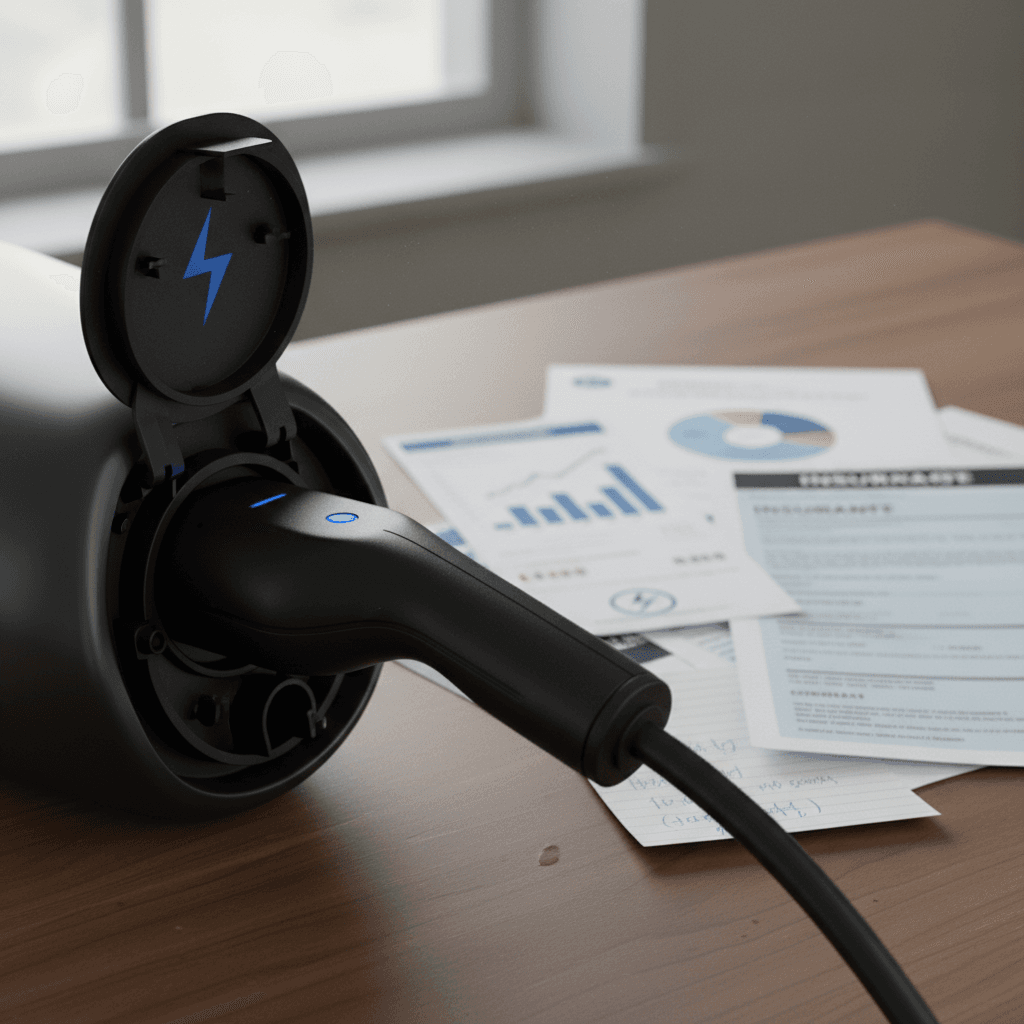
Home charging is the heart of the EV experience. It’s also where many new owners meet their first surprise bill. The EV itself often comes with a portable Level 1 or basic Level 2 cable, but the electrical work to support fast, convenient charging can vary wildly from house to house.
Typical home Level 2 charging costs (United States)
Approximate 2025–2026 price ranges for a dedicated 240V home charger setup.
| Scenario | What it looks like | Typical cost (before incentives) |
|---|---|---|
| Simple install | Panel in garage, short run, no upgrades | $800–$1,500 |
| Moderate install | Longer wire run, some wall work | $1,200–$2,200 |
| Complex install | Panel upgrade, long run, outdoor work | $2,000–$4,000+ |
| Hardware only | Wallbox or hard‑wired Level 2 charger | $400–$1,200 |
Real‑world costs depend on your panel, wiring distance, local labor rates, and available incentives.
Don’t DIY high‑voltage work
Electricity prices, time-of-use plans, and surprise bills
Next up: the power itself. In most of the U.S., residential electricity now averages in the mid‑teens cents per kWh. For many EVs, that works out to 3–5 cents per mile on a normal rate plan, versus 10–15 cents per mile for a typical gas car at today’s pump prices. But there are two gotchas: time‑of‑use plans and demand‑based pricing.
- Time‑of‑use (TOU) rates can make off‑peak charging dramatically cheaper, but may also raise your daytime rate. If you work from home and run a heat pump, you’ll want to run the math carefully.
- Some utilities add demand charges or higher rates once you cross a monthly usage threshold, which means fast overnight charging plus electric heating can nudge you into a pricier tier.
- Smart chargers and apps can schedule charging for the cheapest hours, but you have to actually turn those features on and double‑check your utility bill the first few months.
How to keep electricity costs low
Public fast charging: when “fuel” gets expensive
Fast charging is a lifesaver on road trips and for apartment dwellers, but it’s rarely cheap. DC fast chargers often price electricity by the kWh at a significant premium over residential rates, or by the minute in ways that punish slower‑charging models. Membership fees, idle fees, and parking charges can all pile on.
Common fast‑charging gotchas
Why your road‑trip “fuel” bill may look higher than expected
High per‑kWh prices
Session and idle fees
Parking and access costs
Plan around your charging mix
Insurance: Why many EVs cost more to cover
This one catches a lot of people off guard. In the latest national data, electric vehicles cost roughly half again as much to insure as comparable gas cars on average. EV drivers are seeing annual premiums north of $4,000, compared with under $2,800 for internal‑combustion models. Why the gap? Expensive batteries, aluminum bodywork, complex sensor suites, and a relatively small pool of EV‑certified repair shops all push claim costs up.
Factors that raise EV insurance
- Higher vehicle values: A more expensive car means a pricier total‑loss payout.
- Repair complexity: Damage near the battery or sensors can require specialized labor and parts.
- Limited repair networks: Fewer shops drive longer repair times and higher rental‑car costs.
How to keep premiums sane
- Get quotes on specific VINs before you buy, trim and options matter.
- Look for insurers with EV‑friendly programs or usage‑based discounts.
- Consider slightly higher deductibles if you have good reserves and a clean record.
Don’t assume your current insurer is cheapest
Maintenance, repairs, and tires: not always “near zero”
One of the joys of an EV is skipping oil changes, timing belts, spark plugs, and transmission fluid services. Over five years, that can absolutely save you money. But “no maintenance” is a myth. You’ll still pay for brake fluid flushes, cabin filters, coolant service on some models, and, eventually, tires and suspension components heavier EVs wear out faster.
What you’ll (probably) spend on
The realistic side of “low maintenance”
Routine service
Tires and suspension
Use the maintenance schedule, not the sales pitch
Battery health, warranties, and replacement risk
The high‑voltage battery is the beating heart of an EV, and the scariest line item on any cost sheet. Replacement packs for mainstream models typically run about $8,000 to $20,000 installed, with smaller cars near the low end and large luxury SUVs and trucks at the top. That’s enough to total out some older EVs after a collision or a severe failure.
- Most modern EVs carry an 8‑year, 100,000–150,000‑mile battery warranty, often with a 70% capacity guarantee. If a pack fails early, the manufacturer usually eats the cost.
- True catastrophic pack failures are still uncommon, but partial replacements (modules, electronics) can be pricey and time‑consuming when they do happen.
- Battery degradation, gradual range loss, is more common. Hot climates, years of frequent fast‑charging, and high annual mileage can all accelerate it. This matters a lot when you’re shopping used.
What to watch on a used EV
Depreciation and resale value: EVs vs gas cars
Depreciation, the slow, steady march of a car’s value downward, is the single biggest ownership cost for most drivers, EV or gas. Here’s where EVs have had a rougher ride. Rapid technology improvements, generous tax credits on new models, shifting demand, and concerns about battery longevity have pushed many EVs to lose value faster than similarly priced gas cars over the last few years.
What hurts EV resale
- Price cuts on new models make used examples look less attractive overnight.
- Short model cycles mean older tech and shorter range look dated quickly.
- Battery uncertainty keeps some second‑owners on the sidelines.
Where buyers can win
- Used‑EV shoppers can often find excellent value precisely because of that early depreciation.
- Battery health reports, like the Recharged Score, help separate strong cars from risky ones.
- Models with longer range and solid charging performance tend to hold value better.
Leaning into depreciation as a buyer
Registration, taxes, and EV-specific fees
Because EV drivers don’t pay gas taxes at the pump, many states have added special registration fees for electric cars, often an extra flat amount per year. The idea is to recoup road‑fund contributions, but for owners, it’s simply another line item on the cost of ownership. A few states also treat EVs differently for emissions inspections or city congestion charges.
- Expect an annual EV fee in many states, typically the cost of a couple of tanks of gas spread over the year.
- Some regions offer discounts on tolls or HOV‑lane access that can offset those fees in time savings if you commute in heavy traffic.
- Sales‑tax treatment varies by state and by whether a federal or state EV incentive is applied at the point of sale or as a later credit. Make sure you know how rebates affect your out‑the‑door price and tax bill.
Check your state’s EV fee before you buy
Hidden costs with used EVs, and how Recharged helps
Used EVs are where the hidden‑cost story gets especially interesting. On one hand, heavy first‑owner depreciation means you can buy a lot of car for the money. On the other, this is where battery health, prior charging habits, and out‑of‑warranty repairs start to matter most. A too‑cheap deal can get expensive in a hurry if you inherit a tired pack or a car that’s been fast‑charged hard for years.
How Recharged reduces used‑EV surprises
Designed from the ground up around EV transparency
Recharged Score
Fair market pricing
EV‑specialist support
Ready to find your next EV?
Browse VehiclesWhy battery diagnostics matter more than ever
Checklist: How to avoid EV cost surprises
Pre‑purchase checklist for EV ownership costs
1. Get real insurance quotes
Before you fall in love with a specific EV, get quotes from at least three insurers using that exact year, make, model, and trim. Don’t rely on rough online averages.
2. Price your home charging setup
Have an electrician look at your panel, distance to the parking spot, and potential load. Ask for a written estimate for a 240V circuit and charger install, including permits.
3. Understand your electricity rates
Call your utility or check their website for EV and time‑of‑use plans. Estimate your annual kWh use for charging and what it will cost on each rate.
4. Map your public charging reality
If you can’t charge at home, look at the actual networks near you, their prices, parking rules, reliability, and how busy they are at the times you’d use them.
5. Read the battery and drivetrain warranty
Note the years, mileage, and capacity guarantee on the battery and any exclusions. If you’re shopping used, see how much of that coverage is left.
6. Check battery health on used EVs
For used EVs, insist on a battery health report, such as a <strong>Recharged Score</strong>, or at minimum, compare current range to the original rating and have a knowledgeable shop inspect the car.
7. Factor in state EV fees and taxes
Look up any extra EV registration fees, plus how incentives and tax credits apply where you live. Add those numbers to your five‑year cost comparison.
8. Compare depreciation scenarios
If you finance or lease, look at projected resale or residual values. A slightly cheaper car with poor resale may cost more than a higher‑priced model that holds value better.
FAQ: Hidden costs of owning an electric car
Bottom line: Is an EV still worth it?
When you strip away the marketing and look squarely at the hidden costs of owning an electric car, the picture gets more complicated, but also more honest. EVs are not magically free to own, and in some categories, they’re clearly more expensive than gas cars today. Yet for the right driver, in the right home, with the right charging setup, they still deliver lower day‑to‑day fuel and maintenance costs, a smoother drive, and the quiet satisfaction of skipping the gas station.
The trick is to treat an EV like any other major appliance: understand your wiring, your utility bill, your warranty, and your long‑term plans. If you’re leaning toward a used EV, that’s where a platform like Recharged really earns its keep, battery health data, fair pricing, EV‑savvy financing options, and expert guidance that puts total cost of ownership front and center. Do that homework up front, and your EV won’t just feel good on the road, it will make sense on your balance sheet, too.