If you’re shopping for a used electric vehicle, you don’t just have to hope the price is fair, you can sometimes get rewarded for going electric. That’s exactly what a green auto loan for a used EV is designed to do: offer slightly better terms when you finance a vehicle that’s cleaner and more efficient than a typical gas car.
Why lenders offer green auto loans
What is a green auto loan for a used EV?
A green auto loan is simply an auto loan with special terms for cleaner vehicles. Instead of a completely separate product, most lenders take their standard auto loan and apply a rate discount, often 0.25%–1.00% APR, for qualifying electric, plug‑in hybrid, or ultra‑efficient cars. Many programs apply to both new and used EVs, which is where the biggest savings can stack up.
- You still get a regular auto loan structure: fixed rate, fixed term, monthly payments.
- The “green” part is usually a small APR discount or extra perks if the car meets eligibility criteria.
- Most programs are offered by credit unions, community banks, or mission‑driven lenders, but some larger banks are starting to follow.
Quick definition
How green auto loans work for used EVs
When you use a green auto loan to buy a used EV, the nuts and bolts feel just like any other car loan. You choose a car, apply, and if you’re approved the lender sends funds to the seller or dealership. The differences show up in rates, eligibility, and documentation.
Green auto loan basics in plain English
Same auto loan foundation, with a greener twist
1. Standard auto loan structure
You’ll see the familiar ingredients: loan amount, APR, term (often 36–84 months), and a fixed monthly payment. Nothing exotic about how you repay.
2. Rate discount for going green
The lender applies a small APR discount, commonly 0.25% to 1.00% off their normal auto rate, when your car qualifies as an EV, plug‑in hybrid, or high‑MPG “green” vehicle.
3. Extra documentation
You may need to share the VIN, window sticker (Monroney label), or EPA rating so the lender can verify that your used EV or hybrid meets their green criteria.
Not every lender treats used EVs the same
Typical rates, terms, and lender examples
Let’s talk numbers. Every lender sets its own rates, but there are clear patterns in how green auto loan discounts work for used EVs across the U.S., especially at credit unions.
What green auto loan programs look like in the real world
Here’s how actual lenders structure things (details change over time, but the patterns are useful):
Sample green auto loan features from real‑world lenders
These are representative examples, not offers from Recharged, and are subject to change. Use them as a feel for what’s out there, not as exact quotes.
| Lender type | Green benefit | Applies to used EVs? | Notable extras |
|---|---|---|---|
| Local credit union A | Up to 1.00% APR discount for EVs/hybrids | Often yes, age/mileage limits possible | Refinance existing EV loans to get discount. |
| Regional credit union B | 0.25% APR discount for green vehicles | Yes, for qualifying EVs and hybrids | Discount can stack with autopay rate reduction. |
| Specialty green lender or program | 0.50% APR discount + bundled EV charger financing | Sometimes, depending on year/model | May roll up to ~$2,000 of home charger costs into the loan. |
| Community credit union C | 0.25% APR discount for EVs and plug‑in hybrids | Yes, for both new and used vehicles | Occasional promos tied to local climate or clean‑air goals. |
Always check current lender disclosures for exact rates and eligibility rules.
Rates move. Your strategy shouldn’t.
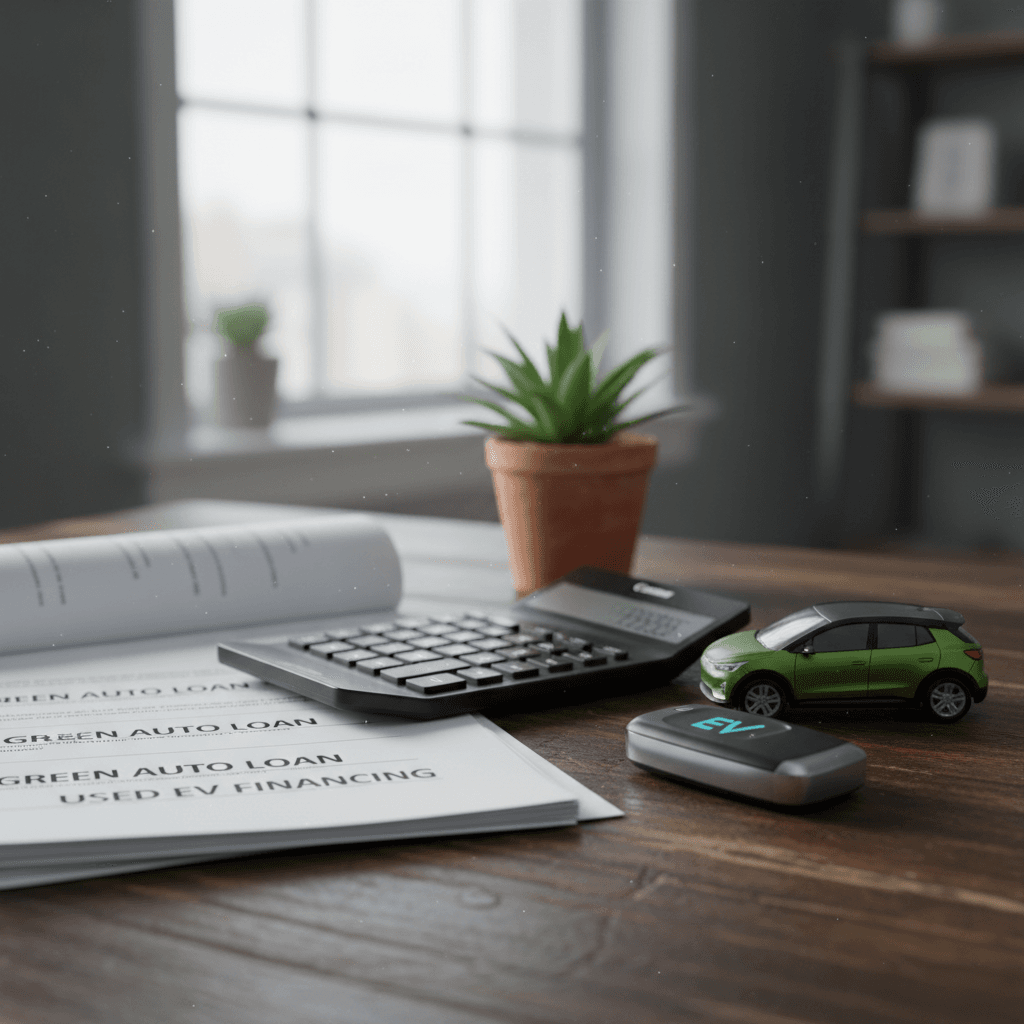
Pros and cons of using a green auto loan
Advantages
- Lower APR: Even a 0.25%–1.00% discount can save hundreds of dollars over the life of a typical used‑EV loan.
- Rewards your choice: You’re already choosing a more efficient car; a green loan lets your financing reflect that.
- Signals future‑minded lenders: Credit unions with green programs often understand EVs better and may be more flexible on things like battery age or mileage.
- Often available for refinances: If you already own an EV, you may be able to refinance into a green loan and drop your rate.
Trade‑offs
- Limited availability: Not every bank or captive lender offers a green program, especially for used EVs.
- Eligibility rules: Some lenders only include certain model years, minimum MPGe ratings, or specific fuel types.
- Base rate still matters: A small discount on a high base rate may be worse than a regular loan from a more competitive lender.
- Extra homework: You’ll sometimes need to provide EPA or vehicle documentation to prove your car qualifies.
When a green auto loan makes the most sense
Eligibility: what counts as a “green” vehicle?
Here’s the catch: every lender decides for itself what qualifies as "green." Some limit the discount to fully electric vehicles. Others broaden it to plug‑in hybrids, conventional hybrids, or even ultra‑efficient gas cars with very high EPA ratings.
Common vehicle types that qualify
Check your lender’s fine print, but these categories show up again and again
Battery‑electric vehicles (BEVs)
Fully electric vehicles (no gas engine at all) are almost always eligible: think Nissan LEAF, Chevy Bolt, Hyundai Ioniq 5, Tesla models, and similar.
Plug‑in hybrids (PHEVs)
These have a chargeable battery plus a gas engine. Many lenders count them as green vehicles if they meet minimum electric‑range or MPGe thresholds.
High‑efficiency hybrids & alt‑fuel
Some programs include stand‑alone hybrids or alternative‑fuel cars with a combined EPA rating around 40 MPG or better. Details vary by program.
Don’t assume your EV is automatically eligible
How to qualify for a green auto loan: step-by-step
If you’ve qualified for a car loan before, most of this will feel familiar. The difference is making sure both you and the car clear the bar for the lender’s green program.
Step-by-step path to a green auto loan for a used EV
1. Check your credit and budget
Pull your credit reports, estimate your score, and decide on a comfortable payment range. Remember that EV ownership can lower fuel and maintenance costs, but the monthly payment still needs to fit your life.
2. Shortlist vehicles that qualify as “green”
Decide whether you’re shopping only BEVs or also considering plug‑in hybrids. Look up EPA ratings and electric range so you can quickly show a lender that your pick fits their program.
3. Compare lenders and pre‑qualify
Look at banks, online lenders, and especially local credit unions. Many let you <strong>pre‑qualify with a soft credit check</strong>, so you can see estimated rates without dinging your score.
4. Confirm green loan eligibility in writing
Before you fall in love with the perfect used EV, ask: “Does your green auto loan apply to used EVs? Is there an age or mileage cap? What documentation do you need?” Get a clear yes and keep the email or PDF.
5. Pick your car and lock in the offer
Once you’ve found a used EV, whether through a dealer, a private seller, or Recharged, submit the VIN and purchase details to the lender. They’ll finalize your rate, including any green discounts and autopay perks.
6. Close the loan and set up autopay
Sign your documents (often fully digital), confirm the lender has paid the seller, and immediately set up autopay to avoid missed payments and possibly earn another small rate reduction.
Time your application
Stacking savings: green loans, used EV prices, and incentives
The end of the federal EV tax credit in late 2025 has pushed more shoppers toward the used EV market, where prices are often lower and depreciation has already done some of the heavy lifting. That makes green auto loans an especially interesting tool: you’re not just saving a bit on interest, you’re layering savings on top of today’s more approachable used‑EV pricing.
Where your savings can come from
- Market pricing: Many used EVs now list well below their original MSRP, especially older models or those with smaller batteries.
- Green loan discount: That 0.25%–1.00% APR reduction is like a quiet rebate spread across every payment.
- Local and utility incentives: Some states, cities, and utilities still offer rebates for EV buyers or home chargers, even after federal credits sunset.
- Ownership costs: Lower fuel and maintenance spend free up room in your monthly budget, effectively lowering the total cost of the loan.
How not to overextend
- Don’t stretch the term just to hit a payment: A 72‑ or 84‑month term may look attractive, but you’ll pay more total interest and could outlast the battery warranty.
- Leave budget for charging: If you need a Level 2 charger at home, consider how you’ll pay for it, cash, separate financing, or rolled into a green loan at a lender that allows charger bundling.
- Check insurance: Some EVs cost more to insure than similar gas cars. Get quotes early so your total monthly cost isn’t a surprise.
Watch the trade-off between rate and term
Green auto loans vs. regular auto loans
A green auto loan isn’t magic. It’s a regular auto loan with a handful of differences that matter when you put pencil to paper. Here’s how they stack up.
Comparing green auto loans with standard auto loans
Use this as a framework when you’re comparing offers from banks, credit unions, online lenders, and dealer financing.
| Feature | Green auto loan | Regular auto loan |
|---|---|---|
| Vehicle requirements | Must meet EV/efficiency criteria; sometimes age/mileage limits for used EVs | Any vehicle that meets lender’s general guidelines |
| Rate structure | Standard auto rate minus small green discount, often 0.25–1.00% APR | Standard auto rate, sometimes with autopay or loyalty discounts |
| Eligible vehicles | Typically EVs, plug‑in hybrids, efficient hybrids, sometimes high‑MPG gas cars | New and used gas, hybrid, or electric vehicles |
| Availability | More common at credit unions and community lenders; may require membership | Available almost everywhere |
| Extras | Occasional perks like bundled charger financing or environmental donations | Occasional dealer rebates or captive‑finance incentives |
If a regular lender beats a green program by more than the discount, it may still be the better deal.
How to compare offers quickly
Using a green auto loan to buy a used EV from Recharged
This is where things get interesting. At Recharged, every used EV comes with a Recharged Score Report, including verified battery health and transparent pricing. Pair that with a green auto loan, and you can walk into (or log into) the deal with both the car and the money working in your favor.
How buyers often combine Recharged with a green auto loan
You control the car, the financing, and the numbers
1. Shop and compare vehicles
Browse used EVs on Recharged and compare Recharged Scores, battery health, and pricing. Narrow down to a few candidates that fit your budget and your daily driving.
2. Take a Recharged listing to your lender
Share the VIN, price, and Recharged Score details with your bank or credit union. It’s much easier for them to underwrite a used EV when they can see independent battery health and condition info.
3. Close digitally and arrange delivery
Once you’re approved, green discount and all, you can complete your purchase fully online and schedule nationwide delivery or a visit to Recharged’s Experience Center in Richmond, VA.
Ready to find your next EV?
Browse VehiclesAsk your lender these Recharged‑specific questions
Green auto loan for used EV: FAQ
Your questions about green auto loans, answered
Key takeaways before you apply
- A green auto loan for a used EV is a standard auto loan with a small APR discount when you finance an efficient vehicle, most commonly a fully electric or plug‑in hybrid car.
- The biggest wins come from stacking a fair purchase price, a competitive base rate, and the green discount, rather than chasing the green label alone.
- Eligibility rules vary widely. Always confirm in writing that your specific used EV, model year, and mileage qualify for the lender’s green program.
- Shorter loan terms and solid battery health often save more than any rate discount. Tools like Recharged’s Recharged Score Report help you judge the car itself, not just the payment.
- You’re allowed to be picky. Shop lenders, ask questions, and let your financing choice support both your budget and your goal of driving something cleaner. If a green auto loan checks those boxes, it’s doing its job.
If you’re ready to run the numbers on a used EV, start by narrowing in on cars with healthy batteries and honest pricing, then look for a lender that rewards you for making that choice. With the right pairing of vehicle, marketplace, and green auto loan, you can feel good about what’s in your driveway and what’s on your monthly statement.