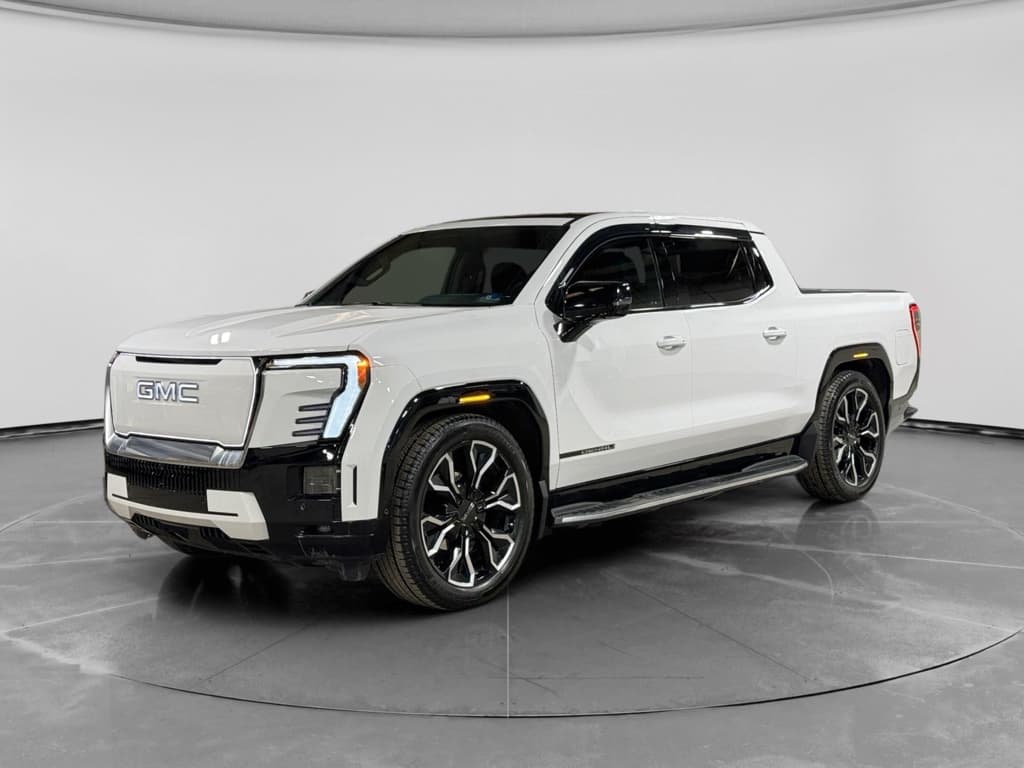
If you’re looking at a **GMC Hummer EV**, you already know it’s not a budget EV. That reality shows up in your insurance bill, too. GMC Hummer EV insurance costs are among the highest in the electric SUV and truck segment, and they can be a shock if you’re coming from a midsize crossover or sedan. The good news: once you understand why, you can do a lot to keep the numbers under control, especially if you’re considering a used Hummer EV.
Key takeaway
Overview: How much does GMC Hummer EV insurance cost?
Typical GMC Hummer EV insurance ranges (2025–2026 data)
- One national quote aggregator pegs **average Hummer EV insurance** around $223 per month overall, with newer model years trending closer to **$280–$320 per month** for full coverage.
- Cost‑of‑ownership tools that bundle five years of expenses show **roughly $4,700 per year** in insurance cost assumptions for a new Hummer EV SUV.
- Comparisons of electric cars place the **Hummer EV SUV over $4,500 per year** on average, among the most expensive EVs to insure, just behind high‑end luxury sedans and SUVs.
Why your quote may look very different
Why is GMC Hummer EV insurance so expensive?
Four big reasons Hummer EV insurance runs high
It isn’t just because it’s electric, it’s the way this EV is built and used.
1. Enormous weight and power
2. Complex, costly repairs
3. High vehicle value
4. Off‑road and lifestyle usage
EVs in general now cost more to insure than comparable gas vehicles, largely because average EV repair and claim severity are higher. When you layer that on top of the Hummer EV’s size, price tag, and off‑road hardware, you end up with premiums that sit toward the **top of the entire EV market**.
EV insurance is catching up to the tech
Hummer EV SUV vs pickup: insurance cost comparison
Insurance pricing for the **GMC Hummer EV SUV** and **Hummer EV pickup** is directionally similar, but there are some differences worth calling out. The SUV’s higher roofline and enclosed cargo area can drive slightly higher replacement costs, while some pickups see more commercial or work‑site use, which may push rates up depending on your insurer and how you classify the vehicle.
Typical GMC Hummer EV insurance cost comparison
Illustrative national averages for a 40‑year‑old driver with a clean record and full coverage. Your numbers may vary significantly.
| Model | Typical annual premium (full coverage) | Typical monthly cost | Relative to average EV |
|---|---|---|---|
| Hummer EV Pickup | $3,400–$3,700 | $280–$310 | Slightly above average |
| Hummer EV SUV | $4,300–$4,600 | $360–$385 | Well above average |
| All‑EV average (full coverage) | ~$2,700 | ~$225 | Baseline |
| U.S. overall vehicle average | ~$2,100–$2,200 | ~$175–$185 | Lower than EVs overall |
Both body styles are expensive to insure; the SUV often comes in a bit higher in consumer studies.
Trim and package matter
What really moves your Hummer EV insurance rate
Driver & usage factors
- Age & experience: Young drivers, especially under 25, pay dramatically more, sometimes double or more the premium of a 40‑year‑old.
- Driving record: At‑fault crashes, speeding tickets, and DUIs can add thousands of dollars over a multi‑year period.
- Annual mileage: A Hummer EV that logs 8,000 miles per year for weekend fun is lower risk than one doing 25,000 miles of mixed commuting and job‑site travel.
- Garaging & theft risk: Insurers price differently for secure garages in low‑theft suburbs vs. street parking in dense urban areas.
- Credit‑based scores (where allowed): In many states, lower credit tiers are correlated with higher claim frequency and push premiums up.
Vehicle & coverage factors
- Body style & trim: A fully loaded Omega Edition SUV with Extreme Off‑Road hardware costs more to fix, and insure, than a base 2X pickup.
- Selected deductibles: Lower deductibles on collision and comprehensive shift more of every claim to the insurer, raising your monthly bill.
- Optional coverages: Gap coverage, custom equipment, and extra liability limits are smart in many cases but add to premiums.
- State regulations: Some states mandate higher minimum liability limits or offer fewer pricing levers, which raises overall costs.
- EV‑specific endorsements: Battery coverage add‑ons and OEM‑parts guarantees can be worth it but come at a price.
Don’t under‑insure a six‑figure EV
7 ways to lower your GMC Hummer EV insurance cost
Practical steps to bring Hummer EV premiums down
1. Shop multiple insurers that understand EVs
Rates for the exact same Hummer EV can vary by hundreds of dollars per year between carriers. Get quotes from at least three companies that actively write EVs and offer high limits for luxury vehicles.
2. Adjust deductibles, carefully
If your cash reserves can handle it, raising your collision and comprehensive deductibles from $500 to $1,000 can trim premiums. Just make sure you can comfortably cover that out‑of‑pocket cost after a loss.
3. Max out safe‑driver and telematics discounts
Enroll in safe‑driver programs, let your insurer track your driving via an app, and avoid hard braking and late‑night speeding. Many telematics programs offer meaningful discounts if you drive gently and infrequently.
4. Bundle home and auto coverage
Carriers often give a break when you combine your Hummer EV policy with a homeowners or renters policy. On a high‑premium vehicle like the Hummer, that multi‑policy discount can be substantial.
5. Re‑rate your mileage and usage honestly
If your Hummer EV is a weekend toy or secondary vehicle, make sure it isn’t coded as a high‑mileage daily driver. Lower annual mileage and personal‑use classifications typically reduce premiums.
6. Maintain strong credit and a clean record
Over time, keeping tickets and accidents off your record and improving your credit‑based insurance score where it’s used can have as much impact on your bill as the vehicle you drive.
7. Consider slightly older or used model years
Insurance premiums often soften as a model ages and its value declines. A well‑cared‑for used Hummer EV can deliver the same experience with a lower insured value, and a lower premium, than a brand‑new build.
How Recharged can help
Ready to find your next EV?
Browse VehiclesInsuring a used GMC Hummer EV: what’s different?
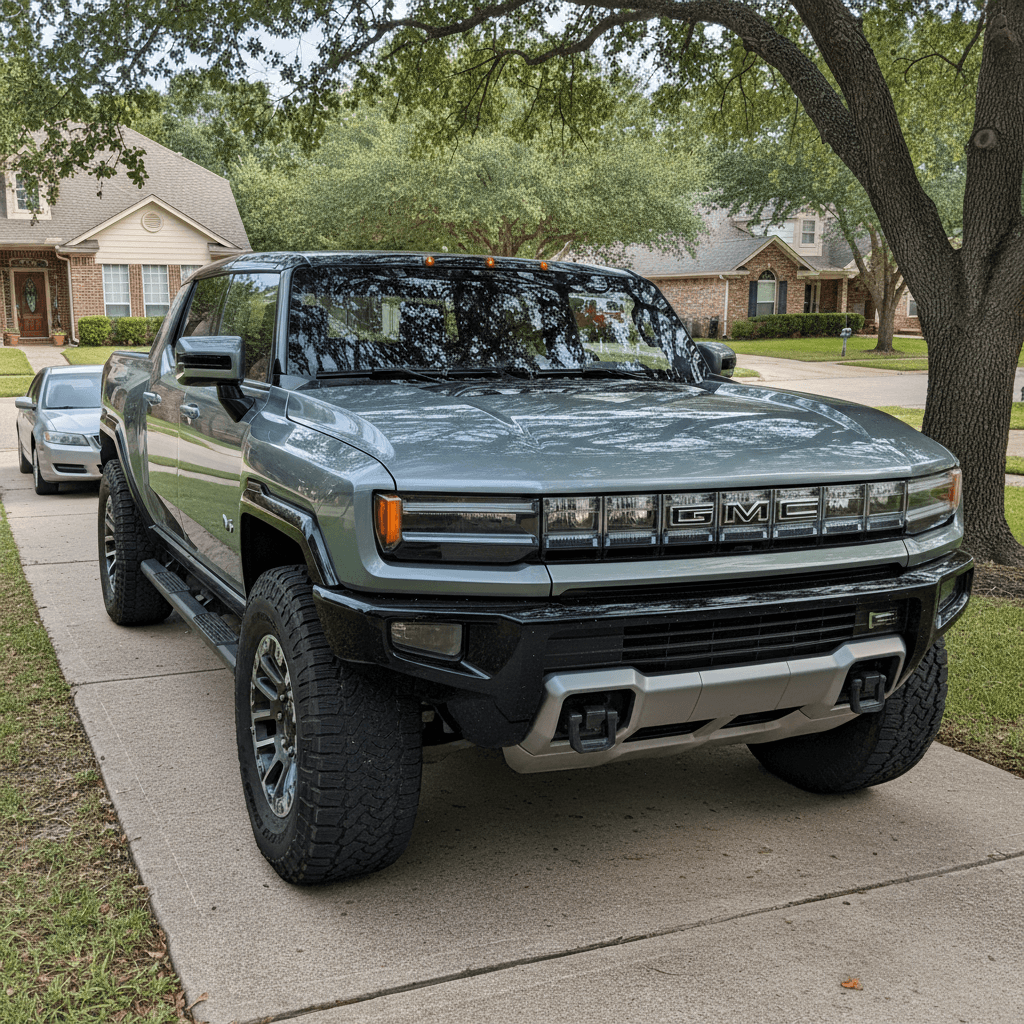
From an insurer’s point of view, a **used Hummer EV** has two competing forces at work: its **value is lower** than a brand‑new example, but its **loss history is more established** and out‑of‑warranty repairs may be more frequent. That doesn’t automatically mean cheaper coverage, but it does change the conversation.
- **Lower replacement cost:** As the truck or SUV depreciates from six figures into the $70,000s, then $60,000s and below, the potential payout for a total loss drops, often easing premiums compared with a new model, all else equal.
- **More real‑world data:** By the time you’re insuring a 2–3‑year‑old Hummer EV, insurers have more claim data on that specific generation, which can help stabilize rates.
- **Condition becomes critical:** Accident history, prior repairs, and aftermarket modifications all matter. A clean, stock truck is generally easier to insure than one with lift kits, oversized wheels, or non‑OEM accessories.
- **Battery health matters long‑term:** While most policies don’t rate directly on battery state of health today, a healthy pack is less likely to suffer failures that lead to complex claims and total‑loss decisions.
Use documentation to your advantage
How insurance fits into Hummer EV total cost of ownership
Insurance is a big slice of Hummer EV ownership costs
- Estimate annual insurance based on your actual record and ZIP code, not just national averages.
- Look at five‑year totals, not just month‑to‑month payments.
- Compare those numbers against alternatives you’re considering, other electric trucks and SUVs, or even a smaller EV that better matches your usage.
Leaning toward used?
When a GMC Hummer EV does (and doesn’t) make financial sense
When it can make sense
- You want maximum capability, off‑road hardware, massive power, and road presence, and you’re comfortable with higher fixed costs.
- You drive relatively low annual miles, so fuel savings versus a gas truck help offset high premiums.
- You can pay off the vehicle quickly or put down a large amount, reducing the need for expensive gap coverage.
- Your budget has room to absorb $300–$400 per month in insurance without squeezing other priorities.
When you should think twice
- Your monthly budget is already tight and an unexpected renewal increase would cause stress.
- You’re a younger driver or have recent tickets/accidents; Hummer EV premiums can spike sharply in those scenarios.
- You primarily need an appliance‑like commuter and don’t use the off‑road capability or towing capacity.
- You plan to keep the vehicle only a short time; steep early depreciation plus high insurance can make for an expensive experiment.
Using Recharged to compare options
GMC Hummer EV insurance FAQs
Frequently asked questions about GMC Hummer EV insurance
Bottom line: budgeting for Hummer EV insurance
The GMC Hummer EV sits in rarefied air, on the road and on your insurance bill. Expect **above‑average premiums** driven by its size, technology, and price tag, whether you choose the SUV or the pickup. For the right buyer, that’s an acceptable trade‑off for incredible capability and presence. For others, it’s a reason to gravitate toward a smaller, more insurance‑friendly EV.
If you’re seriously considering a Hummer EV, build insurance into your shopping homework from day one. Get real quotes for your specific situation, compare them with two or three alternative EVs, and look at the full cost of ownership, not just the payment on the truck. And if you decide a used EV is the smarter play, Recharged can help you find a vehicle with transparent battery health, fair pricing, and expert guidance so that insuring it is one less unknown in the process.