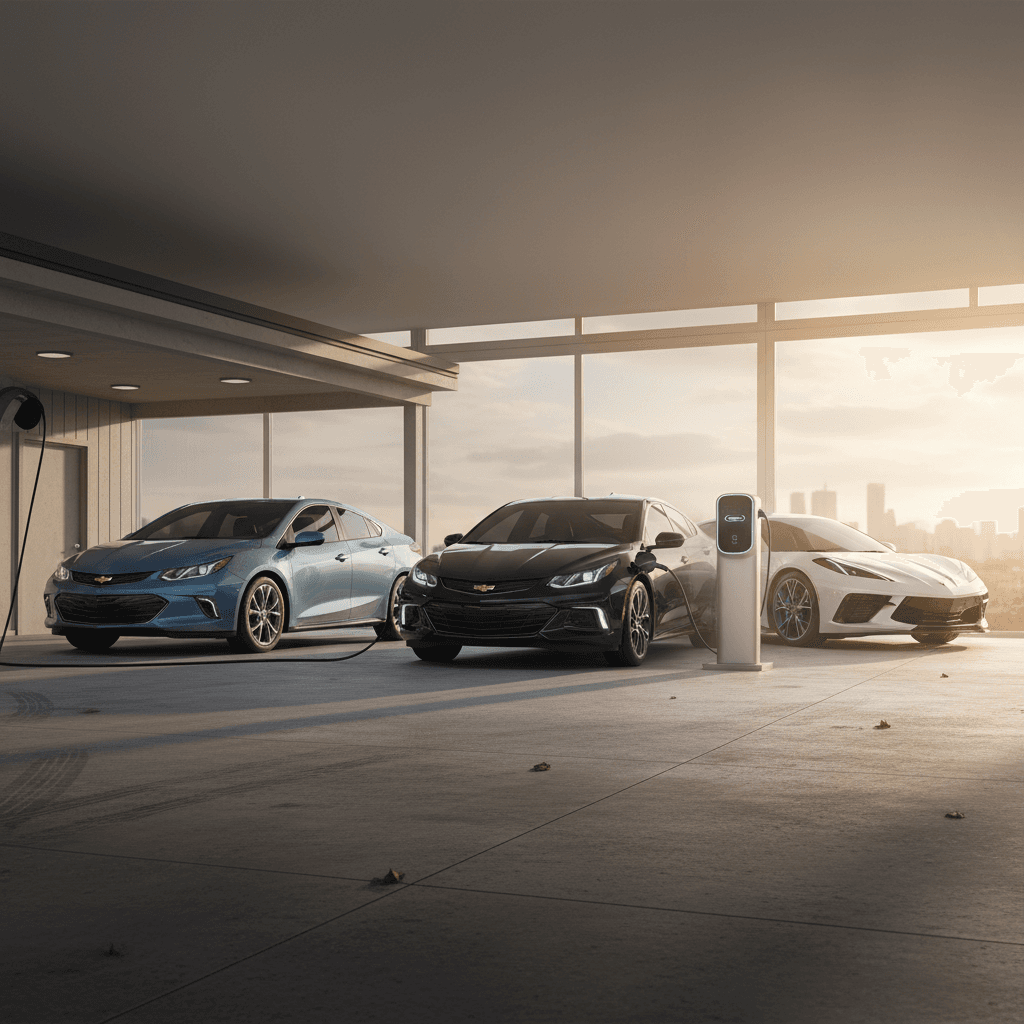
Search for “GM hybrid vehicles” in 2025 and you’ll mostly find two different stories. One is the long list of hybrids GM used to sell, Chevy Volt, Malibu Hybrid, Tahoe and Yukon Hybrids, Silverado and Sierra Hybrids. The other is GM’s aggressive push into full battery-electric models like the Equinox EV and Blazer EV. If you’re trying to decide whether a GM hybrid belongs in your driveway, it helps to understand where hybrids fit in GM’s strategy now, and what your real options are.
Quick takeaway
GM hybrid vehicles today (2025 snapshot)
Let’s start with what’s actually on sale. Despite the long history of GM hybrid vehicles, the current U.S. showroom is surprisingly simple.
Current GM hybrid offerings in the U.S.
As of late 2025, the list is shorter than you might expect
Corvette E‑Ray (C8)
Type: High-performance hybrid sports car
- 6.2L V8 plus front electric motor
- ~655 hp combined and eAWD
- Small battery, not a plug‑in, can’t charge from a wall outlet
Best for drivers who want supercar performance with hybrid tech, not fuel-sipping commuting.
Other U.S. brands (Chevy, GMC, Buick, Cadillac)
Type: Mostly conventional gas and full EVs
- No current Chevy or GMC hybrid SUVs or trucks in U.S. showrooms
- Buick and Cadillac hybrids are focused on China and other markets
- Electrification in North America is centered on Ultium-based EVs like Blazer EV, Equinox EV, Lyriq, Hummer EV
Don’t assume every “electrified” GM is a hybrid
If your goal is to reduce fuel use dramatically or drive mostly on electricity, GM’s current U.S. hybrid lineup won’t give you many choices. You’re really cross-shopping older used GM hybrids, like the Chevy Volt, or GM’s newer full EVs against hybrids from other brands.
A brief history of GM hybrid vehicles
To understand where GM is headed, it’s worth looking at where they’ve been. Over the last two decades, GM has experimented with everything from mild hybrids to sophisticated range‑extended EVs.
GM hybrid and plug‑in milestones
- Full hybrids and mild hybrids: Tahoe/Yukon Hybrid, Silverado/Sierra Hybrid, Buick LaCrosse eAssist, Malibu eAssist and Malibu Hybrid, Cadillac Escalade Hybrid.
- Plug‑in hybrids / extended‑range EVs: Chevy Volt, Cadillac ELR (basically a luxury two‑door Volt).
- Regional hybrids: In China, GM sells multiple Buick and Chevrolet PHEV and hybrid models, including plug‑in versions of the Buick GL8 people-mover and various sedans and crossovers. These haven’t made it to the U.S. so far.
Why the Chevy Volt still matters
Spotlight: Corvette E‑Ray hybrid performance
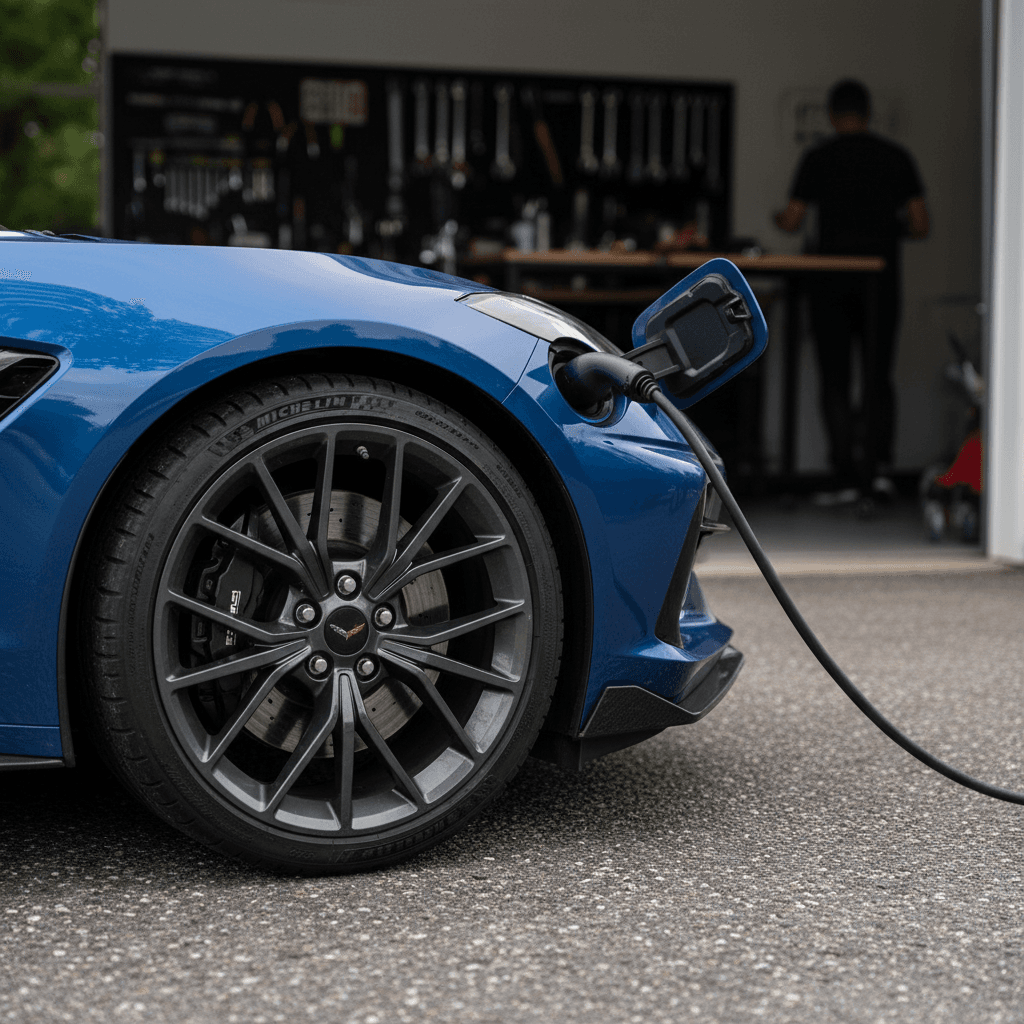
GM’s only mainstream U.S. hybrid today is the Corvette E‑Ray, and it’s nothing like the fuel‑saving hybrids you might be picturing. The E‑Ray is a performance‑first hybrid that uses electric power to go quicker, not necessarily to save fuel.
How the E‑Ray hybrid system works
- 6.2L LT2 V8 drives the rear wheels.
- An electric motor powers the front axle, creating electric all‑wheel drive.
- A compact battery stores energy from regeneration and the engine.
- No charge port: you can’t plug it in. The car charges itself as you drive and brake.
This is closer to Formula 1–style hybrid tech than a Prius. The goal is instant torque, traction out of corners, and blistering acceleration.
What you get as a driver
- Massive combined output, well north of the standard Corvette Stingray.
- Improved launch traction in poor conditions thanks to eAWD.
- Stealthy low‑speed operation in certain modes where the engine stays off briefly.
- A glimpse of how GM can blend combustion and electric performance in future sporty models.
If you’re shopping hybrids mainly to cut fuel bills, the E‑Ray isn’t the answer. But it proves GM still knows how to use hybrid tech creatively.
Is GM bringing back plug-in hybrids?
GM has publicly committed to a mostly electric future, but the real‑world transition has been bumpier than early press releases suggested. As EV demand grows unevenly and charging infrastructure evolves, plug‑in hybrids can act as a bridge for many drivers, and GM has signaled it understands that.
What GM has said about future hybrids
Reading between the lines of recent announcements
PHEVs as a bridge
GM executives have acknowledged that plug‑in hybrids will play a role in helping families transition from gas to fully electric vehicles, especially in markets where public charging is thin.
China-first strategy
GM already sells multiple Buick and Chevrolet plug‑in hybrids in China, including the latest Buick GL8 PHEV. Much of GM’s hybrid development work is happening there first.
U.S. timing still unclear
While GM has indicated PHEV powertrains will return to North America, concrete U.S. model and timing announcements have been limited. Expect them to appear in higher‑volume SUVs before niche sedans, if and when they arrive.
What this means for you
GM hybrids vs GM EVs: which makes more sense?
With GM’s showroom now tilted toward full EVs, it’s natural to ask whether you’re better off hunting for a used GM hybrid or stepping into a used GM EV instead. The answer depends on your driving pattern, home charging situation, and appetite for change.
GM hybrid vs GM EV: practical comparison
How an older GM hybrid (like a Volt or Malibu Hybrid) stacks up against a modern GM EV (like Equinox EV or Bolt) for everyday drivers.
| Factor | Used GM Hybrid (Volt, Malibu Hybrid, etc.) | Used GM EV (Bolt, Equinox EV, Blazer EV, etc.) |
|---|---|---|
| Fuel & energy cost | Gas plus some electricity; good savings vs pure gas. | Mostly electricity; usually lowest cost per mile if you can charge at home. |
| Range & refueling | Long total range with quick gas fill‑ups; ideal for very long trips without planning. | Excellent daily range, but long trips require planning around fast chargers. |
| Complexity | Engine + transmission + electric system = more parts, more fluids. | Simpler drivetrain with far fewer moving parts; no oil changes. |
| Noise & drive feel | Quieter than pure gas but still engine‑dependent most of the time. | Smooth, quiet, instant torque all the time. |
| Local emissions | Lower than pure gas, especially in city driving. | Zero tailpipe emissions. |
| Long‑term strategy | GM is moving away from hybrids in the U.S., which can affect long‑term support and parts availability. | GM’s Ultium-based EVs are central to its future lineup and investment. |
If you can charge at home or work, a full EV often delivers lower running costs than an older hybrid, especially when you buy used.
Where a hybrid still shines
Buying a used GM hybrid: what to look for
Because GM isn’t selling many new hybrids here, the real story for most shoppers is the used GM hybrid market. That’s where models like the Chevy Volt, Malibu Hybrid, and the early hybrid SUVs live, and each comes with specific things to check before you buy.
Used GM hybrid inspection checklist
1. Understand the hybrid type
Is it a <strong>full hybrid</strong> (can drive on electric alone), a <strong>plug‑in hybrid</strong> (can be charged from a wall outlet), or a <strong>mild hybrid</strong> (can’t drive on electric alone)? A Chevy Volt behaves very differently from a Malibu with eAssist.
2. Evaluate battery health, not just mileage
Hybrid and plug‑in batteries degrade over time. Ask for any available battery diagnostics or service history. On plug‑ins, compare real‑world electric range (from the current owner or trip logs) with the original EPA rating to see how much capacity has been lost.
3. Check charging hardware and cables
For plug‑ins like the Volt, make sure the <strong>charge port</strong> opens and latches correctly, the included charging cable works, and public charging connectors fit securely. Replacing damaged cables or inlets can be pricey.
4. Review hybrid-specific recalls and campaigns
Hybrids often have unique service campaigns for things like battery control modules and cooling systems. Ask a dealer to run the VIN for open recalls or extended warranty coverage that might still apply.
5. Test drive in all drive modes
Drive long enough to experience engine‑on and engine‑off operation, regenerative braking, and full‑throttle acceleration. Listen for unusual noises when the engine starts and stops, and watch for any warning lights or error messages.
6. Factor in future parts and service
Some older GM hybrids were low‑volume. Ask local shops or dealers whether they still see these vehicles regularly, and what typical repairs cost. In some cases, moving to a more common EV or hybrid model can mean easier long‑term ownership.
Be cautious with neglected early hybrids
This is where buying through a specialist matters. At Recharged, every used EV we list comes with a Recharged Score Report that includes verified battery health, fair‑market pricing, and expert guidance, so you’re not guessing about the most expensive component in the car.
When a used EV beats a used hybrid
If you started this search looking for GM hybrid vehicles, you may actually be a great candidate for a used EV, especially now that prices on models like the Chevy Bolt and early Ultium EVs have become more approachable on the used market.
Scenarios where a GM EV is the better move
- Reliable home charging: You can install or already have a Level 2 charger in your garage or driveway.
- Predictable daily miles: Your daily driving is well within the range of a Bolt, Equinox EV, or similar.
- Low maintenance appeal: You like the idea of skipping oil changes and many traditional wear items.
- Urban or suburban lifestyle: You spend most of your time in areas with decent public charging, not remote regions.
In these cases, a used EV often gives you smoother driving, lower running costs, and a future‑proof powertrain compared with an aging hybrid.
Scenarios where a hybrid still earns its keep
- Limited home charging: You rent, have no dedicated parking, or can’t install a charger.
- Frequent long-distance travel: You often exceed typical EV ranges in areas with sparse fast‑charging.
- One-vehicle household: You need one car to do everything, without planning around charging.
- Budget constraints: A fairly priced used Volt or Malibu Hybrid falls into your budget before comparable EVs.
If any of these sound like you, a hybrid, GM or otherwise, can still be the most practical near‑term solution.
How Recharged can help you decide
GM hybrid vehicles: frequently asked questions
Frequently asked questions about GM hybrid vehicles
Bottom line on GM hybrid vehicles
GM’s hybrid story is a bit unusual. The company helped pioneer plug‑in hybrids with the Chevy Volt, experimented with hybrid trucks and SUVs, and now finds itself in 2025 selling just one U.S. hybrid, an ultra‑quick Corvette, alongside a growing lineup of full EVs. For you as a shopper, that means most of the action is in the used market, where Volts and other legacy GM hybrids sit next to newer GM EVs at increasingly attainable prices.
If you can charge at home and your daily driving fits within an EV’s range, a used GM EV may out‑deliver any older hybrid on running costs and driving experience. If your life doesn’t yet fit neatly into the EV box, a plug‑in hybrid like a Volt, or even a hybrid from another brand, can still be the right bridge. The important thing is matching the technology to your real‑world use, not the other way around. And if you’d like help sorting that out, Recharged’s battery‑health reports, expert guidance, financing, and nationwide delivery make it simpler to choose the electrified path that actually works for you.