If you’re considering a Genesis Electrified GV70, you’ve probably heard about its generous battery warranty. But what does the Genesis GV70 Electrified battery warranty really cover in day‑to‑day terms, especially if you’re planning to keep the SUV a long time or buy one used? This guide breaks the warranty down into plain English so you know exactly what’s protected, what isn’t, and how that should influence your buying decision.
Key takeaway
Overview: Electrified GV70 battery warranty at a glance
Genesis Electrified GV70 battery & EV warranty snapshot (U.S.)
Genesis pairs the Electrified GV70’s luxury interior and strong performance with one of the longer EV battery warranties in the segment. For a typical U.S.‑spec Electrified GV70, you can expect factory coverage on the high‑voltage battery and related components well past the basic new‑vehicle warranty. That’s reassuring if you’re worried about the cost of a replacement pack or major EV system failure.
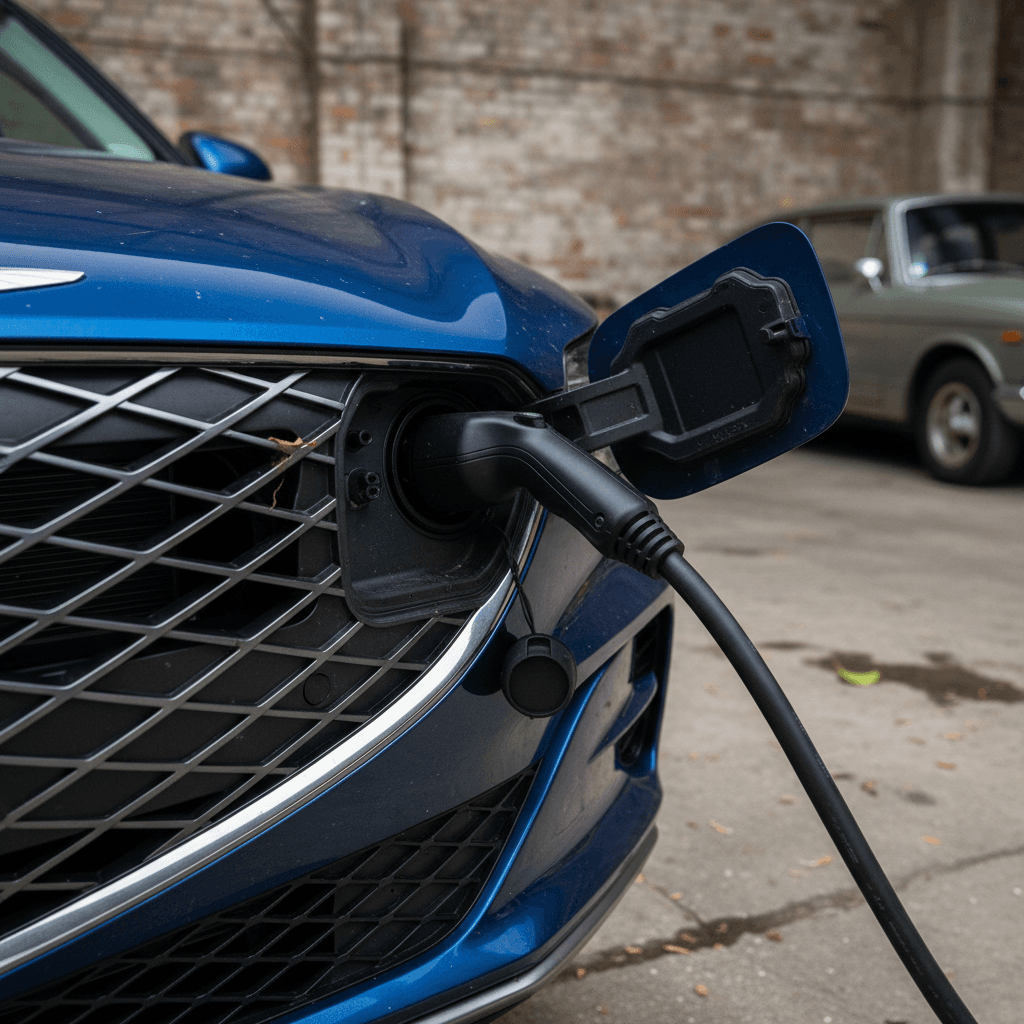
How long the Genesis Electrified GV70 battery warranty lasts
Genesis advertises a long warranty for its EV batteries, and the Electrified GV70 is no exception. Exact terms can vary by model year and region, so always confirm in the warranty booklet for the specific vehicle in front of you. But in the U.S., the pattern is clear.
Typical Electrified GV70 U.S. warranty terms
Time and mileage limits you’re likely to see on a U.S.‑market Genesis Electrified GV70. Always verify against the VIN’s actual warranty record.
| Coverage type | What it mainly protects | Duration (time) | Limit (miles) |
|---|---|---|---|
| High‑voltage battery pack | Battery modules, pack case, high‑voltage battery management components | Up to 10 years | Up to 100,000 miles |
| EV system / powertrain | Electric drive motors, reduction gear, inverter, onboard charger, high‑voltage wiring | Up to 10 years | Up to 100,000 miles |
| New‑vehicle limited warranty | Most non‑wear interior, exterior, electronics, HVAC, suspension components | 5 years | 60,000 miles |
| Anti‑perforation (corrosion) | Rust‑through on body panels | 7 years | Unlimited miles (typical) |
Warranty limits are measured from the vehicle’s original in‑service date, not from when you buy it used.
Check your specific model year
The important point is that the high‑voltage battery warranty outlasts the basic bumper‑to‑bumper warranty. Even after the 5‑year/60,000‑mile new‑vehicle coverage runs out, you may still have several years of protection left on the battery and core EV hardware.
What the Electrified GV70 battery warranty actually covers
Think of the Electrified GV70’s battery warranty as protection against defects in materials or workmanship on the high‑voltage system. It’s not a blanket promise that the battery will always behave like new, but it does give you a safety net if something major goes wrong during the coverage period.
Core items typically covered by the Electrified GV70 battery warranty
Exact wording varies by model year, but these are the usual categories Genesis treats as part of the high‑voltage battery system.
Battery pack & modules
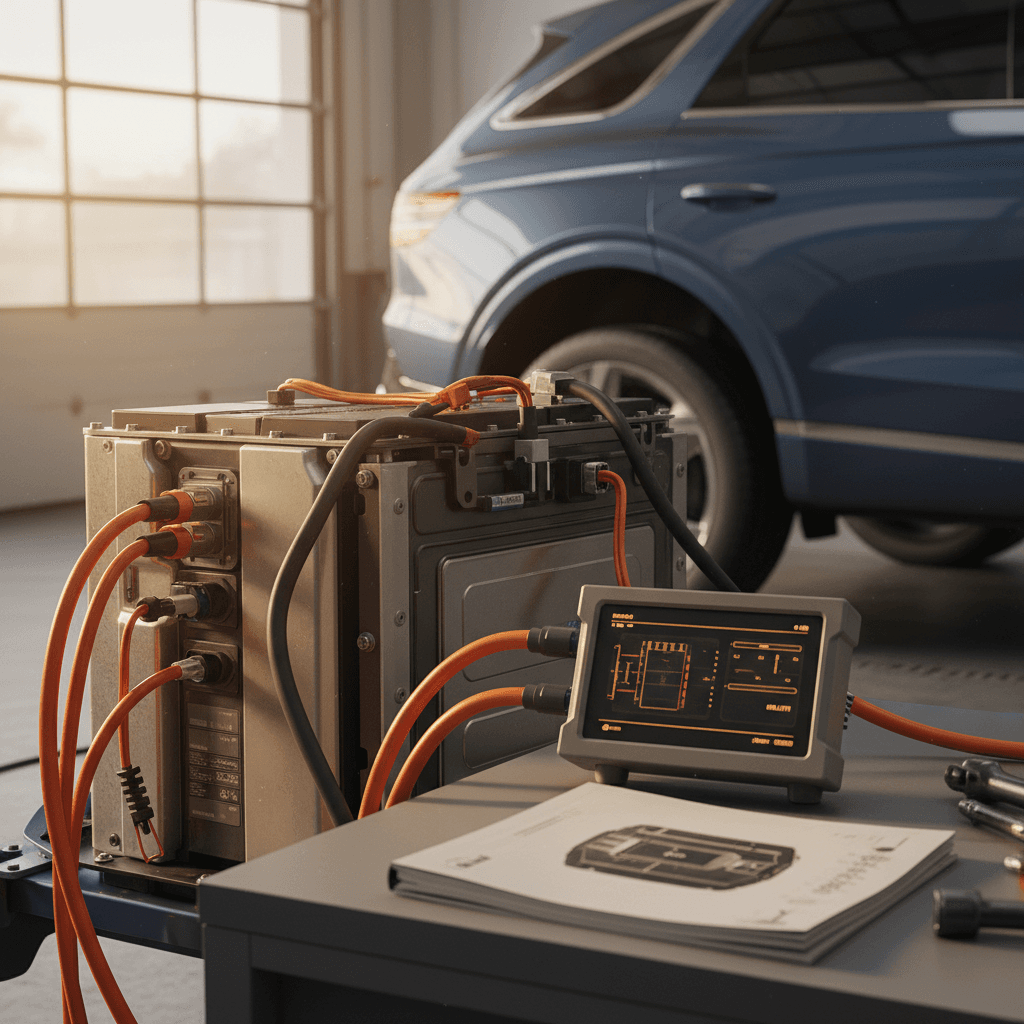
The physical high‑voltage battery pack, including internal modules and pack enclosure, is the heart of the warranty. If a defect causes the pack to fail or lose the ability to hold charge within the warranty period, Genesis may repair or replace it.
Battery management electronics
Control units that monitor and balance cells, often called the Battery Management System (BMS) and related controllers, are usually considered part of the high‑voltage battery coverage if they fail due to a defect.
High‑voltage safety components
Contactors, relays, and other integrated high‑voltage components may be included when they’re considered part of the battery assembly. Failures that keep the vehicle from charging or driving can fall under this warranty.
EV battery vs. EV powertrain
Genesis often distinguishes between the high‑voltage battery and the broader EV system / powertrain. The battery warranty focuses on the pack and its direct control modules. A separate EV powertrain warranty backs items like the drive motors, reduction gear, inverter, and onboard charger, usually to the same 10‑year / 100,000‑mile limit.
How warranty repairs work in practice
If a covered battery or EV system part fails inside the time/mileage window, Genesis typically covers parts and labor for the repair or replacement at an authorized retailer. In serious cases, that may mean an entire pack or major component swap. You’re usually responsible only for normal taxes and fees, if any.
Use the dealer’s warranty look‑up
What the battery warranty doesn’t cover (the fine print)
No automaker offers unlimited protection on an EV battery, and Genesis is no different. The Electrified GV70’s warranty comes with a list of exclusions that matter a lot if you’re comparing vehicles or reading online horror stories about expensive battery work.
- Normal capacity loss (degradation): Like every lithium‑ion pack, the Electrified GV70’s battery will gradually lose range over time. Genesis does not promise to keep the pack at its original capacity forever, and there’s no widely advertised capacity‑percentage guarantee as you’ll see with some rivals.
- Damage from misuse or neglect: Improper lifting or jacking, collision damage, submersion, unauthorized modifications, or ignoring warning lights can all void coverage for the damaged components.
- Charging equipment outside the car: Home wall boxes, portable chargers, adapters, and public charging stations themselves are not covered. If a faulty charger harms the battery, Genesis may deny coverage and you’d be dealing with the charger provider or your insurer.
- Wear‑and‑tear items: Tires, brake pads, cabin 12‑V battery, and normal maintenance items fall under routine ownership, not the high‑voltage battery warranty.
- Commercial or abusive use: Taxis, rideshare, delivery, and other heavy‑duty or track use can change or limit coverage depending on the exact terms in the warranty booklet.
Salvage or flood titles usually end warranty coverage
This is why a clean vehicle history report and a transparent seller matter as much as the numbers printed in a brochure. The warranty is only as good as the vehicle’s history and how closely previous owners followed the maintenance and usage rules.
Original owner vs. second owner and California differences
One of the trickiest parts of Genesis warranty coverage, especially relevant if you’re shopping used, is how much depends on whether you’re the original owner, where the vehicle was first sold, and which state’s emissions rules apply.
How Electrified GV70 battery coverage can differ by owner and region
Always confirm the exact terms for the VIN and state where the vehicle was first registered.
Original retail owner (most states)
The first retail buyer or lessee usually gets the full advertised EV battery and powertrain warranty (commonly up to 10 years / 100,000 miles). In many cases, that longer coverage is not fully transferable to later owners, after a sale, coverage may effectively drop to the basic 5‑year / 60,000‑mile level for major components.
Second or later owners
If you’re not the first owner, you should assume you’re getting at least the remaining portion of the 5‑year / 60,000‑mile new‑vehicle warranty, as long as the vehicle wasn’t abused or branded. The extended 10‑year EV powertrain coverage may or may not carry over. That’s why a VIN‑based warranty check is so important on a used Electrified GV70.
California and CARB states may see longer coverage
Genesis also sells Certified Pre‑Owned (CPO) vehicles through its own retailers. CPO Electrified GV70s can include additional warranty benefits beyond what an ordinary second owner would get from a private‑party sale. If you’re cross‑shopping CPO and non‑CPO, make sure you’re comparing the full warranty stack, not just the battery terms.
Battery warranty vs. the rest of the Electrified GV70 warranty
The high‑voltage battery warranty is just one slice of the Electrified GV70’s coverage picture. Understanding where it fits with the rest of the warranty stack helps you see what’s still protected and what’s on you as the vehicle ages.
How the Electrified GV70’s battery warranty fits with other coverage
These are typical U.S. coverage buckets for an Electrified Genesis model. Always validate against the specific VIN and year.
| Coverage | Typical duration | Mileage limit | Main focus |
|---|---|---|---|
| High‑voltage battery | Up to 10 years | Up to 100,000 mi | Battery pack and closely related control components |
| EV system / powertrain | Up to 10 years | Up to 100,000 mi | Electric drive units, reduction gear, inverter, onboard charger |
| New‑vehicle limited | 5 years | 60,000 mi | Most non‑wear components: interior/exterior hardware, electronics, HVAC |
| Corrosion (anti‑perforation) | 7 years | Often unlimited | Rust‑through of body panels from the inside out |
| Complimentary maintenance | Typically 3 years | 36,000 mi | Factory‑recommended maintenance at a Genesis retailer on new vehicles (terms vary by year). |
Durations measured from the original in‑service date; subsequent owners inherit only what remains, and some long‑term coverage applies to original owners only.
Why this matters for long‑term owners
Buying a used Electrified GV70? Warranty and battery checklist
On paper, “10‑year battery warranty” sounds like a guarantee. In the real world, what matters is how much of that coverage is left, whether it transfers to you, and how healthy the battery actually is today. Here’s a practical checklist to use when you’re evaluating a used Genesis Electrified GV70.
Used Electrified GV70 battery & warranty checklist
1. Confirm original in‑service date
Ask the seller or a Genesis retailer to provide the vehicle’s original in‑service date, the day it was first sold or leased. All warranty clocks start there, not when you buy it. Subtract that date from today to see how many years of battery coverage are realistically left.
2. Run a VIN‑based warranty lookup
Have a Genesis retailer or a trusted marketplace like <strong>Recharged</strong> confirm remaining factory coverage by VIN. This answers critical questions: Is the longer EV battery/powertrain warranty still in effect? Has any coverage been voided due to salvage, flood, or misuse?
3. Review title history and accidents
Order a vehicle history report to check for salvage, rebuilt, or flood titles. Any of those can effectively wipe out factory warranty coverage, including the high‑voltage battery. Multiple severe accidents or prior structural damage also raise red flags about long‑term reliability.
4. Ask about fast‑charging habits
Repeated, back‑to‑back DC fast‑charging from low state of charge can accelerate battery wear over time. Ask previous owners how often they used DC fast chargers versus home or workplace Level 2 charging. You’re looking for patterns, not perfection.
5. Look for charging or range complaints
Scan service records and any online listings for notes about charging faults, reduced range, or high‑voltage component failures (like onboard charger or ICCU issues). Recurring problems, even if repaired under warranty, are worth considering carefully.
6. Get an independent battery health report
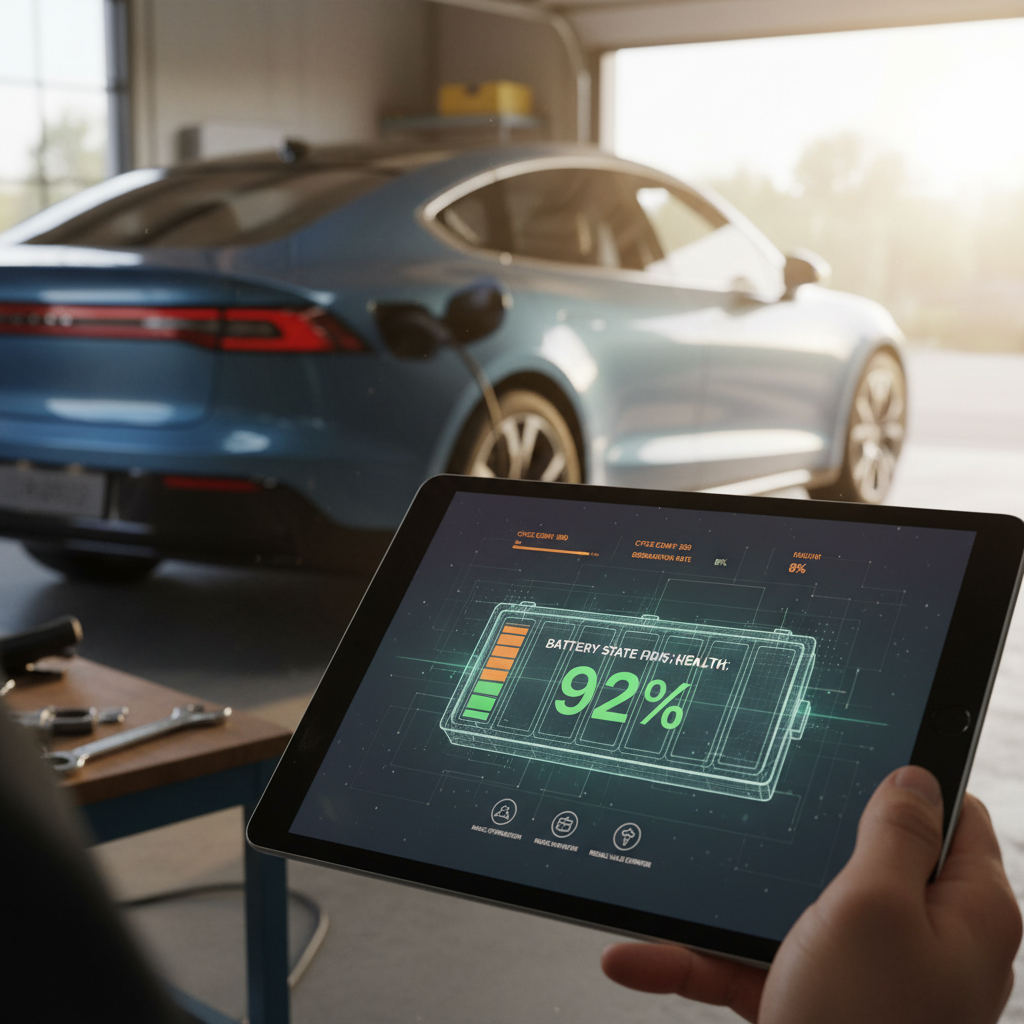
Whenever possible, go beyond the dash guess‑o‑meter. A third‑party battery health assessment, like the <strong>Recharged Score</strong> you get with every vehicle on Recharged, quantifies remaining capacity and flags outliers before you commit.
Bring this checklist when you test‑drive
How Recharged evaluates Electrified GV70 battery health
A strong factory warranty is good. Knowing how much life is realistically left in the battery is better. That’s where independent battery health data comes in, especially if you’re shopping outside the Genesis dealer network or considering a higher‑mileage Electrified GV70.
The Recharged Score battery assessment
Every EV sold through Recharged includes a Recharged Score Report with verified battery health. Our diagnostics look beyond basic odometer readings to estimate usable capacity, flag unusual degradation patterns, and highlight any mismatches between the vehicle’s age, mileage, and energy behavior.
Why this matters for the Electrified GV70
With a luxury EV like the Electrified GV70, pack replacement costs can be significant if you’re unlucky enough to experience an out‑of‑warranty failure. A transparent, third‑party view of battery health gives you leverage when negotiating price, comparing similar vehicles, or deciding whether to purchase additional coverage.
Simplify your used EV search
Ready to find your next EV?
Browse VehiclesCommon questions about the Electrified GV70 battery warranty
Electrified GV70 battery warranty FAQ
Bottom line: Is the Electrified GV70 battery warranty enough?
Taken on its own, the Genesis GV70 Electrified battery warranty is one of the stronger offerings in the luxury EV space. Up to 10 years or 100,000 miles of high‑voltage battery and EV system coverage gives original buyers genuine peace of mind and can still offer meaningful protection for careful second owners. But like any warranty, it has limits, particularly around normal degradation, ownership transfers, and vehicles with rough histories.
If you’re shopping new, the warranty should be a confidence booster, not the only thing you rely on. If you’re shopping used, pair the remaining coverage with hard data on real battery health and a detailed review of title history and service records. That’s exactly what you get when you shop EVs, Electrified GV70 included, through Recharged, where every vehicle comes with a Recharged Score battery report, transparent pricing, and EV‑specialist support from first click to delivery.