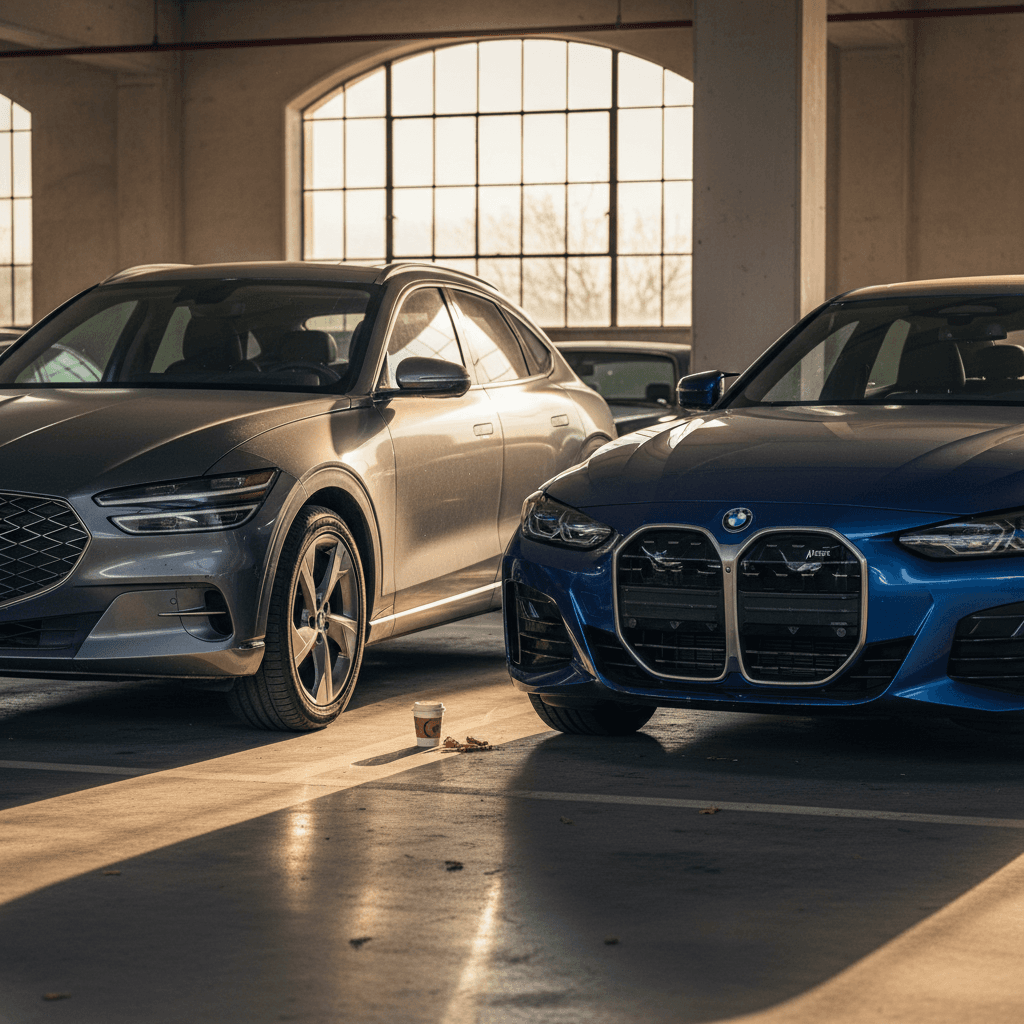
You’re cross‑shopping the Genesis GV60 vs BMW i4 because you want a premium electric car that still feels special every time you drive it. One is a swoopy electric SUV from a rising luxury brand; the other is a classic BMW sport sedan gone electric. Both are compelling on the used market today, but they suit very different kinds of drivers.
Two luxury EVs, two personalities
Overview: Genesis GV60 vs BMW i4
The Genesis GV60 rides on Hyundai‑Kia’s dedicated E‑GMP EV platform, shared with the Hyundai Ioniq 5 and Kia EV6. It’s a compact luxury crossover with standard or available all‑wheel drive, a 77.4 kWh battery, and a cabin that punches well above its price in materials and design. In the U.S., you’ll most often see three trims: Standard RWD (introduced for 2024), Advanced AWD, and Performance AWD.
The BMW i4 is essentially a 4 Series Gran Coupe converted to electric power. That means a lower, longer, more traditional sedan‑like shape with a hatchback trunk. Common U.S. variants include the i4 eDrive35 and eDrive40 (single‑motor RWD) and the dual‑motor M50 performance model. Batteries hover around the low‑80 kWh range, with EPA ranges that can nudge past 300 miles in the right spec.
How they’re positioned
Same luxury EV shopper, very different flavors
Genesis GV60
Type: Compact luxury electric SUV
- Higher seating position
- Playful exterior and bold interior colors
- Ultra‑fast DC charging (E‑GMP platform)
- Comfort‑oriented with plenty of tech
BMW i4
Type: Electric sport sedan / Gran Coupe
- Low, sporty driving position
- Classic BMW handling feel
- Long‑range highway cruiser
- More conservative styling and layout
Quick specs and key differences
Genesis GV60 vs BMW i4: core specs
Typical U.S. configurations you’ll see most often on the used market.
| Genesis GV60 (typical) | BMW i4 (typical) | |
|---|---|---|
| Body style | Compact 2‑row SUV | 4‑door Gran Coupe hatchback |
| Drive layout | RWD or AWD | RWD (eDrive35/40) or AWD (M50) |
| Battery size | 77.4 kWh (usable class) | ~70–81 kWh usable depending on trim |
| EPA range (best trims) | Up to ~294 miles (Standard RWD) | 300+ miles possible (eDrive40) |
| 0–60 mph (quickest trims) | ≈4.0 sec (Performance AWD, Boost) | As quick as mid‑3s (M50) |
| DC fast‑charge peak | Up to 235 kW (800V system) | Around 180–200 kW depending on trim |
| Ground clearance | SUV‑like, easier ingress/egress | Lower, sedan‑like |
| Cargo space | More vertical space, SUV hatch | Long hatch but lower roofline |
| Overall vibe | Playful, tech‑forward, comfy | Sporty, familiar BMW luxury |
Exact specs vary by model year and trim, but this gives you the broad shape of the matchup.
Read the badges carefully
Driving experience and performance
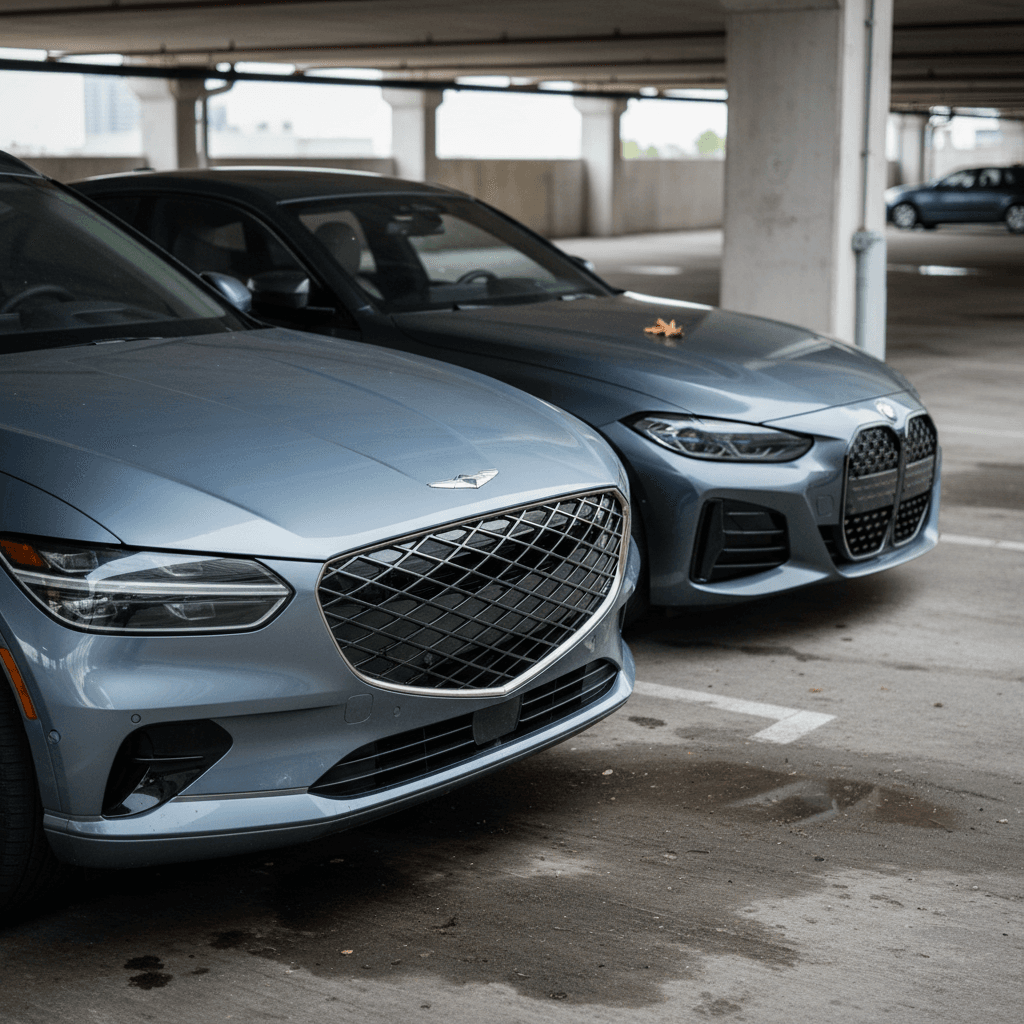
If you care most about how an EV feels from behind the wheel, the way it turns in, how it rides over bad pavement, how quickly it piles on speed, this is where the Genesis GV60 vs BMW i4 comparison gets interesting.
Genesis GV60: effortless and playful
- Standard RWD delivers smooth, easy power that feels more than adequate for everyday driving.
- Advanced AWD adds a front motor for stronger acceleration and more confident all‑weather traction.
- Performance AWD turns things up with a Boost mode that temporarily unleashes serious shove for passing or freeway on‑ramps.
- The steering is light and the ride is generally comfortable, with a clear luxury bent over outright sportiness.
It’s the kind of EV that makes city traffic bearable and highway cruising serene, while still feeling eager when you ask it to hustle.
BMW i4: classic BMW, now electric
- The eDrive40 and eDrive35 focus on smooth, confident acceleration and excellent high‑speed stability.
- The M50 adds a second motor and serious horsepower; it can launch with the kind of urgency that used to be reserved for M3s.
- The steering is weightier than the GV60’s and the chassis feels buttoned‑down, even if the underlying car started life with a gas engine.
- Ride quality on M50s with big wheels can be firm; buyers sensitive to harshness should pay attention to wheel size and tire choice.
If you’ve loved BMWs for their handling, the i4 will feel like slipping back into a familiar pair of driving shoes.
Watch wheel and tire choices
Range, battery, and charging
Real‑world range depends on temperature, speed, wheels, and how much you lean on that instant EV torque. But some clear patterns emerge when you compare the GV60 and i4 head‑to‑head.
Range and charging at a glance
- Genesis GV60 uses a roughly 77.4 kWh battery in U.S. models and an 800‑volt system that supports very rapid DC fast charging when conditions are right.
- Best‑case range is found in the Standard RWD trim, which can approach the mid‑200s to just under 300 miles EPA; AWD and Performance trims trade a bit of range for power and grip.
- BMW i4 uses a battery just over 80 kWh in many trims, with EPA ranges that can climb above 300 miles in the eDrive40, particularly on smaller wheels.
- The i4 doesn’t charge quite as dramatically fast at peak as the GV60, but it’s still competitive for road‑trip DC charging and benefits from BMW’s mature navigation and charging route planning.
Charging networks and plugs
Where the GV60 quietly pulls ahead is charging convenience. That 800‑volt architecture makes it easier to go from a low state of charge to 80% in a short coffee stop, especially on 350 kW stations. If you road‑trip a lot, that time saved matters. The i4 counters with slightly better best‑case range and BMW’s polished navigation and charging route guidance.
Interior comfort and technology
Open the doors and the character of these two EVs really splits. The GV60 is like walking into a boutique hotel; the i4 is more of a familiar European business hotel, well‑finished, conservative, and ergonomically excellent.
Genesis GV60 cabin
- Light, airy feel with a flat floor and lots of storage space between the seats.
- Eye‑catching details like the "Crystal Sphere" shifter that glows when you start the car, and bold color/trim combinations.
- Large, sharp dual screens with Genesis’ latest infotainment and a solid mix of physical controls for high‑use functions.
- Comfortable, supportive seats with available ventilation, massage‑like functions, and clever features like Face Connect and Digital Key on newer years.
It feels genuinely special, especially considering where Genesis sits on the price ladder versus traditional German luxury brands.
BMW i4 cabin
- Classic BMW driving position: low, snug, and oriented toward the driver.
- Materials feel solid and familiar if you’ve been in recent BMWs, with lots of dark surfaces and subtle accent lighting.
- BMW’s large curved display and iDrive infotainment system bring strong navigation, charging info, and over‑the‑air update capability.
- Front seats are typically firmer and more bolstered than the GV60’s, especially in M Sport or M50 trims.
If you like a cockpit‑style driving environment and less visual drama, the i4 will feel exactly right.
Tech tip for used shoppers
Practicality, space, and ride comfort
Both of these are compact luxury EVs, but “compact” means something different in a low sedan versus a upright crossover. How you use the back seat and cargo area should weigh heavily in any Genesis GV60 vs BMW i4 decision.
Everyday usability: GV60 vs i4
Think about people, pets, and stuff, not just horsepower.
Genesis GV60 practicality
- Higher roofline and more upright seating make the rear seats easier to access, especially for kids or older passengers.
- Cargo area is tall and square, so bulky items, strollers, and dogs are easier to fit.
- Higher driving position offers excellent visibility in traffic and parking lots.
- Ride tuning leans comfortable; even the Performance model mostly keeps its composure over broken pavement when properly equipped.
BMW i4 practicality
- Hatchback trunk opens wide and long, handy for luggage and long items, but the roofline limits vertical space.
- Rear headroom can be tight for tall adults due to the sloping roof.
- Lower seating position may be tough for anyone with mobility issues to slide in and out.
- On smooth highways, the i4 settles into an impressive, Germanic long‑distance lope.
Family‑friendly edge
Ownership costs and value on the used market
On the used market, both the GV60 and BMW i4 represent smart ways to get into a premium EV without taking the brunt of new‑car depreciation. But their cost stories play out differently.
Cost and value considerations
1. Purchase price and depreciation
Genesis is still earning its luxury stripes with some shoppers, so <strong>GV60 resale prices can be softer</strong> than BMW’s. That’s good news if you’re buying used: you may find a well‑equipped GV60 for noticeably less than a comparable‑year i4 with similar mileage.
2. Charging costs and efficiency
The i4, especially in eDrive40 trim, tends to shine on steady‑state highway efficiency. The GV60 is very competitive. Your actual electricity costs will depend more on local rates and how often you use DC fast charging versus home Level 2.
3. Maintenance and repairs
Neither EV needs oil changes, but tire wear, brakes, and suspension components still matter. The i4’s heavy performance trims on big wheels can chew through tires. The GV60’s EV‑dedicated platform simplifies some systems but introduces advanced tech like facial recognition and trick parking aids that are worth testing thoroughly on a used example.
4. Warranty coverage
Both brands offer strong EV battery warranties (often 8 years/100,000 miles for battery components, depending on model year). On a used car, check what remains of both the basic and powertrain warranties and whether they’re transferable.
5. Insurance and registration
Premium EVs can be more expensive to insure than mainstream models. If you’re torn between a GV60 and i4, get sample quotes on specific VINs before you sign. Some states also offer reduced registration fees or perks for EVs, which can tilt the math a bit.
Battery health is the big wildcard
Which one fits you best?
If you stripped away the badges and handed these two EVs to different drivers, they’d gravitate in predictable directions. Your lifestyle and preferences are the real tiebreaker in the Genesis GV60 vs BMW i4 debate.
Match yourself to the right EV
Choose the Genesis GV60 if…
You want a <strong>compact SUV body style</strong> with easier access, better headroom, and more flexible cargo space.
You love <strong>bold design and high‑impact interiors</strong> that don’t look like anything else in the Whole Foods parking lot.
Fast DC charging is a priority because you road‑trip often and want to minimize stop times.
You value a softer, quieter ride over razor‑sharp handling, and your commute includes rough pavement or city streets.
You’re happy to trade a few miles of maximum range for better charging speed and day‑to‑day comfort.
Choose the BMW i4 if…
You prefer a <strong>sport sedan feel</strong> with a low driving position and a more connected sense of the road.
BMW’s <strong>steering, chassis tuning, and highway poise</strong> are exactly what you’re after in an EV.
You drive long distances at higher speeds and want the strongest possible real‑world range in an electric luxury car.
You like an <strong>understated interior</strong> that prioritizes driving ergonomics over show‑stopping design flourishes.
You’re willing to accept slightly firmer ride quality (especially in M50 trims) in exchange for serious performance.
How Recharged helps with used GV60 and i4 shopping
Shopping for a used luxury EV can feel like detective work, especially when you’re trying to compare something as different as a GV60 and an i4. That’s exactly the gap Recharged was built to fill.
Why shop your GV60 or i4 with Recharged
Clarity on battery, price, and the whole ownership picture.
Verified battery health
Fair market pricing
EV‑specialist guidance
Ready to find your next EV?
Browse VehiclesWhat your GV60 or i4 journey looks like with Recharged
1. Browse vehicles online
Filter by model, trim, price, and range to compare used Genesis GV60s and BMW i4s side by side in a fully digital showroom.
2. Dig into the Recharged Score
Review battery health, charging history patterns, and condition notes so you understand the story behind each car, not just the photos.
3. Talk to an EV specialist
Schedule a call or chat to sanity‑check your choice, talk through home charging, and get honest answers to “How will this feel at 80 mph in winter?”
4. Arrange financing and trade‑in
Use Recharged’s <strong>financing</strong> options and <strong>trade‑in or instant offer</strong> tools to put numbers around your decision without visiting three different dealerships.
5. Delivery or Experience Center visit
Complete your purchase online and choose <strong>nationwide delivery</strong> or schedule a visit to the Recharged Experience Center in Richmond, VA, where you can see vehicles in person.
Genesis GV60 vs BMW i4 FAQ
Frequently asked questions
Bottom line
The Genesis GV60 vs BMW i4 decision isn’t about which one is “better” in a vacuum. It’s about whether you want an expressive compact SUV that charges like a sprinter and pampers you with design, or a sport sedan that happens to be electric but still feels every inch a BMW. The GV60 leans toward comfort, clever tech, and everyday usability; the i4 leans toward range, driving feel, and familiarity.
On the used market, that means there’s likely a sweet‑spot example of each waiting for you, an i4 eDrive40 that shrinks your fuel bill on your weekly interstate run, or a GV60 Advanced that makes errands feel like a mini spa session. With Recharged, you can compare them apples‑to‑apples, from verified battery health to fair market pricing, and end up in the EV that actually fits your life instead of just winning a spec‑sheet argument.