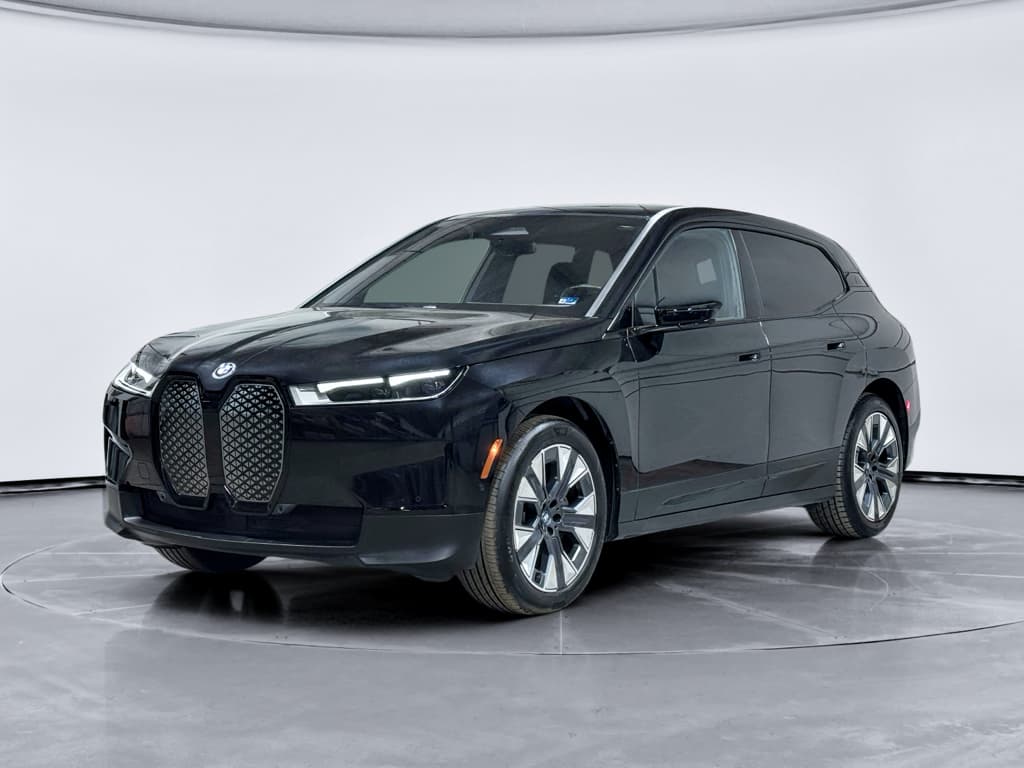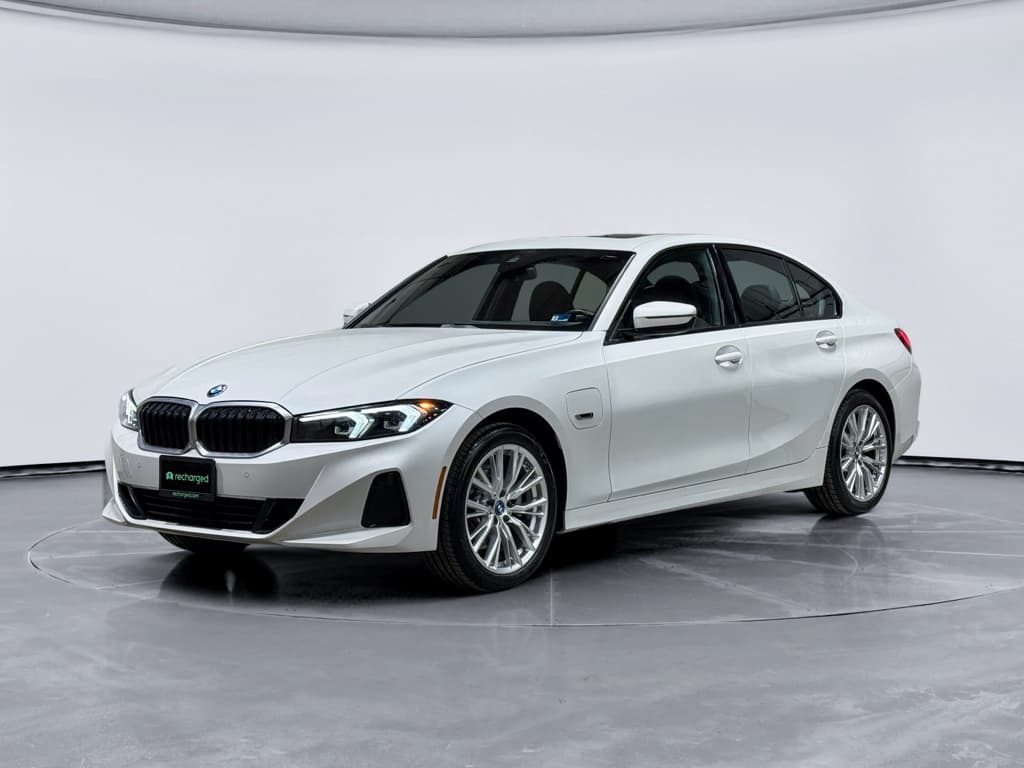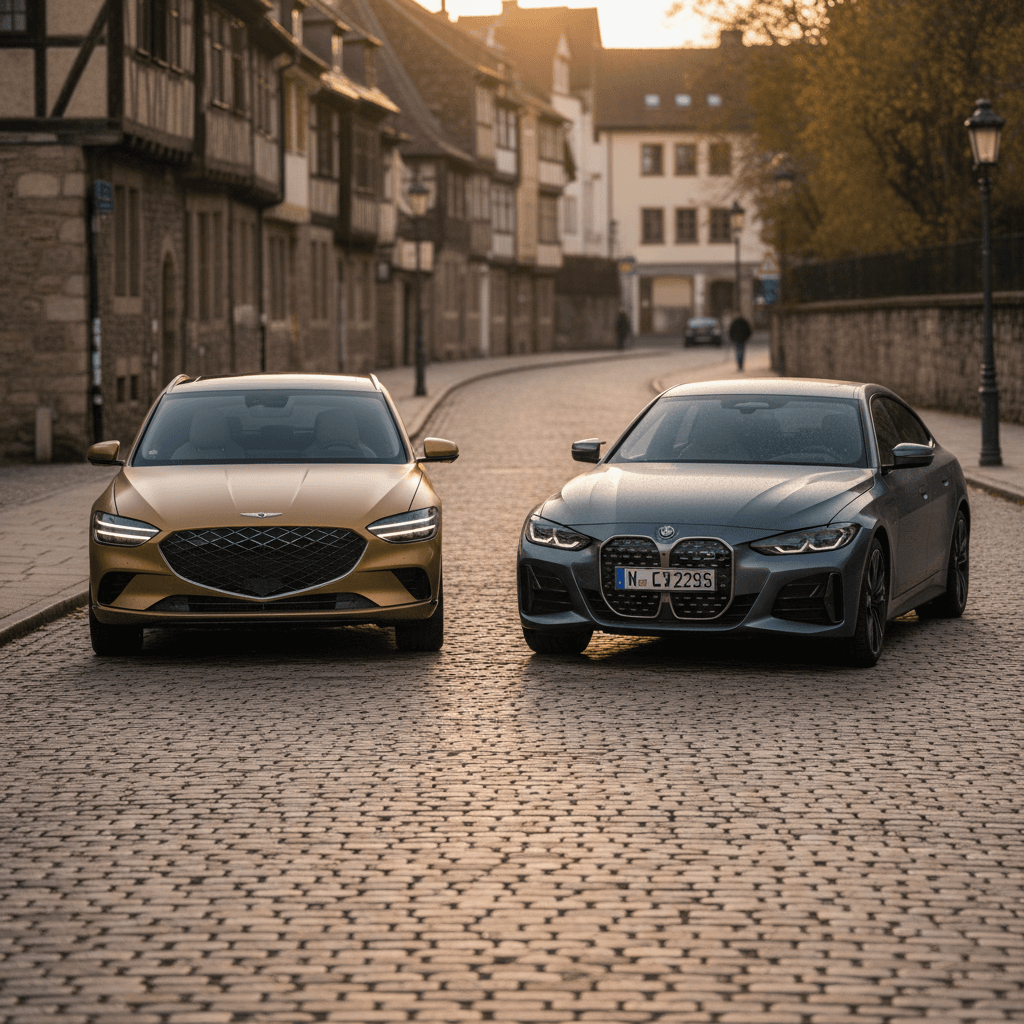
You’re comparing the Genesis GV60 vs BMW i4 and asking the right question: which is actually better to live with, not just quicker on paper? These two luxury EVs overlap on price and performance, but they feel very different day to day. Think of the GV60 as a high-tech, compact electric crossover and the i4 as a classic BMW sport sedan that happens to be electric.
Spoiler: there’s no one “best” here
Genesis GV60 vs BMW i4: quick overview
At-a-glance comparison
Genesis GV60
- Body style: Compact luxury crossover (with a hatch and higher seating)
- Best for: Families, urban drivers, and anyone who wants easier ingress/egress and more cargo space
- Character: Quiet, futuristic, a bit playful; comfort first, performance second
BMW i4
- Body style: Low liftback sedan built off the 4 Series Gran Coupe platform
- Best for: Drivers who love the feel of a classic BMW and don’t need SUV practicality
- Character: Taut, confident, more traditional inside with a strong performance streak
Think about your driveway, not the spec sheet
Design and practicality: crossover vs sleek sedan
Genesis GV60: compact SUV comfort
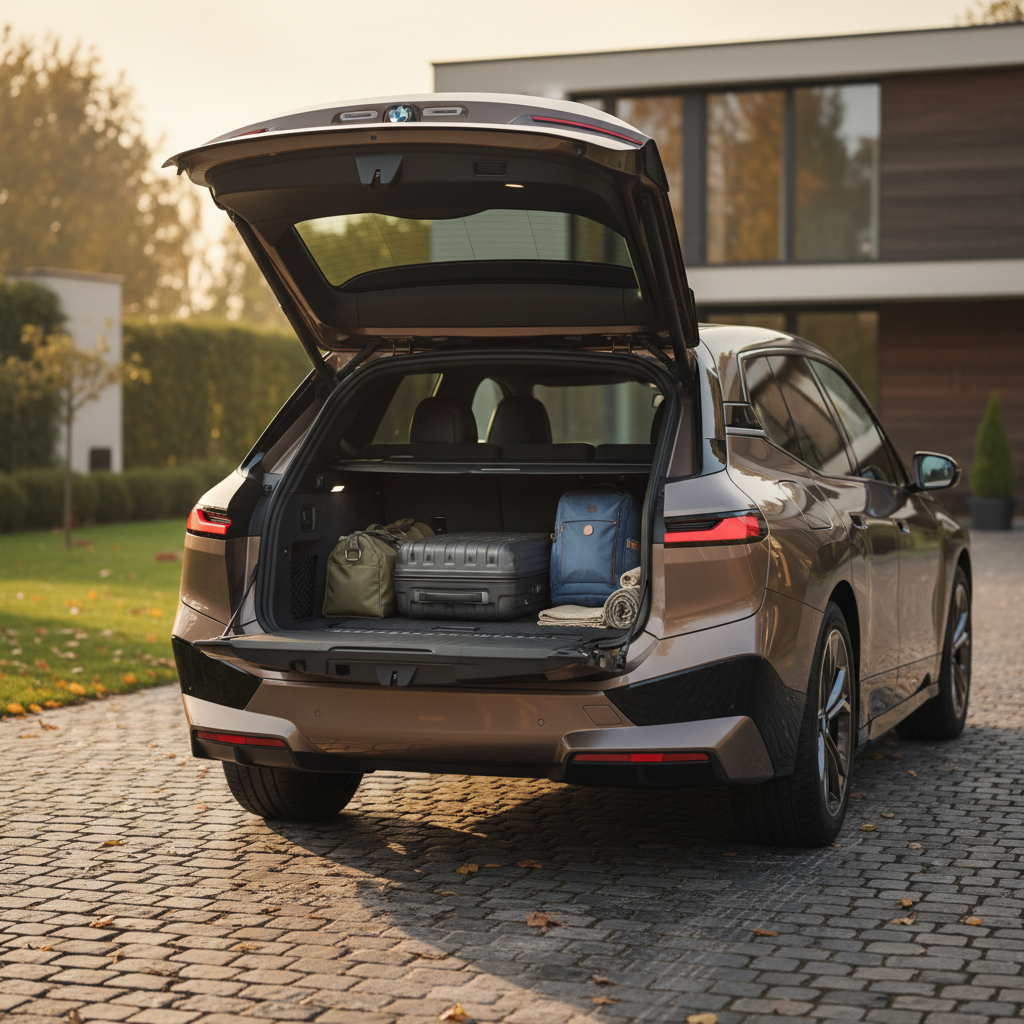
The GV60 is a compact electric crossover. You sit higher, step in rather than drop down, and get a large hatch with a wide opening. That makes it easier for kids, aging knees, and bulky items like strollers or pets.
- Seating position: Upright, airy, with great visibility
- Cargo: Flexible hatch area and split-folding rear seats
- Back seat: More headroom for taller passengers
BMW i4: sleek, low, and coupe-like
The i4 is a low-slung liftback sedan. It looks great and feels classic BMW from the driver’s seat, but that style costs some practicality.
- Seating position: Low and sporty; great if you like being close to the road
- Cargo: Useful hatch, but overall space is less generous than the GV60
- Back seat: Fine for kids or shorter trips; tall adults brush the roof
Watch your driveway and parking ramps
Performance and driving feel
How they feel from behind the wheel
Paper specs are close; the personalities are not.
Power & acceleration
GV60: Even the base models feel quick; Performance trim adds serious punch but stays composed rather than wild.
i4: Ranges from brisk (eDrive35/40) to very fast (M50). The M50, in particular, feels every bit a performance BMW.
Steering & handling
GV60: Light steering, easy in town, relaxed on the highway. More comfort than corner-carver.
i4: Heavier, more communicative steering. You feel more of the road, for better and occasionally for worse.
Ride & noise
GV60: Softer, more insulating ride; takes the edge off broken pavement.
i4: Firmer, more tied down; can feel busy on poor surfaces, especially with big wheels.
If you love driving for driving’s sake…
Range, efficiency, and winter reality
On paper, both the Genesis GV60 and BMW i4 offer plenty of range for daily commuting and normal road trips. Depending on trim and wheels, you’ll see EPA-rated ranges in the mid-200s to just over 300 miles. The i4 often edges ahead on efficiency, especially in rear-wheel-drive versions, while dual-motor GV60s trade some range for traction and power.
- Real-world highway driving at 70–75 mph often lands you closer to 70–80% of the official EPA range, especially in cold weather.
- Bigger wheels (20" and up) can knock meaningful miles off range on both models.
- All-wheel-drive trims are great for traction but are generally less efficient than single-motor rear-drive versions.
Winter range reality check
Charging: home, fast charging, and road trips
On a day-to-day basis, charging is where you’ll feel the difference between having a plug at home and depending on public stations, not so much GV60 vs i4. Both cars support Level 2 home charging and DC fast charging for road trips.
Charging characteristics: Genesis GV60 vs BMW i4
These are typical patterns you’ll see in the real world; exact speeds depend on trim, battery, and charger capability.
| Aspect | Genesis GV60 | BMW i4 |
|---|---|---|
| Home Level 2 charging | Overnight full charge on a 40A or 48A charger | Similar overnight charging; slightly slower if battery is larger |
| Peak DC fast charge | Very quick initial ramp, especially on 800V architecture trims | Strong, but charging curve can vary more by version |
| Charging networks | Primarily CCS public networks; check coverage in your area | Same CCS networks; BMW-branded experiences at some locations |
| Road-trip comfort | Higher ride height, more relaxed seating for long hauls | Feels like a traditional BMW on the highway; lower, more cocooned |
Fast charging is about the curve, not just the peak number. Both are road-trip capable when you plan stops properly.
Make home charging your priority
Comfort, interior quality, and tech
Genesis GV60: lounge meets spaceship
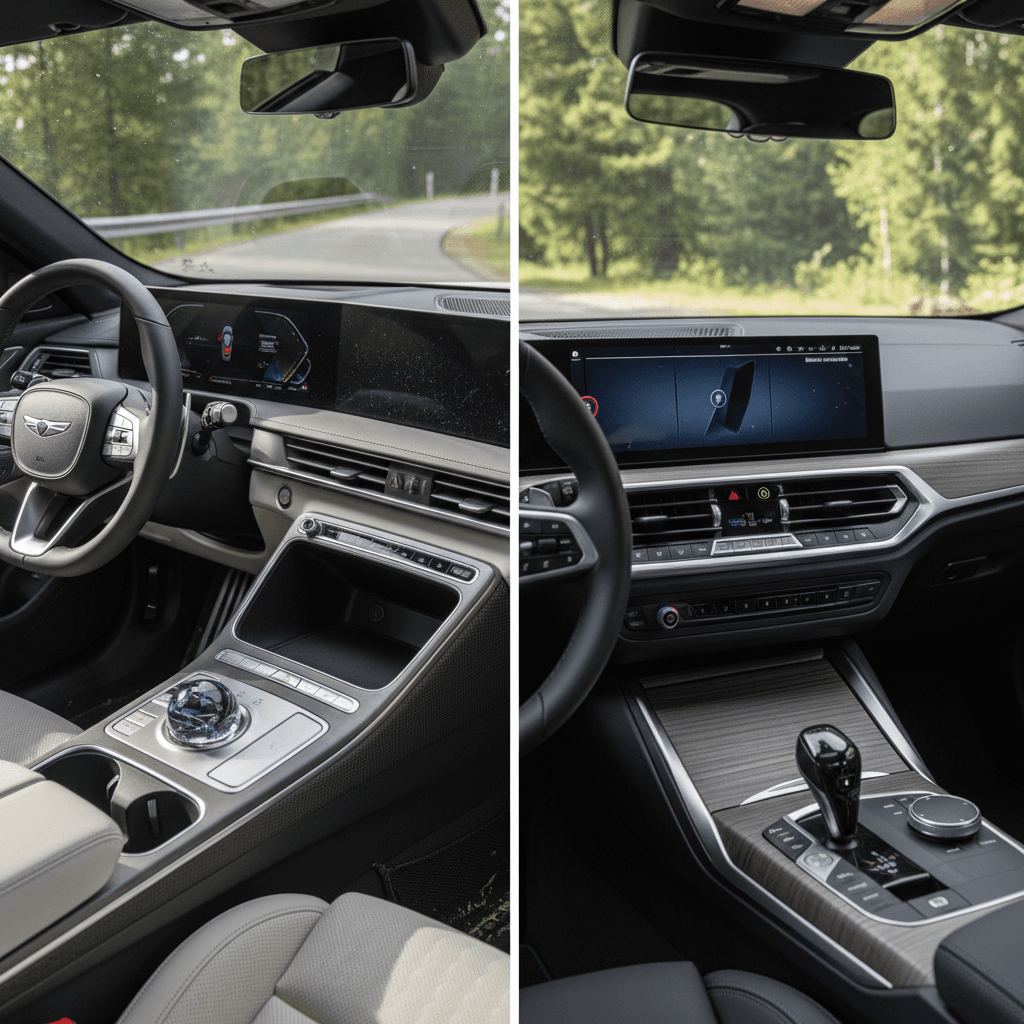
The GV60 interior feels high-design and futuristic. You get bold colors, a floating center console, and that party trick: the rotating crystal sphere drive selector that flips into place when you power on.
- Seats are cushy and supportive, especially in higher trims.
- Materials feel genuinely premium, even in lower-spec cars.
- Infotainment is generally clear, with a learning curve but good payoff.
BMW i4: familiar BMW cockpit, updated for EV life
The i4’s cabin feels like slipping into a well-fitted glove. It’s more conservative, more BMW, with quality materials and a strong sense of driver focus.
- BMW’s latest curved display and iDrive software are powerful but menu-heavy.
- The driving position is excellent if you like being low and locked in.
- Rear passengers lose some headroom to the sleek roofline.
Tech and driver-assistance
Ownership costs, reliability, and depreciation
Luxury EVs depreciate faster than their gasoline cousins, which is bad news for first owners and good news for you if you’re shopping used. The GV60 and i4 both drop meaningfully in their first few years, putting well-equipped examples within reach of more buyers.
What matters most when you’re paying the bills
Sticker price is only part of the story.
Depreciation
Both Genesis and BMW EVs see steep early depreciation. That makes 3–5 year-old examples particularly attractive on the used market.
Maintenance & repairs
EVs skip oil changes and many traditional wear items, but luxury brands can still be pricey when something breaks. Battery health and warranty coverage matter more than badge prestige.
Battery health
Most owners will never replace a traction battery, but its health affects range, performance, and resale value. A verified battery report, like the Recharged Score, gives you hard data instead of guesswork.
Don’t forget tires and insurance
Which is better: Genesis GV60 or BMW i4?
Choose the Genesis GV60 if you:
- Prefer a higher driving position and easier ingress/egress.
- Regularly carry kids, taller passengers, dogs, or bulky cargo.
- Value a plusher ride and a quieter, more insulated cabin.
- Like bold design and a "futuristic" feel inside.
- Live where snow, slush, or bad roads are part of the picture.
Choose the BMW i4 if you:
- Love a sport sedan driving experience and don’t want to give it up for an EV.
- Mostly carry one or two people and only occasionally use the back seat.
- Prefer a more traditional luxury interior design.
- Are willing to trade some ride comfort for sharper handling.
- Care more about the BMW badge and heritage than maximum practicality.
The honest verdict
Buying a used Genesis GV60 or BMW i4
Shopping used is where these two start to look especially appealing. You can often find well-optioned examples for far less than original MSRP, but it pays to be picky. With EVs, the story lives in the battery and the way the previous owner treated the car, not just the odometer.
Used GV60 or i4: must-do checks
1. Get battery health verified
Range is the lifeblood of an EV. Ask for a <strong>third-party battery health report</strong>, for example, every EV sold through Recharged includes a Recharged Score Report that measures real battery performance, not just guesses from the dash display.
2. Review charging history
Frequent DC fast charging isn’t a deal-breaker, but a car that lived entirely on high-power chargers may show more battery wear. Ask how and where the previous owner typically charged.
3. Inspect tires, brakes, and suspension
Heavy, quick EVs can be hard on tires and suspension components. Uneven tire wear or clunks over bumps can hint at alignment issues or worn parts.
4. Check for software updates and recalls
Both Genesis and BMW issue software updates that can affect charging behavior, range estimation, and driver-assistance. Make sure recall work is up to date and that the car can still receive updates.
5. Verify included equipment
Confirm that you’re getting both key fobs, the portable charge cable (if originally included), cargo covers, mats, and any adapters. Replacing missing EV-specific gear can be surprisingly expensive.
6. Compare total ownership costs
Beyond the purchase price, look at insurance quotes, home charging installation, and tire replacement costs. A seemingly cheap luxury EV can cost more than expected if you ignore the running costs.
How Recharged can help
FAQ: Genesis GV60 vs BMW i4
Common questions about the Genesis GV60 and BMW i4
Whether you end up in a Genesis GV60 or a BMW i4, you’re stepping into the thick of where electric luxury is headed: quiet, quick, and packed with tech. The GV60 tilts toward comfort and practicality, the i4 toward classic sport-sedan feel. Start with how you really drive, how you park, and who rides with you, then let the test drives confirm your hunches. And if you’re shopping used, let tools like a Recharged Score battery health report turn this choice from a leap of faith into a well-informed decision.