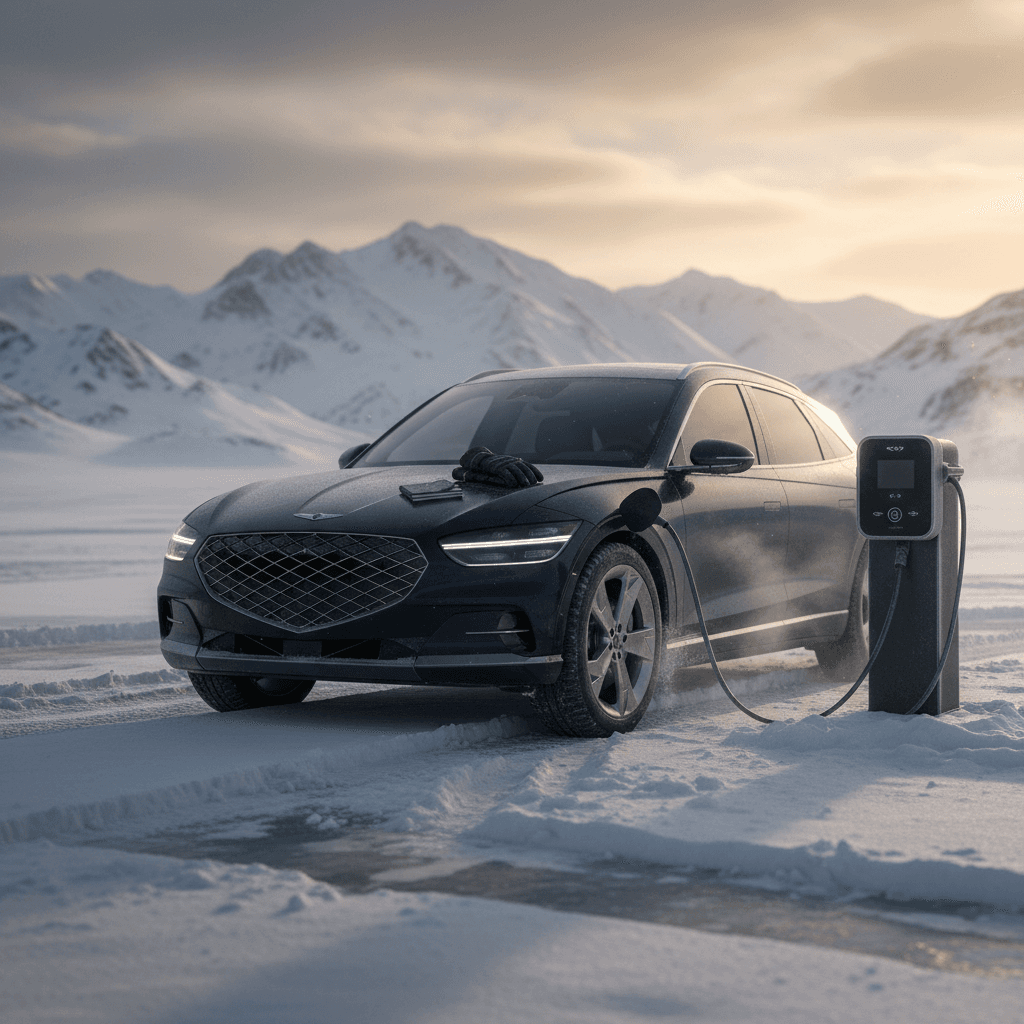
If you’re eyeing a Genesis GV60, you’ve probably heard that EVs lose range when temperatures drop. The question that actually matters is simpler: **how far will a Genesis GV60 really go in cold weather**, and what can you do about it? This guide breaks down winter range expectations by model year and trim, explains why the hit happens, and gives you practical ways to protect range and battery health on icy mornings and highway trips alike.
Quick take
Genesis GV60 EPA range by year and trim
Before you can judge the **Genesis GV60 range in cold weather**, you need a clean baseline: the EPA combined range the car is rated for in mild conditions. Every U.S. GV60 through 2025 uses a 77.4 kWh battery; for 2026, Genesis increases pack size to about 84 kWh, which nudges range upward.
EPA-rated Genesis GV60 range (approximate, U.S. models)
These are official or widely cited EPA combined range figures for recent GV60 model years. Always confirm the exact rating for the specific VIN you’re considering.
| Model year | Trim / drivetrain | Battery | EPA combined range |
|---|---|---|---|
| 2023 | Advanced AWD | 77.4 kWh | ~248 miles |
| 2023 | Performance AWD | 77.4 kWh | ~235 miles |
| 2024 | Standard RWD or longer-range trim | 77.4 kWh | Up to ~294 miles |
| 2024 | Advanced AWD | 77.4 kWh | ~264 miles |
| 2024 | Performance AWD | 77.4 kWh | ~235 miles |
| 2025 | Standard/Advanced AWD | 77.4 kWh | Mid‑230s to high‑260s (similar to 2024) |
| 2026 | Updated AWD trims (84 kWh pack) | ~84 kWh | Roughly 252–306 miles, depending on wheels and trim |
Use this table as your starting point, then apply winter adjustments later in the article.
Check your specific car
GV60 winter range at a glance
How much range the GV60 loses in cold weather
Real-world data from GV60 owners and independent testing lines up with what we see across modern EVs on the same **Hyundai–Kia E‑GMP platform**: the GV60 handles winter competently, but physics still wins. Here’s a practical way to think about it.
- At mild winter temps (around 40–50°F), expect **roughly 10–15%** less range than EPA.
- In typical U.S. winter cold (20–35°F), many drivers see **20–35%** less range, especially with steady highway speeds and normal cabin heat.
- In deep cold (single digits or below zero), or if you’re doing short, stop‑and‑go trips with full heat and seat warmers, you can see **35–45% (or more)** off the EPA number.
Put numbers to that and a 2024 GV60 Advanced AWD rated around **264 miles** might realistically deliver **170–210 miles** of usable winter range in mixed driving at 20–35°F. A performance trim rated closer to **235 miles** may land in the **150–185 mile** ballpark under the same conditions.
Cold doesn’t mean the battery is dying
Why cold weather hurts GV60 range
Four main winter range drains on the GV60
You’ll see the same basic physics on most modern EVs.
1. Cold-soaked battery chemistry
Like other lithium‑ion packs, the GV60’s cells are less efficient when cold. Internal resistance rises, so you get fewer usable kWh and weaker regen until the pack warms up.
2. Cabin heat consumption
Heating air is expensive in an EV. Even with a heat pump, initial warm‑up and defrost can pull several kilowatts. Short trips are worst because you keep paying the “startup” penalty.
3. Higher drag at winter speeds
Cold air is denser, which increases aerodynamic drag on the highway. Higher speeds plus dense air can noticeably push down your **miles per kWh** in winter.
4. Tires and rolling resistance
Winter tires and cold rubber mean **more rolling resistance**. Great for grip, not for efficiency. You may lose a few percent of range just from tire choice and temperature.
Don’t chase summer range numbers in a blizzard
GV60 tech that helps (and doesn’t) in winter
The upside: the Genesis GV60 isn’t starting from scratch. It shares the advanced **E‑GMP platform** with the Hyundai Ioniq 5 and Kia EV6, which brings serious thermal management and fast‑charging hardware to the table. Still, you need to know what actually helps in cold weather, and what’s more marketing than magic.
Key GV60 winter hardware and software
Which features really move the needle for cold-weather range and charging.
High-voltage heat pump
Most GV60 trims use a heat pump instead of (or alongside) resistive heating, which can cut HVAC energy use significantly in moderate cold. In deep cold, the system may still rely on resistive elements and draw more power.
Battery preconditioning
The GV60 can preheat its battery before DC fast charging when you set a fast charger as your destination in the nav. That gives you better winter charging speeds and can slightly improve efficiency once the pack is warm.
Thermal management system
Actively manages coolant loops around the pack, motor, and power electronics. It won’t defy physics, but it helps keep the battery in a healthier temperature window during extended drives.
Snow & Eco drive modes
Snow mode softens throttle response and power delivery at low speeds, helping with traction. Eco mode dials back power and HVAC demand, which can protect range on longer winter runs.
Remote preconditioning
Using the Genesis app or the in‑car schedule, you can pre‑heat the cabin while plugged in, shifting some of that energy draw off the battery and onto the grid.
What doesn’t fix physics
Software tweaks and drive modes are helpful, but they won’t turn a 235‑mile GV60 into a 300‑mile winter highway cruiser. You still have to plan for a substantial range buffer.
Real-world GV60 winter range scenarios
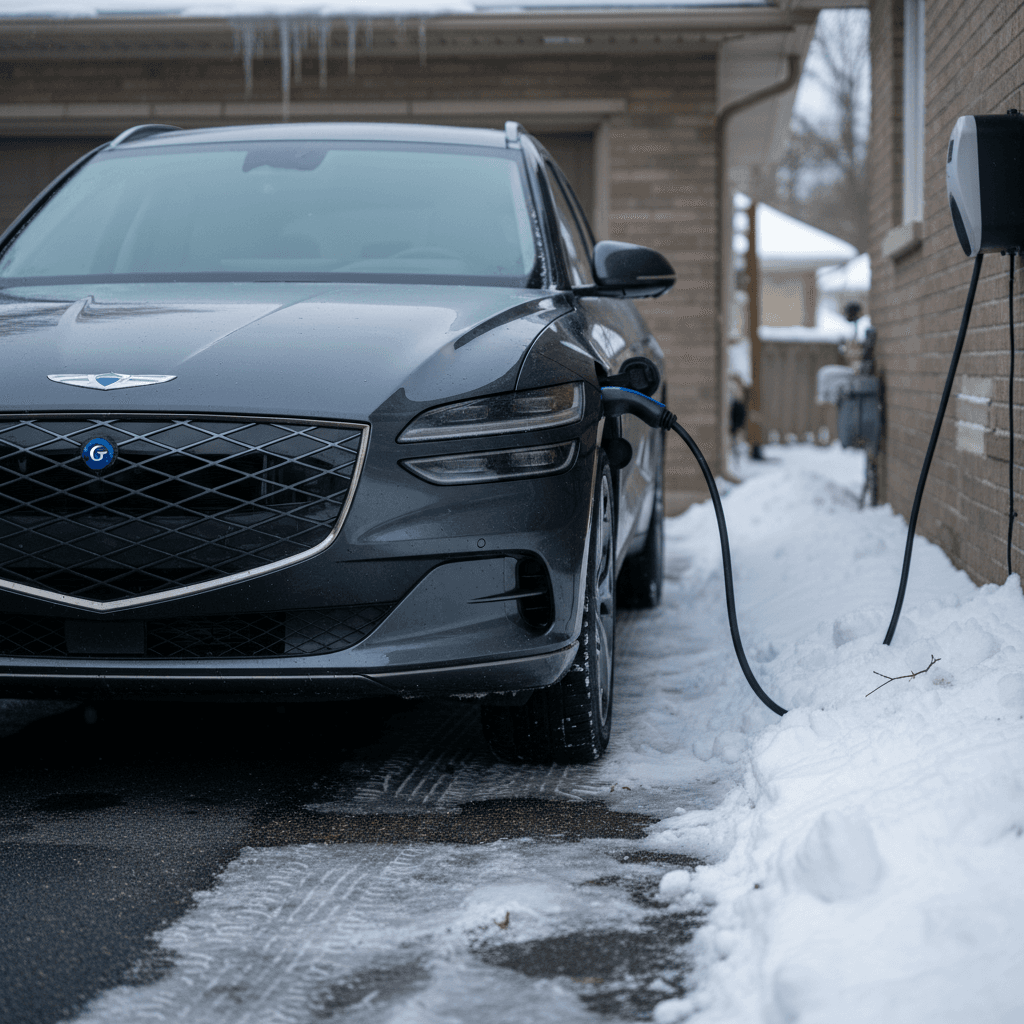
EPA labels and lab cycles don’t describe your commute. To make the **Genesis GV60 range in cold weather** more concrete, here are realistic scenarios based on owner reports, E‑GMP platform behavior, and Recharged’s own highway testing framework.
Scenario 1: Suburban commuter, 30–40°F
Profile: Mixed suburban and light highway, 30–50 miles per day, car garaged, climate at 68–70°F with seat warmers.
- GV60 EPA rating: 248–264 miles (typical AWD trims).
- Expected winter range: about 200–225 miles on a full charge.
- Key factors: Garaging and modest speeds keep losses closer to the 15–20% band.
Scenario 2: 70 mph highway run at 20–25°F
Profile: 70–75 mph interstate, steady run, winter temps in the low 20s, heat set to comfortable, some wind.
- GV60 EPA rating: 235–264 miles.
- Expected winter range: roughly 160–200 miles from 100% to near empty.
- Key factors: High speed, dense air, and continuous HVAC use push losses into the 25–35% range.
Scenario 3: Short errands in deep cold
Profile: 2–5 mile trips at 0–15°F, car parked outside, full defrost and heat every time, no preconditioning.
- GV60 EPA rating: 235–264+ miles.
- Practical winter range: It can feel like you’re only getting 120–160 miles or less.
- Key factors: You keep paying the warm‑up penalty while the battery and cabin never fully stabilize.
Scenario 4: 2026 GV60 with larger pack
Profile: Newer ~84 kWh pack, EPA combined roughly 252–306 miles depending on spec, doing mixed winter driving.
- Expected winter range (20–35°F): about 190–230 miles for many owners.
- Key factors: Bigger battery means a bit more buffer, but percentage loss in the cold stays similar.
Don’t obsess over the guess‑o‑meter
Charging your GV60 in the cold
Cold weather doesn’t just trim driving range; it also slows charging, especially on DC fast chargers if the battery is cold‑soaked. The GV60 can still charge impressively quickly in winter, but you usually need battery preconditioning to unlock that performance.
Cold-weather charging truths for the GV60
How to avoid 45‑minute DC sessions at 40 kW in January.
DC fast charging on a cold pack
Arriving at a DC fast charger with a cold battery often means dramatically slower charging. Instead of the headline 10–80% in ~18 minutes, you might see half the power or less until the pack warms.
Use nav-based preconditioning
Set a compatible fast charger as your destination in the GV60’s navigation. The car can then preheat the battery on the way, significantly improving initial charge speeds in cold weather.
Home Level 2 strategy
In winter, consider finishing your home Level 2 charge right before departure instead of hours earlier. The pack and cabin start warmer, boosting efficiency for the first leg of your drive.
Plan longer dwell times
Even with preconditioning, it’s smart to **budget extra time** for winter DC stops, especially on road trips, or if the previous leg was short and slow.
Watch state of charge at arrival
Winter range tips for GV60 owners
Practical steps to stretch GV60 winter range
1. Precondition while plugged in
Use the Genesis app or scheduled climate to warm the cabin and, when fast‑charging is in the route, preheat the battery before you leave. That shifts energy use to the grid and starts your drive with a warmer pack.
2. Lean on seat and wheel heaters
Heated seats and steering wheel use less energy than blasting air heat. You can often run the cabin a couple of degrees cooler while staying comfortable, saving several miles of range on longer drives.
3. Slow down on the highway
Dropping from 75 mph to 65 mph in winter can easily save **10–15%** of your energy use. On a 150‑mile leg, that’s the difference between arriving with 10% vs 20–25% state of charge.
4. Avoid back-to-back short trips
If possible, group errands together so the car warms up once and stays warm. Ten separate 3‑mile trips in 10°F weather will feel brutal on range compared with a single 30‑mile outing.
5. Keep tires properly inflated
Tire pressure drops in the cold. Running several psi low increases rolling resistance and hurts efficiency. Check and top off pressures as temperatures swing between seasons.
6. Use Eco mode when range matters
Eco mode softens throttle response and reins in HVAC demand, making it easier to drive efficiently without thinking about it every minute.
Good news for urban drivers
Shopping used GV60? Winter-focused checklist
If you’re considering a **used Genesis GV60**, winter performance should be on your due‑diligence list, especially if you live in the northern U.S. or Canada. Here’s how to evaluate a candidate with cold weather in mind, and where a platform like Recharged can de‑risk the process.
Winter-smart checks when buying a used GV60
Confirm trim, wheels, and EPA rating
Get the original window sticker or an official spec sheet. A Performance AWD on 21‑inch wheels will have less absolute winter range than a more efficient trim on smaller wheels, even if they share the same battery.
Review battery health, not just mileage
Ask for a **battery health report**, not just odometer readings. On Recharged, every GV60 listing includes a Recharged Score and verified pack diagnostics, so you can separate normal winter loss from real degradation.
Test-drive in realistic conditions if possible
If you’re buying in winter, pay attention to how quickly the car warms up, how the range estimate behaves over 20–30 miles, and whether any warning messages appear related to the high‑voltage system.
Check charging behavior and settings
Verify that the car connects properly to Level 2 charging and that DC fast charging works as expected. In the menus, look for battery preconditioning and winter‑related settings, these matter more if you road‑trip in the cold.
Ask about software and recalls
E‑GMP cars, including the GV60, have seen multiple software updates, some affecting charging and thermal management. Confirm the car is up to date; buying through Recharged or a diligent dealer often simplifies this step.
Plan for your use case, not the brochure
If you routinely drive 180 miles in Minnesota winters, you’ll want a bigger buffer than someone doing 40 miles in Oregon. Run your own numbers using the EPA range and the 20–35% winter loss guidelines from this article.
FAQ: Genesis GV60 range in cold weather
Frequently asked questions about GV60 winter range
Bottom line: Is the Genesis GV60 good in winter?
When you strip away the marketing and look at **real Genesis GV60 range in cold weather**, the story is straightforward: it behaves like a modern, well‑engineered EV on a sophisticated platform. You’ll see a meaningful range hit, often 20–35% in typical winter conditions, but you also get strong traction, fast charging when preconditioned, and a comfortable, tech‑heavy cabin that makes January commutes feel less like a chore.
If you plan your routes around realistic winter numbers instead of the best‑case EPA label, the GV60 is a capable year‑round SUV. And if you’re shopping used, a marketplace like Recharged can help you compare trims, verify battery health with a Recharged Score Report, and line up financing or trade‑in options, all with the winter realities of EV ownership clearly on the table.