If you’re searching for a Genesis GV60 long term review in 2026, you’re probably less interested in launch-day hype and more interested in how this quirky luxury EV SUV is actually holding up after a few years on U.S. roads. The good news: the GV60 is still quick, comfortable, and packed with tech. The bad news: recalls, software annoyances, and steep depreciation have absolutely shaped the ownership story.
Quick take
Genesis GV60 long-term overview for 2026
The Genesis GV60 landed in the U.S. in 2022 as the luxury cousin to the Hyundai Ioniq 5 and Kia EV6, riding on the same E-GMP platform and 77.4 kWh battery pack on early models. A 2025 update in some markets bumped usable capacity to roughly 84 kWh, but most U.S. used inventory in 2026 is still the earlier pack. Across trims, owners consistently praise the GV60’s refinement, performance, and quiet cabin while flagging Genesis’ learning curve on EV software, recalls, and service capacity.
Genesis GV60 long-term ownership snapshot (2026)
What owners and data say after 2–4 years on the road
Performance & driving
Even after several years, the dual-motor GV60 still feels genuinely quick. Instant torque, confident highway passing, and strong regen braking give it a polished, premium feel.
Battery & range
Real-world reports suggest modest degradation so far and highway range that generally tracks the EPA numbers when driven calmly, but winter and high speeds still take a notable bite.
Recalls & software
Multiple recalls have hit the GV60, from Integrated Charging Control Unit fixes to instrument-cluster issues and trim or windshield concerns. Software and app frustrations are common themes.
Battery health and range after years of use
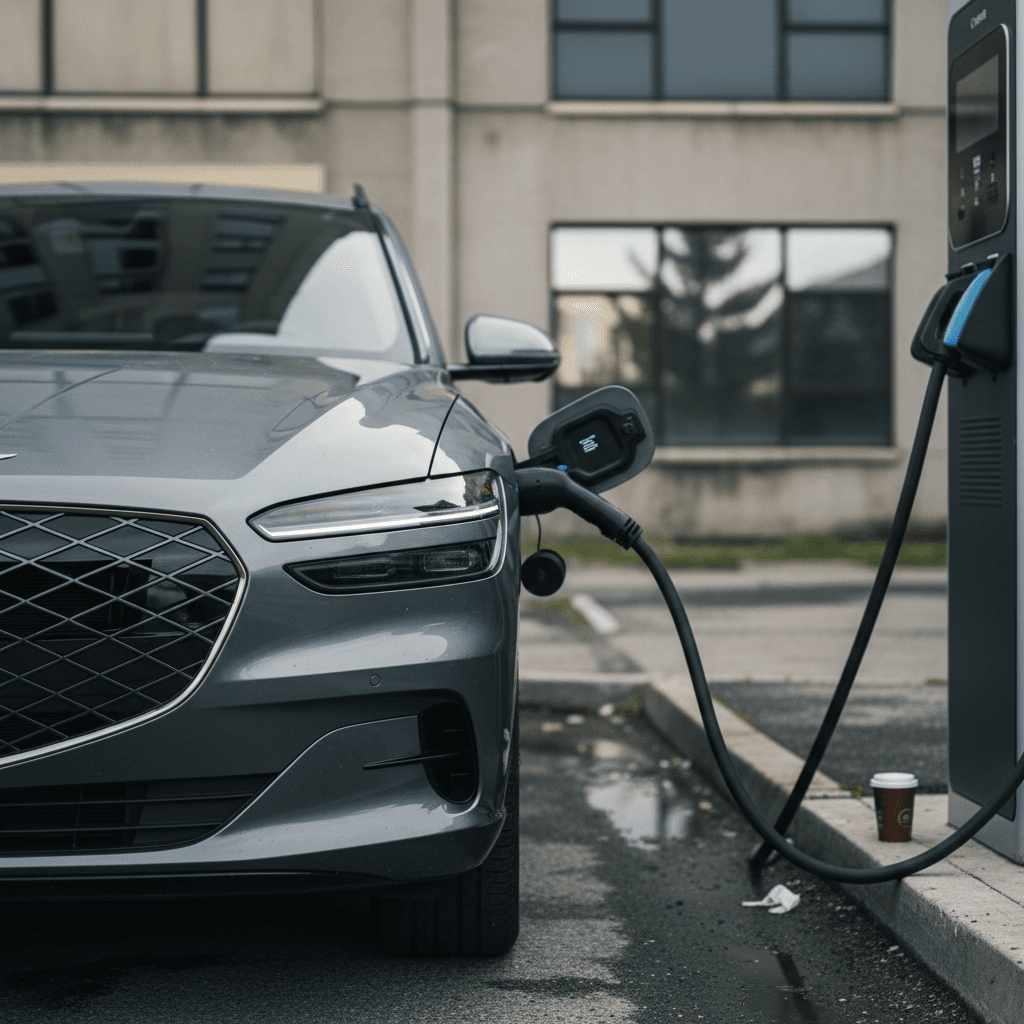
Battery life is usually the make-or-break factor in any long term EV review. Here, the GV60 benefits from the same E-GMP hardware that’s made the Ioniq 5 and EV6 popular. Early real-world reports in 2026 from 2022–2023 GV60 owners with 25,000–45,000 miles generally point to modest capacity loss and no wave of high-voltage pack failures. The bigger complaints are about episodic power-loss issues tied to electronics like the Integrated Charging Control Unit (ICCU), which Genesis has tried to rein in with recall campaigns and software updates.
- Most 2022–2023 GV60s on the road today show usable range still close to EPA ratings in mild weather if driven conservatively.
- Owners in colder climates often report winter highway range dipping into the 180–220 mile band on dual‑motor trims when starting from 100%.
- Aggressive driving and repeated fast‑charging sessions can shave a noticeable chunk off projected range, but there’s no systemic pattern of rapid battery capacity loss so far.
Extend your GV60’s battery life
If you’re considering a used GV60, the real differentiator is how each example was driven and charged. That’s where tools like a battery health scan matter. At Recharged, every used EV gets a Recharged Score Report with verified battery data, so you can see how much usable capacity remains instead of relying on a guess or a generic “good battery” assurance.
Charging experience and road-trip manners
One of the GV60’s headline features from day one has been its 800V electrical architecture, enabling very fast DC charging when the station cooperates. In practice, owners commonly see strong charging curves, often jumping from around 10% to 80% in roughly 18–25 minutes under ideal conditions, although real-world times stretch when a charger is cold, busy, or derated.
Genesis GV60 charging behavior in long-term use
What drivers most often report by 2026.
| Scenario | What owners report | Takeaway |
|---|---|---|
| Daily Level 2 home charging | Roughly 25–35 miles of range per hour on a 40A+ Level 2 unit. | Easy overnight top‑offs even for longer commutes. |
| First 10–80% DC fast charge | Typically ~18–25 minutes on a healthy 350 kW charger when the pack is warm. | Competitive with class leaders for road trips. |
| High‑mileage road trips | Longer stops when chargers are limited, congested, or below spec; charging speed is fine but network reliability is a wild card. | The weak link is often the charging network, not the GV60. |
Actual charge times vary by network and conditions, but the pattern below fits many owner reports.
Watch the public charging fine print
Reliability, recalls, and software gremlins
No honest Genesis GV60 long term review in 2026 can skip the recall story. On paper, the GV60’s powertrain fundamentals have been solid so far, but the model has been caught in a web of software and component recalls shared with other Hyundai–Kia–Genesis EVs.
- ICCU (Integrated Charging Control Unit) recall: Addresses a defect that could cause loss of power or prevent the vehicle from starting, affecting 2023–2025 GV60s and other related EVs.
- Instrument-cluster and screen issues: Separate campaigns have targeted screens that can flicker, blank out, or reboot, prompting safety recalls on 2023–2025 and some early‑2026 GV60s.
- Windshield trim and rear transverse trim campaigns: Smaller but still important campaigns to inspect or replace exterior pieces that could detach or fail over time.
Why recall completion matters so much on a used GV60
Beyond recalls, owner anecdotes paint a mixed picture on day‑to‑day reliability. Many long‑term drivers report essentially trouble‑free experiences aside from scheduled recall visits. Others describe app glitches, intermittent charging‑station communication issues, or long waits for parts during busy recall windows. One recurring theme: your satisfaction often depends on the quality and EV‑savviness of your local Genesis dealer.
"I’m about to celebrate three years and 36k miles in my 2023 GV60. Other than recalls I had to get done at the dealer, no issues."
Interior wear, tech aging, and daily comfort
Luxury EVs live or die by how their cabins age. After a few model years on the road, the GV60’s interior is holding up better than some skeptics expected. Materials in most trims still feel premium, and the design hasn’t dated as quickly as more minimalist rivals. Controls are intuitive, and the rotary crystal gear selector and available facial‑recognition door unlock remain party tricks that still impress non‑EV friends.
How the GV60’s interior and tech age
The good, the bad, and the quirky in 2026
Seats & materials
Owners generally report limited wear on seats and soft‑touch materials when basics like cleaning and conditioning aren’t ignored. The cabin still feels premium after several years.
Infotainment & screens
The graphics remain sharp and the UI responsive, but some drivers are frustrated by system reboots or screen quirks, problems that often overlap with the recall campaigns.
Apps and connectivity
The Genesis app is a recurring sore spot in owner stories: login problems, hangs that require reinstalls, and slow remote commands. The car itself is usually more reliable than the app ecosystem around it.
Comfort is a long-term strong suit
Depreciation and resale value in 2026
If there’s one area where the GV60 has shocked early adopters, it’s depreciation. Pricing tools like Kelley Blue Book and Edmunds show early‑build GV60s losing close to half of their original value within roughly two to three years, landing the model in a high‑depreciation tier among luxury SUVs. That’s brutal for first owners but a gift for used‑EV shoppers.
Genesis GV60 depreciation picture by 2026
At Recharged, we’ve seen clean 2023–2024 GV60s advertised in the mid‑$20,000s to low‑$30,000s depending on mileage and trim, with Genesis CPO examples typically listed higher. That means you can now step into a well‑optioned luxury EV SUV for compact‑crossover money, if you’re comfortable buying into a model that’s been through extra recall scrutiny.
Used Genesis GV60 buying guide for 2026 shoppers
Viewed strictly as a new‑car purchase, the GV60’s combination of heavy incentives and aggressive depreciation has made it risky for anyone planning to own longer than a lease term. But as a used EV in 2026, the script flips. You’re the one benefiting from those earlier price cuts, especially if you target 3‑ to 4‑year‑old examples where most of the curve has already hit but plenty of factory warranty remains.
Who the used GV60 fits best
- Value-focused luxury shoppers who want a quiet, quick EV SUV but don’t want to pay German‑luxury prices.
- Commuters with home Level 2 charging and regular but not extreme highway mileage.
- Tech-curious drivers who appreciate features like facial recognition, advanced driver assists, and over‑the‑air updates.
Who should be cautious
- Buyers far from a Genesis dealer, especially if the nearest retailer has limited EV experience.
- Owners allergic to software hiccups or app issues; the GV60 is better here in 2026 than at launch, but not flawless.
- High‑milers who rely heavily on DC fast charging; you’ll want extra scrutiny on battery health.
Let someone else pay for the steepest years
How the GV60 stacks up against other used EVs
If you’re shopping the GV60 used in 2026, you’re almost certainly cross‑shopping alternatives like the Tesla Model Y, Hyundai Ioniq 5, Kia EV6, and possibly the Mercedes‑Benz EQB or Audi Q4 e‑tron. Here’s where the GV60 stands out, and where it doesn’t.
Genesis GV60 vs other popular used EVs (2026 view)
Strengths and trade‑offs versus common cross‑shops
Vs Tesla Model Y
Pros: Quieter cabin, richer interior, smoother ride, strong DC charging speed.
Cons: Smaller charging‑network footprint, more recalls, higher depreciation for first owners.
Vs Hyundai Ioniq 5 / Kia EV6
Pros: More luxurious cabin, premium branding, extra features, and similar fast‑charging hardware.
Cons: Higher running‑cost expectations (tires, insurance), and more complex tech that can misbehave.
Vs German luxury EVs
Pros: Often cheaper used than Audi/BMW rivals with comparable or better range and charging.
Cons: Brand cachet isn’t at German levels yet, and long‑term Genesis dealer network depth is still maturing.
Checklist: What to check before you buy a used GV60
Used Genesis GV60 pre‑purchase checklist (2026)
1. Run the VIN for recalls and campaigns
Use NHTSA and Genesis recall lookup tools to confirm <strong>all safety recalls and limited coverage campaigns</strong>, including ICCU and instrument‑cluster fixes, have been completed, or get written proof that an appointment is booked.
2. Get a real battery health report
Ask for a <strong>battery health scan</strong>, not just a generic “good battery” statement. At Recharged, every GV60 listing comes with a Recharged Score Report so you know how much usable capacity you’re buying.
3. Inspect and test fast charging
If possible, do a short DC fast‑charge session. Watch for error messages, abnormal charge curves, or repeated failures to initiate a session, all of which can hint at lingering hardware or software issues.
4. Check for screen and software quirks
Cycle the gauge cluster and infotainment through multiple drive cycles. Look for flickering, freezing, or reboots. Connect your phone, test CarPlay/Android Auto (if equipped), and try basic navigation and audio features.
5. Evaluate interior wear and features
Look closely at seat bolsters, steering‑wheel trim, and touch points, especially in lighter interiors. Verify that key tech, driver‑assist systems, cameras, heated/cooled seats, power hatch, works correctly.
6. Review service history and tires
Ask for a full service printout, including recall visit notes. Check tire brand and tread depth; some owners move to different compounds, which can change noise and efficiency.
How Recharged simplifies the homework
FAQ: Genesis GV60 long-term questions
Frequently asked questions about Genesis GV60 long-term ownership
Bottom line: Is the Genesis GV60 a good long-term bet?
Viewed from 2026, the Genesis GV60 is a classic early‑cycle EV story. The fundamentals, battery, charging performance, comfort, and driving dynamics, have aged well. The rough edges, recalls, patchy software, dealer growing pains, and sharp early depreciation, have been harder on first owners than on the product itself. If you’re shopping new and plan to own for a long time, you’ll want to run the numbers carefully, maybe leaning toward a lease. But as a used luxury EV SUV with 2–4 years under its belt, a properly vetted GV60 can be one of the best values in the segment.
The key is doing your homework: confirm recall completion, insist on a real battery health report, and buy from a seller that understands EVs instead of treating them like just another SUV with a plug. If you’d rather have those steps handled for you, Recharged was built for exactly this kind of decision, helping you turn a complex long‑term ownership story into a transparent, data‑backed purchase.