If you’re looking at a Genesis GV60, new or used, you’ve probably noticed how EV insurance can ambush a perfectly sensible budget. In 2026, Genesis GV60 insurance cost sits on the high side of the compact-luxury-SUV pool, but not as punishing as some performance EVs. The good news: this is a safe, tech-heavy crossover that gives you plenty of levers to pull your premium back down.
What this guide covers
Genesis GV60 insurance cost in 2026: quick overview
Where the GV60 sits in 2026
Most U.S. drivers shopping a 2026 Genesis GV60 can expect full-coverage insurance to land somewhere around $2,400–$2,800 per year with a clean record, average credit, and normal commuting mileage. That’s a bit higher than the average gas compact SUV, but very much in line with other luxury EV crossovers. Individual quotes span a wide range, young drivers, city parking, or at-fault accidents can easily push a GV60 policy north of $3,500 a year.
Your number can be very different
How much does a Genesis GV60 cost to insure in 2026?
Estimated 2026 Genesis GV60 insurance ranges (U.S.)
These are illustrative full‑coverage ranges for a GV60 in 2026. They’re not quotes, but they show how profile and usage move the number.
| Driver profile | Typical yearly premium | Monthly equivalent | What’s driving the price |
|---|---|---|---|
| Experienced, clean record, suburban ZIP | $2,200 – $2,600 | $185 – $220 | Strong safety scores plus reasonable repair expectations |
| High‑mileage commuter, urban area | $2,600 – $3,000 | $220 – $250 | More time on the road in heavier traffic, higher claim frequency |
| Young driver (under 25) on own policy | $3,200 – $4,200+ | $265 – $350+ | Age and limited history are the biggest cost multipliers |
| GV60 on multi‑car, multi‑policy bundle | $2,000 – $2,400 | $165 – $200 | Home + auto or multi‑car discounts pull costs back down |
| Used 3–4‑year‑old GV60, similar driver | $1,800 – $2,300 | $150 – $190 | Lower replacement value slightly reduces comprehensive and collision |
Assumes $500–$1,000 deductibles and typical liability limits. Urban high‑risk ZIPs and very young drivers can exceed the top of these ranges.
Analysts looking at EV insurance in 2026 see a familiar pattern: luxury EV crossovers like the GV60 typically price 10–25% higher to insure than equivalent gas models, mainly because of expensive bodywork and sensors. At the same time, the GV60’s strong safety performance and advanced driver-assistance systems help offset some of that shock on the actuarial side.
Why EVs, and the GV60, often cost more to insure
Why insuring a GV60 isn’t like insuring a Tucson
Same driveway, very different repair economics.
Expensive electronics
Specialized repair network
High-value battery pack
In short, the GV60 looks like a small, friendly crossover but accounts actuaries treat it like a precision instrument. That doesn’t mean you’re doomed to pay supercar money for coverage, only that you should understand why your quote may outpace a similar‑size gas SUV.
GV60 safety ratings: how they help your premium
The paradox of modern EV insurance is that the safest vehicles are often the most expensive to fix. The Genesis GV60 sits right in the center of that Venn diagram. That said, it’s exactly the kind of vehicle underwriters like to see on a policy.
- The GV60 has earned top ratings from major safety bodies, including 5-star overall scores and IIHS Top Safety Pick+ status in recent test years for its small SUV class.
- Standard and available active safety features, like automatic emergency braking, lane‑keeping assist, blind‑spot monitoring, and adaptive cruise control, help reduce claim frequency and severity.
- Stout crash structures and multiple airbags lower the risk of severe injury claims, which is a huge long‑term cost driver for insurers.
Why safety still matters to your wallet
8 key factors that change your GV60 insurance price
What actually moves your premium up or down
1. Where you live and park
Dense urban ZIP codes with more traffic and theft usually price higher than quiet suburbs. A GV60 in Brooklyn will almost always cost more to insure than the same GV60 garaged in Boise.
2. Your driving record
At‑fault accidents, speeding tickets, or a DUI loom larger than the fact that you drive an EV. A clean three‑ to five‑year history is one of the biggest discounts you can “earn.”
3. Annual mileage and commute
The more miles you run, the more exposure your insurer carries. If your GV60 is mostly a weekend car with low mileage, make sure your policy reflects that.
4. Age and experience
Twenty‑two‑year‑olds in high‑power EVs are not an actuary’s happy place. Putting a younger driver on a parent’s multi‑car policy is typically cheaper than a standalone policy in their own name.
5. Credit-based insurance score (where allowed)
In many states, insurers can use a credit-based score when pricing auto policies. Better credit often means materially lower premiums, even with the same car and driving record.
6. Coverage limits and deductibles
Higher liability limits and low deductibles (like $250) cost more upfront but protect your assets better. Pushing deductibles to $1,000 or $1,500 is a common lever to tame a high EV premium.
7. New vs. used GV60
A brand‑new Performance trim with every option costs more to replace than a three‑year‑old entry model. Insurers see that in the VIN and adjust comprehensive and collision rates down as the vehicle ages.
8. Discounts and bundling
Home + auto bundles, telematics programs, advanced safety, even paying in full can all shave meaningful dollars off your premium. Don’t assume the first quote you see has everything applied. Ask.
Concrete ways to lower your Genesis GV60 insurance cost
Tactics you can use with any insurer
- Shop aggressively. The same GV60 can price wildly differently between carriers. Get at least three quotes, and don’t be shy about asking one company to match another.
- Adjust deductibles carefully. Moving from a $500 to $1,000 deductible can trim your premium, but only if you’re comfortable covering that out of pocket after a crash.
- Take advantage of telematics. Many insurers offer “safe driver” programs through an app or plug‑in device. If you’re a smooth, low‑mileage driver, those programs can help reverse the EV price penalty.
- Ask for EV and safety discounts. Some carriers now have explicit discounts for EVs and for advanced driver‑assistance systems, both of which the GV60 has in abundance.
Moves specific to GV60 and other EVs
- Clarify your charger setup. If you mostly charge at home and don’t rack up huge highway miles, make sure your annual mileage estimate is accurate, not just a default 15,000 miles.
- Watch wheel and tire choices. Oversized wheels or performance tires can increase both accident risk and replacement cost. Staying closer to stock wheel sizes makes you look more sensible to insurers.
- Install anti‑theft and tracking. Many EVs already have excellent tracking via OEM apps. Confirm your insurer recognizes those features; some will discount for factory immobilizers and trackers.
- Re-rate as the GV60 ages. If you bought a 2023 or 2024 GV60, don’t just auto‑renew forever. Shop again after three to five years; the drop in vehicle value can justify a cheaper policy, especially if you’re willing to raise deductibles.
Bundle the smart way
Smart coverage decisions for GV60 owners
A Genesis GV60 is not the place to cut coverage to the bone. This is a relatively expensive, fast, tech‑laden EV, and liability-only coverage is usually a false economy. What you can do is tune coverages to how you actually use the car.
Core coverages to think through
Where to spend, where you can cautiously save.
Liability coverage
Collision coverage
Comprehensive coverage
- Uninsured/underinsured motorist (UM/UIM): Crucial if you live in a state with lots of uninsured drivers. An expensive EV magnifies the risk that the other driver’s policy won’t come close to covering your losses.
- Gap or loan/lease payoff: On a new or nearly new GV60 with a small down payment, gap coverage can be the difference between walking away clean and writing a five‑figure check after a total loss.
- Roadside and rental: EVs are generally reliable, but if this is your only car, a rental reimbursement rider buys peace of mind while the GV60 sits in a shop waiting for parts.
Where to be careful cutting corners
Used Genesis GV60 insurance: how costs change
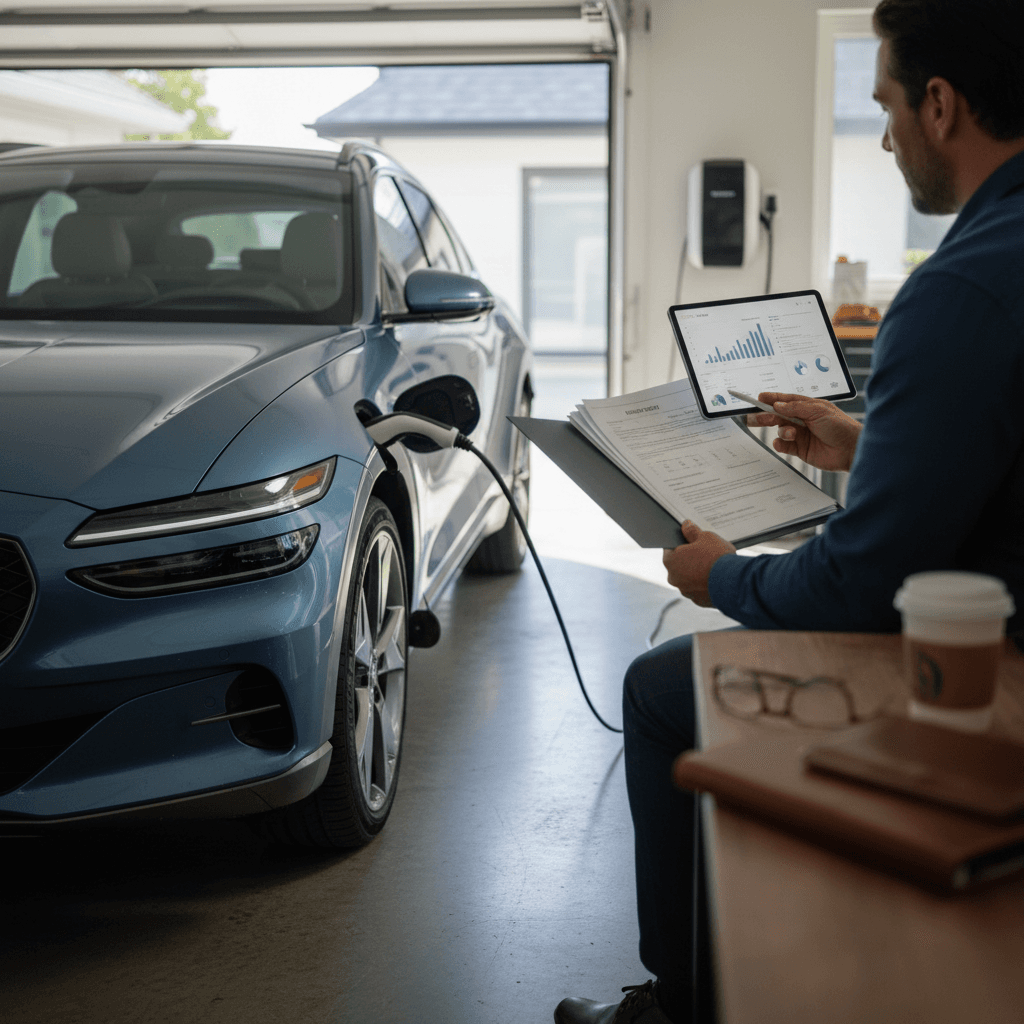
By 2026, the earliest GV60s are three model years old. That’s exactly when smart shoppers start hunting the used market, and when insurance math begins to tilt in your favor.
Why used GV60 insurance is often cheaper
- Lower replacement value. As the GV60 depreciates, the maximum a claim might cost the insurer drops, which can reduce comprehensive and collision portions of your bill.
- More stable repair data. By 2026, insurers have several years of real‑world claim data on the GV60. That typically leads to more accurate, and sometimes more favorable, pricing than when the model was brand new.
- Owner profile shift. Early adopters trend toward enthusiasts; later owners are often more mainstream commuters, which can mean less aggressive driving behavior.
Why condition and history still matter
Insurers rate the vehicle, not just the model name. A clean‑title, accident‑free GV60 with documented maintenance and healthy tires looks better on paper than a car with a long list of prior claims.
When you shop used through Recharged, every vehicle includes a Recharged Score Report with verified battery health and history. That doesn’t just protect you against range disappointment, it gives you documentation you can reference if an insurer ever questions the vehicle’s condition or value.
Leverage the Recharged Score
Insurance and total cost of ownership for the GV60
Insurance is just one piece of the GV60’s cost puzzle. Fuel and maintenance are where electric crossovers quietly claw back what they lose in premiums.
How insurance fits into GV60 ownership costs
What you pay every year, and what you save elsewhere.
Fuel vs. electricity
Maintenance profile
Insurance share
If you’re cross‑shopping a GV60 against, say, a German compact crossover that drinks premium fuel, it’s worth running a full five‑year cost comparison. A slightly higher insurance bill may be more than offset by fuel and maintenance savings, especially if you’re buying used at a substantial discount from new.
Genesis GV60 insurance cost 2026: FAQ
Frequently asked questions about GV60 insurance in 2026
Bottom line: where the GV60 lands in 2026
The Genesis GV60 lands in a familiar EV paradox: it’s safe, sophisticated, and relatively efficient to live with, yet more expensive to insure than its gas‑burning cousins. In 2026, most owners will see full‑coverage premiums in the mid‑$2,000s, more if you’re young, urban, or carrying a bumpy driving record.
If you can take the long view, though, the math starts to look friendlier. Lower fuel and maintenance costs, combined with the price break of a well‑bought used GV60, can more than offset the extra insurance. And if you choose your coverage wisely, bundle smartly, and shop carriers rather than auto‑renewing, you’re not at the mercy of the sticker shock.
When you’re ready to run the numbers for real, consider starting with a used Genesis GV60 from Recharged. Every car comes with a Recharged Score Report, verified battery health, fair market pricing, and EV‑specialist support, so your insurance quote is just one more line in a total‑cost story that finally makes sense.