If you bought or leased Acura’s first modern EV SUV early, you’ve already felt the shock: Acura ZDX trade‑in value in 2026 is far below the original $65,000–$75,000 sticker. Between heavy incentives, short production run rumors, and a fast‑moving EV market, the ZDX is one of the quickest‑depreciating luxury electric SUVs on the road. The good news? If you understand how dealers think, and how battery health, mileage, and timing work, you can still protect plenty of value when you sell or trade.
Key takeaway for 2026 ZDX owners
Acura ZDX trade‑in value in 2026: What’s happening to prices?
The ZDX launched for the 2024 model year with MSRPs in the mid‑$60,000s for A‑Spec trims and roughly mid‑$70,000s for the Type S. Within a year, Acura and dealers were stacking thousands of dollars in discounts and sub‑$400 lease offers to clear inventory, which set a much lower real‑world price floor in the used market. By early 2026, early depreciation data shows **losses of more than half the original MSRP within just a few years**, putting the ZDX among the weaker value holders in the luxury EV SUV segment.
2026 Acura ZDX value snapshot (big picture)
Don’t anchor on your payoff
What is my Acura ZDX worth right now?
Every ZDX is different, but you can build a realistic 2026 trade‑in estimate by starting from original MSRP and adjusting for trim, miles, condition, and market heat in your zip code. Think in **bands**, not exact numbers, until you’ve had a few formal appraisals and a battery health report done.
2026 ballpark trade‑in bands for 2024 Acura ZDX
These are directional ranges for U.S. buyers in 2026, assuming normal mileage (~24,000–30,000 miles), clean title, and no major accidents. Local demand, incentives, and battery health can move you above or below these bands.
| Trim | Original MSRP (approx.) | 2026 Typical Trade‑In Band | Notes |
|---|---|---|---|
| A‑Spec RWD | $65,000–$67,000 | $26,000–$31,000 | Rear‑drive, slightly longer range; usually the softest on value because it was heavily discounted new. |
| A‑Spec AWD | $69,000–$71,000 | $28,000–$34,000 | Bread‑and‑butter configuration; wide spread based on options and how it was leased or discounted. |
| Type S AWD | $74,000–$76,000 | $31,000–$38,000 | Performance trim with more power and equipment; holds a bit more value but still hit hard by incentives. |
Use this table as a starting point, not a quote. Always verify with live appraisals and a battery‑health‑driven valuation from a specialist marketplace like Recharged.
How Recharged tightens your range
Why is the Acura ZDX depreciating so fast?
4 big reasons ZDX trade‑in value is under pressure
Understanding the “why” helps you anticipate where prices go next.
1. High MSRP, big incentives
The ZDX launched with pricing above key rivals but quickly needed steep discounts, loyalty cash, and aggressive leases to move units. That means the true transaction price was often far below MSRP, pulling used values down with it.
2. Fast‑moving EV tech
Newer luxury EV SUVs are arriving with better charging speeds, more range, and richer software. Shoppers compare a used 2024 ZDX against a fresh‑off‑the‑lot 2026 competitor, and price in heavy discounts to offset the tech gap.
3. Thin brand momentum in EVs
Acura is still establishing its EV identity. Unlike Tesla or established volume EV brands, there’s less built‑in demand on the used market, so **dealers bid cautiously** to avoid getting stuck with slow‑moving inventory.
4. Short run, uncertain future
With talk of shifts in Acura’s EV roadmap and limited ZDX volumes, buyers worry about long‑term support and software updates. That uncertainty shows up directly in **more conservative trade‑in offers**.
Depreciation reality check
8 factors that shape your 2026 ZDX trade‑in offer
Key items dealers and buyers look at
1. Trim and original MSRP
Type S models and well‑equipped A‑Spec AWD trims usually appraise higher. Dealers look at original window sticker plus current equipment and options when setting a baseline value.
2. Mileage vs. age
Two‑year‑old EVs around 24,000–30,000 miles feel “normal.” Much higher and you’re penalized; much lower and you can justify a premium, especially if the battery health report is strong.
3. Battery health and usable range
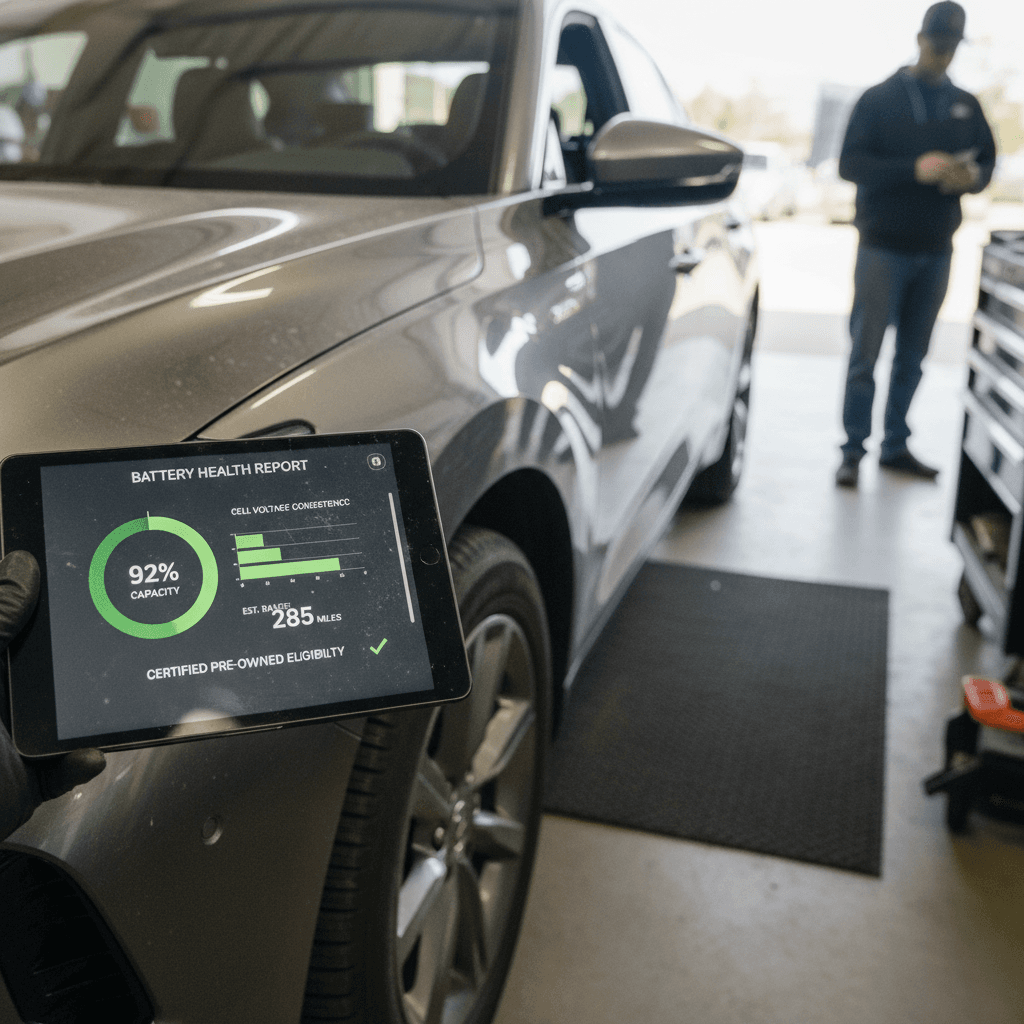
On a used EV, <strong>state of health (SOH)</strong> is as important as miles. A ZDX that still delivers near‑EPA range is worth more than one with noticeable degradation, even with similar odometer readings.
4. Accident history and repairs
Any structural damage, airbag deployment, or branded title can cut offers dramatically. Even cosmetic repairs matter if they’re visible or poorly documented.
5. Interior and exterior condition
Curb rash on the 22‑inch wheels, worn tires, stained seats, and cracked glass all add reconditioning costs. Dealers simply subtract those costs from what they’re willing to pay you.
6. Local demand and incentives
If your market is flooded with off‑lease ZDXs or aggressive new‑car incentives, trade‑in bids drop. In regions with fewer luxury EVs on the lot, clean ZDXs can command noticeably stronger offers.
7. Market timing
Seasonality still matters. Tax‑refund season and early summer often bring stronger retail demand; late‑year dealer push on new models can also create windows where your ZDX is worth a bit more.
8. Who you’re selling to
Franchise Acura dealers, national used‑car chains, specialty EV marketplaces like <strong>Recharged</strong>, and private buyers all value risk differently, and that shows up in the number they put on your trade.
Battery health: How much it can move your offer
For gasoline SUVs, miles and accident history carry most of the weight. With EVs like the ZDX, battery health is the single biggest swing factor between a lowball offer and a strong one. Yet most trade‑in tools still rely on crude proxies, age and odometer, because they don’t have independent battery data.
What dealers see without data
- They assume worst‑case degradation for your age and mileage.
- They bake in risk for a potential battery warranty fight down the road.
- They discount more heavily on early‑generation or slow‑selling EVs.
For the ZDX, which is already a soft value holder, that extra risk can mean **thousands of dollars left on the table**.
What happens with a verified report
- A third‑party battery health diagnostic shows actual usable capacity, not a vague dash readout.
- Dealers and buyers see how your ZDX compares to similar EVs.
- Clean results justify smaller risk discounts, and stronger offers.
On Recharged, this is built into the Recharged Score Report, which converts technical diagnostics into plain‑English and a single, easy‑to‑compare score.
Why Recharged bakes battery health into pricing
Ready to find your next EV?
Browse VehiclesLeasing vs owning: How it changes your exit strategy
A lot of early ZDX adopters were steered into **heavily subsidized leases**. That’s shaping the 2026 trade‑in landscape just as much as depreciation tables. Your best move depends on whether you leased or bought.
2026 exit options: leased vs. financed ZDX
Same EV, very different math depending on how you got into it.
If you leased your Acura ZDX
- Check your **residual value** in the lease contract and compare it to real‑world market value.
- If residual > market value, you probably want to walk away at lease‑end rather than buy it out.
- If residual < market value (rare on ZDX, but possible on specific deals), you might profit by buying and reselling.
- Some captives restrict third‑party buyouts; confirm whether a marketplace like Recharged can buy your ZDX at lease‑end.
If you financed or paid cash
- Your payoff doesn’t affect market value, but it does affect whether you’re **upside‑down**.
- If your loan balance is higher than trade‑in value, you’ll need cash or rolling negative equity into your next deal.
- Shopping multiple exit paths (dealer trade, instant offers, EV marketplaces) matters more, because you’re not locked into a residual.
- With a paid‑off ZDX, you’re free to time the market and hold if offers feel too low in 2026.
Run the “keep vs. trade” math
Where to sell or trade your Acura ZDX in 2026
In 2026, you have more options than ever for unloading a used EV, but not all of them value a ZDX the same way. The right channel can easily swing your outcome by several thousand dollars, especially on a niche model like this.
Main ways to move a ZDX, and how they stack up
Different buyers see different risk in a luxury EV that depreciates quickly.
Franchise Acura dealer
Best for: Convenience, rolling negative equity into a new Acura.
- Fast appraisal and instant trade‑in value.
- Often the most conservative number, especially if local lots are already sitting on ZDX inventory.
- Strongest if you’re moving into another Acura with factory incentives.
Big‑box used‑car chain
Best for: Quick sale, simple paperwork.
- Online quote tools, same‑day checks.
- May undervalue niche EVs and heavily discount for unknown battery health.
- Good baseline for comparing other offers.
EV‑specialist marketplace (like Recharged)
Best for: Maximizing value when battery health is strong.
- Uses EV‑specific pricing, not generic SUV tables.
- Includes a Recharged Score Report with every listing so buyers can see verified battery health.
- Offers financing, trade‑in and nationwide delivery support to your buyer, which can support higher sale prices.
Recharged coverage and support
How to prepare your ZDX for top‑dollar offers
ZDX buyers are cross‑shopping Teslas, German luxury EVs, and newer Ultium‑based SUVs. They expect your Acura to look and feel like a premium product. A few targeted steps before you list or appraise can tighten that expectation gap and give you more leverage at the negotiation table.
Pre‑trade checklist for Acura ZDX owners
1. Get a battery health report first
Schedule an independent EV battery diagnostic or list through a marketplace like <strong>Recharged</strong> that includes a Recharged Score. Walk into dealer appraisals with that data in hand so they see less downside risk.
2. Fix the cheap cosmetic issues
Repair minor curb rash, replace missing trim caps, and take care of small windshield chips. These are inexpensive fixes that prevent dealers from padding reconditioning estimates.
3. Complete overdue maintenance
EVs still need tires, brakes, cabin filters, and software updates. A stack of service receipts from an Acura dealer or reputable shop reassures buyers and appraisers alike.
4. Clean and detail thoroughly
A professional detail, especially on lighter interiors, can make a ZDX look a model year newer. Buyers make emotional decisions quickly; a clean cabin and glossy paint boosts perceived value.
5. Gather both keys and accessories
Missing key fobs, charging cables, or cargo covers give buyers an easy excuse to negotiate down. Track them all down before you request offers.
6. Pull your payoff and check equity
If you still owe on the ZDX, call your lender for a **10‑day payoff** amount. Compare that to realistic trade‑in estimates so you know whether you’re bringing money to the table or walking away with a check.
Sample 2026 Acura ZDX trade‑in value scenarios
To make the numbers less abstract, here are three simplified 2026 scenarios. These aren’t offers, just illustrations of how mileage, condition, and battery health interact when a dealer or marketplace prices your ZDX.
Illustrative 2026 trade‑in scenarios for 2024 Acura ZDX
Assumes U.S. market conditions in 2026. Real offers will vary by region, trim, lender rules, and current incentives.
| Scenario | Vehicle Details | Appraisal Context | Likely 2026 Trade‑In Outcome |
|---|---|---|---|
| A. Best‑case ZDX | 2024 ZDX Type S AWD, 18,000 miles, one‑owner, no accidents, excellent cosmetic condition, strong Recharged Score battery report. | Dealer has low ZDX inventory, you’re trading into another Acura or late‑model EV, market for luxury EVs is steady. | High end of band: could land in the mid‑to‑high $30,000s with dealers and potentially more via a retail‑focused EV marketplace. |
| B. Typical real‑world ZDX | 2024 ZDX A‑Spec AWD, 28,000 miles, clean Carfax, a few wheel scuffs, average tire wear, battery health solid but not perfect. | Dealers already have a couple of ZDXs sitting, but local EV demand is decent. You’ve gathered 2–3 offers plus an online quote. | Middle of band: something in the low‑to‑mid $30,000s is realistic, with smaller premiums possible where EV demand is stronger. |
| C. Rough‑edge ZDX | 2024 ZDX A‑Spec RWD, 38,000 miles, one minor accident on record, visible cosmetic damage, no independent battery report. | Dealer sees this as a risky, slow‑moving EV. They assume worst‑case degradation and build in reconditioning and holding costs. | Low end of band: high‑$20,000s or lower from franchise dealers; an EV‑savvy buyer may improve that if you invest in cleanup and documentation first. |
If your ZDX looks more like Scenario A than Scenario C, you’re in a much better position to push for the high end of the ranges discussed earlier.
Remember: online estimates aren’t checks
FAQ: Acura ZDX trade‑in value in 2026
Frequently asked questions
Bottom line: Should you trade your Acura ZDX in 2026?
If you’re holding a 2024 Acura ZDX in 2026, you’re staring at one of the sharpest depreciation curves in the luxury EV world. For many owners, **that loss is already baked in**, the question now is how to exit smartly. If your battery health is strong and you like the way the ZDX drives, keeping it longer can spread that hit over more miles. If you’re ready to move on, the key is to leverage independent battery data, shop multiple channels, and avoid relying on a single instant quote.
A specialist marketplace like Recharged can help you do exactly that. Every vehicle comes with a Recharged Score battery health report, fair‑market pricing based on real EV sales, and EV‑savvy support from trade‑in to delivery. Whether you decide to sell outright, consign, or trade into another used EV, going in with clear data, and a plan, will do more for your 2026 Acura ZDX trade‑in value than any single negotiation tactic.