If you’re shopping for a Genesis GV60, especially a used one, the battery warranty details are just as important as the color and trim. The good news: Genesis backs the GV60’s high-voltage battery with some of the strongest terms in the segment. The trick is understanding what “10 years / 100,000 miles” really means in day-to-day use, and how it carries over to second owners.
Quick GV60 battery warranty snapshot
Genesis GV60 battery warranty at a glance
Core GV60 warranty terms (U.S. market)
Model‑year details for the GV60 (2023–2026 so far) sit on top of Genesis’s brand‑wide warranty structure: a strong 5‑year / 60,000‑mile new vehicle warranty and a 10‑year / 100,000‑mile powertrain warranty, plus a 10‑year / 100,000‑mile EV battery warranty that applies to the high‑voltage pack. Dealer and owner documentation confirm that the EV battery warranty is a distinct section from the powertrain warranty and does not carve out second owners the way some “powertrain for first owner only” language does.
Why this matters for used buyers
How the Genesis GV60 battery warranty works
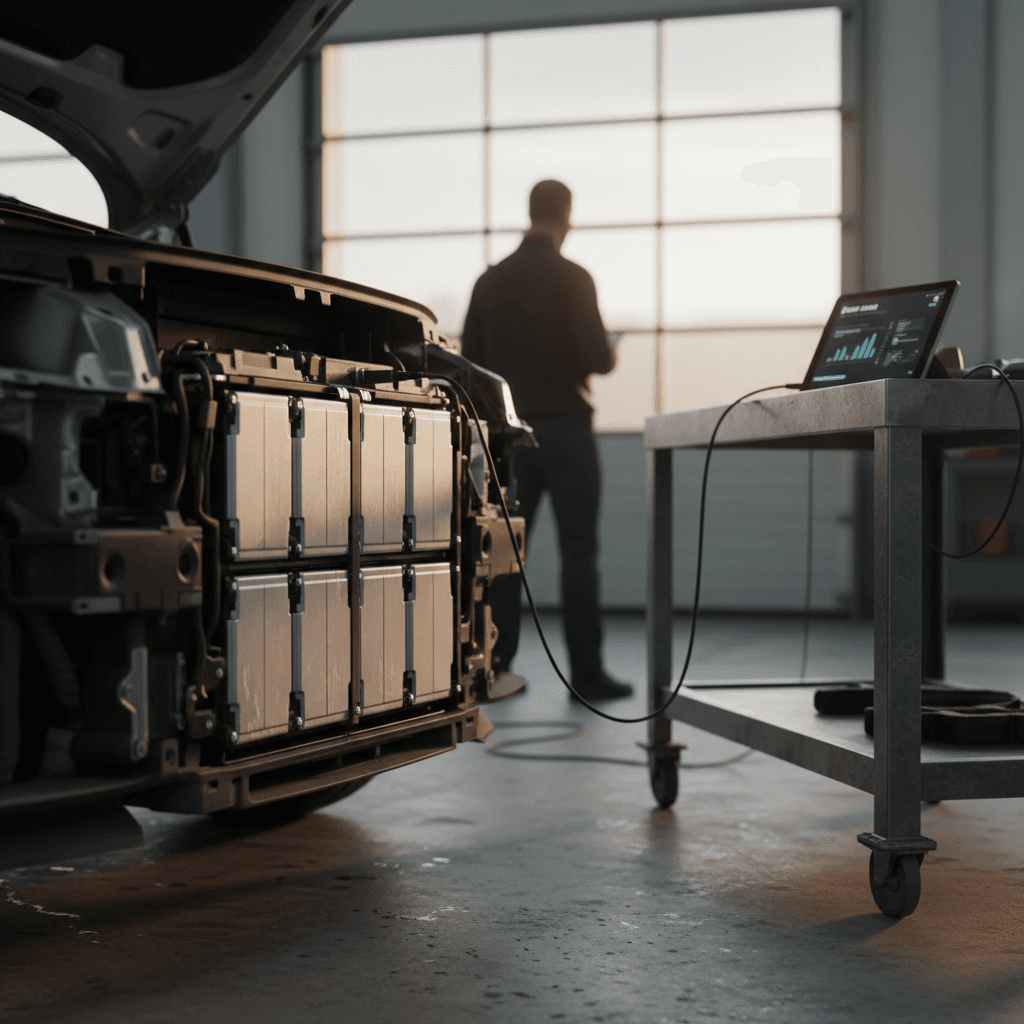
At a high level, the GV60’s battery warranty is a promise from Genesis to repair or replace the high‑voltage traction battery pack and certain EV‑specific components if they fail due to defects in materials or workmanship during the coverage period. For U.S. buyers, that period is 10 years from the original in‑service date or 100,000 miles, whichever comes first.
- Coverage clock starts on the original in‑service date (when the GV60 was first sold or leased, not when you buy it used).
- Coverage ends at 10 years OR 100,000 miles, whichever happens first.
- Warranty is administered through Genesis retailers; diagnosis must confirm a warrantable defect.
- If repair isn’t practical, Genesis can replace the pack with a new or remanufactured unit.
- Coverage follows the vehicle, not just the first owner, for the EV battery (subject to the official warranty booklet terms).
Separate from the high‑voltage pack, the GV60 also has a conventional 12‑volt battery that powers accessories and control electronics. That battery typically falls under the general parts warranty, often around 3 years / 36,000 miles, not the 10‑year EV battery warranty. It’s important not to confuse the two.
Watch the mileage AND the calendar
What’s actually covered on a GV60 battery
Genesis groups the battery and several EV‑specific components into an “electric vehicle system” warranty section. While exact language lives in the warranty handbook, coverage typically includes:
Key EV components Genesis ties to the battery warranty
These are the expensive parts you most want covered
High‑voltage battery pack
Battery Management System
Charging & power electronics
Covered when there’s a defect
If a battery module, pack cooling component, or EV control unit fails because of a manufacturing or material defect, Genesis will repair or replace it under warranty, provided the vehicle is within the 10‑year / 100,000‑mile window and has been used and maintained within the guidelines of the owner’s manual.
Normal use is expected
The warranty assumes you’re using the GV60 in a way that aligns with the manual: no salvage titles, no severe abuse, and charging behavior within normal bounds. Occasional DC fast charging is fine; repeatedly overheating the pack or tampering with it is not.
What’s NOT covered (and common surprises)
Like every automaker, Genesis excludes a long list of items and scenarios from its battery warranty. Understanding these up front helps you avoid expensive surprises later, especially if you’re considering a modified or hard‑used GV60.
Common GV60 battery warranty exclusions
Always confirm with the latest Genesis warranty handbook, but these exclusions are typical across the industry.
| Area | Typically NOT covered |
|---|---|
| Wear items | Tires, brake pads, wiper blades, and most 12‑volt batteries |
| Damage | Accidents, flooding, fire, vandalism, rodent damage |
| Improper maintenance | Ignoring critical recalls, failing to repair obvious issues, not following the manual’s charging/storage guidance |
| Unauthorized modifications | Aftermarket tuning of battery/thermal software, non‑approved high‑voltage work, certain non‑OEM parts |
| Abuse or extreme use | Track use, repeated extreme overloading, or commercial uses not allowed under the warranty terms |
If a failure is linked to misuse, neglect, or non‑approved modifications, you may be paying out of pocket even within 10 years / 100,000 miles.
Salvage or branded title? Assume no coverage
How the warranty treats battery degradation and capacity loss
Modern EV packs, including the Genesis GV60’s 77.4–84 kWh battery, are designed to lose capacity gradually over time. All EV makers draw a line between normal degradation and defect‑driven loss, but they don’t all describe it in the same way.
- The GV60 battery warranty is aimed at defects, cells or modules that fail or degrade abnormally quickly, not just any loss of range over time.
- Genesis, like many brands, does not advertise a simple public threshold like “below 70% capacity is automatically warrantable,” even though internal guidelines exist.
- Capacity concerns are usually evaluated case‑by‑case through dealer diagnostics that check the pack’s health, error codes, and usable energy.
What’s “normal” degradation?
In practical terms, the GV60 battery warranty offers strong protection against outright failures and out‑of‑family degradation, but it’s not a guarantee that your 10‑year‑old GV60 will still have its day‑one EPA range. That distinction matters if you’re planning to keep the SUV a long time or buying used with high mileage.
Original vs. second owner: what used GV60 shoppers get
One confusing wrinkle is that Genesis, like parent brand Hyundai, treats powertrain coverage differently for first and subsequent owners, but the EV battery warranty is structured separately in the handbook. Owners and dealers who’ve dug through the warranty booklet point out that the battery coverage section does not carve out second owners the way the powertrain section does.
If you’re the first owner
- 10yr / 100k high‑voltage battery warranty starting at in‑service date.
- 10yr / 100k powertrain warranty on EV drive components.
- 5yr / 60k basic warranty, plus maintenance and roadside benefits.
If you’re a second (or later) owner
- Basic warranty and some powertrain benefits may shorten or end based on age/miles.
- Documentation and owner reports indicate that the EV battery warranty still runs to 10yr / 100k miles, because it is a separate warranty section.
- Always confirm in writing with a Genesis retailer or customer care using the VIN and in‑service date.
Transferable battery coverage is a big plus
How the GV60 battery warranty compares to other EVs
On paper, the GV60’s battery warranty is at or near the top of the market. U.S. regulations require at least 8 years / 100,000 miles of EV battery coverage, but Genesis goes to 10 years / 100,000 miles, in line with Hyundai.
GV60 battery warranty vs. common EV rivals (U.S.)
Approximate factory battery warranty terms as of early 2026. Always verify specifics with each manufacturer.
| Model | Battery warranty (years / miles) | Notes |
|---|---|---|
| Genesis GV60 | 10 / 100,000 | Strong duration; EV‑specific system coverage as well |
| Hyundai Ioniq 5 | 10 / 100,000 | Sibling platform with similar warranty philosophy |
| Tesla Model Y | 8 / 120,000 (varies by pack) | Higher mileage cap but shorter time period |
| Ford Mustang Mach‑E | 8 / 100,000 | Meets federal minimum, similar to many legacy brands |
| Audi Q4 e‑tron | 8 / 100,000 | Premium rival with standard EV coverage window |
Genesis sits in the top tier for battery warranty duration, especially for used‑EV shoppers.
Don’t just compare numbers, compare how you’ll use it
Using battery warranty details when buying a used GV60
Where this all really matters is the used‑EV lot. A strong battery warranty is only useful if you know how much of it is left and whether the pack is actually healthy. This is where a structured process, and good diagnostics, make a difference.
Used Genesis GV60 battery due‑diligence checklist
1. Confirm in‑service date and mileage
Ask the seller or dealer for documentation of the original in‑service date. Subtract that from 10 years and 100,000 miles to see what’s left on the battery warranty. A reputable platform like <strong>Recharged</strong> will surface this automatically in the vehicle details.
2. Verify warranty status by VIN
Call Genesis customer care or a Genesis retailer with the VIN and ask them to confirm remaining <strong>EV battery warranty</strong> and any open recalls. Get this in writing or email if possible.
3. Check for salvage or branded title
Run a history report. If the GV60 has a salvage, flood, or rebuilt title, assume <strong>battery coverage is void</strong>. Even if the pack seems fine today, you’re on your own if it fails later.
4. Review charging and usage history
Ask how the previous owner charged: mostly Level 2 at home, or constant DC fast charging? Occasional fast charging is fine, but heavy DC use in very hot climates can accelerate aging.
5. Get objective battery‑health data
Relying on the dash range estimate isn’t enough. A platform like <strong>Recharged</strong> uses a <a href="/recharged-score">Recharged Score</a> with verified <strong>battery health diagnostics</strong> so you can see how the pack is performing relative to its baseline.
6. Inspect for software and recall history
Make sure major software updates and recalls have been applied. Skipping critical updates or ignoring warning lights can jeopardize warranty coverage and long‑term health.
How Recharged helps de‑risk used EVs
Genesis GV60 battery warranty FAQ
Common questions about Genesis GV60 battery warranty details
Bottom line: Is the GV60 battery warranty strong?
If you strip away the marketing gloss and look at the numbers, the Genesis GV60 battery warranty details are genuinely compelling. A 10‑year / 100,000‑mile high‑voltage battery warranty, separate from powertrain coverage, and generally transferable, puts the GV60 in the top tier of EVs for long‑term peace of mind.
For new buyers, that means you can enjoy one of the more distinctive luxury EV crossovers on the market without constantly worrying about a five‑figure battery replacement. For used‑EV shoppers, it means a well‑documented, low‑mileage GV60 can still have years of battery protection left, if you do your homework on in‑service date, usage, and health.
That’s exactly where a platform like Recharged comes in. By pairing verified battery diagnostics, transparent pricing, and EV‑specialist guidance with tools like financing, trade‑in, and nationwide delivery, Recharged helps you treat the GV60’s battery warranty as one piece of a bigger picture: long‑term, low‑stress EV ownership.