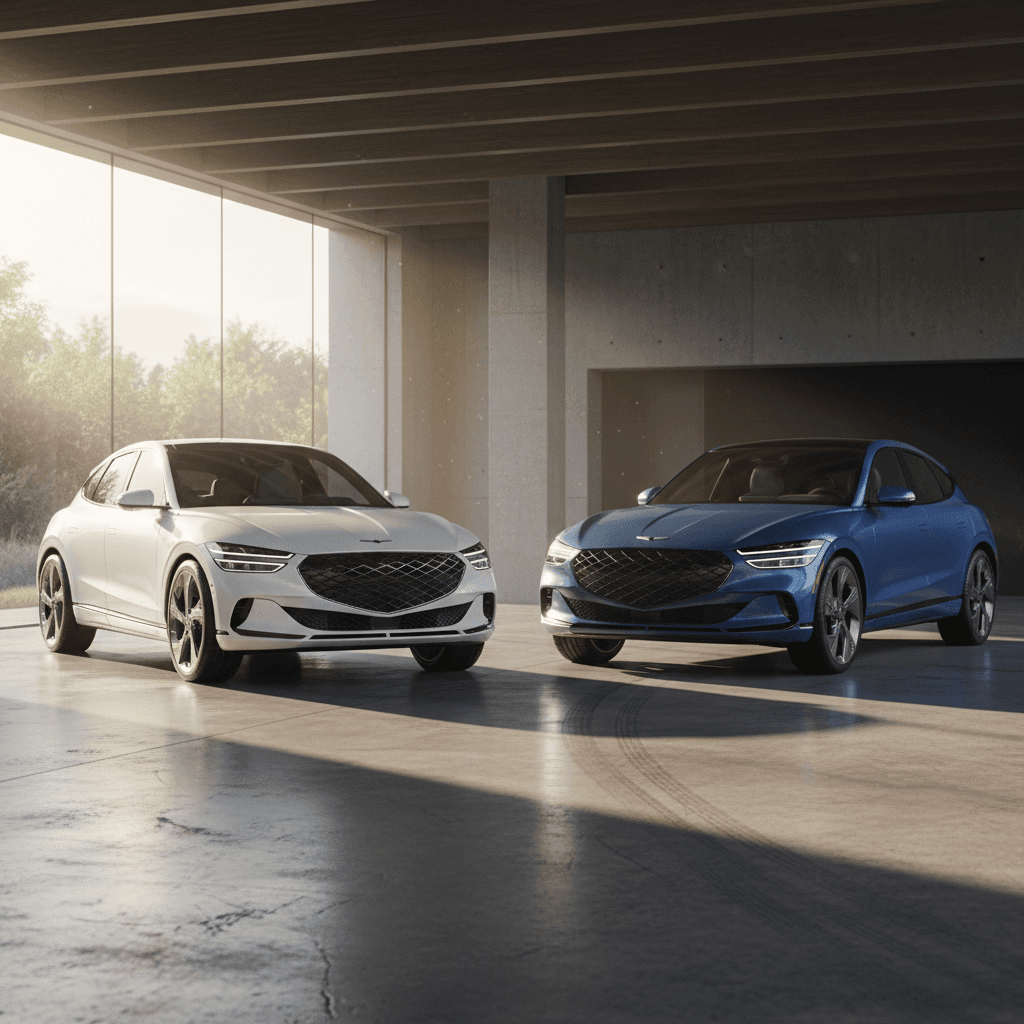
If you’re shopping a Genesis GV60, you’ve probably noticed two main all‑wheel‑drive trims on dealer lots and the used market: GV60 Advanced and GV60 Performance. On paper they share the same 77.4‑kWh battery and sleek design, but real‑world differences in power, range, features and price can dramatically change which one makes sense for you.
Model years covered
Genesis GV60 Advanced vs Performance: Quick Overview
Both trims ride on Hyundai Motor Group’s 800‑volt E‑GMP platform and use a 77.4‑kWh battery with dual motors and standard all‑wheel drive. The key differences are in how much power those motors deliver, how far you can go on a charge, and which luxury and performance features come standard.
GV60 Advanced vs Performance: Core Specs (U.S. trims)
High‑level snapshot of the main differences between the Genesis GV60 Advanced and Performance trims.
| Spec | GV60 Advanced AWD | GV60 Performance AWD |
|---|---|---|
| Horsepower | 314 hp | 429 hp (up to ~483 hp in Boost mode) |
| Torque | 446 lb‑ft | 516 lb‑ft (up to ~516+ lb‑ft in Boost) |
| 0–60 mph (approx.) | ~5.3–5.7 seconds | ~3.7–3.9 seconds with Boost |
| Battery | 77.4 kWh | 77.4 kWh |
| EPA Range (typical) | around 248 miles (20" wheels) | around 235 miles (21" wheels) |
| Drive | Dual‑motor AWD | Dual‑motor AWD with performance tuning |
| Base MSRP when new* | ≈ low $60Ks | ≈ high $60Ks / low $70Ks |
| Wheels | 20" alloy | 21" performance alloy |
| Adaptive suspension / e‑LSD | Typically not included | Standard or more widely available |
| Target buyer | Comfort, range, value | Maximum performance and tech |
Specs reflect typical 2024–2025 U.S. models; individual vehicles may differ slightly by options and wheels.
How to read this table
Power, Acceleration and Handling
If your top question is “how quick is it?”, the Genesis GV60 Performance is the clear winner. But the Advanced is no slouch, especially compared with other compact luxury EV SUVs.
GV60 Advanced vs Performance: Power at a Glance
Advanced: Plenty quick for real‑world driving
The GV60 Advanced sends a combined 314 hp and 446 lb‑ft of torque to all four wheels. That’s good for roughly 5.3–5.7 seconds 0–60 mph depending on wheels, conditions and testing method. In practice, that means instant torque off the line, easy highway merges, and quiet, refined acceleration that fits its luxury mission.
- Balanced power delivery that doesn’t overwhelm traction control in wet or snowy conditions.
- More comfort‑oriented suspension tuning, though still sporty by luxury‑SUV standards.
- Less wheelspin and drama than the Performance trim when you mat the accelerator.
Performance: Boost button thrills
The GV60 Performance uses the same battery but uprates the motors for 429 hp and 516 lb‑ft of torque in normal driving, with a steering‑wheel Boost button that unlocks roughly 10 seconds of even higher output. Independent tests peg 0–60 mph in the high‑3‑second range, putting it squarely in sports‑car territory.
- Noticeably harder shove in your back when you accelerate from a stop or at highway speeds.
- Sharper throttle mapping in Sport and Sport+ modes that make the GV60 feel smaller and more agile than it looks.
- Available or standard Electronically Controlled Suspension and an e‑LSD (electronic limited‑slip differential) that help the Performance carve corners with surprising confidence.
Performance comes with trade‑offs
Range, Battery and Charging Experience
Mechanically, Advanced and Performance trims share the same roughly 77.4‑kWh battery pack and 800‑volt architecture, so their charging behavior is nearly identical. Where they differ is range: wheel size, tire choice and tuning give the Advanced a small but meaningful edge.
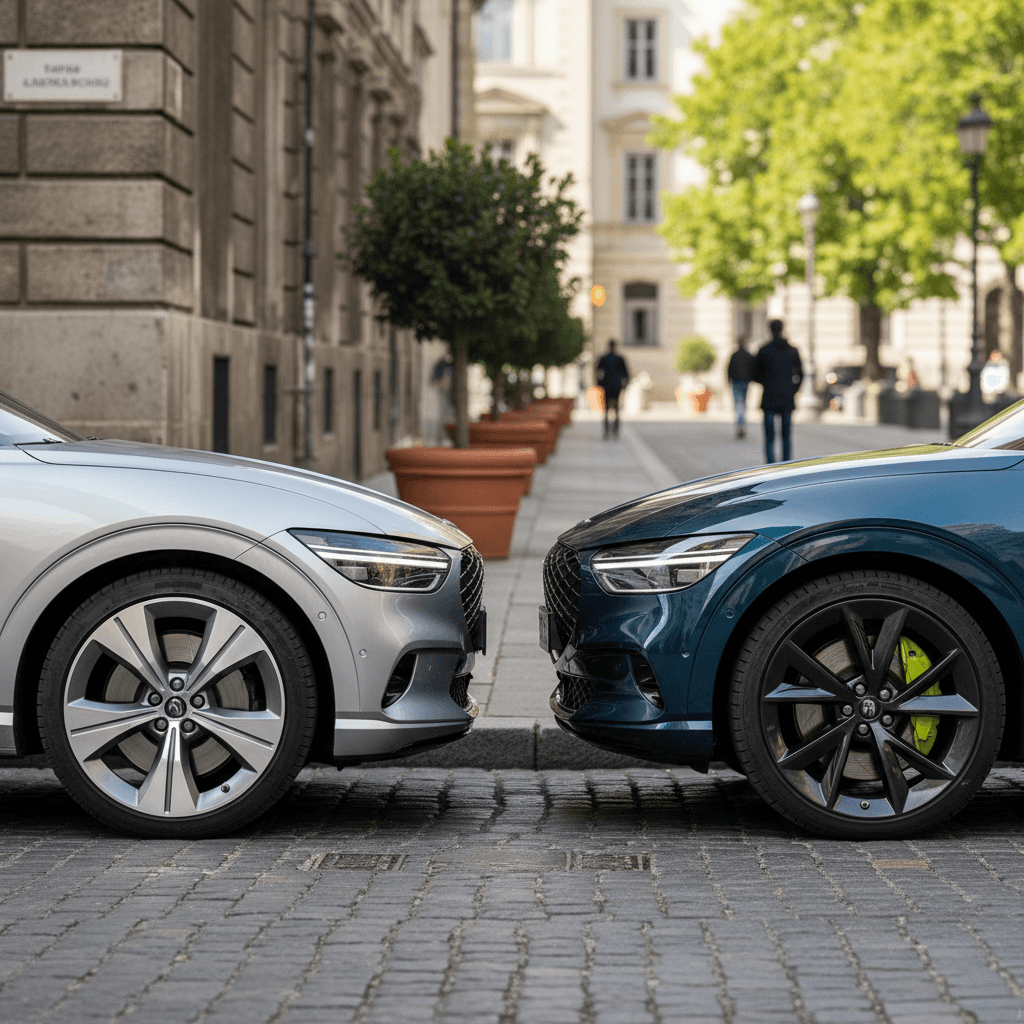
Range and Charging: Advanced vs Performance
Same pack, slightly different real‑world endurance
Driving Range
- Advanced AWD: commonly around the high‑240‑mile mark on EPA estimates, especially on 20" wheels.
- Performance AWD: typically around 235 miles of EPA‑rated range due to wider 21" tires and performance tuning.
- In mixed real‑world driving, expect slightly less than EPA if you drive aggressively or live in cold climates.
Charging Experience
- Both trims leverage the E‑GMP platform’s ultra‑fast DC charging, often going 10–80% in around 18 minutes on a 350‑kW charger.
- AC Level 2 charging at home tops out around 10.9 kW, adding roughly 30+ miles of range per hour on a 240‑V, 48‑amp setup.
- Battery preconditioning and good charging curves make road‑tripping easier than in many rivals.
Home charging tip
Features, Luxury and Tech Differences
Equipment varies slightly by model year, but in general the GV60 Advanced is well‑equipped luxury transport, while the Performance layers on more advanced driver aids and performance‑oriented hardware.
Feature Highlights: GV60 Advanced vs Performance
The exact spec can vary by year and options, but this captures the typical differences shoppers will see.
| Feature Area | GV60 Advanced AWD | GV60 Performance AWD |
|---|---|---|
| Wheels & tires | 20" alloys, all‑season tires | 21" performance‑oriented wheels, lower‑profile tires |
| Suspension | Fixed damping, comfort‑leaning tune | Often includes Electronically Controlled Suspension with Road Preview |
| Differential | Conventional AWD setup | Available electronic limited‑slip differential for sharper cornering |
| Drive modes | Eco / Comfort / Sport | Eco / Comfort / Sport / Sport+ plus Boost button |
| Interior trim | Luxury‑focused, high‑quality materials | Similar luxury cabin with extra sporty cues depending on package |
| Tech & safety | Rich ADAS suite; Highway Driving Assist II on newer years | Generally matches Advanced, sometimes adds more standard equipment |
| Seats | Heated front seats common; ventilation often optional | Heated and ventilated front seats more common; sportier bolstering on some builds |
| Biometrics (Face Connect, fingerprint start) | Increasingly standard by 2024+ | Same biometric tech; often standard as well |
Always confirm options on the specific GV60 you’re considering, especially on the used market.
Both trims feel genuinely premium
Pricing, Incentives and Cost of Ownership
New, the Genesis GV60 Advanced and Performance sit squarely in the compact luxury EV class, with pricing that reflects their premium positioning and hardware. On the used market, depreciation makes them particularly interesting values, especially for shoppers cross‑shopping Tesla Model Y, Audi Q4 e‑tron, or Mercedes‑Benz EQB.
Typical Pricing Snapshot (U.S.)
Exact numbers change every model year, here’s how they relate to each other.
When new
- GV60 Advanced AWD: Typically in the low $60,000s with destination.
- GV60 Performance AWD: Generally around $69,000–$71,000 with destination, depending on year and equipment.
- Genesis builds the GV60 in Korea, so recent model years have not qualified for federal EV tax credits when new in the U.S.
On the used market
- Depreciation often makes both trims meaningfully cheaper after just 2–3 years.
- Expect the Performance to command a premium vs an equivalent Advanced, but that gap can shrink as vehicles age.
- A used GV60 with a strong battery health report and clean history can undercut new‑EV prices while offering similar tech.
How Recharged can help
Ready to find your next EV?
Browse VehiclesWhich GV60 Trim Fits Your Lifestyle?
Rather than asking “Which trim is better?”, it’s more helpful to ask “Which trim is better for me?” Your daily driving pattern, tolerance for firm rides, and appetite for speed all matter here.
GV60 Advanced vs Performance: Best Fit by Driver Type
Daily commuter & family driver
You prioritize comfort, quiet, and confidence in bad weather.
Most of your driving is city and highway cruising, not canyon carving.
You’d rather have a bit <strong>more range</strong> and lower long‑term tire costs.
Verdict: <strong>GV60 Advanced</strong> is usually the smarter, more relaxed choice.
Driving enthusiast or performance EV fan
You care a lot about 0–60 times and high‑speed passing power.
You’re okay with a slightly firmer ride and higher tire replacement costs.
You enjoy exploring twisty roads or using on‑ramp merges as mini drag strips.
Verdict: <strong>GV60 Performance</strong> delivers the drama and sharpness you’re looking for.
Style‑focused urban driver
You mainly drive in dense urban or suburban environments.
You like the look of big 21" wheels and don’t mind the comfort trade‑off.
Range isn’t a concern because you have reliable home or workplace charging.
Verdict: <strong>Either trim works</strong>, but Performance’s wheels and stance may appeal more.
Road‑trip and efficiency‑minded owner
You regularly cover long highway distances.
You value a smoother ride and slightly better range more than raw power.
You want the most relaxed, quiet GV60 you can get.
Verdict: <strong>GV60 Advanced</strong> on 20" wheels is the safer, more efficient bet.
Don’t overbuy on power
Buying a Used Genesis GV60: What to Watch For
Whether you land on the Advanced or Performance, the same used‑EV fundamentals apply. The GV60 is packed with tech and has a complex dual‑motor AWD system, so a little extra due diligence goes a long way.
Used GV60 Advanced vs Performance: Inspection Checklist
1. Verify battery health
Ask for an independent <strong>battery health report</strong>, or a Recharged Score Report if you’re shopping through Recharged, to understand remaining capacity and any signs of abnormal degradation.
2. Check wheel and tire condition
Performance trims with 21" wheels are more prone to <strong>curb rash, sidewall damage, and uneven wear</strong>. Inspect closely and budget for near‑term replacements if tread is low.
3. Test drive on mixed roads
Drive both trims on rough pavement and highways. The Performance may feel busier over bumps; the Advanced should be calmer. Make sure the ride and noise levels fit your expectations.
4. Confirm software and recall status
Ask the seller to show proof of <strong>completed software updates and recall work</strong>. Over‑the‑air updates help, but some campaigns require dealer visits.
5. Evaluate driver‑assist features
Test Highway Driving Assist, lane‑centering, adaptive cruise and parking features. These systems are a big part of the GV60’s appeal, and fixing radar or camera issues can be costly out of warranty.
6. Review charging history and patterns
Heavy, repeated DC fast‑charging at high states of charge can stress batteries over time. A balanced history of home and public charging is generally a healthier sign.
Leverage a digital buying experience
Genesis GV60 Advanced vs Performance: FAQ
Frequently Asked Questions
Bottom Line: How to Choose Your GV60 Trim
The Genesis GV60 Advanced and Performance share the same futuristic design, fast‑charging E‑GMP platform, and tech‑heavy cabins. The choice comes down to how you drive and what you’re willing to trade for extra speed. If you want quiet comfort, slightly better range and lower running costs, the Advanced is the smart default. If you’ll genuinely use the Boost button, sharper handling and 3‑something‑second 0–60 runs, the Performance delivers a level of fun that few electric crossovers can match.
When you’re ready to move from research to ownership, Recharged can help you compare real‑world Advanced and Performance listings, decode battery‑health reports, explore financing and trade‑in options, and even arrange nationwide delivery. With transparent pricing and the Recharged Score Report included on every EV, you can choose the GV60 that fits your life, not just the one that looks best on paper.