If you own or are shopping for a Genesis Electrified G80, you’re dealing with a rare car: a low‑volume luxury EV sedan that’s now been discontinued in the U.S. That makes having a clear, up‑to‑date Genesis Electrified G80 recalls list even more important, especially if you’re looking at a used example.
Discontinued, but still supported
Why a Genesis Electrified G80 recalls list matters
The Electrified G80 shares its platform and key components with other Hyundai–Kia–Genesis EVs, including the GV60 and Electrified GV70. When one of those vehicles has a safety defect, there’s a good chance the G80 EV is included in the same campaign. Because it was sold in small numbers and in limited states, many owners never see the original mailer or hear about recalls at all.
This guide pulls together the major Electrified G80 recalls known as of February 2026, explains what can go wrong, and shows you how to confirm your car’s status in minutes. If you’re cross‑shopping used EVs, this also helps you compare the Electrified G80’s track record to rivals.
Electrified G80 recalls in context
Quick overview of major Electrified G80 recalls
Major Genesis Electrified G80 recalls (U.S.)
High‑level snapshot of the most important safety recalls that include the G80 EV. Always verify by VIN for exact coverage.
| Recall / campaign | Approx. model years affected (G80 EV) | Main issue | Primary symptoms | Typical remedy |
|---|---|---|---|---|
| 12‑volt battery charging fault / loss of power | 2023–2024 (some 2025) | Auxiliary 12‑volt battery may not charge correctly, risking loss of motive power while driving. | Warning lights, reduced power mode, eventual loss of drive. | Software update to charging control; inspection and replacement of related fuse or components if needed. |
| Instrument cluster & infotainment screen failure | 2025–2026 (software family used on late 2024+) | Software bug in HD‑radio related memory can cause digital cluster and center screen to reboot or go black while driving. | Speedometer and gauges disappear, infotainment resets, screen flicker or blackout. | Instrument cluster/infotainment software update at dealer or via over‑the‑air (if supported). |
Dates and ranges are approximate; your specific car’s status can only be confirmed via its VIN.
This list isn’t VIN‑specific
Recall #1: 12‑volt battery charging fault and loss of drive power
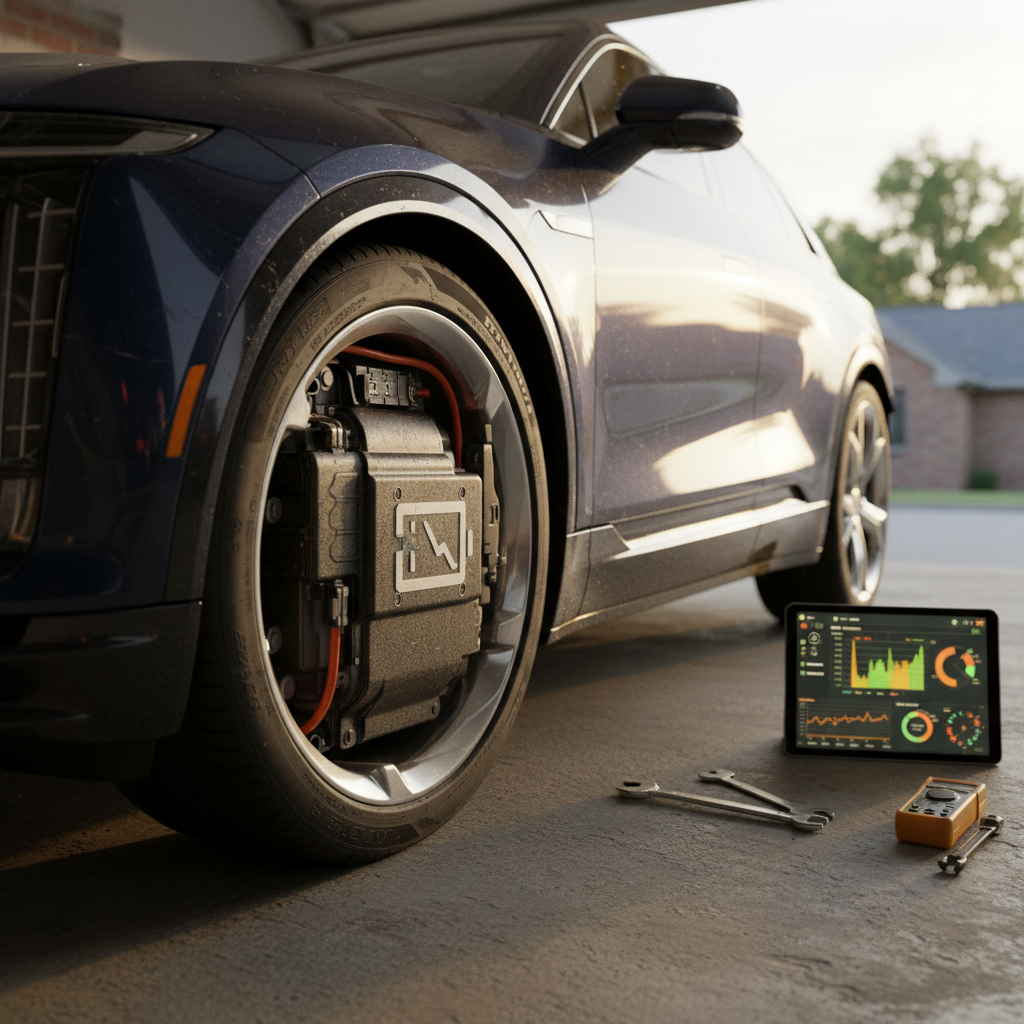
One of the most important EV recalls affecting the Electrified G80 involves the 12‑volt auxiliary battery charging system. Even though the Genesis G80 EV uses a large high‑voltage pack to move the car, it still relies on a conventional low‑voltage battery to power computers, contactors, and accessories.
In late 2024, Hyundai and Genesis announced a sweeping EV recall, covering roughly 145,000 electric vehicles, because the system that maintains that 12‑volt battery’s charge could malfunction. The campaign includes select 2023–2025 Genesis GV60 and Electrified GV70, and 2023–2024 Genesis Electrified G80, among others.
- If the 12‑volt battery isn’t properly supported, the car can eventually drop into reduced‑power “fail‑safe” mode.
- In that mode, you may see warning lights and feel the car limit available power so you can pull over safely.
- If you keep driving and ignore warnings, the vehicle can ultimately lose motive power altogether, raising the risk of a crash.
Why this recall matters
Which Electrified G80s are included?
Documentation around this campaign focuses on build dates rather than simple model‑year labels. In general, affected U.S.‑market Electrified G80s fall into these buckets:
- 2023 Genesis Electrified G80 built during the initial U.S. launch window.
- 2024 Genesis Electrified G80 produced before software changes went into regular production.
- A smaller number of early‑build 2025 cars, depending on plant and configuration.
Because the G80 EV was produced in relatively low volume and in batches, it’s entirely possible your specific car is not impacted, even if it’s the same model year as one that is. Again, the only definitive answer is a VIN lookup.
What Genesis dealers do to fix the issue
Typical 12‑volt charging recall remedy steps
1. Confirm recall eligibility
The service advisor runs your VIN through the Genesis and NHTSA databases to confirm the campaign applies and hasn’t already been completed.
2. Scan for diagnostic trouble codes
Technicians scan the vehicle for stored fault codes tied to the low‑voltage battery, power electronics, and battery management system.
3. Update control‑unit software
A software update adjusts how the car manages and monitors the 12‑volt system, helping prevent under‑charging and unexpected shut‑downs.
4. Inspect & replace hardware if needed
If related fuses or components show damage, Genesis replaces them under the recall at no cost to you.
Owner tip
Recall #2: Instrument cluster and infotainment screens shutting off
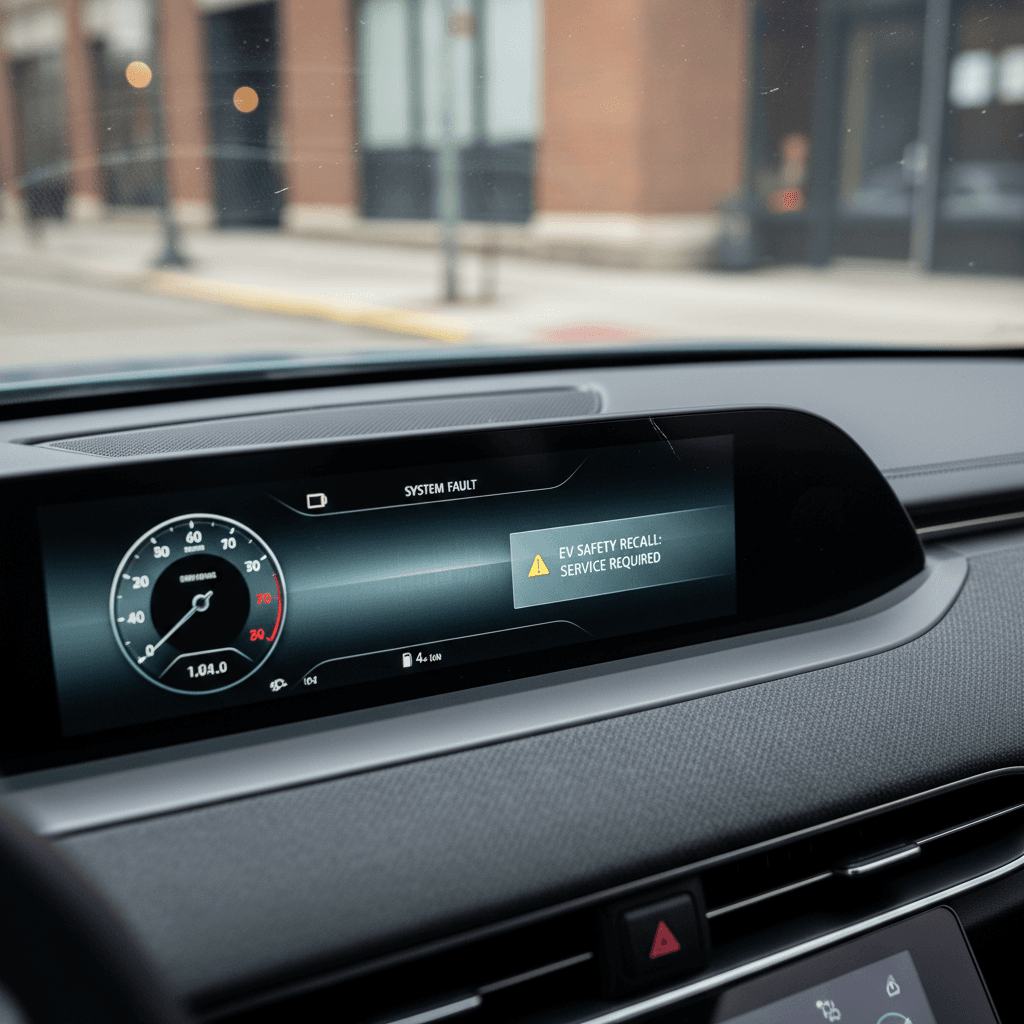
The second major Genesis G80 EV recall is all about screens. In late 2025 and early 2026, Genesis filed a campaign covering nearly 84,000 vehicles across its lineup because the digital instrument cluster and infotainment display can reboot or go dark while driving.
The Electrified G80 uses a fully digital cluster and a large center screen. If a software bug triggers a reboot, you temporarily lose access to critical information like vehicle speed, selected gear, and warning indicators, exactly the sort of data you want on a twisty road or in heavy traffic.
What causes the screen failures?
Genesis traced the problem to the way software handles data tied to HD Radio memory. Under certain conditions, this bug can cause the infotainment unit or cluster controller to freeze and restart. It’s annoying in any car, but in a vehicle where nearly everything is displayed digitally, it crosses into a safety issue.
- Digital speedometer and key gauges may vanish or freeze.
- Infotainment may reboot mid‑drive, interrupting navigation and audio.
- In some cases the screens flicker or stay black for several seconds.
Good news so far
Which G80 EVs are affected by the screen recall?
The recall population spans multiple Genesis models built for the 2025 and 2026 model years, plus some late‑2024 vehicles running the same software family. For the Electrified G80, that typically includes:
- Most 2025 Genesis Electrified G80 sedans sold in the U.S.
- Any late‑build 2024 G80 EVs that received the updated infotainment/cluster software before the formal 2025 model‑year changeover.
- Early‑run 2026 models, in markets where the G80 EV remained on sale. (In the U.S., Genesis discontinued the car after 2025, but some 2026‑model vehicles may still share the same software stack.)
How Genesis is fixing the screen issue
Dealer software update
For many Electrified G80s, the primary fix is an instrument cluster and infotainment software update performed at a Genesis retailer. The technician connects a factory tool, installs new software, and verifies that the displays reboot correctly.
The work itself usually takes under an hour, though you may spend longer at the dealership depending on their schedule.
Over‑the‑air updates when available
Some newer Genesis models can receive portions of the update over the air (OTA). Even if your car supports OTA, Genesis may still ask you to visit a dealer so technicians can confirm that the recall conditions are fully addressed.
If you see an OTA update prompt referencing the radio or instrument display, accept it, but also double‑check your VIN on the NHTSA site to ensure you’ve closed out all related campaigns.
Driving while screens are blank
Other safety campaigns and service bulletins to know
Beyond the two big recalls above, Electrified G80 owners may see smaller campaigns or technical service bulletins (TSBs) over time. These might cover items like charging‑port doors, software calibration for driver‑assist systems, or minor hardware updates shared with the gas‑powered G80.
Common non‑headline campaigns you may encounter
Not all of these are formal recalls, but they can still improve reliability and drivability.
Charging hardware updates
Occasional updates to onboard charger software or charge‑port seals may appear as service campaigns, especially in regions with extreme temperatures.
Driver‑assist tuning
TSBs can adjust lane‑keeping, adaptive cruise, or camera calibration if customers report inconsistent behavior.
General software refinements
Genesis, like most EV makers, periodically refines vehicle software to address bugs that don’t rise to full recall status.
Why this is reassuring for used buyers
How to check if your Electrified G80 has open recalls
The Electrified G80’s low sales volumes mean you can’t rely on word of mouth. The fastest way to see if a specific car has open recalls is to run its 17‑character VIN through official databases.
Step‑by‑step: Check your Genesis Electrified G80 for recalls
1. Locate your VIN
You’ll find the VIN at the base of the windshield on the driver’s side, on a label in the driver‑side door jamb, and on your registration or insurance card.
2. Use the NHTSA lookup tool
Go to the federal recall lookup site and enter your VIN. The tool shows all <strong>open safety recalls</strong> that have not yet been marked as completed for that specific vehicle.
3. Check the Genesis owner portal
If you’ve registered the car with Genesis, log in to the owner site or app. It may show brand‑specific campaigns and software updates beyond the NHTSA list.
4. Call or email a Genesis retailer
Provide the VIN to a Genesis service department and ask them to pull the recall history. They can see what’s open and what has been completed at their store or another dealer.
5. For used shoppers, ask for proof
If you’re buying used, request printed or digital service records showing that recall work has been done. A reputable seller will be happy to provide it.
Make it part of your routine
What to expect from a Genesis recall visit
If your Electrified G80 shows an open recall, the next step is scheduling a visit with a Genesis retailer that’s certified to work on high‑voltage vehicles. Here’s what that typically looks like.
- You call, go online, or use the Genesis app to book a recall appointment and mention the specific campaign number if you have it.
- At check‑in, the advisor confirms your VIN, explains the work, and gives a time estimate. For software‑only recalls, plan on 60–90 minutes; for more complex ones, you may be offered a loaner vehicle.
- Technicians perform the recall repair, check for related software updates, and usually run a quick health check on the high‑voltage system.
- When you pick up the car, you should receive a work order noting that the recall was completed, hang onto this for your records or future resale.
No charge for recall work
Used Electrified G80 buyers’ checklist
Because the Electrified G80 is already out of production in the U.S. and was sold in small numbers, most shoppers will encounter it as a used luxury EV. Recalls and campaign history become part of the value conversation, along with battery health, charging history, and accident repairs.
Checklist for shopping a used Genesis Electrified G80
1. Run a fresh VIN recall check
Before you fall in love with the car, enter the VIN into the NHTSA tool and Genesis owner site. Note any open campaigns and ask the seller whether they’ll handle them before sale.
2. Review service history for recall closures
Look for line items showing the 12‑volt charging recall and any instrument‑cluster/infotainment software updates. Multiple visits for the same problem can be a red flag.
3. Ask about warning lights or screen glitches
Have the seller describe any history of blank screens, random reboots, or power‑loss warnings. During a test drive, cycle through screens and drive long enough to see if the issue appears.
4. Evaluate battery health, not just recalls
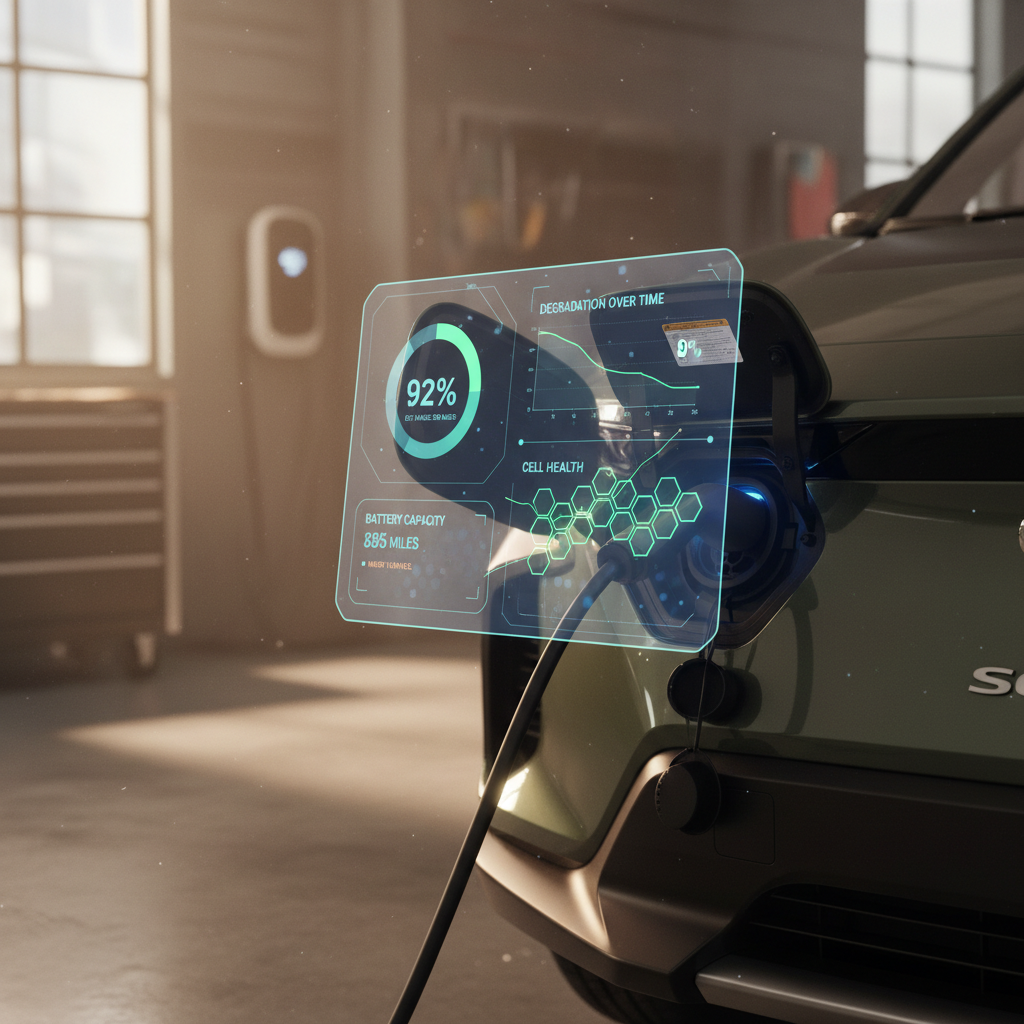
Recalls don’t tell you how the previous owner treated the high‑voltage battery. Look for documentation of state‑of‑charge habits, DC‑fast‑charging frequency, and any prior high‑voltage repairs.
5. Get an independent EV‑focused inspection
If possible, have a technician familiar with high‑voltage systems inspect the car. They can spot emerging issues that aren’t yet subject to a recall.
6. Consider a marketplace that verifies this for you
Platforms like <strong>Recharged</strong> specialize in used EVs. Every vehicle includes a Recharged Score Report with verified battery health, pricing analysis, and a check for open safety recalls, taking a lot of guesswork out of buying a used Electrified G80. (And yes, they can help with financing and nationwide delivery, too.)
FAQ: Genesis Electrified G80 recalls
Frequently asked questions about Electrified G80 recalls
Bottom line on Electrified G80 recalls
The Genesis Electrified G80 is a niche car with a lot going for it, refined ride, premium cabin, and a quiet, torquey drivetrain. But like most first‑wave luxury EVs, it’s seen its share of software‑heavy recalls, especially around the 12‑volt system and digital displays. None of that has to be a deal‑breaker if you take recalls seriously and treat them as part of responsible ownership.
Whether you already own an Electrified G80 or you’re considering one on the used market, make recall checks part of your routine. Run the VIN through official tools, confirm work with a Genesis dealer, and keep documentation for your records. And if you’d rather have much of that homework done for you, consider shopping through a used‑EV specialist like Recharged, where every car’s recall and battery‑health story is laid out before you sign anything.