If you’re driving, or thinking about buying, a Cadillac Lyriq, it’s natural to worry about Cadillac Lyriq battery degradation. The Lyriq has only been on the road since the 2023 model year, so we don’t yet have decade‑long data, but we do have early real‑world owner reports, GM’s warranty details, and a good understanding of how Ultium batteries age. This guide pulls that together into plain‑English advice, especially if you’re considering a used Lyriq.
Key takeaway
Cadillac Lyriq battery degradation at a glance
What early data suggests for Lyriq batteries
Those numbers are based on early owner reports and what we know from similar NMC lithium‑ion packs. They’re not a guarantee, but they’re directionally useful: the Lyriq is **not** an outlier for rapid degradation, and in typical use you should expect **gradual**, not catastrophic, range loss.
How the Cadillac Lyriq battery is built
Ultium pack & chemistry
- Platform: The Lyriq rides on GM’s Ultium platform, using a large structural battery pack integrated into the floor.
- Chemistry: Nickel‑manganese‑cobalt (NMC) lithium‑ion cells, a proven chemistry used across many modern EVs.
- Capacity: Roughly 100–102 kWh usable in most trims, depending on model year and variant.
Thermal & battery management
- Liquid cooling: Active liquid thermal management keeps the pack in a healthy temperature range, critical for slowing degradation.
- BMS controls: A conservative battery management system (BMS) manages charging speeds, peak voltage, and temperature to protect longevity.
- Software updates: Cadillac can tweak charging behavior and range estimates over‑the‑air to improve durability and accuracy over time.
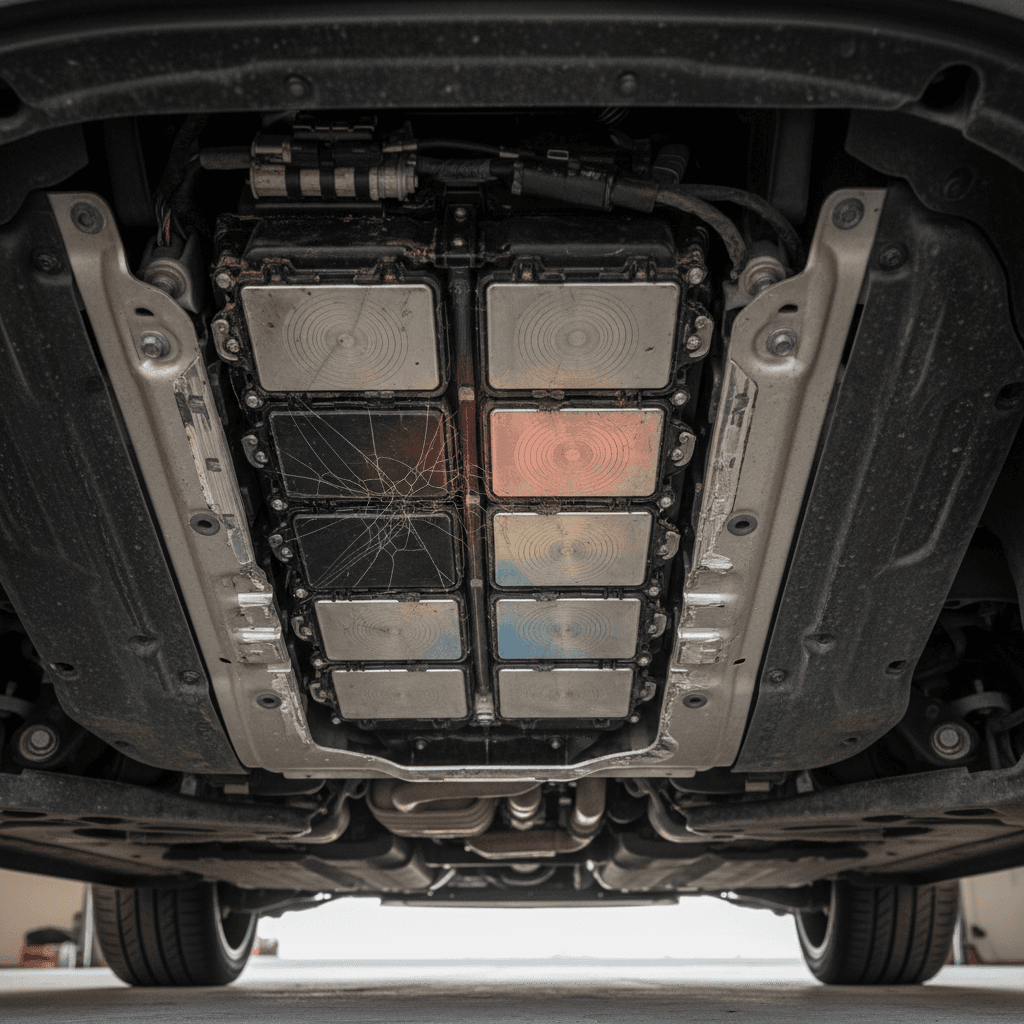
Why this matters for degradation
Early real‑world data on Lyriq battery degradation
Because the oldest Cadillac Lyriqs on U.S. roads date to the 2023 model year, the **oldest packs are only about 3 years old** as of early 2026. That means we don’t yet have the kind of 8–10‑year data we have for early Teslas or Nissan Leafs. But we do have two useful data sources: aggregated owner reports and third‑party battery health assessments.
- Independent reliability and used‑EV analysts tracking early 2022–2023 Lyriqs report that many vehicles still show **over 95% of their original battery capacity** after 20,000–30,000 miles of mixed use, with only a modest range drop.
- Anecdotal owner reports on forums and Reddit threads show similar patterns: winter range can drop sharply in cold climates, but that’s mostly about temperature and HVAC use, not permanent degradation.
- Battery‑health reports on low‑mileage 2024–2025 Lyriqs typically show **near‑new (≈100%) capacity** when scanned with professional tools, which is what you’d expect at just a few thousand miles.
Be careful with early anecdotes
Warranty coverage for Lyriq battery degradation
General Motors backs the Cadillac Lyriq’s high‑voltage battery with an 8‑year / 100,000‑mile warranty in the U.S. That’s roughly in line with other mainstream EVs and is specifically designed to reassure buyers about battery life.
Cadillac Lyriq battery‑related warranty basics (U.S.)
Always confirm exact terms for the model year and region you’re considering. This is a high‑level overview, not legal advice.
| Component / Coverage | Typical Term | What it Generally Covers |
|---|---|---|
| High‑voltage battery pack | 8 years / 100,000 miles (whichever comes first) | Defects in materials or workmanship; in practice, GM will repair or replace packs that clearly fall below normal performance expectations. |
| EV propulsion components | 8 years / 100,000 miles (varies by component) | Electric drive units, power electronics, and associated high‑voltage components tied to propulsion. |
| Bumper‑to‑bumper limited warranty | 3 years / 36,000 miles | Most non‑wear items on the vehicle aside from specific exclusions. |
| 12‑volt battery | Shorter coverage, commonly under basic warranty | Covers manufacturing defects, but this is not the same as the high‑voltage traction battery. |
GM’s coverage is broadly competitive with other EVs, but you should read the fine print on degradation and exclusions.
Does GM guarantee a specific percentage?
What actually causes battery degradation in a Lyriq
Main drivers of Lyriq battery degradation
Same physics as any EV, just with GM’s spin on thermal and software management.
High temperatures
High state of charge
High charge / discharge rates
- Time itself: Even if you barely drive, lithium‑ion cells slowly age. A 10‑year‑old low‑mileage Lyriq will have some degradation just from calendar age.
- Deep cycling: Repeatedly running the battery to very low state of charge (near 0%) and then charging to 100% is harder on the pack than staying in the mid‑range.
- Manufacturing variance: Some packs or modules age a bit faster due to subtle differences in cell manufacturing or cooling effectiveness. That’s where warranties and diagnostics come in.
How to slow down Cadillac Lyriq battery degradation
Practical habits to protect your Lyriq battery
1. Live in the 20–80% zone for daily use
Use the Lyriq’s charge‑limit settings so the car stops around 80% for everyday driving. Save 100% charges for days when you actually need maximum range.
2. Avoid leaving it full in hot weather
If you live somewhere hot, don’t fast‑charge to 100% and then leave the car baking in the sun all afternoon. Either depart soon after charging or stop closer to 70–80% on road trips.
3. Favor AC home charging over public DC fast charging
Slow, Level 2 AC charging, especially overnight at home, is gentler on the pack than frequent DC fast charging. Occasional fast charging is fine; relying on it daily is not ideal.
4. Keep software up to date, but pay attention
GM uses software updates to refine thermal management and charging. Install updates, but if you notice odd behavior afterward (range estimates, 12‑V issues), get it documented with your dealer.
5. Store around 40–60% if parked long‑term
If you’ll leave the Lyriq parked for weeks, aim to park it around 40–60% state of charge and, if possible, plugged in so the car can manage the pack and 12‑V system.
6. Use preconditioning instead of driving with a cold or hot pack
Use cabin pre‑conditioning while plugged in to warm or cool the battery and cabin before driving, which reduces stress and improves range, especially in winter.
The upside of smart habits
Fast charging, Ultium, and long‑term battery health
The Lyriq supports competitive DC fast‑charging speeds for its class, and GM has been steadily improving charge curves via software. That’s great for road trips, but it also raises the classic question: **does fast charging accelerate Cadillac Lyriq battery degradation?**
What we know so far
- Early data on Ultium packs (including Lyriq and related models) suggests that occasional DC fast charging has limited impact when the pack is kept cool.
- Owners who fast charge only on long trips and primarily use Level 2 at home are not reporting abnormal degradation so far.
- GM’s liquid cooling and software can reduce charge power when the pack is hot or nearly full, which protects longevity even if it makes some sessions slower.
When fast charging can be a problem
- Using high‑power DC fast charging several times a week, especially in hot climates, will increase degradation over years compared with mostly Level 2 charging.
- Fast‑charging repeatedly from very low SOC (5–10%) straight to 100% is harder on the pack than topping from 30% to 70–80%.
- If you buy a used Lyriq that spent its life as a rideshare or fleet vehicle, it may have relied more heavily on DC fast charging, something to factor into your evaluation.
Range loss vs. battery degradation: don’t confuse them
A lot of “my battery is dying” posts are actually about **temporary range loss**, not permanent degradation. The Lyriq is no exception. Owners in cold climates, for example, routinely report winter range that’s 25–35% below the EPA number, then see things bounce back in spring.
Three common sources of Lyriq “range loss”
Only one of them is true degradation.
Temperature effects
Climate control load
Guess‑o‑meter quirks
How to tell if it’s real degradation
Buying a used Cadillac Lyriq? Battery checklist
Because the battery pack makes up such a large share of any EV’s value, **Cadillac Lyriq battery degradation is a central question when you’re shopping used**. The good news is that with the right tools, you don’t have to guess.
Used Lyriq battery health checklist
1. Get an objective battery health report
Ask for a third‑party battery health report, like the <strong>Recharged Score</strong> you get on every vehicle listed on Recharged, which reads pack data and estimates remaining capacity rather than relying on dash estimates.
2. Verify remaining factory battery warranty
Confirm the in‑service date and mileage so you know how much of the 8‑year / 100,000‑mile high‑voltage battery warranty is left. On a 2023 Lyriq, there should be several years remaining.
3. Review charging and usage history
Whenever possible, ask how the car was used. Mostly home‑charged commuters age better than DC‑fast‑charged fleet or rideshare vehicles. Service records can sometimes hint at use patterns.
4. Test on a known route
Do a reasonably long test drive (40–60 miles) on a mixed route and compare energy use to EPA ratings and online owner reports. Big outliers may justify deeper diagnostics.
5. Inspect for battery‑related warnings
During the test drive, look for warning lights, charging errors, or inconsistent range estimates after a full overnight charge. These can be subtle clues to BMS or module issues.
6. Factor in software and recall history
Ask the seller whether all recalls and software campaigns have been completed, especially those related to battery management or 12‑volt issues.
How Recharged helps with Lyriq battery questions
Common Lyriq battery‑related issues to know about
It’s important to distinguish between **high‑voltage pack degradation** and other battery‑related headaches owners have reported. Much of the online noise around the Lyriq has actually centered on the 12‑volt system and software interactions, not the main Ultium pack wearing out.
- Early 2023–2024 Lyriqs saw a spate of 12‑volt battery drain issues, sometimes linked to over‑the‑air (OTA) update glitches. GM issued service programs and software fixes; in many cases, dealers reprogrammed modules or replaced 12‑V batteries.
- Some owners have reported that certain software updates briefly caused strange range estimates or rapid projected range drops, for example, parked with A/C running, without evidence of actual capacity loss.
- There have also been scattered reports of vehicles going into reduced‑function or “bricked” states after failed OTA updates, again usually tied to 12‑V behavior rather than the high‑voltage pack itself. These cases are frustrating, but they’re typically addressed under warranty.
Don’t ignore 12‑volt issues
FAQ: Cadillac Lyriq battery degradation
Frequently asked questions about Lyriq battery health
Bottom line: Is Lyriq battery degradation a deal‑breaker?
Put simply, **Cadillac Lyriq battery degradation doesn’t look like a red flag so far**. The Ultium pack, liquid cooling, and conservative software are behaving roughly as you’d expect from a modern premium EV: small early losses, then a gradual taper. The real variables are how the car was used, how often it fast‑charged, and how well software and 12‑volt issues were handled.
If you’re buying new, focus on building good charging habits from day one and keep an eye on software updates. If you’re buying used, don’t guess, lean on objective data. At Recharged, every used Lyriq comes with a Recharged Score Report showing verified battery health, remaining warranty, and fair pricing, plus EV‑specialist support that can walk you through what those numbers mean. That way, “Cadillac Lyriq battery degradation” becomes a manageable variable in your decision, not a mystery hanging over your next EV.