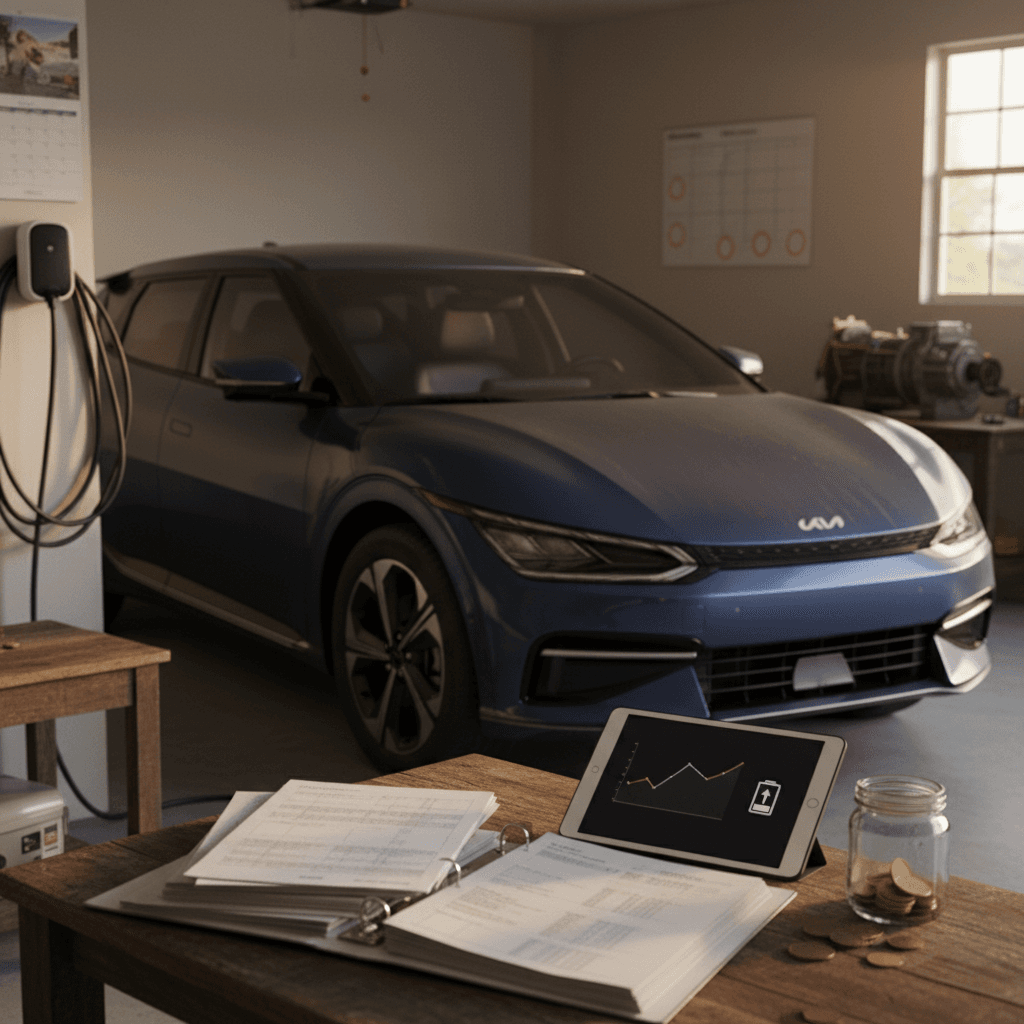
If you’re considering a Genesis Electrified G80, you’re probably weighing lush luxury against long‑term cost. The good news: as an EV, its fuel and maintenance bills are lower than a comparable gas G80. The catch: depreciation and insurance can be steep, especially if you buy new. In this guide, we’ll walk through the Genesis Electrified G80 long term ownership cost over five years and explain how buying used can dramatically improve the math.
Important 2026 context
Electrified G80 long-term cost: quick overview
Genesis Electrified G80 5-year cost at a glance (new)
Those headline numbers come from industry cost‑to‑own modeling for a new 2025 Electrified G80, assuming typical U.S. driving, financing, insurance, and tax/fee profiles. Real‑world costs vary with where you live, how you drive, and how you buy, but the pattern is clear: depreciation and insurance dominate, while charging and maintenance are relatively modest.
5-year cost to own: what the numbers say
Estimated 5-year cost to own – new 2025 Genesis Electrified G80
High‑level cost‑to‑own model for a new Electrified G80 over 5 years. Numbers are directional averages, not quotes.
| Cost category | 5-year estimate (new) | What’s included |
|---|---|---|
| Depreciation | $49,247 | Value lost from new transaction price over 5 years. |
| Energy (electricity) | $2,315 | Home and public charging based on typical U.S. usage. |
| Insurance | $17,040 | Comprehensive coverage on a new luxury EV sedan. |
| Financing | $10,008 | Interest on a typical 60‑month loan at average rates. |
| Maintenance | $6,293 | Tires, inspections, cabin filters, brake fluid, etc. |
| Repairs | $706 | Out‑of‑warranty items not covered by scheduled maintenance. |
| Taxes & fees | $6,708 | Sales tax, registration, and other state/local fees. |
| Total 5‑year cost to own | $92,317 | Out‑of‑pocket costs plus depreciation. |
Depreciation and insurance make up the bulk of long‑term ownership cost for a new Genesis Electrified G80.
Why your number may be different
How much does the Electrified G80 depreciate?
For most owners, depreciation is the single biggest cost of Electrified G80 ownership. Industry data suggests roughly $49,000 of value lost in the first five years on a new example. That’s largely a function of three things: it’s a luxury car, it’s an EV, and it’s now a discontinued model in the U.S.
Why Electrified G80 depreciation is relatively steep
Understanding the factors helps you decide whether to buy new or used.
Luxury segment dynamics
EV price shifts
U.S. discontinuation
How to dodge the worst depreciation
Charging and energy costs vs gas

On the running‑cost side, the Electrified G80 is quite efficient for a large luxury sedan. The first‑generation model uses an 87.2 kWh battery and is EPA‑rated at around 282 miles of range on a full charge, with a usable capacity in the low‑80 kWh range. That works out to roughly 3.2–3.5 miles per kWh in mixed driving when driven reasonably.
Typical home charging costs
Assume you drive about 12,000 miles per year:
- Energy use: roughly 3.2 mi/kWh → about 3,750 kWh per year.
- At $0.15/kWh (national-ish average), that’s about $560/year.
- Over five years: roughly $2,800 in home charging.
If your utility offers EV time‑of‑use rates, you can drive that number even lower by charging off‑peak.
Compared with a gas G80
Take a gas G80 averaging ~23 mpg combined:
- 12,000 miles/year → ~522 gallons of fuel.
- At $3.75/gal, that’s about $1,960/year.
- Over five years: nearly $9,800 in fuel.
Even with some public fast charging factored in, the Electrified G80 can easily save you $6,000+ in energy costs over 5 years versus a similar gas sedan.
Fast charging capability is a bonus, not a requirement
Maintenance and repair costs
Genesis’s electric powertrain removes many of the priciest maintenance items you’d see on a comparable gas sedan. There’s no engine oil, spark plugs, or complex exhaust after‑treatment, and brake wear is reduced by regenerative braking. That’s why 5‑year maintenance estimates for the Electrified G80 sit at roughly $6,300, or about $1,250 per year.
- Tires: Large, high‑performance tires are usually your biggest recurring expense, budget for a full set roughly every 25,000–35,000 miles depending on how you drive.
- Brake fluid and inspection: Periodic fluid service and inspections are still required, but pad and rotor replacement intervals tend to stretch because regen does a lot of the slowing.
- Cabin filters and misc. wear items: Standard for any modern luxury car.
- Software updates and recalls: Most software changes are covered under warranty; some can even be done over the air or as complimentary dealer updates.
Warranty coverage helps early owners
Insurance, taxes, and fees
Insurance is the other big recurring cost bucket for a new Electrified G80. Cost‑to‑own modeling pegs five‑year insurance spend around $17,000 for a new car, roughly $3,400 per year, reflecting its status as a high‑value luxury EV loaded with tech and advanced safety systems.
What drives Electrified G80 insurance cost?
Why quotes can vary so widely from one owner to another.
Where you live
Your profile
Repair complexity
Taxes and fees are largely a function of where you register the car. Some states charge extra annual fees for EVs to replace gas‑tax revenue; others still offer incentives that offset purchase cost. Over 5 years, it’s reasonable to expect several thousand dollars in sales tax and registration, especially if you bought the car new at a high transaction price.
Battery health, warranty, and long-term range
Under the skin, the Electrified G80 uses a large lithium‑ion pack (around 87–95 kWh, depending on model year) with an estimated usable capacity in the low‑80s kWh. Like most modern premium EVs, it’s designed for gradual, predictable degradation over many years rather than sudden capacity loss.
Factors that affect your long-term battery health
Limit frequent 100% fast charges
Occasional DC fast charging on road trips is fine, but living on high‑power chargers and always charging to 100% can accelerate degradation. Day‑to‑day, staying in the 10–80% band is easier on the pack.
Use home Level 2 when you can
Charging at 7–11 kW on a home Level 2 charger is generally gentler on the battery than repeated high‑power DC sessions, and it’s often cheaper per kWh.
Avoid extreme heat where possible
High ambient temperatures are tough on any lithium‑ion battery. Parking in shade or a garage and avoiding long periods parked at full charge in summer help preserve long‑term capacity.
Leverage the battery warranty
If you’re shopping used, look for a car that’s <strong>well within its 8‑year battery warranty window</strong>. That gives you years of protection against rare but expensive pack issues.
Watch for range changes over time
New vs used Electrified G80: which is smarter now?
Because the Electrified G80 is now discontinued in the U.S. and has above‑average first‑owner depreciation, the case for buying used is strong, especially if you’re focused on total cost of ownership rather than having the very latest model year.
New vs used Electrified G80 – ownership cost implications
How your choice of new or used changes long‑term cost dynamics.
| Factor | Buying new (historical 2025 baseline) | Buying used (2–4 years old) |
|---|---|---|
| Purchase price | Highest; near original MSRP and potentially higher fees. | Significantly lower than new; depreciation already baked in. |
| Depreciation hit | Largest in first 3 years; about $49k over 5 years from new. | Much smaller; earlier drop already happened so later‑year values stabilize. |
| Warranty coverage | Full new‑car coverage, plus full battery/EV component warranty. | Still several years of battery and EV‑system coverage if you choose the right car. |
| Financing costs | Higher, because you’re borrowing more. | Lower total interest paid if you finance a smaller amount. |
| Feature set | Latest design updates and screens if you’re in the final facelift years. | Very similar driving experience, same dual‑motor performance and fast‑charge capability on earlier years. |
Letting the first owner absorb depreciation can sharply lower your effective cost per year.
Where Recharged fits in
Ready to find your next EV?
Browse VehiclesPractical ways to lower your Electrified G80 ownership cost
Smart strategies to keep long-term costs in check
1. Buy after the big depreciation hit
Target cars that are 2–4 years old with reasonable mileage. You’ll still have years of battery and powertrain warranty remaining, but a much lower starting price than new.
2. Charge smart at home
Install (or use) a Level 2 charger where you live and set the car to charge during off‑peak hours. This minimizes both per‑mile energy cost and wear on the battery.
3. Shop insurance aggressively
Get quotes from multiple insurers and ask about EV‑specific discounts, telematics programs, and bundling with home policies. The spread between insurers on a luxury EV can be hundreds of dollars a year.
4. Plan for tires and wear items
Set aside a realistic budget for tires, especially if you drive spiritedly or live where roads are rough. Building this into your mental ownership cost keeps “surprise” bills from feeling painful.
5. Use data when buying used
Don’t rely on gut feel alone. Use a <strong>battery health report</strong>, vehicle history, and market pricing tools (like the Recharged Score) to understand whether you’re paying a fair price for the condition and remaining warranty.
6. Consider financing strategically
If you plan to keep the car long term, a conventional loan and shorter term can reduce total interest. If you’re unsure, lean toward more flexible terms and avoid being “upside down” in the first few years.
FAQ: Genesis Electrified G80 long-term ownership cost
Frequently asked questions
Is the Genesis Electrified G80 worth it long term?
If you’re drawn to the Genesis Electrified G80, you’re likely looking for a serene, high‑tech luxury sedan that happens to be electric, not a stripped‑down efficiency play. Over five years, its biggest cost isn’t electricity or maintenance, it’s depreciation. That’s exactly why the car makes more sense as a carefully chosen used purchase than as a fresh‑off‑the‑lot splurge.
By letting the first owner absorb the initial drop, using smart home charging to keep energy bills low, and leaning on battery‑health data rather than guesswork, you can enjoy everything the Electrified G80 does well while keeping your long‑term costs in check. And if you’d like help finding one, Recharged can connect you with inspected used EVs, transparent battery reports, fair market pricing, financing options, and even nationwide delivery, so you can focus on the drive, not the spreadsheet.