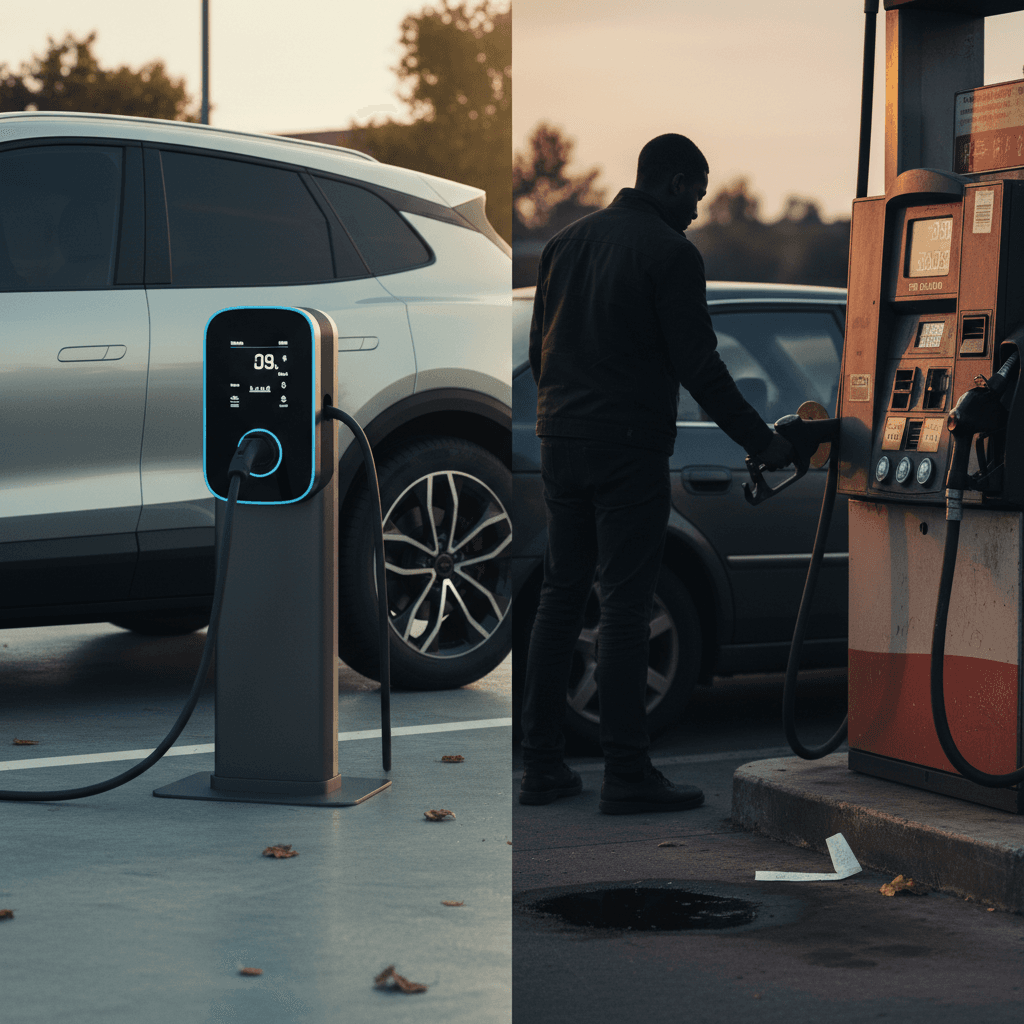
If you’re cross‑shopping a gas car and an EV, the first question is usually simple: how much will I really spend on “fuel”? The answer isn’t just about gas prices or electricity rates, it’s about cost per mile, where you charge, and how you drive. This guide breaks down gas vs electric car fuel cost in plain English so you can see what makes financial sense for you.
Quick takeaway
Why fuel costs matter more than ever
A lot of buyers focus on sticker price or monthly payment, but fuel is one of the biggest recurring costs of owning any vehicle. When you compare a gas car to an electric car, looking only at MSRP hides the whole story. A slightly higher payment on an EV can be offset, and sometimes more than offset, by lower fuel and maintenance expenses over the years.
- Gas prices are volatile and can swing dramatically from year to year.
- Electric rates change too, but home charging costs are usually more stable month to month.
- If you drive a lot, even a small difference in cost per mile adds up quickly.
- Fuel costs are one of the easiest numbers to estimate before you buy.
Think in cost per mile, not cost per tank
How to compare gas vs electric car fuel costs
Once you break it down, comparing gas vs electric car fuel cost is surprisingly straightforward. You only need a few numbers you can usually find on a window sticker or manufacturer website.
The basic math: gas vs electric
Four key inputs give you a reliable cost-per-mile estimate.
1. Your gas car
- MPG rating: Use your real-world average if you know it.
- Gas price: Look at what you actually pay locally, not a national average.
Cost per mile ≈ gas price ÷ MPG.
2. Your electric car
- Efficiency (mi/kWh or kWh/100mi): Higher is better.
- Electric rate: Check your utility bill (home) or charger app (public).
Cost per mile ≈ (kWh used × price per kWh) ÷ miles driven.
3. Where you charge
- Home: Often the cheapest and most predictable.
- Work/public Level 2: Sometimes free, often moderate cost.
- DC fast charging: Most expensive, but fastest.
4. How you drive
- City vs highway: EVs often shine around town; gas cars often do their best on the highway.
- Climate: Very hot or cold weather slightly raises energy use for both.
Don’t compare perfect lab numbers to your real life
Real-world cost per mile: gas vs electric
Let’s walk through simplified examples using round numbers you can adapt to your local prices. These aren’t the absolute extremes, they’re realistic scenarios for U.S. drivers in late 2025.
Typical cost-per-mile snapshots
Sample cost-per-mile comparison
Use this table as a template. Swap in your local gas and electricity prices to see your own numbers.
| Scenario | Assumptions | Estimated cost per mile |
|---|---|---|
| Efficient gas car | 30 MPG, $3.50/gal | ~12¢/mi |
| Same gas car, expensive fuel | 30 MPG, $5.50/gal | ~18¢/mi |
| EV, mostly home charging | 3.0 mi/kWh, $0.14/kWh | ~5¢/mi |
| EV, average home rate | 3.0 mi/kWh, $0.18/kWh | ~6¢/mi |
| EV, mostly DC fast charging | 3.0 mi/kWh, $0.40/kWh | ~13¢/mi |
Approximate examples for a compact SUV‑sized vehicle class.
What this means for you
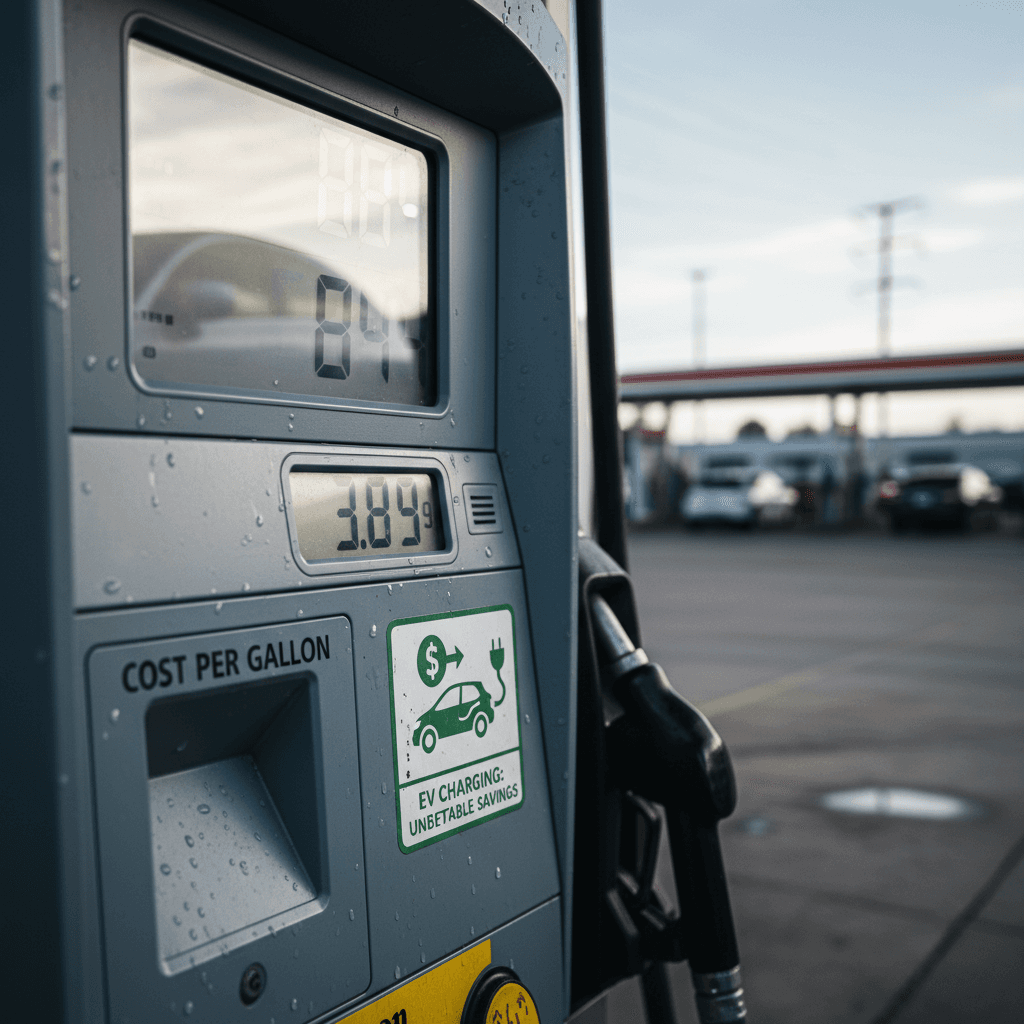
Home charging vs public charging costs
Where you get your energy is just as important as which vehicle you buy. Two EV owners with the same car can have very different “fuel” costs depending on their charging mix.
Home charging: your “cheap gas station”
- Most predictable pricing: Whatever your utility charges per kWh is what you pay.
- Often cheaper at night: Time‑of‑use plans can lower off‑peak rates.
- Convenience: You start each morning with a full “tank.”
If you own or can influence your parking situation, installing Level 2 home charging is usually the key to unlocking maximum EV fuel savings.
Public charging: fast but variable
- Level 2 public: often priced similarly to or slightly above home rates; sometimes free at workplaces or shopping centers.
- DC fast charging: much faster, but rates can be two to three times your home rate.
- Session fees or idle fees: can raise your effective cost per mile if you stay plugged in too long.
Public chargers are great for road trips or apartment living, but they can narrow or erase the EV fuel‑cost advantage if they’re your primary source of energy.
Stack the deck in your favor
City vs highway driving and weather impacts
Even with the same car and same prices, your real‑world fuel bill changes with driving patterns and climate. Gas and electric vehicles behave differently here, which is easy to overlook when you’re just glancing at window stickers.
How driving conditions change fuel costs
Same route, different vehicles, different winners.
Stop‑and‑go city driving
- Gas cars: MPG usually drops in traffic.
- EVs: Regenerative braking recovers energy, so efficiency often improves.
Result: EVs tend to gain an extra edge on cost per mile in urban driving.
Steady highway cruising
- Gas cars: Often achieve their best MPG at steady speeds.
- EVs: Aerodynamic drag at higher speeds raises energy use.
Result: EV efficiency shrinks at 75–80 mph, but can still pencil out cheaper per mile than gas, depending on energy prices.
Heat, cold, and climate
- Both: Use more energy in very hot or cold weather.
- EVs: Cabin heat and battery conditioning pull energy from the same pack you use to drive.
Result: Expect modestly higher cost per mile in extreme climates for both gas and electric, though the EV’s underlying efficiency advantage usually remains.
Don’t overreact to winter range loss
Used EVs, battery health, and fuel cost
If you’re looking at a used electric vehicle, fuel cost is still one of its strongest selling points, but battery health matters. A degraded battery doesn’t suddenly make electricity expensive, but it can change how you use and charge the car.
- As a pack ages, usable range can decline slightly, but energy use per mile often stays similar for day‑to‑day driving.
- If range shrinks enough that you need to fast‑charge more often, your effective cost per mile can rise.
- A healthy battery lets you stick with cheaper home charging for more of your total miles.
How Recharged helps here
Ready to find your next EV?
Browse VehiclesQuick checklist when you run the numbers
Before you decide between a gas and electric car based on fuel cost, spend 10 minutes with these questions and a calculator. You don’t need perfect precision, you just need a realistic range.
Gas vs electric fuel cost checklist
1. Estimate your annual miles
Most U.S. drivers average around 12,000–15,000 miles per year. If you’re a long‑distance commuter or road‑tripper, use your own number.
2. Find your gas car’s real MPG
If you already drive it, look at your long‑term average, not the optimistic trip computer reading. If you’re shopping, compare EPA figures for the models you’re considering.
3. Plug in your local gas price
Use what you actually see on the pump today, not what you wish you were paying. Then compute cost per mile: gas price ÷ MPG.
4. Check your home electric rate
Look at your most recent utility bill for your ¢/kWh rate. If you’re on a time‑of‑use plan, note the off‑peak rate you’d use for overnight charging.
5. Use a realistic EV efficiency number
Take the EPA mi/kWh rating and trim it slightly to account for real‑world conditions, or use a reputable owner‑reported efficiency figure for your climate and driving style.
6. Decide your charging mix
Estimate what percentage of your charging will be at home, at work/public Level 2, and at DC fast chargers. Weight your cost per mile accordingly.
Avoid this common mistake
FAQ: gas vs electric car fuel cost
Frequently asked questions about fuel costs
The bottom line: when does an EV win on fuel cost?
When you zoom out, the pattern is clear: if you can reliably charge at home or work at reasonable electricity rates, an EV almost always wins on fuel cost versus a similar gas car. Your savings grow with your annual mileage and gas prices in your area. If you’ll depend heavily on high‑priced fast charging and don’t drive many miles, the advantage shrinks, and in some cases, a very efficient gas or hybrid model can be competitive.
The smartest move is to treat fuel cost like any other line item in your budget: run the numbers for your situation, not someone else’s. If you’re exploring a used EV, Recharged can help you compare options side by side, verify battery health with a Recharged Score Report, line up financing, and even arrange trade‑in and delivery, all so you’re not guessing about what you’ll actually spend to keep your next car moving.