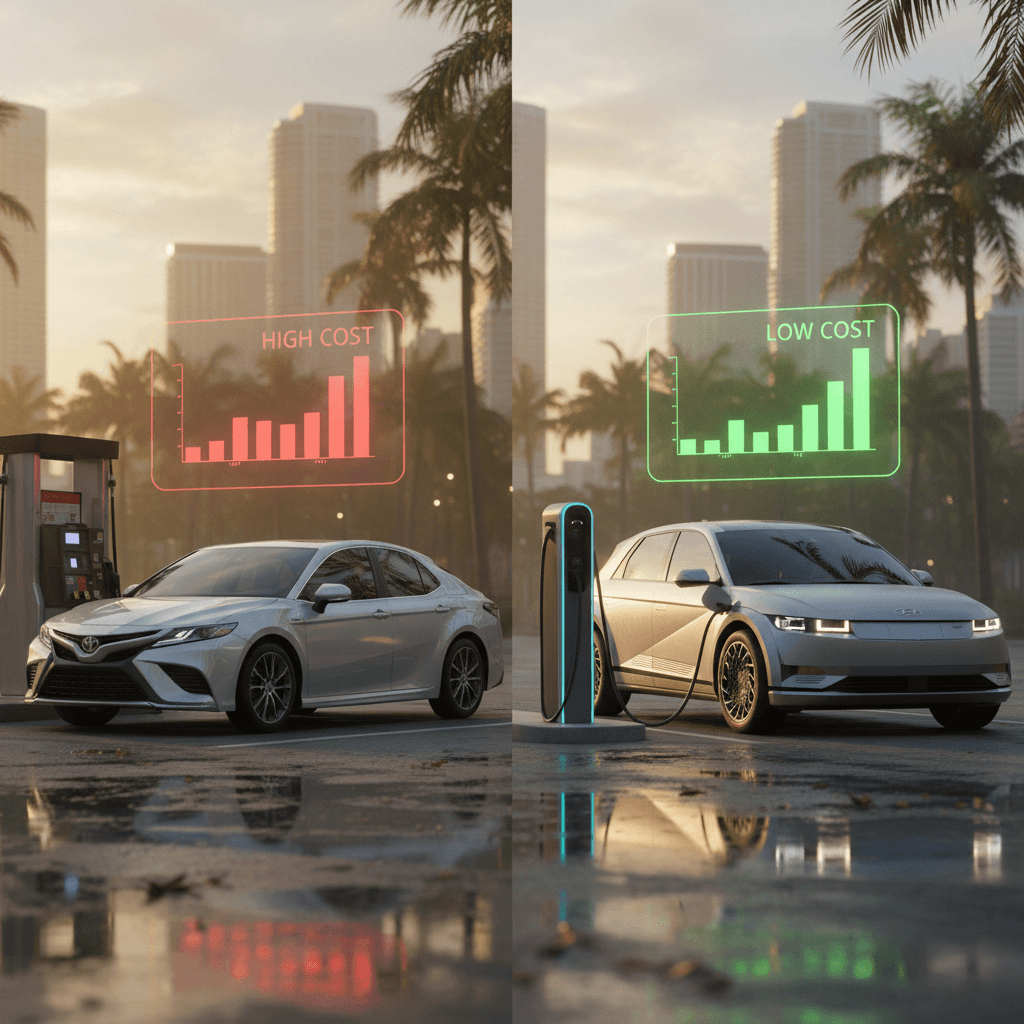
If you live in Miami, you don’t need a headline to tell you gas has gotten expensive again. Between global shocks and Florida’s own price swings, regular gas hovering in the mid‑$3s to high‑$3s, and spiking toward $4, has become the new normal. In 2026, comparing gas prices vs EV charging cost in Miami isn’t just an eco question; it’s a monthly budget question.
Numbers you’ll see in this guide
Why Miami drivers are rethinking gas in 2026
South Florida has always been a driving town, but 2026 has put fuel costs back under the microscope. Gas prices across Florida bounced between roughly $3 and $3.50 per gallon through 2025, with Miami typically a bit higher than the state average. Early 2026 brought another round of volatility, with national prices crossing $4 and Florida climbing into the high‑$3s, just as hurricane-season cost anxieties start creeping into the back of your mind again.
- You’re commuting on I‑95 or the Palmetto and watching weekly gas bills creep higher.
- Your family SUV drinks premium, and every unexplained price spike shows up on your credit card.
- You’re eyeing a used EV but wondering if public charging in Miami will erase any savings.
- You’ve seen neighbors brag about “fueling” at home for the price of a cafecito and want to know if that’s hype.
The one metric that really matters
Baseline: What gas and electricity cost in Miami in 2026
Typical 2026 energy costs for Miami drivers
These are reference points, not fixed prices
Step-by-step cost per mile: gas vs EV in Miami
Let’s walk through the math the same way you’d do it on the back of a napkin at a Calle Ocho café. We’ll start with realistic city‑plus‑highway fuel economy and then translate today’s Miami prices into cents per mile.
Gas vs EV cost per mile with Miami‑style prices
Assuming $3.60/gal gas, $0.15/kWh home charging, $0.30/kWh public Level 2, $0.45/kWh DC fast. Efficiency numbers are realistic averages, not best‑case brochure numbers.
| Vehicle type / scenario | Efficiency assumption | Energy price used | Approx. cost per mile |
|---|---|---|---|
| Compact gas sedan | 30 mpg combined | $3.60 / gal | $0.12 per mile |
| Small crossover SUV (gas) | 25 mpg combined | $3.60 / gal | $0.14 per mile |
| Home-charged EV | 3.0 mi / kWh | $0.15 / kWh | $0.05 per mile |
| Efficient home-charged EV | 3.5 mi / kWh | $0.15 / kWh | ≈$0.04 per mile |
| Public Level 2 EV | 3.0 mi / kWh | $0.30 / kWh | $0.10 per mile |
| DC fast charging EV | 3.0 mi / kWh | $0.45 / kWh | ≈$0.15 per mile |
Use this as a template, substitute your actual gas price or electric rate for a personalized comparison.
The short story for Miami
Home EV charging costs with FPL
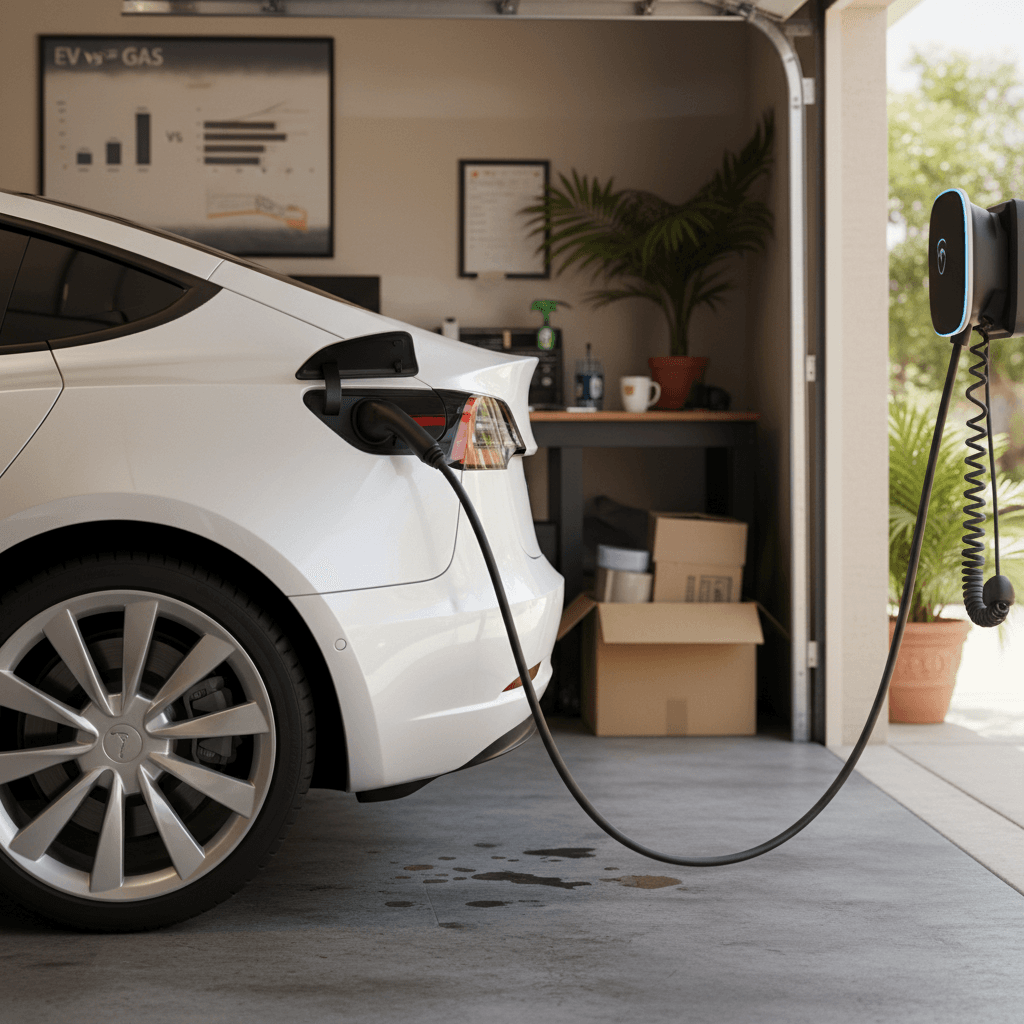
Florida Power & Light (FPL) serves most of Miami‑Dade, and by 2025–2026 a typical 1,000 kWh residential bill in their territory is in the mid‑$130s per month. That works out to somewhere in the **$0.13–$0.16 per kWh** range once you blend base energy, fuel and riders. We’ll use **$0.15** as an easy, conservative working number.
- A mainstream EV in real Miami traffic (think Hyundai Ioniq 5, Tesla Model 3, Chevy Bolt EUV) typically returns **2.7–3.5 miles per kWh** depending on driving style and A/C use.
- At **3 mi/kWh** and **$0.15/kWh**, each mile costs about **5 cents**.
- If you drive **1,000 miles per month**, that’s roughly **$50** in electricity when most charging happens at home.
Apartment & condo reality check
Public charging in Miami: Level 2 vs DC fast
Miami’s public charging scene has grown quickly, especially around malls, downtown garages, and highway stops between Miami and Orlando. But the **price spread** between Level 2 and DC fast charging is just as important as how many plugs are on the map.
How common Miami charging options compare
Think of these as three different “fuel grades” for EVs, each with a very different price and purpose.
Home or workplace Level 2
Best for: Daily driving, commuting, predictable routines.
- Cost: typically close to local utility rate.
- Speed: 20–40 miles of range per hour.
- Goal: Use this for 70–90% of your charging.
Public Level 2
Best for: Top‑offs while shopping, dining or at the gym.
- Cost: often around $0.25–$0.35/kWh in Miami.
- Speed: similar to home Level 2.
- Goal: Handy supplement, not your only fuel source.
DC fast charging
Best for: Road trips to Orlando, Tampa, the Keys, or emergency fills.
- Cost: often $0.40–$0.55/kWh depending on the network.
- Speed: 150–200+ miles of range in ~30 minutes on modern EVs.
- Goal: Use occasionally; treat like paying highway tolls, not rent.
Why relying on DC fast can erase EV savings
Real-world examples: popular EVs vs gas cars
Abstract cents‑per‑mile numbers are good, but let’s put some familiar metal into the story. These aren’t formal lab tests, just realistic pairings that match what many Miami households actually drive or are considering, using the 2026 price assumptions from earlier.
Tesla Model 3 RWD vs compact gas sedan
- Tesla Model 3 RWD: about 3.5 mi/kWh in mixed use.
- Home charging at $0.15/kWh → ≈ $0.043/mi.
- 1,000 mi/month → about $43 in electricity.
- Same miles on public L2 at $0.30/kWh → ≈ $87/month.
- Gas sedan (30 mpg) at $3.60/gal → $0.12/mi.
- 1,000 mi/month → $120 in gas.
Result: A home‑charged Model 3 cuts your “fuel” bill by roughly two‑thirds vs a typical compact gas sedan at current Miami‑style prices.
Hyundai Ioniq 5 vs small crossover SUV
- Ioniq 5 RWD: about 3.0 mi/kWh in real use.
- Home at $0.15/kWh → $0.05/mi.
- 1,000 mi/month → about $50.
- Gas crossover (25 mpg) at $3.60/gal → $0.14/mi.
- 1,000 mi/month → $144.
Result: Even against a pretty efficient small SUV, home‑charged Ioniq 5 miles are less than half the cost. If you mix in some public L2, you still usually come out ahead, as long as DC fast is the exception, not the rule.
What if you do mostly city stop‑and‑go?
Beyond fuel: what else affects ownership costs
Fuel or electricity is just one line item in a Miami household budget. When you’re deciding between another gas car and an EV, you also need to zoom out and look at total cost of ownership over 3–8 years.
Key cost factors for Miami EV vs gas ownership
Some costs go up, many go down, and a few are just different.
Maintenance & repairs
- EVs skip oil changes and have fewer moving parts.
- Brake wear is lower thanks to regenerative braking.
- But out‑of‑warranty battery or high‑voltage repairs can be expensive, this is where verified battery health matters for used cars.
Insurance & weather risk
- Miami premiums are high for every vehicle, EV or not.
- Some insurers price EVs higher today; others view them similarly once repair costs normalize.
- Hurricanes and flooding make comprehensive coverage a must either way.
Battery health & range
- Battery degradation affects real‑world range and how often you need to charge.
- In hot, humid climates like Miami, proper thermal management and charging habits matter.
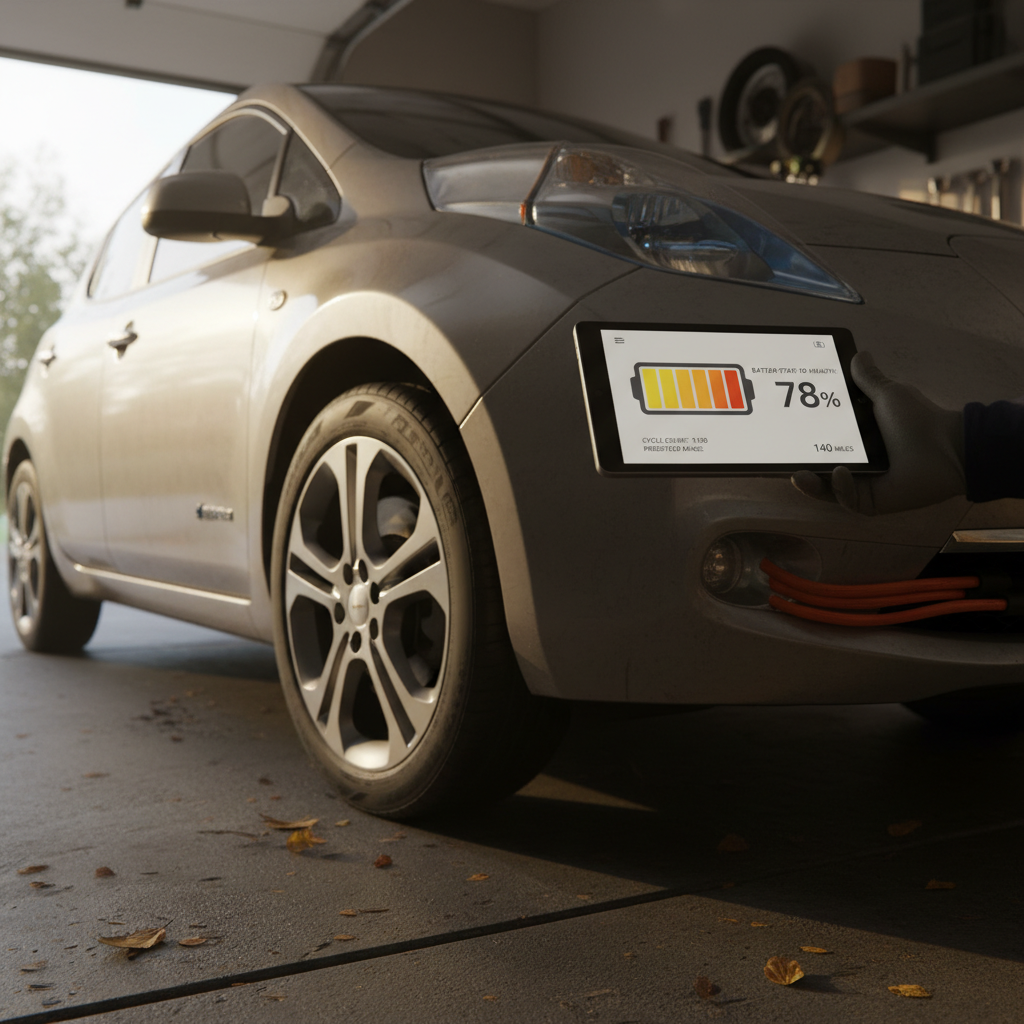
- Buying a used EV with a documented battery health report reduces guesswork.
Financing & incentives
- Used EV prices have softened compared with pandemic peaks.
- Depending on your income and the vehicle, you may qualify for federal used EV tax credits.
- Financing terms and interest rates will sway the monthly payment as much as fuel savings.
Where Recharged fits into the picture
How to estimate your own Miami EV charging cost
You don’t need a spreadsheet to get a realistic answer. Grab a recent FPL bill, think about your driving pattern, and walk through this quick checklist. Ten minutes later you’ll have a Miami‑specific answer instead of a national average.
DIY worksheet: from FPL bill to cost per mile
1. Pull your true electricity rate
Look at your latest FPL bill and divide the total amount (including fees and taxes) by the kWh used. That’s your **real cents per kWh**. It’s often slightly higher than the headline rate tables because of riders and local charges.
2. Check your EV’s efficiency
Find your EV’s rated kWh/100 miles or miles per kWh (window sticker, manual, or in‑car display). For Miami, use the **real‑world number from your car**, not the optimistic brochure figure.
3. Estimate how many miles you’ll charge at home
If you have (or will have) a home Level 2 charger, most drivers can plan on **70–90% of miles from home**, especially if they commute locally. If you live in a condo without assigned charging, be more conservative, maybe 50–60%.
4. Assign prices to your public charging
List where you’re likely to charge (workplace, mall, DC fast corridor). Note each station’s kWh price (or session fee) from the app. Use those for the other 10–40% of your miles.
5. Run the simple equation
For each scenario, use: <strong>cost per mile = energy price ÷ miles per kWh</strong> (for EVs) or <strong>gas price ÷ mpg</strong> (for your current car). Then blend the EV costs based on what % of your miles you expect to charge at home vs in public.
6. Compare to your current gas spend
Look back three months on your bank or credit card statements. Add up gas purchases and divide by miles driven (from service receipts or odometer logs). It’s not perfect, but it will tell you whether an EV meaningfully moves your monthly bottom line in Miami.
Don’t forget parking and HOA rules
Miami EV cost & savings FAQ (2026)
Frequently asked questions about EV vs gas costs in Miami
Thinking about a used EV? How Recharged helps
When you lay the numbers out side by side, the 2026 story in Miami is straightforward: if you can charge at home or at a fairly priced Level 2 station, an EV turns every mile into a discount mile compared with a similar gas car. The more you lean on DC fast charging, the more that advantage shrinks. The trick is matching **the right EV**, with **the right battery health**, to **the way you actually live and drive** in South Florida.
That’s exactly the gap Recharged was built to close. Our used EV marketplace combines expert‑guided support with verified Recharged Score battery health diagnostics, so you know how much range, and what kind of charging pattern, you can count on before you ever sign. You can explore vehicles online, get financing, value your trade‑in or sell your current car, and arrange nationwide delivery, all through a fully digital experience, or visit our Experience Center in Richmond, VA if you like to kick tires in person.
If Miami’s pump prices have you doing back‑of‑the‑envelope math, it’s a good time to turn that curiosity into a real plan. Run the cost‑per‑mile numbers with your own bills, then browse used EVs on Recharged that fit your budget, range needs and charging reality. The right car, charged the right way, can make your 2026 Miami commute a lot less dependent on the next gas price headline.