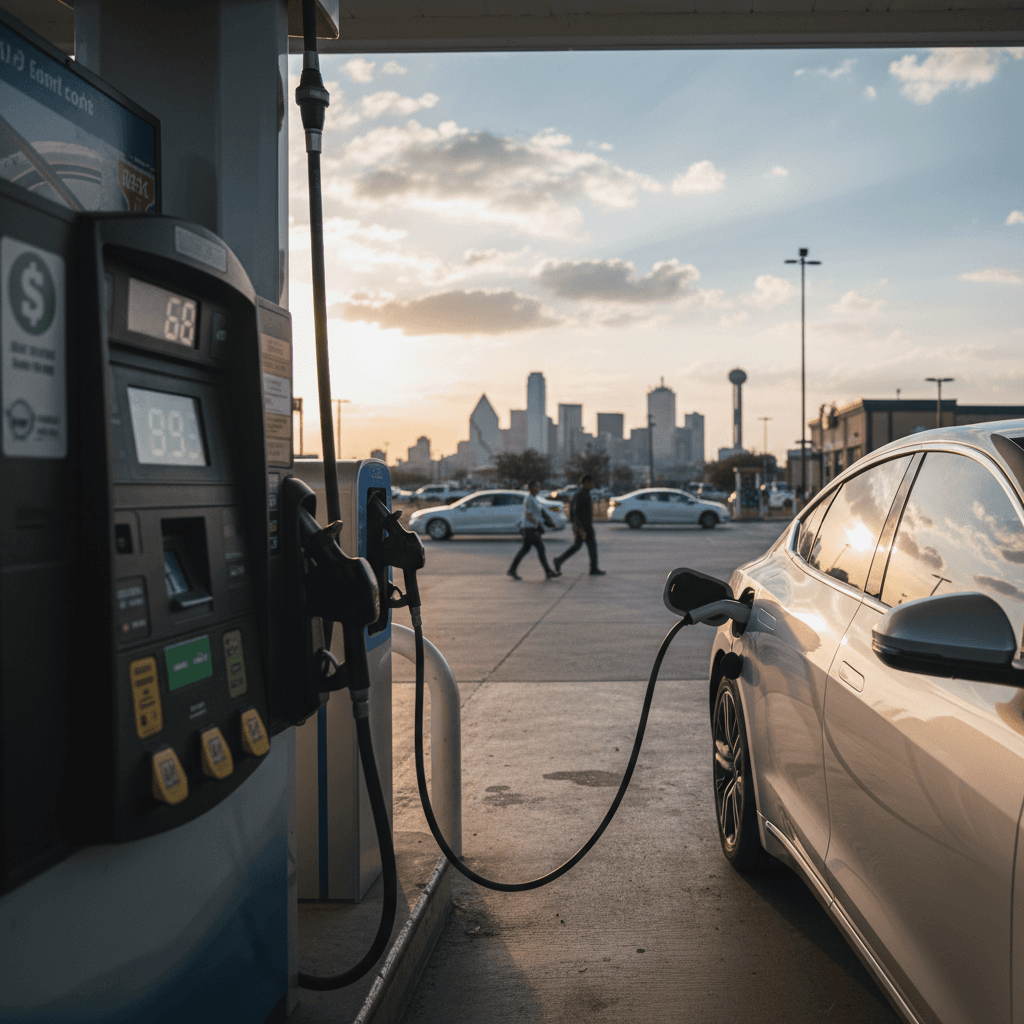
If you live in North Texas, you’ve felt it at the pump. After years of relative calm, 2026 gas prices are jumping again, and Dallas drivers are asking a simple question: **is it finally cheaper to plug in than to fill up?** This guide walks through gas prices vs. EV charging cost in Dallas in 2026, using realistic local numbers, not fantasy rates, to show what you’ll actually spend per mile.
Article snapshot
Why Dallas drivers are rethinking fuel costs in 2026
Dallas has always been truck country, but the math is shifting. Nationally, regular gas has climbed back to around **$4.00 per gallon** in early 2026, and metro areas like Dallas are flirting with that mark or higher. Meanwhile, residential electricity in Dallas still averages roughly **14¢ per kWh**, with many fixed‑rate plans available near or even below that for savvy shoppers. Gas is volatile and headline‑grabbing; electricity prices move more slowly and are easier to lock in for a year or more.
Layer in the growth of public charging around DFW, home‑charging friendly housing stock in the suburbs, and more capable EVs hitting the used market, and you’ve got a recipe for a genuine cost‑of‑ownership rethink, especially if you’re racking up 12,000–15,000 miles per year on I‑30, US‑75, or the Tollway.
Dallas 2026: Typical energy costs
Dallas 2026: Gas vs. EV cost per mile at a glance
Let’s start with the **simple cents‑per‑mile story** using reasonable 2026 Dallas numbers. We’ll assume regular gas around **$3.90/gal** for the year (some days lower, some days north of $4) and **$0.14/kWh** at home. For an EV, we’ll use a typical efficiency of **3.0–3.5 miles per kWh**; for gas, we’ll look at a midsize SUV and a full‑size pickup, since that’s what fills Dallas parking lots.
Estimated 2026 energy cost per mile in Dallas
Rounded examples using typical vehicles and prices for the Dallas area. Your exact numbers will depend on your car, driving style, and specific electricity or gas station prices.
| Vehicle & scenario | Key assumption | Estimated cost per mile |
|---|---|---|
| Gas midsize SUV | 28 mpg, $3.90/gal | ≈ $0.14/mi |
| Gas full-size pickup | 18 mpg, $3.90/gal | ≈ $0.22/mi |
| EV home charging (efficient sedan) | 3.5 mi/kWh, $0.14/kWh | ≈ $0.04/mi |
| EV home charging (larger SUV) | 3.0 mi/kWh, $0.14/kWh | ≈ $0.05/mi |
| EV public fast charging (mix of networks) | 3.0 mi/kWh, $0.35/kWh | ≈ $0.12/mi |
| EV mostly fast‑charged (worst case) | 2.8 mi/kWh, $0.45/kWh | ≈ $0.16/mi |
Home charging delivers the lowest and most predictable per‑mile cost; public fast charging is closer to gas but still competitive.
Rule of thumb for Dallas
What gas actually costs you in Dallas in 2026
The U.S. average price for regular gasoline bumped back above **$4 per gallon** in late March 2026, and Texas typically runs slightly below the national average. In early April 2026, Dallas‑area drivers are seeing a **high‑$3 to low‑$4 range** for regular at many stations, depending on neighborhood and timing.
Because Texas refineries feed much of the region, Dallas doesn’t always hit the extreme prices seen on the coasts, but it’s still exposed to the same global oil shocks and geopolitical surprises. When a tanker route is disrupted or a refinery has an issue, you see it **within days** on the big numbers at the street corner.
- A typical **midsize gas SUV** (around 28 mpg combined) at $3.90/gal costs about **14¢ per mile** in fuel.
- A popular **half‑ton pickup** around Dallas often averages closer to **18 mpg** in mixed driving, which works out to roughly **22¢ per mile** at the same price.
- Even a thrifty compact at **35 mpg** still burns about **11¢ per mile** when gas is $3.90/gal.
The hidden cost: volatility
How much does EV charging cost in Dallas?
EV charging costs split into two buckets: **home charging** (where most daily miles come from) and **public charging** (for road trips, apartment dwellers, and top‑ups). Dallas is unusual in that you can shop dozens of electricity plans, including **fixed‑rate** and **time‑of‑use** deals that can make EV charging dramatically cheaper if you charge at night.
Two main ways Dallas drivers pay to charge
Home is usually cheapest; public fast charging buys speed and convenience.
Home charging
Level 2 (240V) in your garage or carport is the sweet spot for most EV owners.
- Electricity rates often around 12–16¢/kWh on fixed‑rate plans.
- Some time‑of‑use or "free nights" plans make off‑peak charging even cheaper.
- Up‑front cost for a wallbox or outlet, but lowest long‑term fuel cost.
Public charging
Level 2 and DC fast chargers across DFW. Pricing varies by network.
- Level 2: often billed by the hour or kWh, roughly comparable to or a bit higher than home power.
- DC fast: commonly around $0.30–$0.45/kWh in Texas on big networks.
- Some locations add parking or idle fees if you stay after your session ends.
Home charging math for Dallas drivers
Let’s do the back‑of‑the‑envelope math with actual Dallas‑style numbers. Residential power here is a little cheaper than the U.S. average. Many households are paying in the neighborhood of **14–15¢/kWh** all‑in; bargain hunters can snag plans in the low teens or use **free‑nights** style offers if their lifestyle fits.
Example: 1,000 miles a month on a Dallas electricity plan
1. Pick a realistic EV efficiency
Many modern EV sedans and crossovers average **3.0–3.5 miles per kWh** in mixed Texas driving. We’ll use 3.2 mi/kWh as a middle‑of‑the‑road number.
2. Estimate your energy use
At 3.2 mi/kWh, **1,000 miles** of driving takes about **313 kWh** of electricity (1,000 ÷ 3.2).
3. Multiply by your kWh rate
On a **$0.14/kWh** plan, that 313 kWh of charging costs roughly **$44 per month** in energy. On a $0.12 plan, it’s closer to **$38**.
4. Compare to gas
A 28‑mpg SUV driving 1,000 miles a month burns about **36 gallons**. At **$3.90/gal**, that’s around **$140** in fuel, more than **3×** the cost of home charging the EV.
5. Adjust for a bigger EV
Driving a less‑efficient electric truck at **2.4 mi/kWh**? That same 1,000 miles uses about 417 kWh. At $0.14/kWh, you’re at **$58/month**, still dramatically below gas truck fuel bills.
6. Factor in off‑peak deals
Some Texas plans offer **cheaper overnight power** or free charging during set hours. If you can reliably plug in after 9 or 10 p.m., your effective per‑kWh rate can drop enough to shave another **20–40%** off these estimates.
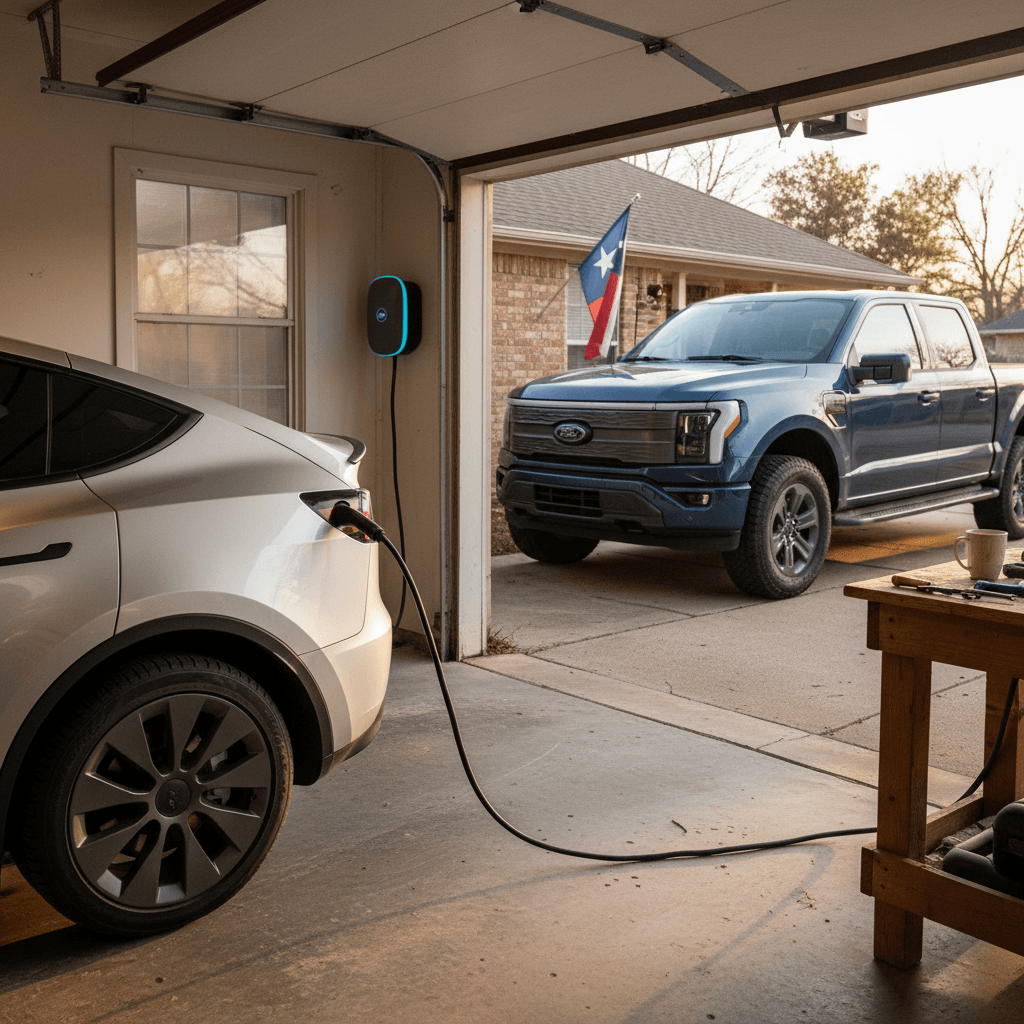
Home charging isn’t just cheaper, it’s calmer
Public EV charging costs around Dallas
Public charging around Dallas–Fort Worth runs the gamut: **free Level 2 at some workplaces and hotels**, modestly priced stations at grocery stores and malls, and full‑fat DC fast chargers along I‑35E, I‑20, and the Turnpike. Prices change, but late‑2025 and early‑2026 data put most big‑network DC fast charging in Texas between **$0.30 and $0.45 per kWh**, with some outliers above or below that depending on memberships and promos.
Level 2 public chargers
- Common at hotels, office parks, and municipal garages.
- Often priced per hour or per kWh; effective rates can be similar to or a bit higher than home power.
- Best used when you’re parked anyway, workday, dinner, shopping at NorthPark or Legacy West.
DC fast chargers (50–350 kW)
- Quick top‑ups along I‑35, I‑20, and major corridors around DFW.
- Many networks in Texas bill per kWh; common prices roughly **$0.30–$0.45/kWh** as of late 2025.
- Membership discounts can trim the price, especially if you use the same network regularly.
At **$0.35/kWh** and an EV efficiency of 3.0 mi/kWh, you’re paying around **12¢ per mile**, similar to or slightly cheaper than that gas SUV at $3.90/gal. Bump the price to **$0.45/kWh**, and you’re in the **15–16¢ per mile** range, closer to gas, but still well below what many trucks actually cost to drive in real traffic.
The costly way to run an EV
Real-world examples: commuter vs. road-tripper
Numbers are helpful, but let’s make this concrete with a couple of Dallas‑centric scenarios. Assume **$3.90/gal** for gas and **$0.14/kWh** at home unless otherwise noted.
Two Dallas drivers, two very different fuel bills
How gas vs. EV energy costs play out in everyday 2026 life.
Plano–Downtown commuter
Scenario: You drive a 40‑mile round trip from Plano to downtown Dallas, 5 days a week, plus errands, about 1,200 miles/month.
- Gas SUV (28 mpg): 1,200 ÷ 28 ≈ 43 gallons × $3.90 ≈ $168/month.
- EV, home charging (3.2 mi/kWh): 1,200 ÷ 3.2 ≈ 375 kWh × $0.14 ≈ $53/month.
Monthly savings: about $115. Over a 4‑year loan, that’s roughly $5,500 in fuel alone.
Weekend Hill Country road‑tripper
Scenario: You average 800 miles/month weekday driving plus a 600‑mile Austin/Fredericksburg trip every other month, about 1,100 miles/month plus some road‑trip fast charging.
- Gas truck (18 mpg): 1,100 ÷ 18 ≈ 61 gallons × $3.90 ≈ $238/month.
- EV mix: 70% home, 30% fast charging: 1,100 miles at 2.7 mi/kWh ≈ 407 kWh total.
- Home (285 kWh × $0.14) ≈ $40
- Fast (122 kWh × $0.38) ≈ $46
Monthly savings: about $150, even with regular fast charging on trips.
Once you combine Dallas electricity prices with modern EV efficiency, you’re not talking about nickels and dimes, you’re often saving a car payment’s worth of fuel every year compared with a thirsty truck.
Beyond fuel: total cost of ownership in Dallas
Energy is only one piece of the puzzle, but it’s the piece you feel every week. Over a few years of ownership, the Dallas EV vs. gas picture also includes **maintenance, tires, insurance, and depreciation**. EVs cut some of those big-ticket recurring items down to size.
- EVs skip oil changes, transmission services, and many exhaust/emissions repairs that can add up on high‑mileage gas vehicles.
- Regenerative braking takes some wear off brake pads, especially in stop‑and‑go DFW traffic.
- Tires can cost a bit more on heavier EVs, but it’s a predictable expense, nothing like a major engine or transmission repair.
- Used EV prices are stabilizing as more models hit the market, making **pre‑owned EVs** an especially attractive way to lock in those fuel savings without new‑car pricing.
How Recharged fits into the picture
How to save the most on EV charging in Texas
In a deregulated electricity market like Dallas, the EV driver who shops their power plan and uses public charging smartly can **stack the deck** in their favor. Here’s a practical playbook to squeeze the most from every kWh.
Dallas EV driver’s cost‑cutting checklist
1. Lock in a fair fixed‑rate plan
Look for straightforward fixed‑rate contracts with an all‑in rate (energy + delivery) that lands in the **low‑ to mid‑teens cents per kWh**. Avoid gimmicky teaser rates that spike after certain usage thresholds.
2. Consider night‑friendly plans
If your schedule allows, explore **time‑of‑use** or “free nights” plans. Charging your EV after 9–10 p.m. can slash your effective rate, but be sure to check daytime prices so you don’t overpay for everything else in your home.
3. Install a right‑sized Level 2 charger
For most Dallas households, a **32–40 amp Level 2 charger** is plenty. It can add 25–35 miles of range per hour and fully recharge an EV overnight. Over‑buying on charger capacity doesn’t help if your car can’t use it.
4. Use public fast charging strategically
Think of DC fast charging like convenience‑store snacks: great on a road trip, expensive as a daily habit. Use it for **long drives and occasional top‑ups**, but lean on home or workplace Level 2 whenever you can.
5. Stack memberships and perks
Many charging networks offer **discounted per‑kWh rates** or subscription plans. If you often use one brand (for example, near your office or favorite trailhead), check if a monthly plan cuts your cost below walk‑up pricing.
6. Watch idle and parking fees
Some fast chargers and downtown garages add **idle charges** once your battery is full. Set a timer on your phone or use app alerts so your cheap kilowatt‑hours don’t turn into an expensive parking mistake.
Apartment dwellers: look for hidden charging
FAQ: Gas prices vs. EV charging cost in Dallas
Frequently asked questions for Dallas drivers
So, should you switch to an EV in Dallas in 2026?
If you’re a typical Dallas‑area driver putting real miles on a gas SUV or truck, 2026 might be the year the numbers finally push you toward a plug. With gas hovering near **$4 a gallon** and residential electricity still relatively affordable, the **fuel‑only math** tilts strongly toward EVs, especially when you can charge at home on a sensible fixed‑rate plan.
The story doesn’t end there. Lower maintenance, fewer surprise repairs, and the growing supply of **well‑priced used EVs** mean you can capture those savings without paying new‑car money. That’s exactly where Recharged lives: matching you with a used EV whose **battery health, range, and pricing** are transparent from the first click, backed by a detailed Recharged Score Report and EV‑savvy support from shopping through delivery.
If you’re ready to see what those cents‑per‑mile savings could look like in your driveway, start browsing used EVs, compare a few models to your current fuel bill, and let the numbers talk. In 2026 Dallas, they’re speaking pretty clearly.