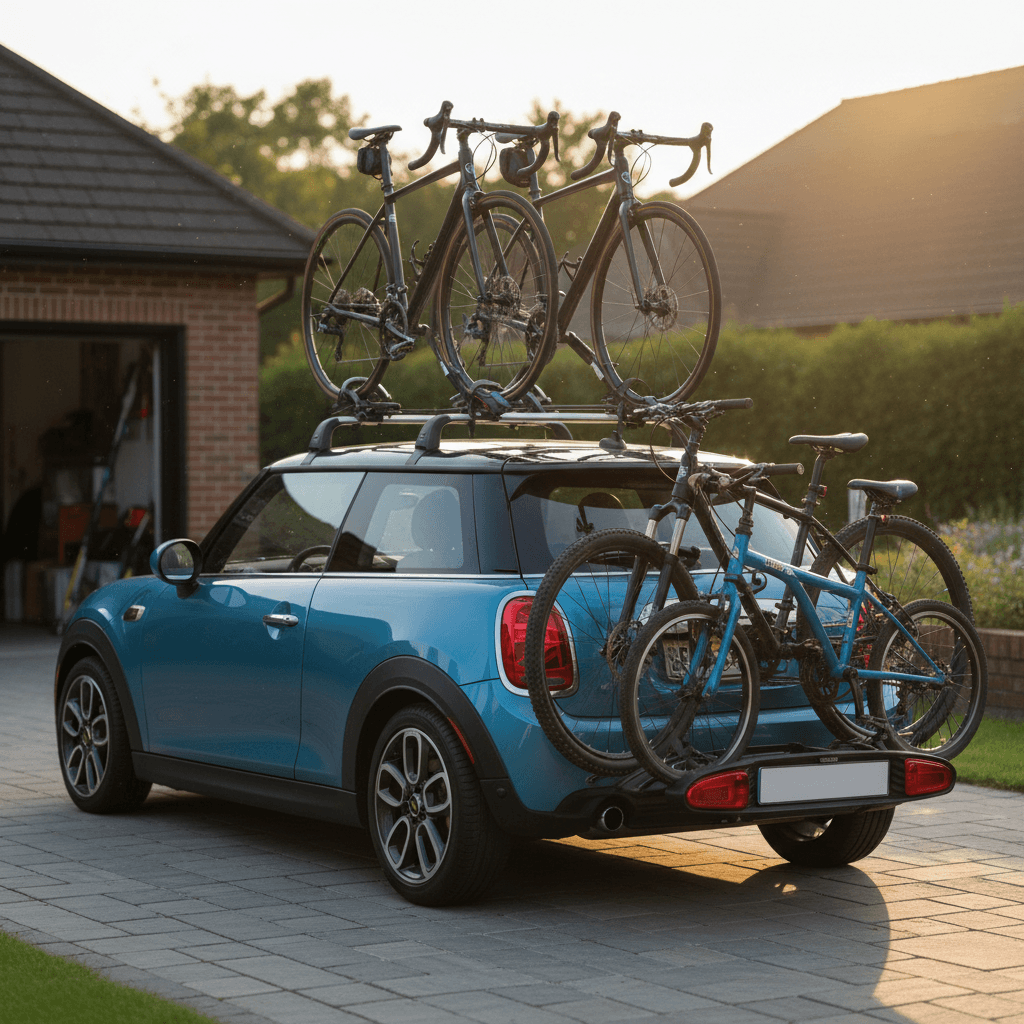
The Mini Cooper SE is a brilliant city EV, but its compact hatchback body doesn’t exactly swallow bikes. If you’re trying to carry one or two bikes, maybe even a small e‑bike, you’ve got three main Mini Cooper SE bike rack options: roof, hitch, and trunk‑mounted racks. Each comes with tradeoffs in cost, convenience, range and risk to that nicely painted hatch.
Quick answer
Mini Cooper SE bike rack basics
Three ways to carry bikes on a Mini Cooper SE
Same small car, very different ownership experience depending on the rack you choose
Roof‑mounted bike racks
Pros: Keeps hatch clear; works with many universal bike trays; no cutting the bumper.
Cons: Needs roof rails/crossbars; lifts bikes high; more wind noise and range loss.
Hitch‑mounted bike racks
Pros: Easiest loading; best for e‑bikes; stable at highway speeds; can swing/tilt for hatch access.
Cons: Requires adding a hitch; Mini SE isn’t rated to tow, so you’re limited to “rack‑only” use.
Trunk‑mounted bike racks
Pros: Lowest up‑front cost; no permanent hardware; moves easily between cars.
Cons: Can rub paint, block lights/camera, and be more fiddly to secure on the SE’s short hatch.
Before you buy anything, it helps to know which Mini Cooper you actually have. In the U.S., the Mini Cooper SE most people are talking about is the F56 3‑door electric hardtop. The all‑electric J01 Cooper SE hatch is starting to arrive globally, but the rack logic is similar: you still choose between roof, hitch and trunk solutions, and you still have to stay inside Mini’s roof load and tongue‑weight limits.
Towing vs carrying
Roof rack bike options for the Mini Cooper SE
If your Mini Cooper SE left the factory with roof rails, you’re in good shape: you can add factory base bars or aftermarket crossbars and run a standard roof‑mount bike tray. If you don’t have rails, things get trickier. Mini has offered retrofit rail and base‑support kits for some model years, but they can be expensive to add after the fact, and not every dealer will install them on an SE.
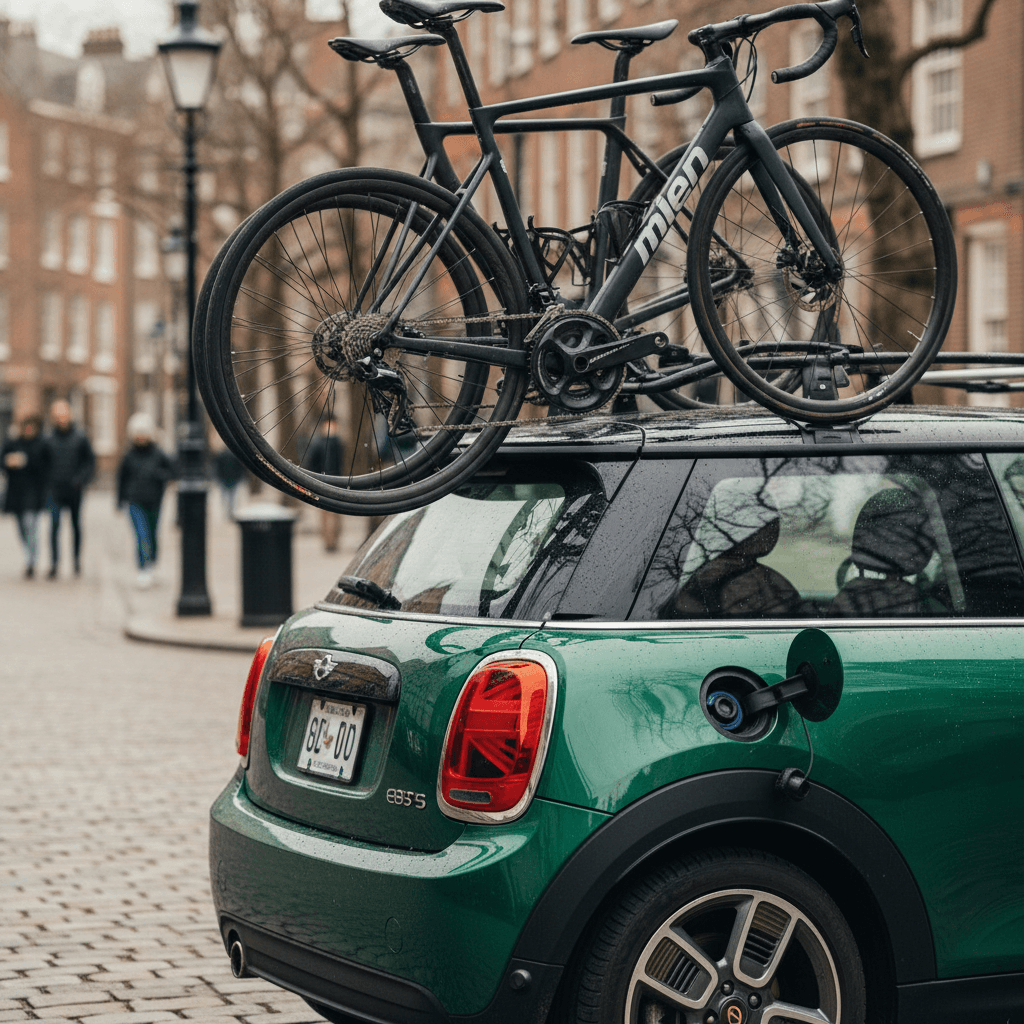
Mini Cooper SE roof load rules of thumb
Good roof‑rack setup on a Mini SE
- Confirm your Mini Cooper SE has factory roof rails or that a dealer is willing to retrofit rails/base supports for your VIN.
- Choose crossbars that match the rail style (OEM, Thule, Yakima, etc.) and respect Mini’s stated roof load rating.
- Pair those bars with 1–2 roof‑mount trays rated for your bike’s weight and wheel size.
- Measure total height, Mini + rack + bike, to avoid unpleasant introductions to your parking garage’s concrete beams.
Be very careful with e‑bikes on the roof
Hitch-mounted bike racks on the Mini Cooper SE
Hitch racks are where the Mini Cooper SE overperforms its size. You’re still not towing, but a 1.25‑inch receiver hitch opens up a world of stable, low‑lift bike carriers, especially important for heavier mountain bikes and e‑bikes.
Common hitch options for Mini Cooper SE–type hatchbacks
Always verify fitment for your exact model year and trim before you buy
EcoHitch / Torklift‑style hitches
Hidden‑style hitches (often sold as EcoHitch) tuck the cross‑tube behind the bumper with only the receiver visible. Many owners like them for the clean look on the F56 SE.
They’re typically rated around 1.25" receiver, ~125–200 lb tongue weight.
Curt & similar Class I hitches
More traditional bolt‑on Class I hitches are also available for late‑model Mini hardtops. They hang a bit lower but are usually cheaper.
Again, think of them as rack‑only hardware for light loads, not full towing setups.
Platform‑style hitch racks
Once you have a hitch, choose a 2‑bike platform rack that supports wheels or frames instead of hanging bikes from the top tube.
Look for tilt‑away or swing‑away features so you can still open the Mini’s hatch.
Hitch vs roof vs trunk for the Mini Cooper SE
How hitch racks stack up against other options for a typical 2‑bike Mini SE setup
| Feature | Hitch platform | Roof trays | Trunk rack |
|---|---|---|---|
| Bike capacity (typical) | 2 (maybe 3 light bikes) | 2–3 depending on weight | 2–3 |
| E‑bike friendly? | Yes, excellent | Rarely (too heavy) | Sometimes (check total weight) |
| Loading effort | Low – waist‑height | High – overhead | Medium – waist to chest |
| Impact on range | Low–medium | Medium–high | Low–medium |
| Impact on paint/body | Low if careful | Low | Medium–high if straps rub |
| Up‑front cost | Medium–high (hitch + rack) | Medium–high (rails + bars + trays) | Low–medium (rack only) |
This is a general comparison, always check the exact rating of your hitch, rack and bikes.
Mind the tongue weight
This is where a used‑EV specialist can help. At Recharged, our advisors talk customers through real‑world use cases like “I need to move two gravel bikes every weekend” all the time. If you’re shopping a Mini SE, or any small EV, through Recharged, you can ask about hitch compatibility and bike‑rack use as part of the buying process.
Trunk-mounted racks that fit the Mini Cooper SE
Trunk‑mounted racks strap to the hatch and bumper with webbing and hooks. They’re the cheapest way into carrying bikes on a Mini Cooper SE, and they can work well if you choose a design that matches the car’s short, curved hatch and set it up carefully.
How to pick a trunk rack for a Mini‑sized hatch
Shape and strap routing matter just as much as weight capacity
Look for “Mini Cooper hatchback” in the fit guide
Brands like Saris and Thule publish vehicle‑specific fit charts. For the Mini Cooper 3‑door hatch (gas or SE), you’ll often see models like the Saris Bones EX or Guardian listed.
If your exact year/trim isn’t listed, don’t improvise, choose another rack or mounting style.
Protect paint and sensors
Add paint‑protection film or clear vinyl under contact points, and check that straps don’t run across the charge door, rear camera, or parking sensors.
Re‑check strap tension regularly; the SE’s short hatch gives the straps a steep angle that can loosen over time.
Cheap insurance: tape and towels
Roof vs hitch vs trunk: what fits your Mini SE best?
Best for everyday cyclists
If you’re hauling 1–2 standard bikes most weekends and storing the car in a garage, a hitch‑mounted platform rack is the sweet spot:
- Low lift, easy loading after a long ride.
- Quick on/off if you don’t want it on the car 24/7.
- Less impact on range than a full roof setup.
Budget for both the hitch hardware and the rack itself. It’s not the cheapest route, but it’s the most Mini‑friendly in daily life.
Best for occasional or multi‑sport use
If you sometimes carry bikes, sometimes skis or a cargo box, and you don’t mind lifting, a roof rack plus trays will be more flexible:
- Same crossbars can take bike trays, a roof box or ski holders.
- Easy to keep the hatch and rear camera/sensors clear.
- Better if you also have another Mini or small hatch to share gear with.
Just remember that bikes on the roof raise the car’s overall height and add wind noise.
Quick decision guide: which rack type makes sense?
You have factory roof rails and light bikes
A couple of 20–25 lb road or gravel bikes and factory rails? Roof trays are cost‑effective and tidy. Stay within Mini’s roof load rating and keep highway speeds reasonable to preserve range.
You own heavier MTBs or e‑bikes
Skip the roof. Look for a <strong>rack‑only 1.25" hitch</strong> and a stout 2‑bike platform rack, then cross‑check the total weight against the hitch’s tongue limit.
You’re on a tight budget and ride occasionally
A trunk‑mounted rack that explicitly lists your Mini Cooper hatch in its fit guide is the most affordable option. Plan to spend extra time on setup and paint protection.
You park in low garages or have a steep driveway
Avoid roof bikes if you’re constantly threading under low beams. Hitch or trunk racks keep your overall height close to stock and reduce the chance of a roof‑rack disaster.
What about e‑bikes and weight limits?
E‑bikes are where the Mini Cooper SE’s tiny footprint collides with physics. The roof can only take so much weight. The rear structure and hitch can only take so much tongue load. And you can only safely muscle so much bike onto any rack before it becomes a circus act.
Typical weight numbers to keep in mind
- If you’re carrying one e‑bike, a stout 1‑bike platform hitch rack on a rack‑only hitch is usually manageable.
- Two e‑bikes on a Mini SE may push tongue‑weight limits; you’ll need to add up everything carefully and stay conservative.
- Roof‑mounting a full‑fat e‑bike on a Mini is usually a bad idea, too heavy to lift safely and too easy to overload the roof.
- Trunk racks and e‑bikes rarely mix well; even if the rack is rated, the hatch and bumper sheet metal aren’t designed for that kind of load.
Don’t ignore “rack only” labels
Protecting your Mini’s paint, sensors, and range
Make your Mini SE + bikes livable long‑term
Three problem areas most owners underestimate at first
Cameras & sensors
The Cooper SE’s rear camera and parking sensors live exactly where many racks want to sit.
- Expect distance warnings to go nuts with a bike on the back.
- Check that the license plate and lights remain visible.
- Some hitch racks offer license‑plate relocation kits.
Paint and trim
Trunk racks are the main offenders here, but even hitch and roof setups can chafe:
- Use clear PPF film where feet or straps contact paint.
- Clean dirt off the hatch/roof before mounting.
- Re‑torque hitch bolts after the first few hundred miles.
Range and charging
Bikes on any EV affect efficiency.
- Roof bikes create the biggest range penalty at freeway speeds.
- Rear racks change airflow but usually hurt less.
- When planning road‑trip charging stops, assume 5–15% more energy use with bikes.
Good news: bikes don’t hurt the battery
Step-by-step: choosing a bike rack for your Mini Cooper SE
From blank slate to the right rack
1. Confirm your exact Mini
Is it the F56 Mini Cooper SE hardtop, a newer J01 Cooper SE, or a Countryman SE? The hatch shape, towing rating and roof hardware differ, and rack compatibility follows.
2. Decide how many bikes and how often
One road bike twice a month is a different problem from two trail bikes every weekend. Be honest about how often you’ll load and unload.
3. Check for existing rails or hitches
Look for factory roof rails or an existing hitch receiver. If they’re already there, it usually makes sense to build on what you have.
4. Choose roof vs hitch vs trunk
Use the comparison table above: <strong>hitch for ease and e‑bikes, roof for versatility, trunk for lowest cost</strong> with some extra setup work.
5. Add up real weights
Read the labels on your bikes and rack, and cross‑check them against the Mini’s roof load or your hitch’s tongue rating. If you’re within 10–15% of the limit, consider downsizing the load.
6. Test‑fit and adjust
With any rack, do a careful first installation in daylight. Drive a short loop, then re‑check clearances, strap tension and bolt torque. Listen for rattles and watch for contact points.
If you’re still in the shopping phase, remember that where and how you’ll carry bikes can be part of your used EV purchase decision. At Recharged, every vehicle comes with a Recharged Score Report so you know the battery is healthy before you start bolting on gear, and our EV specialists can talk through lifestyle details like bike racks, roof boxes and road‑trip charging.
Mini Cooper SE bike rack FAQ
Frequently asked questions about Mini Cooper SE bike racks
The Mini Cooper SE may be one of the smallest EVs you can buy, but with the right bike rack setup it becomes an honest‑to‑goodness adventure tool, one that fits in city parking and still gets you to the trailhead. Choose roof, hitch or trunk based on how often you ride, what kind of bikes you own and how much you value your paint and range. And if you’re still hunting for the right used EV to put those bikes on, Recharged can help you find a Mini, or another EV entirely, with the battery health, hardware and practicality that match your rides.