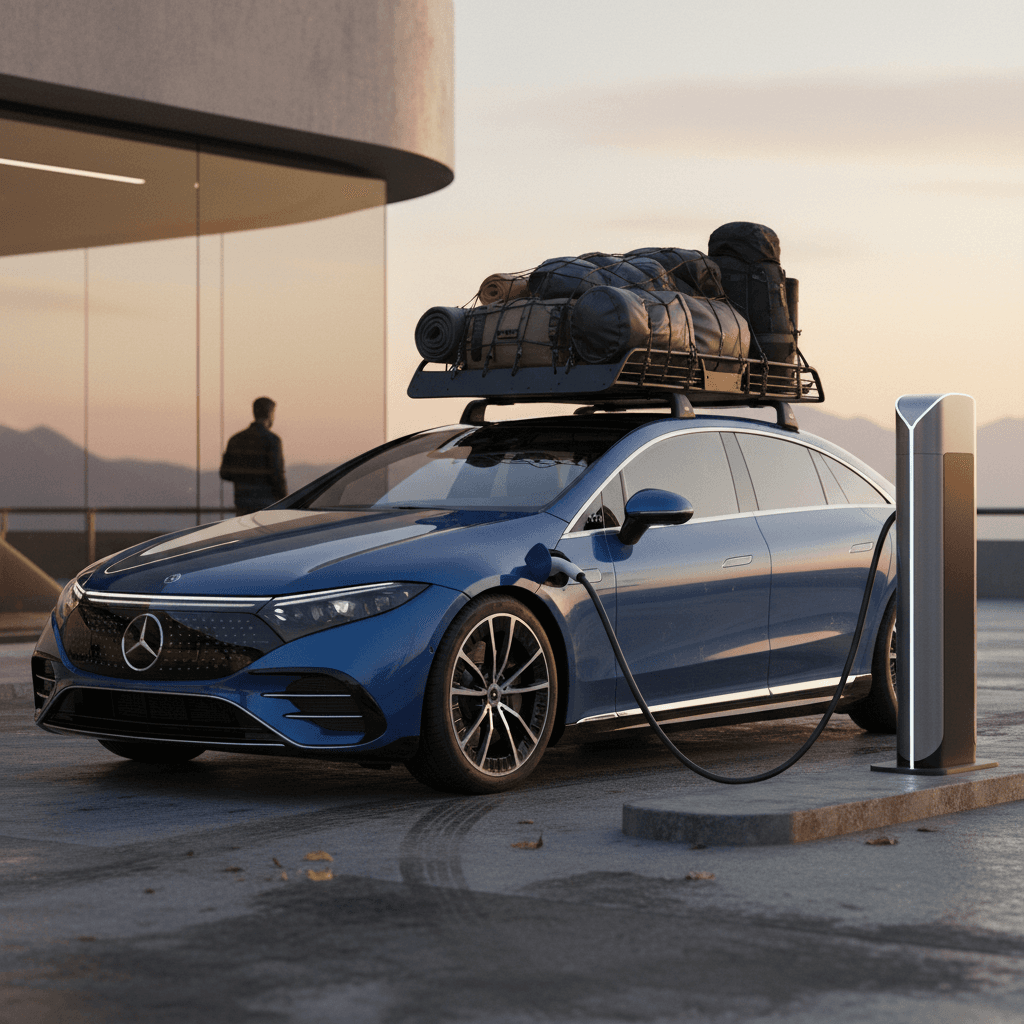
If you’re planning to haul bikes, skis, or a cargo box, you need to know your Mercedes EQE roof rack weight limit, and the answer isn’t the same for every EQE. Between the sedan and SUV, OEM vs aftermarket racks, and “dynamic” vs “static” load ratings, it’s easy to get conflicting numbers. This guide breaks it down so you can load your roof confidently without risking damage or voiding a warranty.
Key figures in 30 seconds
Overview: Mercedes EQE roof rack weight limits
Mercedes doesn’t publish a single roof load number that covers every EQE. Instead, the limit depends on body style (sedan vs SUV), roof design, and sometimes equipment like panoramic glass. In practice, you’ll see two common ranges when you look at OEM fit guides and reputable rack brands:
- EQE sedan (V295): typically around 75 kg / 165 lb max dynamic roof load
- EQE SUV (X294): commonly quoted at 100 kg / 220 lb max dynamic roof load
- Some aftermarket cross bars list higher capacities, but your vehicle’s roof load limit always wins, even if the bars can technically support more.
Always confirm in your own manual
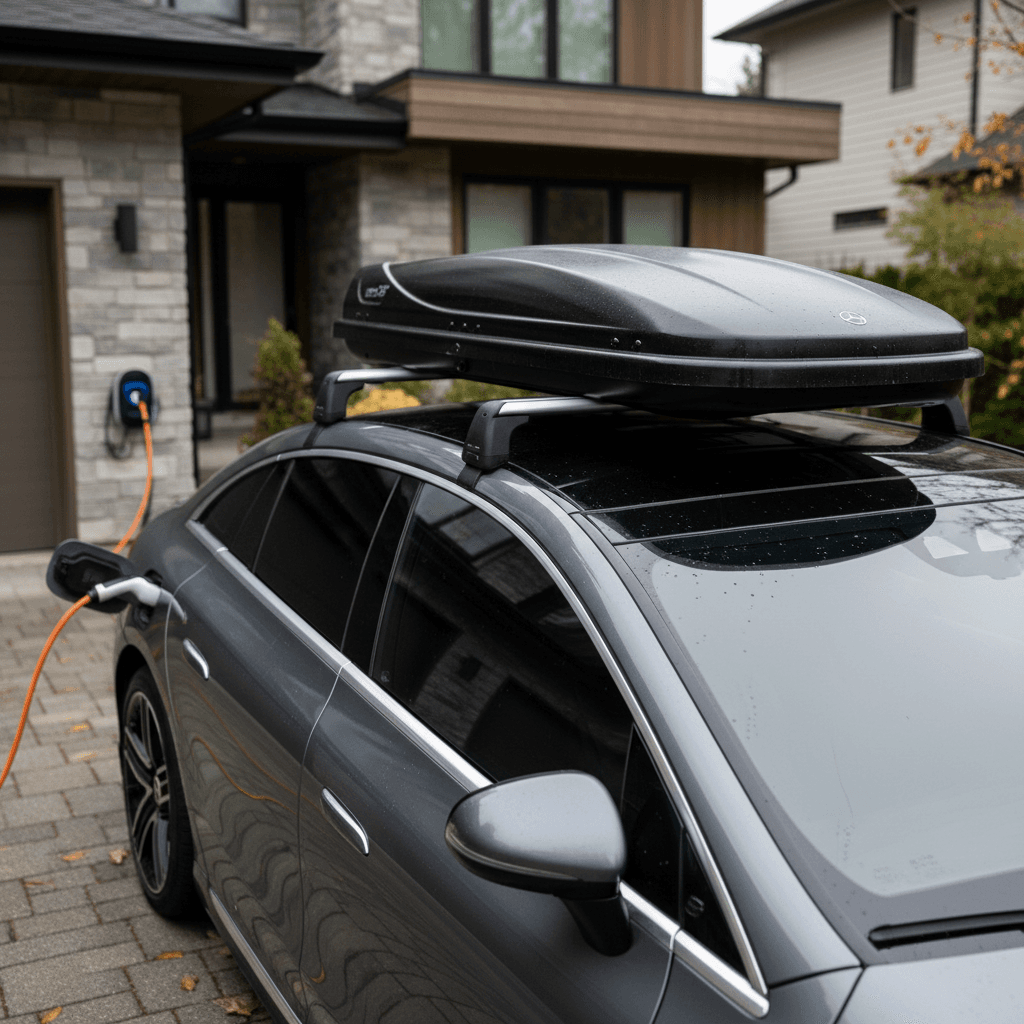
EQE sedan vs EQE SUV: Different roof limits
The first thing you need to nail down is which EQE you own. The sedan and SUV don’t just look different, they carry weight differently and are rated accordingly.
How the EQE sedan and EQE SUV typically compare
These are common roof load figures seen in OEM-style fit guides and spec sheets; always verify in your own documentation.
EQE sedan (V295)
- Uses fixed-point mounting in the roof structure.
- Aftermarket fit kits and Thule instructions for the EQE sedan commonly quote a 75 kg (165 lb) maximum dynamic roof load.
- This 75 kg includes the cross bars, feet, and any accessories or cargo on top.
EQE SUV (X294)
- Boxier body and different roof structure.
- Technical databases for the EQE SUV often list a 100 kg (220 lb) max dynamic roof load.
- Same rule: rack + box + bikes or luggage must all fit inside that 100 kg envelope.
Vehicle limit vs rack limit
Dynamic vs static load: Why the number looks small
Many EQE owners are surprised that their roof load is “only” 75–100 kg, especially if they’ve seen rooftop tents and heavy setups on other SUVs. The key is understanding the difference between dynamic and static load.
Dynamic load (the rating you see)
- What Mercedes and rack brands quote as the roof rack weight limit.
- Covers driving conditions, cornering, emergency maneuvers, potholes, crosswinds.
- For EQE models, usually 75–100 kg, depending on body style and spec.
Static load (parked, not advertised)
- What the roof can support when the car is not moving.
- Almost always higher than the dynamic rating, but manufacturers rarely publish a number.
- Relevant if you’re thinking about rooftop tents, though Mercedes does not market the EQE as a tent‑ready platform.
Don’t “multiply” the rating on your own
How to calculate your real‑world roof load
Once you know the official number for your EQE, you still need to work backwards from that figure. The rack, mounts, and box or bike trays all eat into your allowance before you load a single suitcase.
Step‑by‑step: sizing your EQE roof rack load
1. Find your official roof load limit
Open your owner’s manual and look for “maximum roof load” or “permissible roof load.” Write this down, on many EQE sedans it will be around <strong>75 kg</strong>, and on EQE SUVs it’s often about <strong>100 kg</strong>.
2. Add the weight of the cross bars and feet
Most premium aluminum bar systems for the EQE weigh about <strong>5–7 kg (11–15 lb)</strong> total. Your rack’s product page or manual will list an exact figure, subtract that from your roof load.
3. Add the carrier or box weight
A medium roof box or two bike trays can easily add another <strong>12–20 kg (26–44 lb)</strong>. Again, check the spec sheet for the exact number and subtract it from your remaining capacity.
4. Weigh or estimate actual cargo
What’s left is your payload for bikes, skis, or bags. If you’re close to the limit, use a luggage scale or bathroom scale to weigh bikes and gear instead of guessing.
5. Leave a safety margin
Try to stay at least <strong>10–15%</strong> under your official limit. That margin helps account for scale inaccuracy, added snow or water on the box, and minor misestimates.
6. Distribute weight evenly
Load heavier items in the center of the bars and keep them as low and as far forward as your rack instructions allow. An uneven load can stress the mounts before you ever hit the numerical limit.
Write your limit in the hatch
Common setups: bikes, skis, and cargo boxes
Most EQE owners aren’t trying to max out every last kilogram, they just want to know if their normal weekend gear is safe. Here’s how typical roof‑mounted setups line up against the usual 75–100 kg limits.
Typical roof rack setups vs common EQE limits
Example weights assume quality aluminum bars and name‑brand accessories. Always verify your own hardware specs.
| Setup | Approx. total weight on roof | OK on EQE sedan (75 kg)? | OK on EQE SUV (100 kg)? |
|---|---|---|---|
| Two road bikes + two trays + bars | ~40–45 kg (88–99 lb) | Yes, with margin | Yes, ample margin |
| Four bikes (mixed) + trays + bars | ~65–75 kg (143–165 lb) | Borderline / often too close | Usually OK if carefully loaded |
| Medium roof box, lightly packed + bars | ~40–55 kg (88–121 lb) | Typically safe | Comfortably safe |
| Large box packed heavy + bars | ~65–85 kg (143–187 lb) | Often over the limit | Can approach SUV limit, pack light |
| Skis/snowboards for 4 + bars | ~30–40 kg (66–88 lb) | Safe | Safe |
These examples are illustrative, not a substitute for your EQE manual or rack instructions.
Winter weight creep is real
Can you run a rooftop tent on an EQE?
Rooftop tents are booming in the overlanding world, and you’ll find universal kits advertised to fit “any vehicle with cross bars.” But an electric luxury sedan or crossover like the EQE isn’t the same as a body‑on‑frame SUV or pickup.
- Most EQE rack fit guides are written around dynamic loads of 75–100 kg, which is already eaten up by tent hardware plus two adults.
- Mercedes does not actively market the EQE as rooftop‑tent compatible, and you’re unlikely to find an official tent weight rating in your manual.
- Tents also add significant drag, hurting range and adding stress in crosswinds, exactly the scenario dynamic load limits are designed for.
Conservative answer on tents
Roof racks and range: How much efficiency you lose
Weight isn’t the only concern. Even a light rack can cost you range because it changes the EQE’s aerodynamics. An empty set of bars might only shave a few percent off your highway efficiency, but a tall cargo box or upright bikes can have a much bigger impact.
Typical range impact from roof cargo on an EV
Real‑world results vary with speed, wind, temperature, and how carefully you mount your gear.
Bare cross bars
- Minimal frontal area increase.
- Often 2–5% range loss at freeway speeds.
- Not huge, but worth removing when not in use.
Low‑profile roof box
- Better aero than bikes, especially if centered and not over‑packed.
- Commonly 5–10% range loss on long highway drives.
- Slower speeds and smooth driving help.
Multiple upright bikes
- Bikes stick into clean airflow and can create lots of drag.
- On some EVs, owners report 10–20%+ range loss at 70–80 mph.
- Consider a hitch rack if your EQE is equipped for towing.
Plan charging stops with a buffer
Roof rack buying tips for Mercedes EQE owners
Once you understand the weight limits, the next step is choosing the right hardware. With an EV like the EQE, a few details matter more than they would on a gas sedan.
What to look for in an EQE roof rack system
Choose an EQE‑specific kit
Look for packages that specifically name your body style and generation (for example, “Mercedes EQE (V295) 2022–2025 fixed‑point roof”). Generic “fits most sedans” kits are more likely to stress the mounting points or whistle at speed.
Prioritize aerodynamic bars
Wing‑shaped aluminum bars are quieter and slightly more efficient than square steel bars. On a quiet, refined EV like the EQE, this makes a big difference in cabin comfort.
Confirm the tested load vs vehicle limit
Most premium racks are tested to 75–100 kg or more, but the <strong>vehicle limit may be lower</strong>. The rack’s fit guide should clearly state the load limit for “Mercedes EQE,” and it should match or sit just under your manual’s number.
Use integrated locks and correct torque
Lockable feet reduce theft risk, and torque‑limiting tools ensure you’re not crushing the mounting points. Over‑tightening doesn’t raise the rack’s capacity, it just risks damage.
Check sunroof and tailgate clearance
Some EQE trims have panoramic roofs that can’t be opened with bars installed, and tall boxes can hit the tailgate when it’s raised. Mock‑fit everything and open doors and hatch before a long trip.
Remove bars when you’re not using them
Taking the bars off between trips protects the finish, cuts wind noise, and helps your EQE deliver the efficiency you paid for.
Used EQE owners: What to check before loading up
If you bought your EQE used, or you’re shopping for one now, roof racks and prior usage are worth a closer look. A previous owner may have run heavy loads or an ill‑fitting rack without documenting it.
Inspect the roof and mounting points
- Look for dents, chipped paint, or distortion near the fixed points or rails.
- Check door seals where clamp‑on racks may have rested.
- Make sure threaded inserts (if visible) aren’t rusted or cross‑threaded.
Ask how the rack was used
- Regular bike or ski use within the posted limit is usually fine.
- Heavy cargo boxes or improvised tent setups are more of a concern.
- If in doubt, have a trusted body shop or Mercedes dealer inspect the roof structure.
How Recharged fits in
Ready to find your next EV?
Browse VehiclesFAQ: Mercedes EQE roof rack weight limits
Frequently asked questions
Bottom line: Use your EQE roof safely
The Mercedes EQE is more than capable of carrying bikes, skis, and a well‑packed cargo box, but the roof rack weight limit is not unlimited. Most sedans are capped around 75 kg (165 lb) and EQE SUVs around 100 kg (220 lb), and those numbers include the rack hardware itself. If you confirm your exact limit, do honest math on your gear, and leave some headroom, you’ll enjoy the extra practicality of a roof rack without compromising safety, comfort, or range.
If you’re weighing an EQE against other EVs, or looking at used EQEs and wondering which configuration fits your lifestyle, this is exactly where Recharged can help. Our battery‑health diagnostics, transparent pricing, and EV‑savvy advisors make it easier to choose an electric vehicle that can handle your daily life, your weekend toys, and your next road trip with confidence.