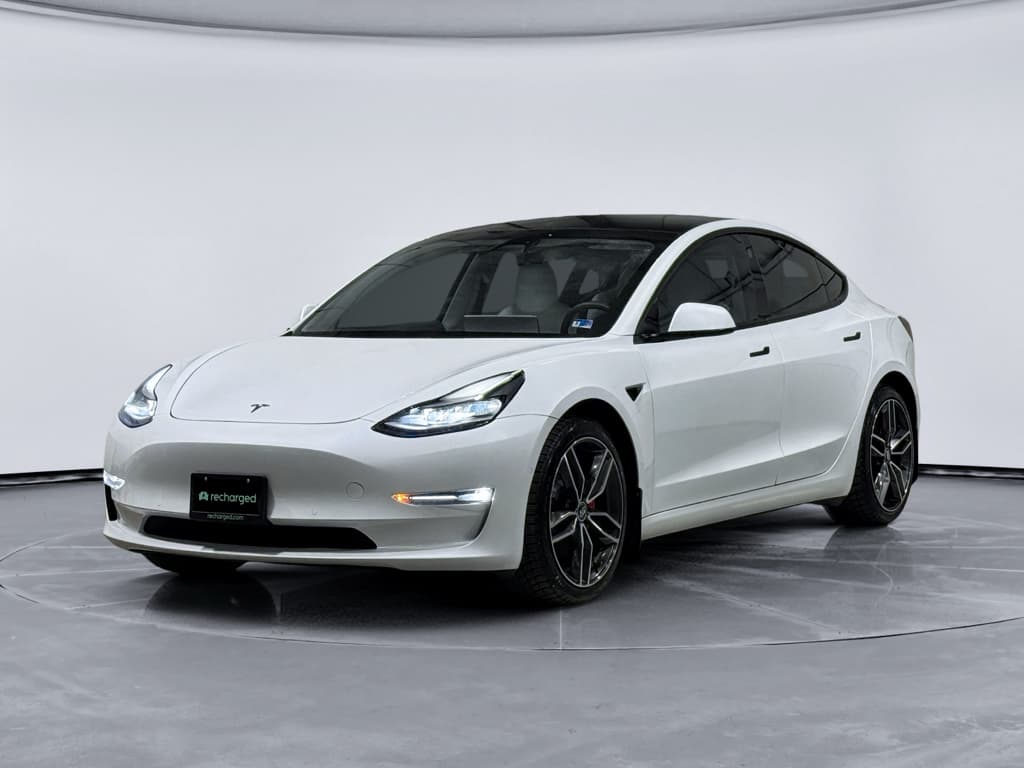
If you’re shopping for a used Tesla in 2026, you’ve probably run into confusing claims about Full Self‑Driving (Supervised), usually shortened to FSD. Some listings say “FSD included and transferable,” others only mention “FSD capable,” and Tesla itself keeps changing the rules. Understanding the real FSD transfer policy on used Teslas is now critical to avoid overpaying for software that might disappear the moment the title changes hands.
Key context for 2026
Quick answer: does FSD transfer on a used Tesla?
- >Sometimes, but not always. It depends on how FSD was acquired (purchased vs. subscription), how the car is being sold (private party vs. through Tesla), and, on newer flagship models, whether FSD was bundled in a Luxe‑style package tied only to the first owner.
- If FSD was purchased outright and is attached to the car’s VIN, it generally stays with the vehicle in a private sale or via a third‑party marketplace like Recharged.
- If the car only has an FSD subscription, the subscription does not follow the car. The new owner has to start their own subscription.
- On recent Model S/X with the Luxe package ordered after February 14, 2026, the bundled FSD is now for the first owner only. When that car is sold, FSD is wiped and the next owner must subscribe separately.
- If you trade your Tesla in directly to Tesla, they can and often do remove FSD before reselling it as a used vehicle.
Don’t trust badges or seller claims alone
How FSD used to transfer vs. how it works in 2026
How it worked for most of the 2010s–early 2020s
- One‑time FSD purchase (often $8,000–$15,000) was tied to the car’s VIN.
- If you sold the car privately, FSD almost always stayed with the vehicle for the next owner.
- Trade‑ins to Tesla were murkier, Tesla could remove FSD before reselling.
- FSD was marketed as something like an “appreciating asset” that would make your car more valuable on resale.
What’s changed by early 2026
- FSD has been rebranded as Full Self‑Driving (Supervised) and is still a Level 2 driver‑assist system that requires constant driver attention.
- Tesla is ending the one‑time purchase option after February 14, 2026 in favor of a $99/month subscription model.
- Limited‑time FSD transfer promotions let existing owners move their paid FSD license to a new Tesla ordered by March 31, 2026, but only when they keep buying new from Tesla.
- On some high‑end models with a Luxe package ordered after February 14, 2026, the included FSD is explicitly non‑transferable to the next owner. Once the car is sold, FSD is removed.
The legal backdrop
FSD on a used Tesla: four common scenarios
How FSD behaves in real‑world used Tesla deals
Which of these situations matches the car you’re looking at?
1. Older Tesla with legacy paid FSD
Example: 2018–2022 Model 3 or Model Y where the original owner bought FSD outright.
- FSD is a permanent software license attached to the VIN.
- In a private sale or via a third‑party retailer, that FSD almost always stays with the car.
- If the car hasn’t been salvaged and Tesla hasn’t manually removed FSD, a new owner should see FSD (Supervised) available in the Autopilot menu and Tesla app after transfer.
Takeaway: This is the cleanest and most valuable FSD situation for used buyers.
2. Car bought used from Tesla with FSD history
Example: 2020 Model Y that originally had purchased FSD, then was traded in to Tesla and resold as a Tesla CPO.
- Tesla reserves the right to remove FSD before resale to avoid giving away perpetual licenses.
- Some buyers report taking delivery of used Teslas from Tesla without the FSD they thought would be included.
- If the current listing doesn’t explicitly guarantee FSD, assume you’re not getting it.
Takeaway: Treat “FSD capable” as no FSD included unless clearly documented.
3. FSD on subscription only
Example: A 2023–2026 Tesla where the owner never bought FSD outright but turned on a monthly subscription.
- The subscription is tied to the owner’s Tesla account, not the car.
- When the car is sold and the account is separated, that subscription stops.
- The new owner can start their own $99/month FSD subscription if the car has compatible hardware.
Takeaway: A seller’s active subscription doesn’t add lasting value to the used car itself.
4. Newer Model S/X with Luxe package FSD
Example: 2026 Model S/X ordered with a "Luxe"‑style package after February 14, 2026 that includes FSD access.
- Under the updated terms, the bundled FSD is for the first owner only.
- When the title transfers to a new owner, Tesla wipes FSD access and the next owner is expected to subscribe.
- Other Luxe perks (maintenance, tire/windshield coverage) may still transfer, but FSD doesn’t.
Takeaway: Don’t pay a resale premium for Luxe‑bundled FSD if you’re not the original buyer.
Salvage titles are a special case
How to verify if a used Tesla really has FSD
Step‑by‑step: verifying FSD on a used Tesla
1. Ignore marketing buzzwords
Terms like <strong>“FSD capable”</strong>, “Hardware 3,” or “Autopilot included” don’t guarantee you actually get Full Self‑Driving (Supervised). Focus on what software is enabled, not the sensors or hardware badges.
2. Check the Autopilot menu in‑car
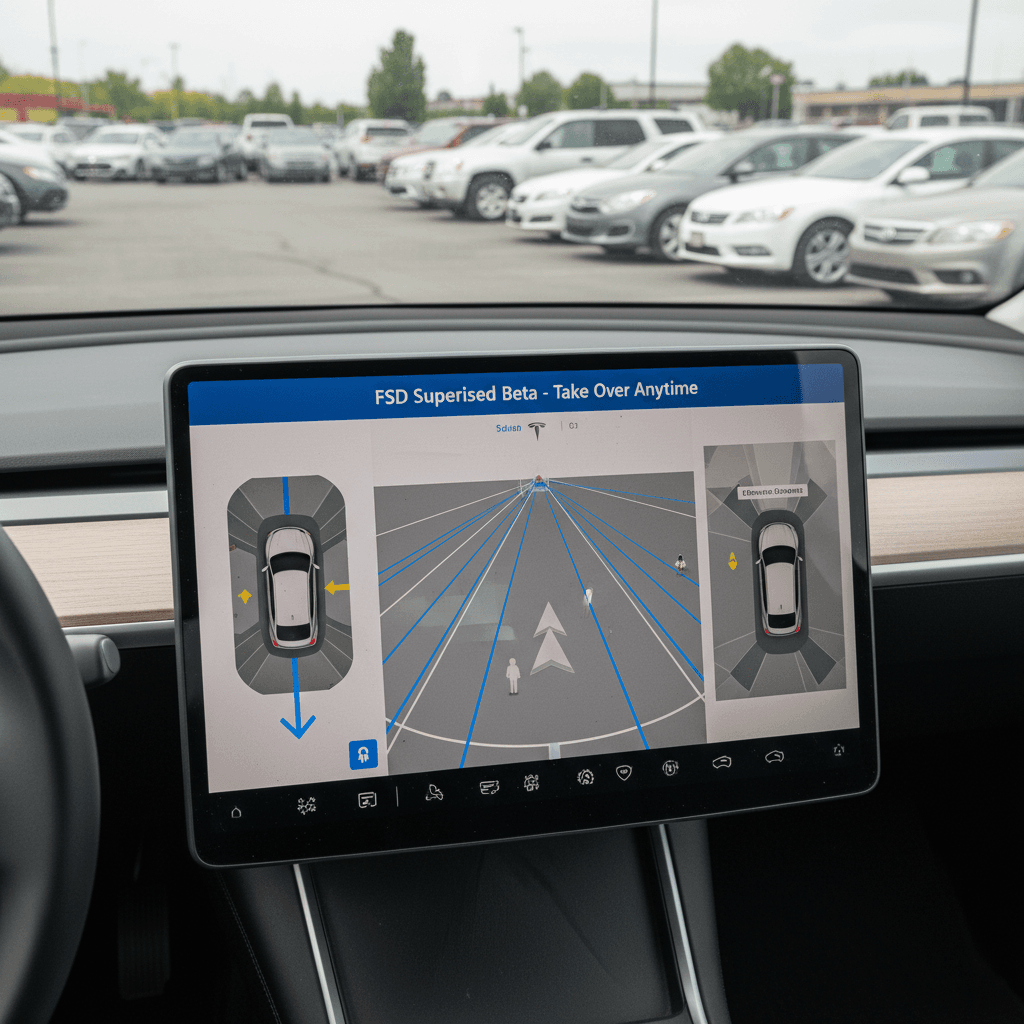
In the vehicle, go to <strong>Controls → Autopilot</strong>. Look for a clearly labeled <strong>Full Self‑Driving (Supervised)</strong> section and whether the system is active or only offered as an upgrade or subscription.
3. Ask for screenshots tied to the VIN
If you’re remote, request screenshots from the car’s screen or the current owner’s Tesla app that show FSD (Supervised) as an active feature for that specific VIN, not just a marketing screenshot from Tesla’s website.
4. Confirm how the car was acquired
Direct questions matter: Was this car <strong>bought new</strong> with FSD, bought <strong>used from Tesla</strong>, or via a third party? Was FSD <strong>purchased outright</strong> or always on subscription? The answers change what transfers.
5. Check for Luxe or first‑owner restrictions
On newer Model S/X, ask whether FSD came via a <strong>Luxe</strong> or similar package and when the car was ordered. If it was ordered after mid‑February 2026, assume FSD is <strong>first‑owner only</strong> unless Tesla documentation says otherwise.
6. Use a trusted intermediary
Buying from a marketplace that <strong>verifies software features</strong> reduces your risk. At Recharged, our Recharged Score Report documents what we’ve confirmed about each vehicle’s software, including FSD status where applicable.
Pro move for serious buyers
What Tesla’s new policies mean for used prices
How FSD is reshaping used Tesla economics
For years, FSD was sold as an “asset” that would make your Tesla more valuable. In reality, the used market has always discounted that promise. Now that Tesla is nudging everything toward subscriptions and first‑owner perks, any FSD value baked into a used car’s price deserves extra skepticism.
- If FSD is permanently attached to the VIN and clearly transfers to you, it can justify a premium, just probably not the full original purchase price.
- If FSD is subscription‑only or tied to a Luxe‑style first‑owner perk, it should not justify a big premium, because you’ll still be paying $99/month yourself.
- Cars once marketed with “free transferable FSD” are becoming rarer over time as Tesla rewrites the fine print and ends promotional transfer windows. That scarcity can support value, but only if the entitlement is documented and survives resale.
- Any used Tesla where FSD might be removed (trade‑ins, salvage, post‑2026 Luxe packages) should be priced as if it has little or no durable FSD value.
Watch for double‑charging risk
How Recharged handles FSD on used Teslas
Software entitlements like FSD are one of the biggest blind spots in the used EV market. At Recharged, our entire model is built around making those invisible variables transparent so you’re not gambling with thousands of dollars on a line of fine print.
Recharged’s approach to FSD and used Teslas
How we reduce the guesswork for buyers and sellers
Verified software status
Our Recharged Score Report doesn’t just cover battery health and pricing. Where relevant, it also documents key software features, like whether FSD (Supervised) appears as an active entitlement for that VIN at the time of inspection.
Fair pricing, not wishful thinking
We price used Teslas based on what actually transfers, not what once appeared in a marketing email. If FSD is first‑owner only or subscription‑based, we don’t pretend it adds permanent resale value.
EV‑specialist guidance
Our EV specialists can walk you through exactly how FSD works on a given car, whether it’s worth paying a premium, or if you’re better off saving the money and using a subscription later.
Ready to find your next EV?
Browse VehiclesBecause Recharged handles financing, trade‑ins, instant offers, consignment, and nationwide delivery, we also see both sides of the transaction. That makes it easier to set realistic expectations for sellers while protecting buyers from overpaying for software that may not survive the handoff.
Buyer checklist: FSD and used Teslas
Questions to answer before you pay extra for FSD
1. Is FSD really active today?
Verify in the car’s <strong>Autopilot</strong> menu that Full Self‑Driving (Supervised) is active, not just available as a paid add‑on. Ask for fresh photos or video if you’re buying remotely.
2. Was FSD purchased or subscribed?
If the owner says they "turned it on" via the app, that’s usually a <strong>subscription</strong>. If they have an invoice showing a one‑time FSD purchase, that’s more likely to survive resale (except where first‑owner rules apply).
3. How was the car originally sold?
Cars bought <strong>used from Tesla</strong> can have FSD removed before resale. Cars bought used from third parties or private owners are more likely to retain whatever VIN‑level FSD they had.
4. Any Luxe or first‑owner package involved?
On newer S/X, a Luxe‑style package ordered after February 14, 2026 typically makes FSD <strong>non‑transferable</strong>. Don’t pay extra for perks that Tesla has tied to the first owner only.
5. What’s the real premium being asked?
Compare similar cars <strong>without FSD</strong>. If this one is $5,000–$8,000 higher, ask yourself if you’d rather keep that money and simply pay $99/month if and when you actually want to experiment with FSD.
6. Does FSD even solve your use‑case?
If your driving is mostly short, predictable commutes, Tesla’s basic Autopilot or Enhanced Autopilot may cover your needs. In that case, you may be better off <strong>not</strong> paying up for FSD at all on a used car.
FAQ: FSD transfer policy on used Teslas
Frequently asked questions about FSD on used Teslas
Bottom line: should you pay up for FSD on a used Tesla?
Whether FSD is “worth it” on a used Tesla in 2026 comes down to two questions: how you actually drive, and how durable the FSD entitlement really is on the specific car in front of you. On older cars with clearly transferable, VIN‑tied FSD, a modest premium can make sense, especially if you’re comfortable with the technology’s current limitations and regulatory uncertainty. On newer cars where FSD is more like a first‑owner perk or a $99/month toggle, big premiums look a lot more like wishful thinking than smart economics.
If you want help sorting the signal from the noise, Recharged can do more than just list a car and a price. Every EV we sell comes with a Recharged Score Report for battery health, transparent pricing data, and EV‑specialist guidance that includes software features like FSD. Whether you’re buying, trading in, or taking an instant offer, that combination makes Tesla’s constantly shifting FSD rules a lot less risky, and keeps you focused on the things that actually matter over the long haul: battery, price, and how the car fits your life.