If you’ve ever typed “free EV charging stations near me” into your phone while watching your state-of-charge drop, you’re not alone. Public charging has grown fast in the U.S., but electricity prices and new policies ending many EV incentives mean more drivers are hunting for ways to cut operating costs without wasting time or range.
Quick reality check
Why Free EV Charging Matters in 2025
In 2025, the U.S. has well over 200,000 public charging ports across AC Level 2 and DC fast chargers, and the number keeps climbing. At the same time, federal purchase incentives for EVs and some public funding programs have been cut back or paused, while electricity prices remain a concern for many households. That combination makes every kilowatt-hour feel more valuable, especially if you’re commuting long distances or running multiple EVs in a household.
Public EV Charging Is Growing Fast
For many drivers, consistently grabbing even a portion of their charging for free, say at work a few days a week or at their regular grocery store, can cut annual running costs by hundreds of dollars. That’s especially meaningful if you’ve just stretched your budget to buy a newer or used EV.
How Many Public Chargers Are Out There?
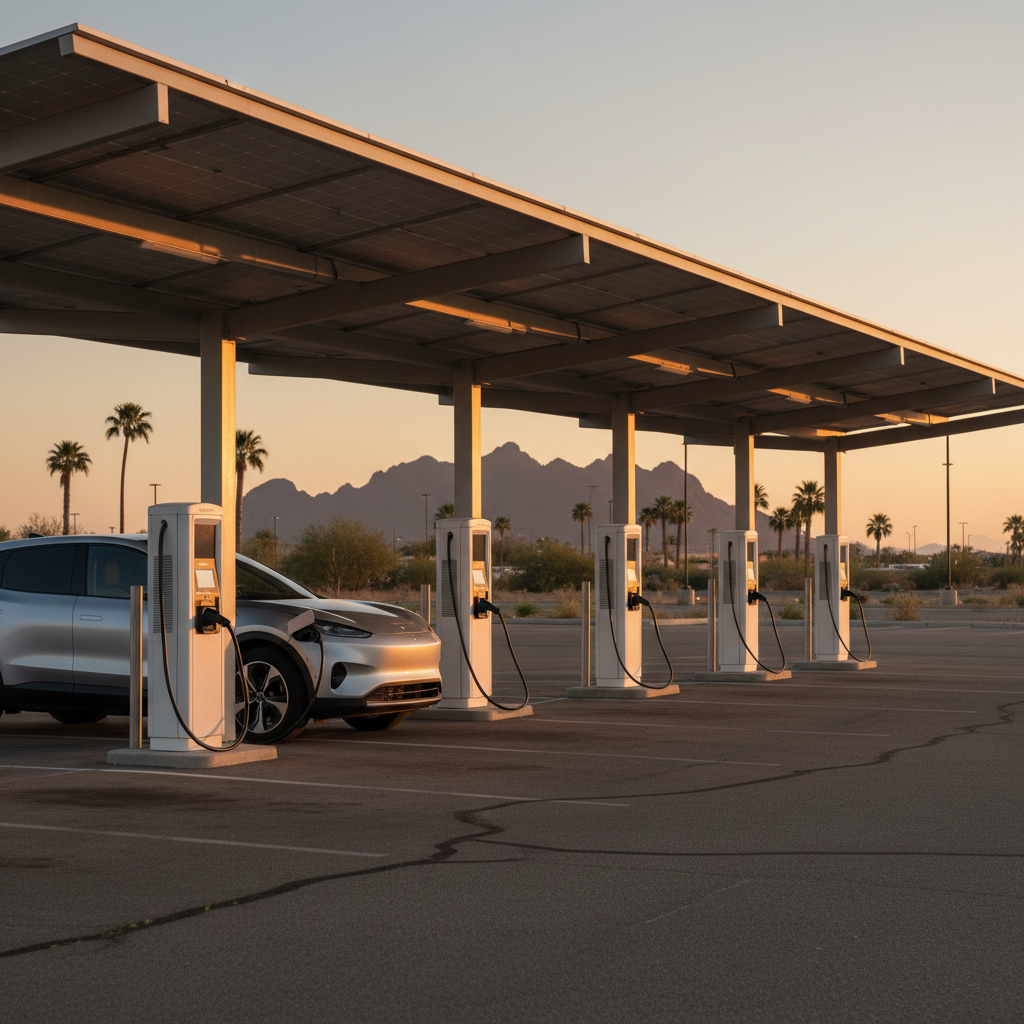
To understand how realistic it is to rely on free public charging, it helps to know the overall landscape. Public charging is now available in the vast majority of U.S. counties, with urban and suburban areas enjoying the densest coverage. By late 2025, public AC Level 2 ports topped roughly 170,000 across more than 66,000 locations, and DC fast chargers passed the 65,000-port mark with over 14,000 locations nationwide.
Coverage isn’t uniform
Best Apps to Find Free EV Charging Stations Near You
When you search “free EV charging stations near me,” the most powerful tools are the same apps you already use to find any charger, if you know how to filter them correctly. Here are the platforms that make it easiest to surface truly free options.
Top Apps and Maps for Free EV Charging
Use filters and user reviews to avoid unpleasant surprises at the plug.
PlugShare
Best overall community map. PlugShare lets you filter by network, plug type, and "Free" under Amenities so you only see no-fee locations. Because it’s crowd‑sourced, drivers also report if a station quietly switched from free to paid.
Google Maps & Apple Maps
Both now show many EV chargers right in the map search. You can usually see the network, pricing notes, and sometimes whether parking fees apply. For quick checks around you, like a mall or downtown cluster, they’re a solid starting point.
Network Apps (ChargePoint, Tesla, etc.)
Network apps like ChargePoint, EVgo, and Tesla’s app sometimes label sites as “$0.00/kWh” or “free parking”. ChargePoint in particular has many workplace and retail hosts that choose to offer free sessions or free first hours.
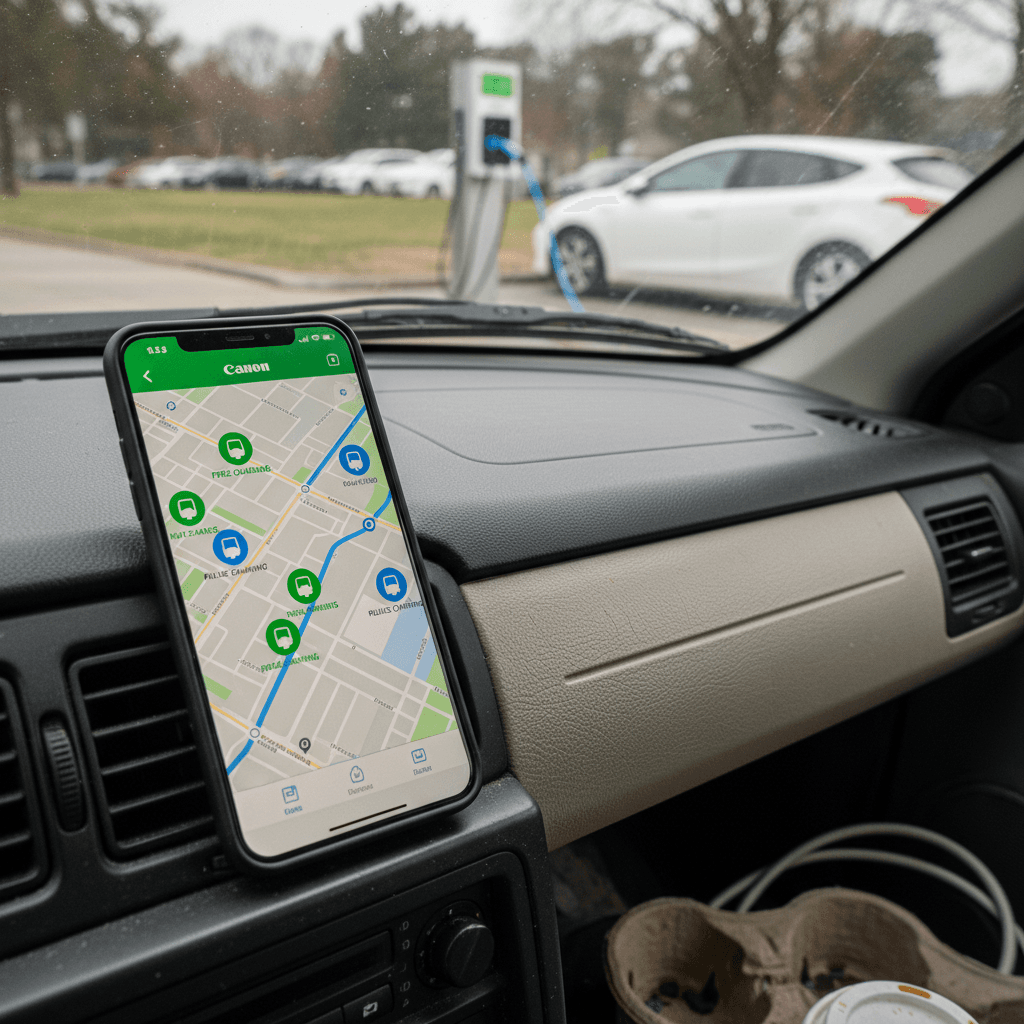
Pro tip: save your own map layer
Common Places to Find Free EV Charging
Most free EV charging is less about big public networks being generous and more about specific locations using free electricity as an incentive. Here’s where you’re most likely to find it and what the fine print usually looks like.
Where Free EV Charging Usually Shows Up
Use this as a checklist when you plan errands, commutes, or road trips.
| Location type | How common? | Typical rules | Best use case |
|---|---|---|---|
| Workplaces & corporate campuses | High in tech/office hubs | Employee or visitor badge required, limited hours, often Level 2 | Daily commuting, topping up during a workday |
| Hotels & resorts | Common at midscale and upscale brands | Guests‑only, limited number of ports, may be first‑come first‑served | Overnight charging on road trips or business travel |
| Grocery & big‑box stores | Growing but still hit‑or‑miss | Free while shopping, time‑limited (e.g., 1–2 hours), sometimes app check‑in required | Errand runs and weekly shopping trips |
| Municipal lots & libraries | Varies widely by city | Often free or very cheap, but parking time limits apply | Downtown visits, events, or library trips |
| Universities & hospitals | Moderate in urban areas | May require campus permit or patient/visitor validation | Long appointments, classes, or shifts |
| Dealerships & auto groups | Spotty and changing | Some allow public use, others restrict to customers or specific brands | Top‑ups during service visits or while shopping for a vehicle |
Availability and rules vary by state, city, and even by store manager, always confirm in the app or at the site.
Parking may be free, or not
Step-by-Step: How to Search for Free Charging Near You
Find Free EV Charging in 6 Practical Steps
1. Pick your primary app
Start with a dedicated EV charging map like <strong>PlugShare</strong> or the app tied to the network you use most (e.g., ChargePoint). Sign in so the app can save filters and favorites.
2. Add your specific EV
Enter your vehicle’s make, model, and year. This lets the app filter incompatible plug types and show only what works with your car’s connector or adapter situation.
3. Turn on the “Free” filter
In PlugShare, open Filters → <strong>Amenities</strong> and enable “Free”. In network apps, look for price filters or manually spot locations showing <strong>$0.00</strong> for energy or session fees.
4. Zoom in around your real life
Search around the places you actually visit: home, work, school, grocery store, gym, kids’ activities. A free charger that fits naturally into your weekly routine is worth far more than one across town.
5. Read recent check‑ins and reviews
Before you depend on a charger, read what other drivers have said in the last few weeks. Watch for notes like “recently switched from free to paid” or “ICE’d every evening.”
6. Test and time your first session
On your first visit, arrive with a comfortable buffer in your battery. Start a session, confirm it’s truly free, and note how many miles of range you gain per hour to decide if it’s worth revisiting.
When you find a gem, protect it
Is Free EV Charging Really Worth It?
“Free” can be a bit of a trap if it pulls you too far off route or costs you time you value more than a few dollars in electricity. The question isn’t just whether the session is free, but whether it’s a good tradeoff for you.
When free charging makes sense
- You’re already there. You’re at work for eight hours, or at a hotel overnight, and plugging in takes 30 seconds.
- Level 2 speed is enough. You don’t need a fast road‑trip stop, just topping up 30–60 miles while you shop or attend a meeting.
- Parking is also free. The combined cost really is zero, so there’s no hidden trade‑off.
- You’re optimizing long‑term costs. Shifting a significant part of yearly charging to free locations can meaningfully reduce your cost per mile.
When it’s smarter to pay
- You’re on a tight schedule. A DC fast charger that costs a few dollars but saves an hour is usually worth it.
- The detour is big. Driving 20 extra miles for a free 10 kWh session is false economy.
- Parking isn’t free. Paying $10 to park for a “free” 5 kWh Level 2 session often costs more than simply charging at home.
- The station is unreliable. If reviews show frequent downtime or ICEing, your risk of being stranded goes up.
Don’t cut it too close
Etiquette and Rules When Using Free Chargers
Free charging only stays “free” when site owners feel it’s adding value instead of creating headaches. A few basic etiquette rules go a long way toward keeping these perks around, and keeping the EV community’s reputation intact.
- Treat posted time limits as firm, not suggestions. If a sign says 2‑hour charging, move your car when time’s up.
- Don’t use free stations as long‑term parking. The spot is for charging, not free downtown storage.
- Only plug in if you actually need energy. Leaving your car plugged in at 90% just because it’s free blocks others who may really need the miles.
- Keep cables tidy and stands clean. Hosts notice whether drivers respect their property.
- If you’re not a guest or employee, don’t assume you’re welcome. Many workplace and hotel chargers are explicitly private, even if the hardware is visible in apps.
Ask before you plug in
How Free Charging Fits Into Your Overall EV Strategy
The healthiest way to think about free EV charging is as a discount, not a dependency. Your core charging plan should still be built around reliable options you control, usually home or workplace charging, then layered with opportunistic free sessions when they align with your life.
Blend Home, Paid, and Free Charging
Design a mix that matches your lifestyle and budget.
Home base charging
If you can install Level 2 at home, it’s often the cheapest and most convenient way to charge. Overnight kWh rates, even without incentives, are usually lower than public fast charging, and you control when and how you plug in.
If you’re shopping for a used EV, factor in whether your home can support a 240V circuit or whether you’ll rely mostly on public options.
Strategic paid fast charging
For road trips or time‑sensitive days, budget for paid DC fast charging. Think like a driver, not a coupon clipper: sometimes the smart move is to buy speed and reliability.
Look for memberships or off‑peak pricing that can bring the effective cost closer to home electricity.
Opportunistic free charging
Layer in free charging where it naturally fits, at work, the grocery store, your gym, or hotel stays. Over a year, that might cover 10–40% of your total kWh without adding friction to your routine.
Track how often you really use these options so you’re honest about the savings.
Where Recharged fits in
FAQ: Free EV Charging Stations Near Me
Frequently Asked Questions About Free EV Charging
Bottom Line on Free EV Charging
Free EV charging isn’t a myth, but it’s also not a magic solution that will power every mile you drive. The winning strategy is to lock in a reliable baseline, home or workplace charging if you can, then layer in free sessions at workplaces, retailers, municipal lots, and hotels when they fit naturally into your day. The right apps, filters, and habits can turn “free EV charging stations near me” from a panicked search into a quiet, background savings engine.
If you’re still in the research phase or thinking about upgrading to a different EV, it’s worth considering how a car’s range, efficiency, and charging speed line up with the public and free infrastructure where you actually live and drive. That’s exactly why every vehicle on Recharged comes with a transparent Recharged Score and battery health report, so you can choose an EV that works with the charging reality around you, not just the marketing brochure.