If you’re shopping a used Polestar 2 in 2026, you’ve probably heard the horror stories: five‑figure battery quotes, insurance companies totaling nearly new cars, rumors of packs that cost more than the sedan is worth. The reality around Polestar 2 battery replacement cost in 2026 is more nuanced, and a lot less terrifying, once you separate early‑market panic from how these cars are actually serviced today.
The short version
Why Polestar 2 battery costs matter in 2026
The first Polestar 2s hit U.S. driveways in 2020. That means the earliest cars reach the back half of their 8‑year/100,000‑mile high‑voltage battery warranty between now and 2028. At the same time, resale values are coming down into reach for more buyers, and the internet is full of anecdotes about eye‑watering battery quotes. If you’re a rational human being, you want to know: “What happens to me in year nine?”
From a distance, the math can look brutal: a 78–82 kWh battery pack that originally underpinned a $60,000 luxury EV is not going to be cheap. Up close, though, the story is more complex. Most packs are aging well; the warranty is generous by industry standards; and a growing secondary market in tested OEM packs has started dragging prices back toward earth.
Polestar 2 battery: key numbers for 2026 shoppers
Quick answer: What a Polestar 2 battery costs in 2026
Polestar 2 battery cost scenarios in 2026
Realistic 2026 scenarios for U.S. owners and shoppers, assuming a car that’s no longer under the original 8‑year battery warranty.
| Scenario | What’s replaced | Where | Typical 2026 cost |
|---|---|---|---|
| Warranty repair inside 8 yrs / 100k | Failed modules or full pack | Polestar/Volvo dealer | $0 (covered, minus any diagnostic fees) |
| Collision damage, car repaired | Full new OEM pack | Dealer via insurance | $15,000–$25,000 billed to insurer |
| Owner pays out of pocket, new pack | Complete new pack + labor | Dealer | $18,000–$30,000+ (rare in practice) |
| Owner pays, used OEM pack | Complete used 78 kWh pack + install | Independent EV specialist | ~$8,000–$12,000 installed |
| Future budget option | Module‑level repair, reman pack | Specialist/rebuilder | Emerging in niche markets; often $5,000–$9,000 when available |
These are ballpark figures based on 2024–2026 service quotes, parts catalogs, and used‑pack listings. Local labor rates and parts sourcing can swing totals higher or lower.
Why the numbers are fuzzy
How the Polestar 2 battery and warranty actually work
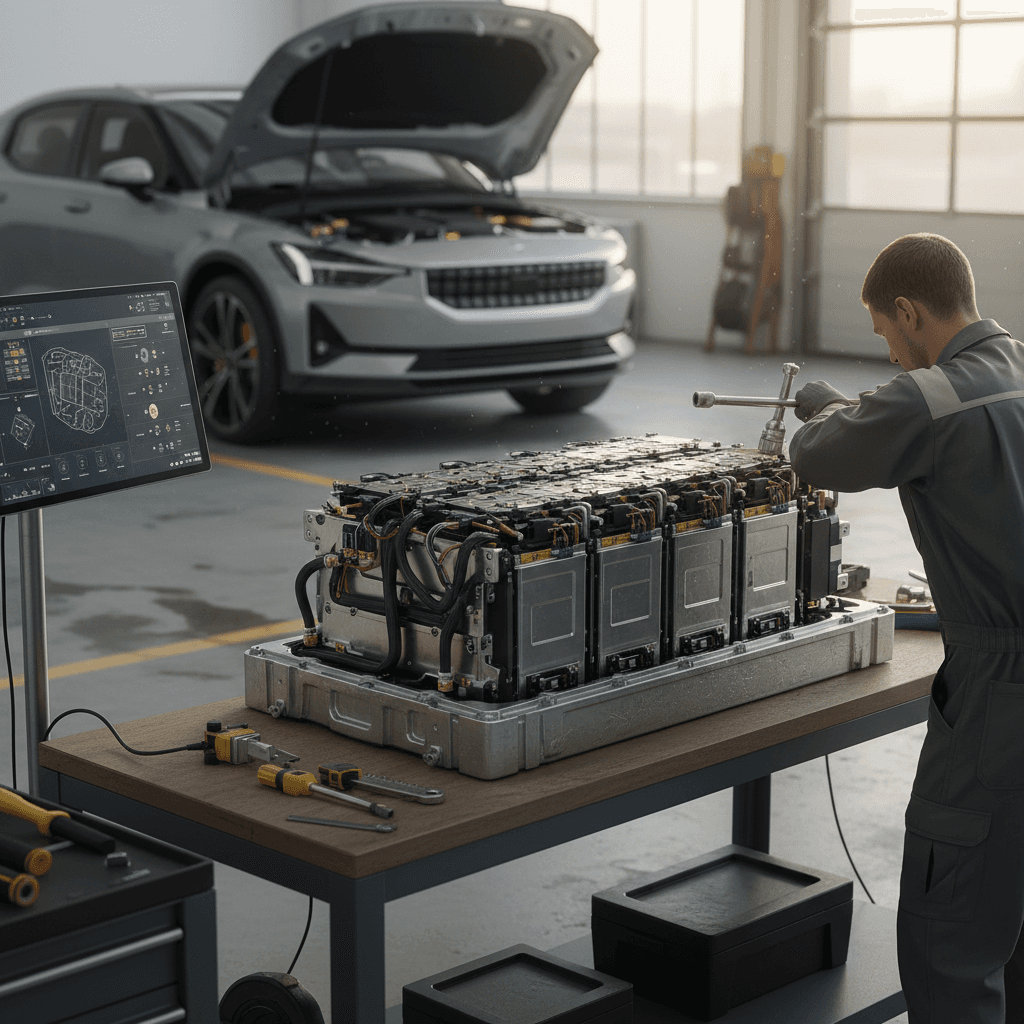
Under the floor of every Polestar 2 lives a maintenance‑free lithium‑ion high‑voltage pack, roughly 78 kWh for early cars, 79–82 kWh for updated models, depending on model year. It’s built from multiple modules bolted into a structural case that forms part of the car’s crash structure.
- Only an authorized workshop can replace or open the high‑voltage battery, for safety reasons.
- Polestar specifies an 8‑year/100,000‑mile warranty on the pack and motors for U.S. and Canadian cars, generally guaranteeing a minimum usable capacity threshold over that term.
- Within that window, defects in materials or workmanship that significantly affect capacity or function are repaired or the pack is replaced at no cost to you, assuming normal use.
Think in terms of capacity, not years
In practice, if a cell group or module misbehaves under warranty, Polestar may authorize a repair, a partial rebuild, or a complete pack swap, depending on diagnosis. Your service advisor may never show you a retail price for the battery, because it’s treated as a warranty part.
Full battery pack replacement costs in 2026
Let’s assume the scary scenario: your Polestar 2 is out of warranty, the pack is damaged or severely degraded, and a shop recommends replacement. What happens to your bank account then?
Three main cost paths for a Polestar 2 pack in 2026
The same problem can look wildly different depending on who’s paying and which parts they source.
1. Insurance‑funded OEM pack
If the pack is damaged in a crash or flooded, insurers will price a brand‑new OEM battery through a Polestar/Volvo dealer. Including labor and shop fees, estimates often land in the $15,000–$25,000 neighborhood, sometimes more for structural repairs. You’ll mostly see this on claim paperwork, not as a bill you personally pay.
2. Used OEM pack from a recycler
As more Polestar 2s are written off for cosmetic or structural damage, their intact packs get parted out. By late 2025, specialty recyclers were advertising tested 78 kWh Polestar 2 packs in the ~$5,000 range, plus freight. Installed by an EV‑savvy independent shop, real‑world totals around $8,000–$12,000 are increasingly plausible.
3. Emerging module‑level repairs
Because the pack is modular, in theory you can replace only the failed section. In practice, only a handful of shops in North America are set up for safe, warrantied module‑level work on Polestar packs as of 2026. Where available, this route can undercut full‑pack replacement by several thousand dollars, but it’s still a niche option.
Why you don’t see $3,000 battery swaps
When insurers total the car instead of replacing the pack
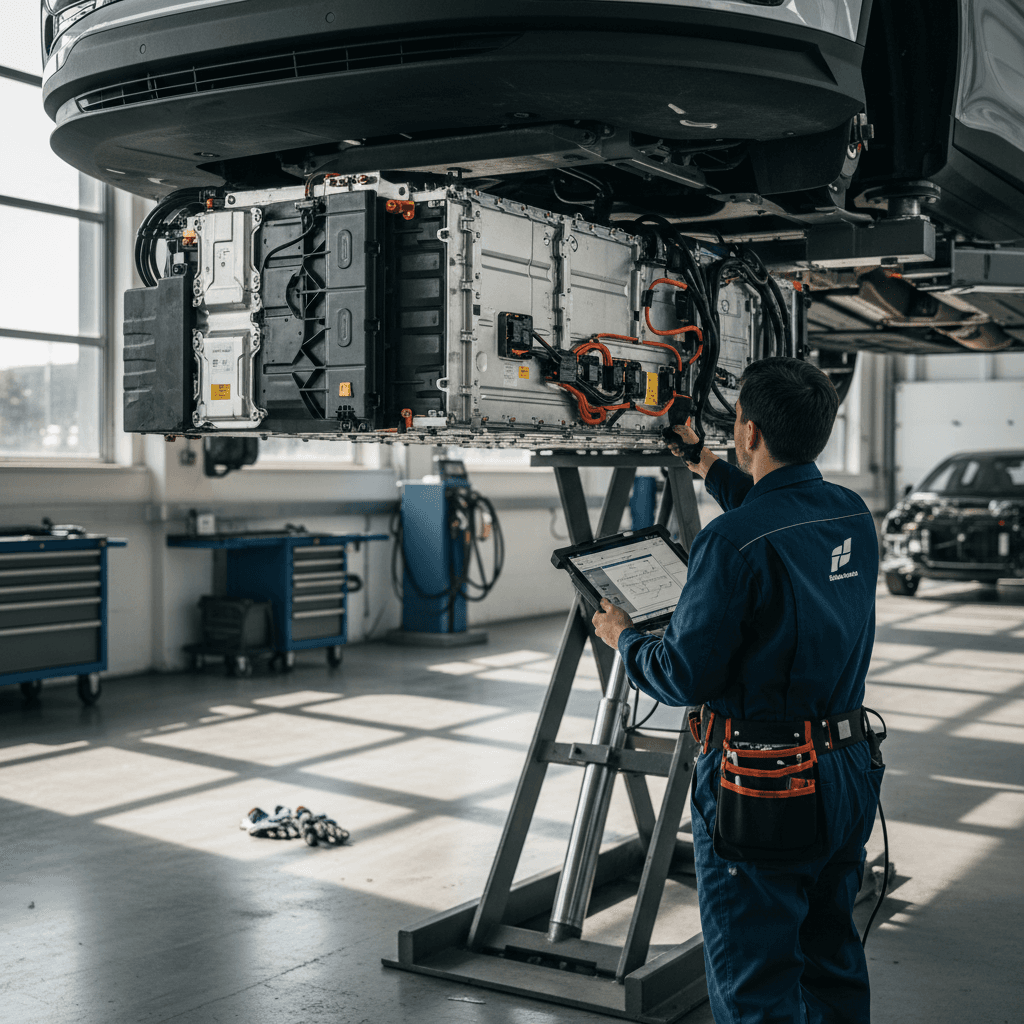
One reason Polestar 2 battery costs feel mythical is that, when a pack is significantly damaged, insurers often walk away from the car instead of paying for a replacement. There have already been high‑profile cases, particularly in Europe and China, where minor underbody or cooling‑loop damage triggered eye‑watering six‑figure local‑currency quotes, and the car was simply written off.
Why insurers total the car
- Structural integration: The Polestar 2’s pack is a stressed member of the body. Certain impacts require extensive subframe, cooling and protection‑plate replacement along with the pack itself.
- Labor and calibration time: High‑voltage work requires specialized technicians, tooling and post‑repair validation, all of which insurers must pay at dealer rates.
- Resale math: For a four‑year‑old Polestar 2, a $20,000+ repair can exceed the vehicle’s market value, so it’s cheaper to cut a check and send the car to auction.
What that means for you
- If your pack is damaged in a qualifying crash, you’re unlikely to be stuck paying for it. Either the insurer funds the repair or they total the vehicle.
- Those totaled cars often become the donor vehicles that supply used OEM packs for the secondary market.
- So the same economics that look scary on social media are part of what makes out‑of‑warranty replacement more affordable down the road.
Ways to avoid paying for a Polestar 2 battery yourself
You can’t control every rock in the road, but you can stack the deck so you’re vanishingly unlikely to write a personal check for a new Polestar 2 battery pack.
Practical strategies to stay out of “I bought a battery” territory
Buy inside the 8‑year/100,000‑mile window
If you’re shopping used in 2026, a 2021–2023 Polestar 2 with fewer than 100,000 miles keeps you under the factory battery warranty for several more years. That’s a powerful safety net.
Prioritize clean history and underbody inspections
A car that’s been curbed, bottomed out or repaired poorly can hide damage to the pack’s case or cooling system. Ask for underbody photos or an inspection report before you commit.
Get a real battery health assessment
Don’t settle for a dashboard range guess. Look for a <strong>3rd‑party battery health report</strong> that verifies usable capacity, thermal behavior and fault codes, exactly what Recharged’s <strong>Score Report</strong> is built to surface.
Consider an extended EV service contract
If you plan to keep the car well past year eight, a reputable, EV‑specific service contract can cap your exposure to big‑ticket failures. Focus on products that explicitly cover the high‑voltage system.
Follow best practices for battery care
Keep daily charging between roughly 20–80%, avoid leaving the car full or empty for days, plug in during extreme heat or cold and use DC fast charging as a tool, not a habit.
Shop where EVs are the core business
Franchise dealers are still learning EV lifecycle economics. Dedicated EV marketplaces like <strong>Recharged</strong> price in battery health from day one and help you understand the real risk profile before you buy.
How Recharged de‑risks used Polestar 2 batteries
Ready to find your next EV?
Browse VehiclesBattery health on a used Polestar 2: what to look for
On a gasoline car, you listen for rod knock. On a Polestar 2, you go hunting for clues about the battery’s past life. The good news: early‑run Polestar 2 packs are generally behaving well, with modest degradation when cared for properly. The bad news: it’s still possible to buy a car that’s been fast‑charged and flogged into an early mid‑life crisis.
- Displayed range at 100%: A healthy long‑range Polestar 2 should still show range in the general ballpark of its original EPA rating, adjusted for software updates and temperature. A huge drop, 25–30% or more, deserves investigation.
- Charging behavior: Sudden throttling at DC fast chargers, frequent failures to complete sessions, or unusual fan and pump noise can indicate thermal management or cell‑group issues.
- Error messages: Persistent high‑voltage system warnings, reduced‑performance modes or “limp home” behavior are red flags on a pre‑purchase drive.
- Service history: Look for documentation of high‑voltage repairs, battery‑coolant system work, or pack replacements. A documented, warranty‑funded new pack can actually be a positive on a used car.
Ask sellers better questions
US vs. Europe and China: why battery costs sound so different
If you Google long enough, you’ll find a Chinese news story about a Polestar 2 owner facing a battery quote that translated to roughly the price of a new car. You’ll also see European owners discussing eye‑watering estimates denominated in euros and kronor. Those numbers are real, but they’re living in a different context than the U.S. retail and insurance market.
Structural pack, global headaches
Everywhere in the world, the Polestar 2 uses a structural, liquid‑cooled pack. That means:
- Seemingly small hits to the battery case can trigger expensive repairs or safety‑driven total losses.
- Labor and calibration procedures are similar whether you’re in Stockholm or Seattle.
- Dealers default to conservative, whole‑pack solutions when there’s any ambiguity about internal damage.
Why U.S. shoppers should care, but not panic
- Those splashy international quotes mostly represent insurance economics, not cash offers to private owners.
- By 2026, the growing global supply of intact used packs helps cap replacement costs in every market, including the U.S.
- The best response isn’t to avoid Polestar 2 entirely; it’s to buy carefully, with battery data and a clear exit plan if your needs change after the warranty window.
Is a Polestar 2 worth buying in 2026 given battery costs?
Here’s the uncomfortable truth: on paper, almost any modern EV looks terrifying once you imagine a full battery failure outside warranty. A brand‑new pack is always going to be a big percentage of the car’s residual value. The real question is how often that worst case happens and what your plan is if it does.
Polestar 2 ownership in 2026: the tradeoffs
Where battery risk fits into the broader picture.
The real‑world risk
Documented high‑voltage failures on Polestar 2 are still rare, and most have occurred well inside the 8‑year warranty window, where full pack replacements have been covered. You’re betting against a low‑probability, high‑cost event.
Operating‑cost upside
Compared with a similarly quick German ICE sedan, a Polestar 2 saves you thousands over the years in fuel and routine service. That margin is effectively a self‑funded insurance pool against big‑ticket repairs that may never come.
Exit and support options
If you buy through an EV‑focused marketplace like Recharged, you get transparency on battery health, access to EV‑savvy financing and trade‑in options, and guidance on extended coverage, all of which blunt the downside risk.
If you want the Polestar 2’s quiet swagger without lying awake at night staring at imaginary five‑figure invoices, the formula for 2026 is straightforward: stay inside the 8‑year/100,000‑mile battery warranty, demand real battery health data, and work with people who understand that the pack under the floor is the whole ballgame. Do that, and the odds of you ever pricing a new Polestar 2 battery, let alone paying for one, drop from urban‑legend territory into a background risk you can live with.