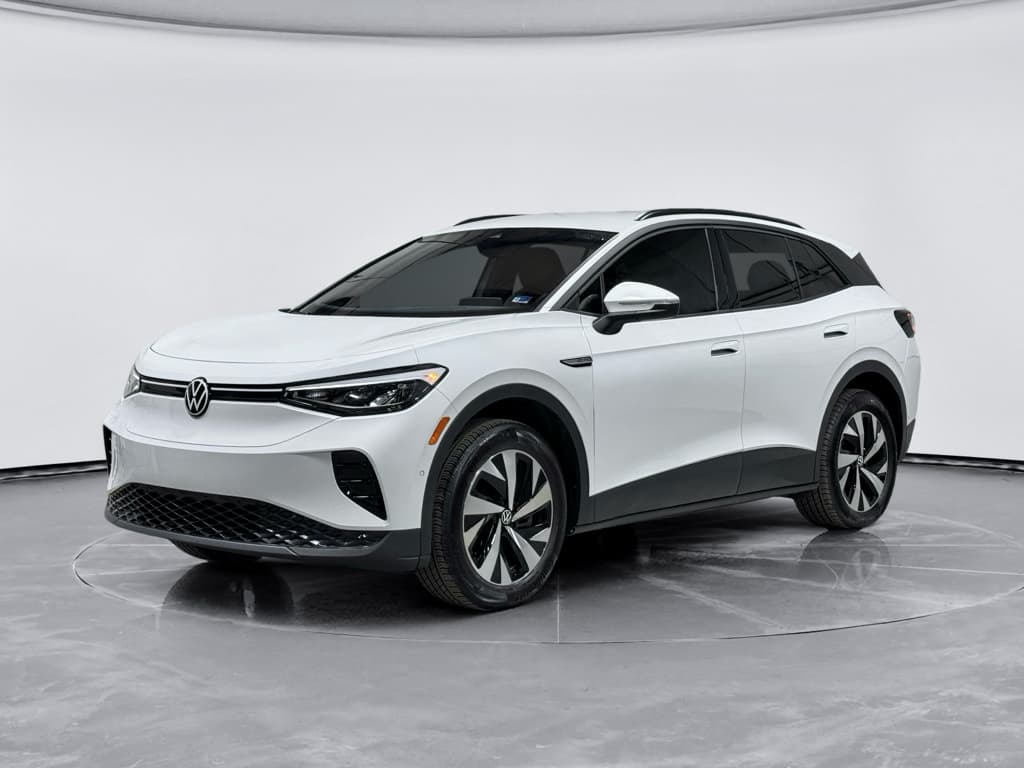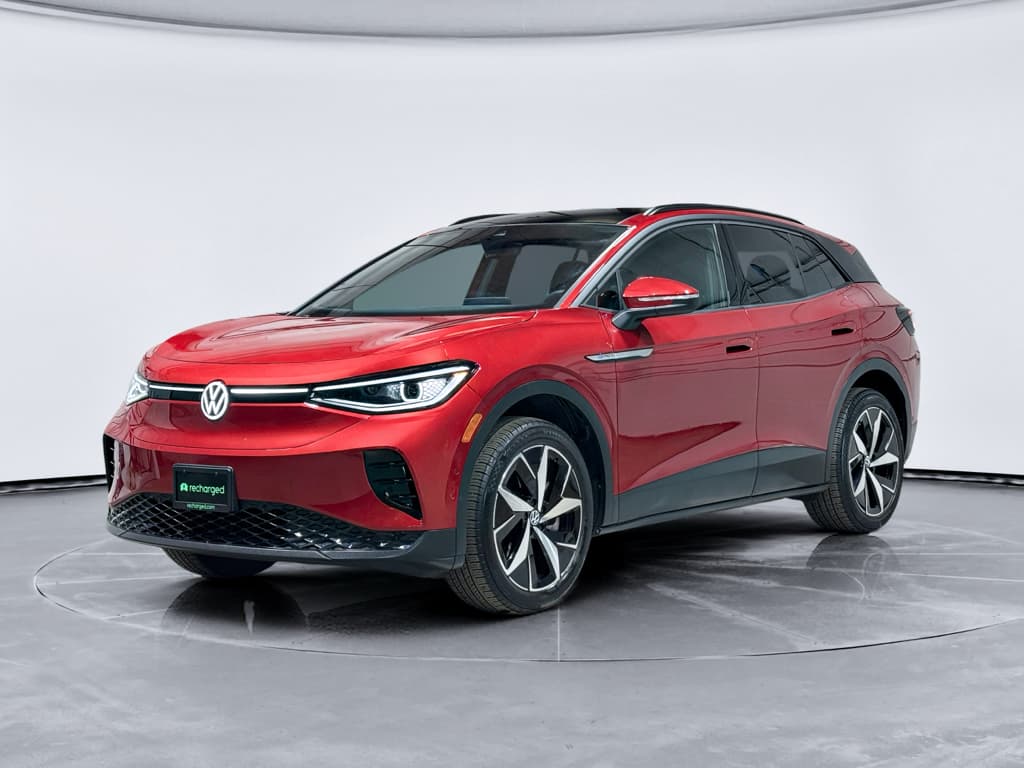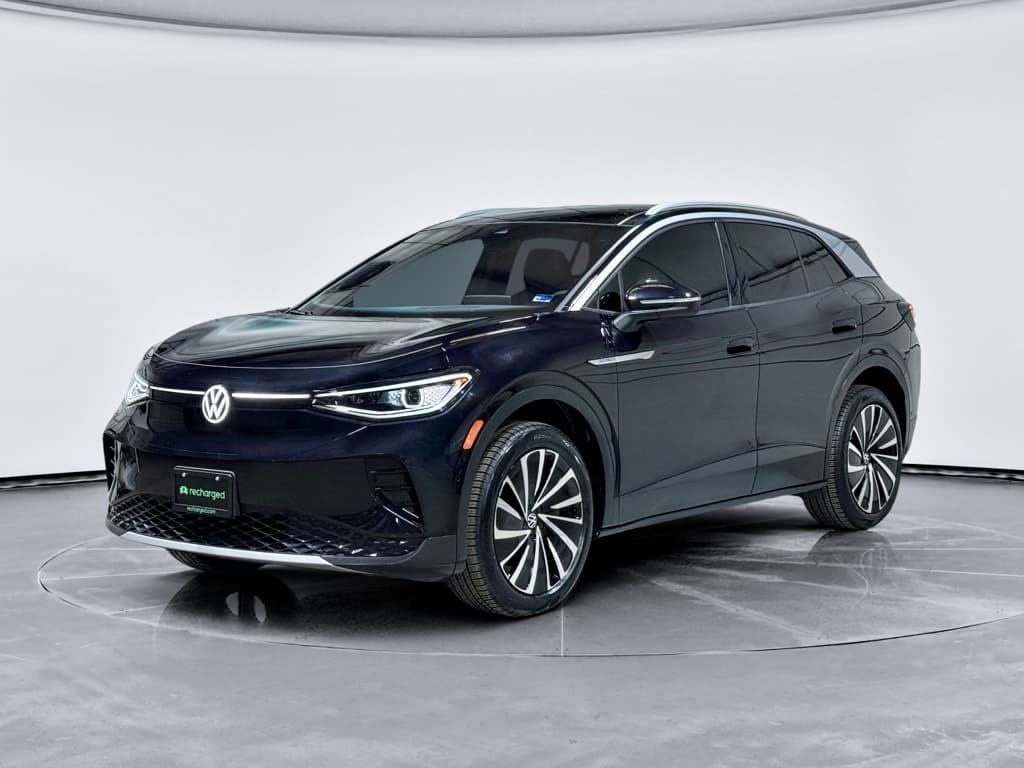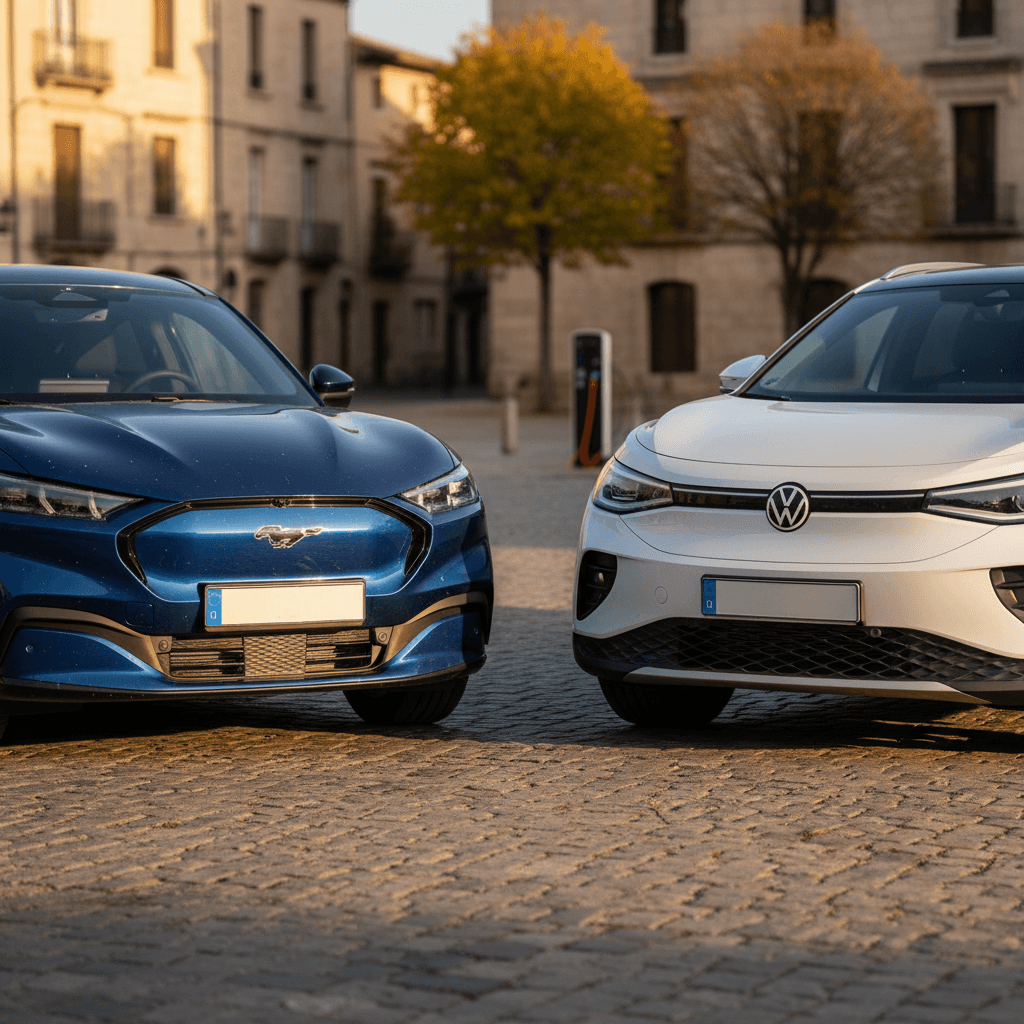
If you’re cross‑shopping the Ford Mustang Mach‑E vs Volkswagen ID.4, you’re already looking in the right segment: practical, compact electric SUVs that don’t feel like science projects. The tougher question is simple to ask but harder to answer: which is better for you, the sportier Mach‑E, or the more laid‑back ID.4?
Short answer
Ford Mustang Mach-E vs VW ID.4: Quick Overview
How the Mach-E and ID.4 differ in character
Same mission, very different personalities
Ford Mustang Mach‑E
Vibe: Sporty electric crossover with Mustang styling and a performance edge.
- Stronger acceleration in most trims
- Sharpened steering and firmer suspension
- Up to ~320 miles of EPA range on newer RWD extended‑range models
- Access to the Tesla Supercharger network in North America (with adapter or native NACS, depending on model year)
Volkswagen ID.4
Vibe: Friendly, understated family EV with a calm driving feel.
- Softer, more relaxed ride
- Simple, upright cabin with good outward visibility
- Max EPA range typically just under 300 miles, depending on year/trim
- Generally better DC fast‑charge curve than early Mach‑E models
Model years matter
Key Specs: Mustang Mach-E vs ID.4 at a Glance
Core spec comparison (typical 2024-ish trims)
Approximate specs for common, mid‑trim configurations you’ll actually find on dealer lots and used marketplaces. Exact numbers vary by model year and option package.
| Spec | Mustang Mach‑E (RWD Extended Range) | VW ID.4 (RWD Pro) |
|---|---|---|
| Battery (usable, approx.) | ~88–91 kWh | ~82 kWh |
| EPA range | Up to ~320 miles | Around 291 miles |
| 0–60 mph | ≈ 5.5 seconds | ≈ 7.5–8.0 seconds |
| Max DC fast charge rate | Up to ~150 kW (newer models may improve) | Around 170 kW on updated models |
| Drive layout options | RWD or AWD; high‑performance GT/Rally trims | RWD or AWD; no true performance variant |
| Towing (when equipped) | Up to ~3,300 lbs (varies by spec) | Up to ~2,700 lbs (varies by spec) |
Representative specs for popular Mach‑E and ID.4 trims, not every configuration.
Always check the specific car
Range & Efficiency: Which EV Goes Farther?
Range is often the first tiebreaker shoppers use when deciding between the Ford Mustang Mach‑E and Volkswagen ID.4. In recent model years, the Mach‑E generally wins on maximum range, while the ID.4 keeps things competitive in more affordable trims.
- Many 2024–2025 Mustang Mach‑E RWD extended‑range models reach roughly 300–320 miles EPA in ideal specs.
- Common ID.4 Pro RWD trims are typically rated in the 260–290 mile range, depending on battery and wheel size.
- AWD versions of both lose some range, but the Mach‑E usually keeps a small edge on comparable trims.
- Real‑world highway efficiency can favor the ID.4 slightly at moderate speeds, thanks to its more conservative power tuning and softer driving character.
Cold‑weather range
If you routinely do longer drives and want to stop as little as possible, a later‑model, extended‑range Mach‑E has the advantage on paper. But range alone doesn’t tell the whole road‑trip story, you also need to look at charging speed and network access.
Charging & Road Trips: Superchargers vs Simplicity
Ford Mustang Mach‑E charging
- Early model years topped out around 150 kW DC fast charging, and some trims taper relatively early in the session.
- Later cars see software updates that improve curves, but the Mach‑E is still mid‑pack for fast‑charging speed.
- Big news: access to Tesla’s Supercharger network in the U.S. and Canada, via adapter on older cars and native NACS ports on newer ones.
- Home charging is straightforward: 240V Level 2 at 32–48 amps will refill overnight in most use cases.
Volkswagen ID.4 charging
- Updated ID.4 models with the larger battery often peak around 170 kW at a DC fast charger, and their charge curve is typically more consistent than early Mach‑E curves.
- On non‑Tesla networks (Electrify America, etc.), many owners find the ID.4 spends less time per stop than comparable Mach‑E trims.
- VW is also rolling into the North American Charging Standard (NACS), meaning Supercharger access is coming or already arriving for later model years with an adapter or native port.
- Home charging behavior is similar to the Mach‑E: Level 2 at home is ideal.
Road‑trip priority? Look at route, not just peak kW
Performance & Driving Feel: Sporty vs Relaxed
On paper, these are both compact electric crossovers. On the road, they feel like they were tuned for very different drivers. Here, the Mustang badge is not just for show.
How they drive
Choosing the personality that suits you
Ford Mustang Mach‑E
- Quicker in most trims, with GT and Rally models offering genuinely strong acceleration.
- Steering feels sharper and more immediate.
- Suspension is firmer; you feel more of the road but it also feels more engaging.
- Available performance‑oriented drive modes that wake the car up even more.
If you like the idea of an EV that still feels like a driver’s car, the Mach‑E is the clear winner.
Volkswagen ID.4
- Softer suspension with a calmer, more relaxed ride.
- Acceleration is perfectly adequate for daily use, but not thrilling.
- Steering is lighter and less sporty, optimized for easy commuting.
- Noise isolation is good, and many owners praise its sense of calm.
If you’re moving from a traditional compact crossover and just want an easygoing EV, the ID.4 is more familiar.
“If you want the EV that makes you smile merging onto the freeway, pick the Mach‑E; if you want the EV that makes your passengers the happiest, the ID.4 has the edge.”
Space, Comfort & Practicality for Daily Life
Both SUVs are sized right in the sweet spot for families: two rows, hatchback practicality, and enough room for kids and a Costco run. But they allocate that space a little differently.
- Cargo space: Numbers are close, but the ID.4’s more traditional SUV roofline and boxier rear make it feel easier to load bulky items. The Mach‑E fights back with a handy front trunk (frunk) on many trims.
- Rear seat comfort: Adults generally find the ID.4’s rear bench slightly more upright and comfortable on long trips, while the Mach‑E’s sloping roof and sportier seating position can feel a bit tighter for tall passengers.
- Ride quality: The ID.4 is tuned softer; broken pavement and expansion joints are handled with more cushion. The Mach‑E is firmer and more controlled, which drivers may love and some passengers may not.
- Kid‑duty: Both handle car seats, school runs, and strollers well. The ID.4’s simpler cabin layout and more conventional door openings are a small but real advantage for daily family use.
Tech, Infotainment & Driver Assistance
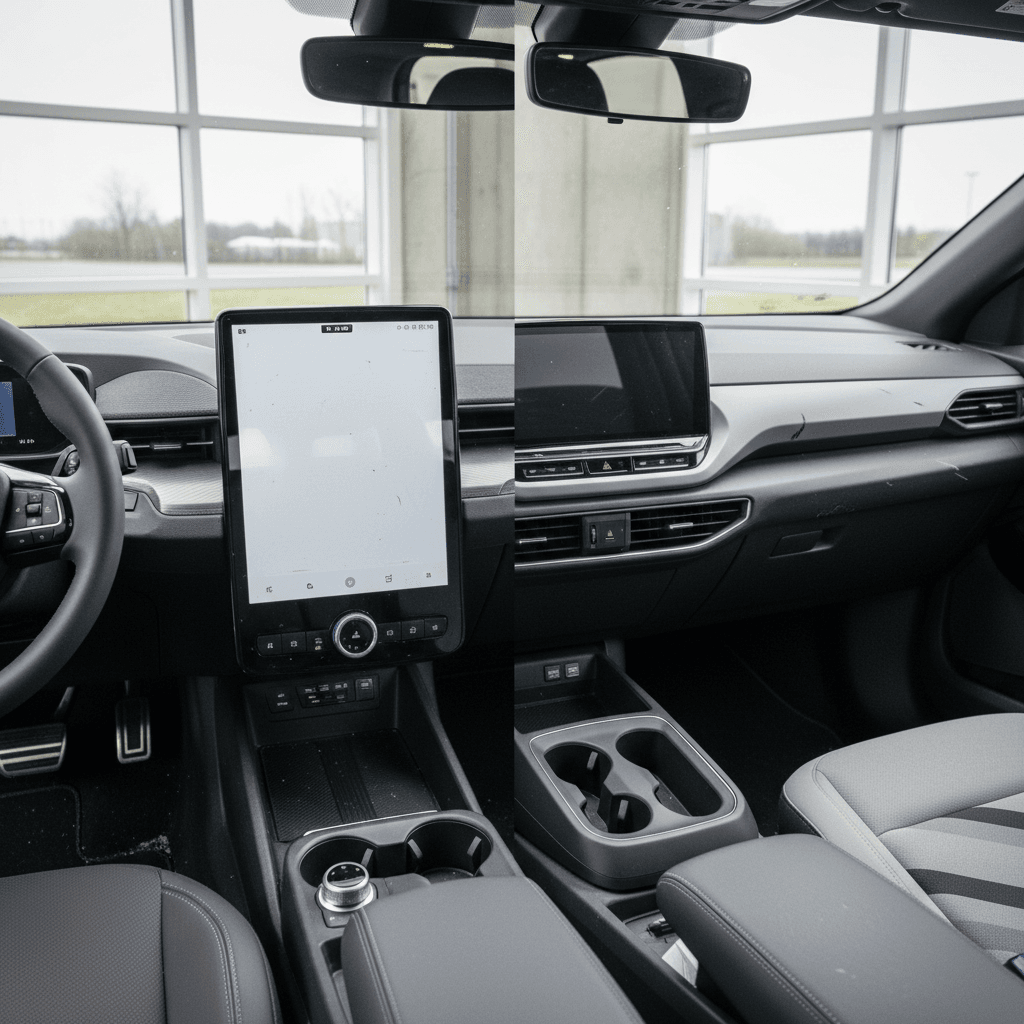
The Mach‑E and ID.4 both rely heavily on touchscreens and software‑defined features, but Ford and Volkswagen took different paths here, and it shows in owner satisfaction.
Ford Mustang Mach‑E tech
- Large, vertically oriented 15.5‑inch center touchscreen on most trims, with a separate digital driver display.
- Ford’s software has matured; menus are fairly logical, and voice control is usable once you learn the prompts.
- Available BlueCruise (name varies slightly by model year) offers hands‑free highway driving on mapped roads in many newer models, one of the best semi‑autonomous systems from a legacy brand.
- Over‑the‑air (OTA) updates have made real improvements to charging behavior, features, and interface over time.
Volkswagen ID.4 tech
- Earlier model years had smaller screens and more lag; later updates brought a larger central display and faster hardware, but experiences still vary by year.
- Owners frequently criticize VW’s haptic touch controls and some confusing menu layouts.
- Driver‑assist systems like Travel Assist work reasonably well, but they’re not as polished as the best hands‑free systems.
- OTA capability exists, but rollouts have been slower and less transformative than Ford’s.
Tech winner: Mach‑E for most shoppers
Reliability, Ownership Experience & Costs
Neither of these EVs is trouble‑free, and long‑term data is still developing, but a few themes have emerged from owner reports and early reliability surveys.
Living with each EV day to day
What owners tend to praise, and complain about
Mustang Mach‑E ownership notes
- Software bugs were more common in early years, but OTA updates have resolved many pain points.
- Battery and drivetrain issues have been relatively limited compared with some first‑generation EVs.
- Dealer experience varies widely; some Ford stores are now genuinely EV‑savvy, others less so.
- Insurance can be on the higher side due to performance and parts costs; shop around.
Volkswagen ID.4 ownership notes
- Build quality feels solid and substantial to many owners, with a “German car” vibe.
- Early software frustrations (infotainment glitches, lag) are a common complaint.
- Some owners report more frequent dealer visits for minor electrical or software issues than they’d like.
- Transaction prices, especially used, can be very aggressive, making the ID.4 a value play if you find a good example.
Market traction and value signals
Budget check: new vs used
How These Two Stack Up as Used EVs
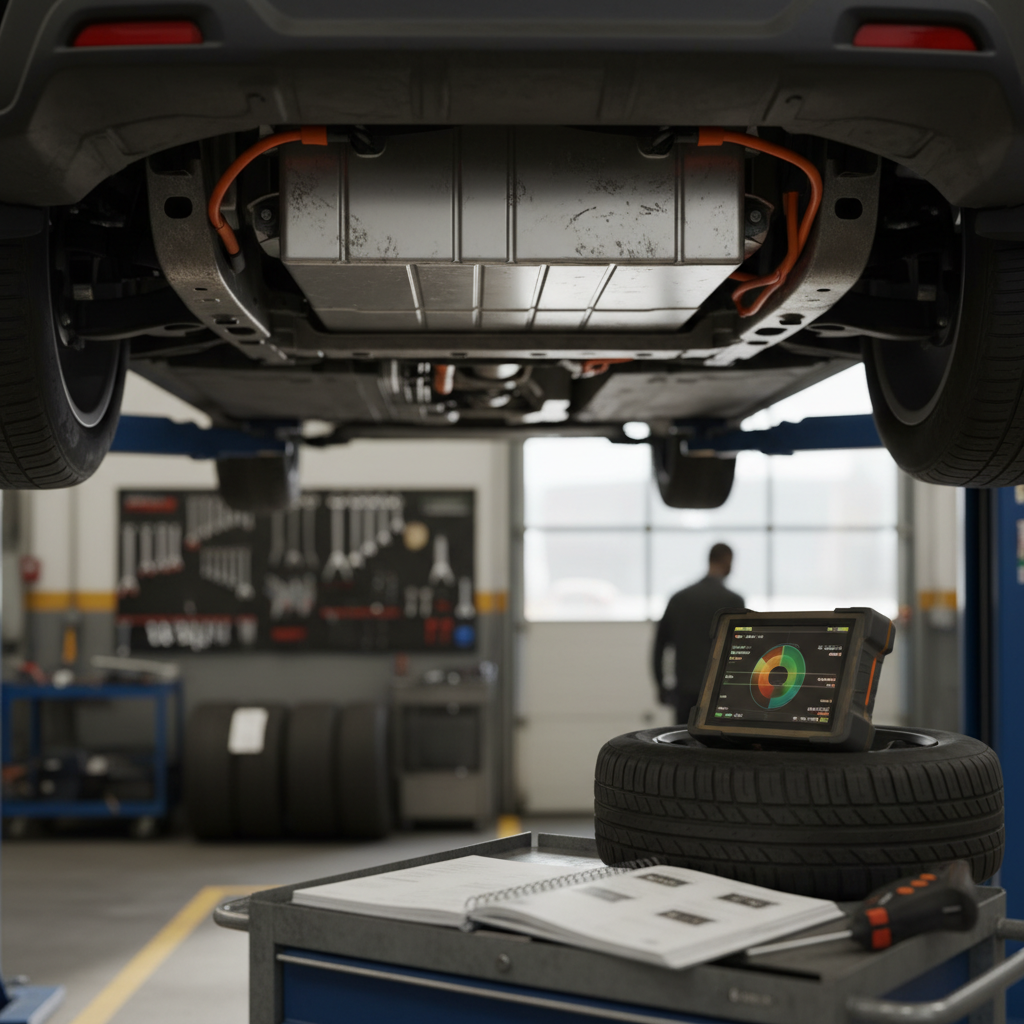
In 2026, you’re likely looking at a 2–4‑year‑old Mach‑E or ID.4 with mileage somewhere between 15,000 and 60,000. That’s right in the zone where battery health, charging behavior, and software history matter more than original window sticker specs.
Key things to check on a used Mach‑E or ID.4
1. Battery health & DC fast‑charge history
Ask for a <strong>battery health assessment</strong> and pay close attention to usable capacity. Frequent fast‑charging isn’t necessarily a deal‑breaker, but you want reassurance the pack is still in good shape.
2. Software & recall status
Both models have had important software updates and occasional recalls. Confirm the car is <strong>up to date on campaigns</strong> so you’re not inheriting someone else’s unfinished business.
3. Charging hardware and cables
Make sure the original Level 1/Level 2 cable is included, and that the charge port door, latches, and seals operate smoothly. If the car is supposed to have a NACS adapter or updated port, verify it’s actually there.
4. Tires and brakes
EVs are heavy and hard on tires. Inspect tread depth, edge wear, and confirm recent brake service, especially if the car has seen a lot of highway use.
5. Interior wear and rattles
Take a long, quiet test drive over rough pavement. Listen for rattles and squeaks, turn off the radio, and check all seats and interior surfaces for premature wear.
6. Driver‑assist operation
Test adaptive cruise, lane‑keeping, parking aids, and, on Mach‑E models so equipped, BlueCruise. You want these systems to feel smooth and confidence‑inspiring, not twitchy or inconsistent.
How Recharged helps
Ready to find your next EV?
Browse VehiclesDecision Guide: Which EV Is Better for You?
There is no single winner in the “Ford Mustang Mach‑E vs Volkswagen ID.4” debate. Instead, each model lines up better for different priorities. Use this quick guide to match the car to your life.
Who should pick which EV?
Match your priorities to the right SUV
Choose the Mustang Mach‑E if…
- You want sporty acceleration and sharper handling.
- You care about design and like the idea of a Mustang‑inspired EV.
- Access to the Tesla Supercharger network is a big factor for your road‑trip plans.
- You value a big, modern touchscreen and strong driver‑assist tech (BlueCruise on supported trims).
- You’re ok with a slightly firmer ride in exchange for better driving dynamics.
Choose the Volkswagen ID.4 if…
- Your top priority is a comfortable, quiet family hauler.
- You prefer a more traditional SUV feel with an upright seating position.
- You want a good deal and are willing to trade some performance and flash for lower used prices.
- You lean on non‑Tesla CCS fast‑charging networks that already work well along your routes.
- You’d rather your EV blend in than stand out.
Don’t ignore the test drive
If you crave an EV with personality, performance, and first‑class tech, the Ford Mustang Mach‑E is, on balance, the better choice. If your priorities are comfort, value, and a more traditional crossover experience, the Volkswagen ID.4 still deserves a serious look, especially in the used market where prices can be very compelling. Either way, focusing on battery health, charging behavior, and how the car fits your daily life will matter more than any spec sheet victory.