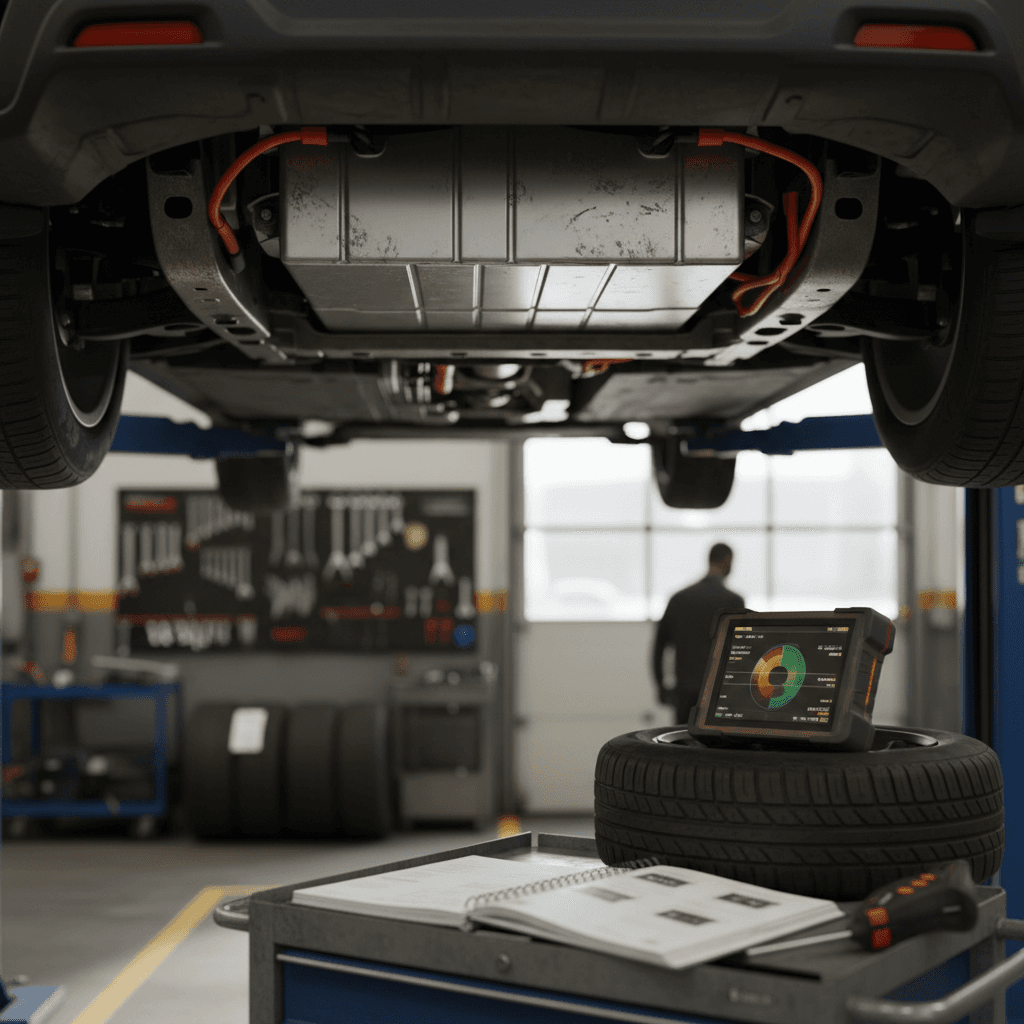
If you drive, or are shopping for, a Subaru Solterra, the first big question is almost always the battery. You want to know whether the **Subaru Solterra battery warranty and what it covers** will actually protect you from an expensive pack failure or just the fine print. Let’s walk through, in plain English, how the warranty works, what’s covered vs. not, and what it means if you’re looking at a used Solterra in 2026 and beyond.
Quick answer
Subaru Solterra Battery Warranty at a Glance
Core Solterra Battery Warranty Terms (U.S.)
Subaru doesn’t market the Solterra’s EV warranty as aggressively as some rivals, so it can be hard to decode what’s actually included. The good news: its **battery warranty length is right in line with most mainstream EVs**. The nuance hides in what counts as a defect, how capacity loss is handled, and how other Solterra warranties interact with the battery coverage over time.
How Long the Subaru Solterra Battery Warranty Lasts
For U.S.‑market Solterras, Subaru wraps battery protection into what’s often listed as the **“Battery and Electric Drive Unit Limited Warranty.”** In practical terms, here’s what that means for you:
- Time limit: 8 years from the original in‑service date (when the vehicle was first sold or leased, not when you buy it used).
- Mileage limit: 100,000 miles on the odometer, whichever comes first with the time limit.
- Applies to: The high‑voltage traction battery pack and usually closely related components (often covered as part of the EV system).
- Coverage territory: Vehicles sold new by Subaru of America and serviced by an authorized Subaru retailer in the U.S.
Watch the in‑service date
Model‑year changes (2023, 2024, 2025) haven’t fundamentally altered the **8‑year/100,000‑mile** high‑voltage battery warranty structure so far. What can change year to year are the details in the booklet, like how explicitly Subaru states a capacity percentage and exactly which components are lumped under the EV system warranty.
What the Solterra Battery Warranty Actually Covers
Car companies rarely spell this out in plain language, so let’s do it here. The Solterra battery warranty is designed to pick up the tab when something goes wrong with the **high‑voltage battery due to a defect**, not just normal aging. In practice, that typically includes:
Core Coverage Areas for the Solterra High‑Voltage Battery
These are the types of problems the battery warranty is meant to address when caused by defects, not abuse.
Internal cell failures
Pack‑level faults
Battery management electronics
When a warranted failure happens, Subaru’s solution may be to **repair part of the pack, replace modules, or in more serious cases, replace the entire battery pack**. Automakers increasingly favor partial repairs when possible, but if a defect is widespread or can’t be isolated, a pack replacement isn’t off the table.
Good news for second owners
What Isn’t Covered (or Is Limited)
Every EV battery warranty, including Subaru’s, comes with a list of exclusions. Some are obvious; others surprise first‑time EV buyers. Here’s where owners most often bump into the fine print.
Common Subaru Solterra Battery Warranty Exclusions
Abuse and improper use
Damage from racing, off‑roading beyond the vehicle’s design, ignoring severe warning lights, or continuing to drive with known faults can be grounds for denial.
Unauthorized modifications
Aftermarket battery heaters, DIY high‑voltage repairs, or tuning that alters battery management software can void coverage for related problems.
Water and collision damage
Flood vehicles, cars with underbody impacts to the pack, or collision‑related damage are usually handled through insurance, not warranty.
Normal capacity loss within spec
All lithium‑ion packs lose some range over time. Subaru only steps in if that loss exceeds the capacity floor specified in its warranty documentation.
12‑volt battery issues
The small 12‑volt battery that powers accessories is often covered under a basic new‑vehicle term (sometimes as short as 1 year), not the 8‑year EV battery warranty.
Don’t ignore warning lights
Battery Degradation: How Much Capacity Loss Is Covered?
The question every EV owner asks: **“How much range loss is Subaru on the hook for?”** The Solterra’s warranty, like most modern EVs, builds in a **capacity guarantee**, a promise that, under normal use, the battery won’t degrade below a certain percentage of its original usable capacity during the 8‑year/100,000‑mile window.
Typical Solterra capacity promise
Subaru’s documentation and dealer guidance generally position the Solterra’s capacity warranty around a **70–75% minimum capacity** over the 8‑year/100,000‑mile period. In plain terms, if your pack drops well below that threshold with normal driving and charging, you may have a valid warranty claim.
Remember: Subaru (and Toyota, which co‑developed the pack for the bZ4X twin) built in a large buffer of hidden battery capacity. That means your day‑to‑day range display can shift with driving style, temperature, and software updates, even when the underlying pack is healthy.
What counts as “normal” degradation?
Across the EV world, **single‑digit percentage loss in the first 3–5 years** is considered normal with reasonable charging habits. The Solterra’s conservative battery management, large buffer, modest fast‑charge rates, is designed to keep degradation tame, even if it sacrifices headline range and charging speed.
If your real‑world range is down slightly from new, that alone doesn’t equal a warranty case. Subaru will look for capacity below its threshold after adjusting for weather, driving style, and software.
How owners typically trigger a capacity claim
Other Subaru Solterra Warranties You Should Know About
The battery is the expensive star of the show, but it doesn’t live in a vacuum. When you’re evaluating a Solterra, new or used, it’s smart to look at how the **battery warranty fits into the rest of Subaru’s coverage.**
Typical U.S. Warranty Coverage for the Subaru Solterra
Exact terms can vary by model year and region, but this gives you the broad picture for U.S.‑market Solterras.
| Coverage type | What it usually covers | Typical term |
|---|---|---|
| New Vehicle Limited (bumper‑to‑bumper) | Most components on the car other than wear items and separately listed exclusions | 3 years / 36,000 miles |
| Powertrain Limited | Electric drive units, reduction gears, and related components | 5 years / 60,000 miles |
| Battery & Electric Drive Unit | High‑voltage traction battery and closely related EV components | 8 years / 100,000 miles |
| Corrosion (rust perforation) | Rust‑through of body sheet metal (not surface corrosion) | Often 5+ years / unlimited miles |
| 12‑volt battery | Accessory battery for electronics, locks, etc. | Commonly around 1–3 years, depending on policy |
Always verify specific coverage for the VIN you’re considering with a Subaru dealer or the original warranty booklet.
Regional differences
Real‑World Examples: Warranty Fix vs. Normal Wear
The line between “covered failure” and “normal aging” can be murky. Here are some realistic scenarios to help you gauge where Subaru is more likely to say yes, or no, to a battery warranty claim.
Is It Likely Covered? Three Common Scenarios
These are simplified examples, but they mirror patterns we’ve seen across early Solterras and similar EVs.
Likely covered: sudden pack fault
Maybe covered: big, early capacity drop
Unlikely covered: mild range loss at high miles
Tips to Protect Your Solterra Battery, and Its Warranty
The best warranty claim is the one you never need to make. Subaru and independent EV service shops alike give similar advice on how to keep a Solterra battery happy for the long haul.
Everyday Habits That Help Your Solterra Battery Last
Stay in the 20–80% zone when you can
For daily driving, use charge limits so you’re not topping off to 100% every night. Save full charges for road trips or when you truly need the range.
Treat DC fast charging as a tool, not a lifestyle
Fast charging on road trips is fine. Using high‑power DC fast chargers multiple times a week as your primary charging source will generate more heat and wear over time.
Mind temperature extremes
Whenever possible, park in a garage or shaded area. Don’t leave the pack hot and full for days, and give the car a chance to precondition in winter before long drives.
Keep software up to date
Subaru and Toyota have both pushed software changes to improve range estimates and charging behavior. Staying current can help both performance and diagnostics.
Document issues early
If you notice sudden range loss, repeated charging errors, or EV‑system alerts, get them on record with a dealer sooner rather than later. That paper trail helps if things worsen.
Follow the maintenance schedule
Coolant, gear oil, and inspections might not seem battery‑related, but thermal management is a big piece of pack longevity, and warranty compliance.
Home charging is your friend
Buying a Used Solterra? Battery Warranty Checklist
Used Solterras are finally showing up in meaningful numbers, and that’s where the **battery warranty can either be a safety net or a question mark.** Here’s how to quickly size up coverage on a car you’re considering.
5 Things to Check Before You Buy a Used Solterra
1. Confirm the in‑service date
Ask the seller or a Subaru dealer to pull the original in‑service date. Subtract that from today to see how many of the 8 years are left, and compare current mileage to the 100,000‑mile cap.
2. Check for salvage or title brands
A branded or salvage title can void remaining factory warranty, including battery coverage. Always run a title history report.
3. Ask for warranty repair history
A dealer can often see whether the car has had battery or EV‑system warranty repairs. Occasional fixes aren’t necessarily bad; they can mean issues were already addressed on Subaru’s dime.
4. Look at real‑world range, not just EPA numbers
On a full charge in moderate weather, ask what range the owner typically sees at highway speeds. Large outliers, especially on low‑mileage cars, warrant more digging.
5. Get an independent battery health report
When you buy through <strong>Recharged</strong>, every Solterra comes with a <strong>Recharged Score Report</strong> that analyzes pack health, charging behavior, and real‑world range. It’s far more meaningful than just an odometer reading or the dash guess.
How Recharged helps de‑risk a used Solterra
- A Recharged Score with verified battery health insights
- Clear info about remaining factory warranty
- Expert EV advisors to explain capacity, range, and charging in normal‑person language
- Financing, trade‑in options, and nationwide delivery, all built around EV ownership
Ready to find your next EV?
Browse VehiclesFAQ: Subaru Solterra Battery Warranty
Subaru Solterra Battery Warranty: Frequently Asked Questions
The Bottom Line on the Solterra Battery Warranty
The **Subaru Solterra battery warranty and what it covers** lines up with the broader EV market: 8 years or 100,000 miles of protection against defective battery components, plus a capacity promise that’s meant to keep extreme degradation in check. It will not freeze your range in time or cover every drop in miles, but it does give you real backup if your pack suffers an abnormal failure while it’s still under warranty.
If you’re shopping used, the smart move is to treat the battery warranty as one piece of a bigger picture. Look at in‑service dates, miles, title history, and, most importantly, independent battery health data. That’s exactly what you get when you buy a used Solterra through Recharged: a Recharged Score Report, EV‑savvy guidance on range and charging, and a transparent view of how much warranty is left. With that information in hand, a Solterra can be a compelling all‑wheel‑drive EV, not a leap of faith on a very expensive battery you can’t see.