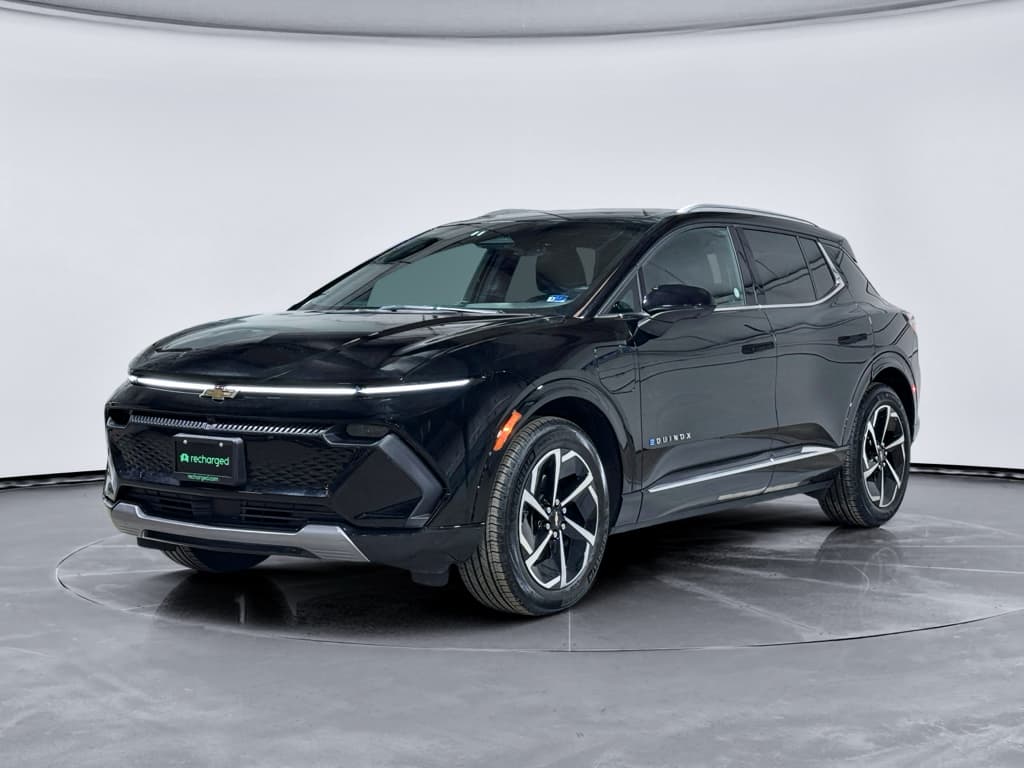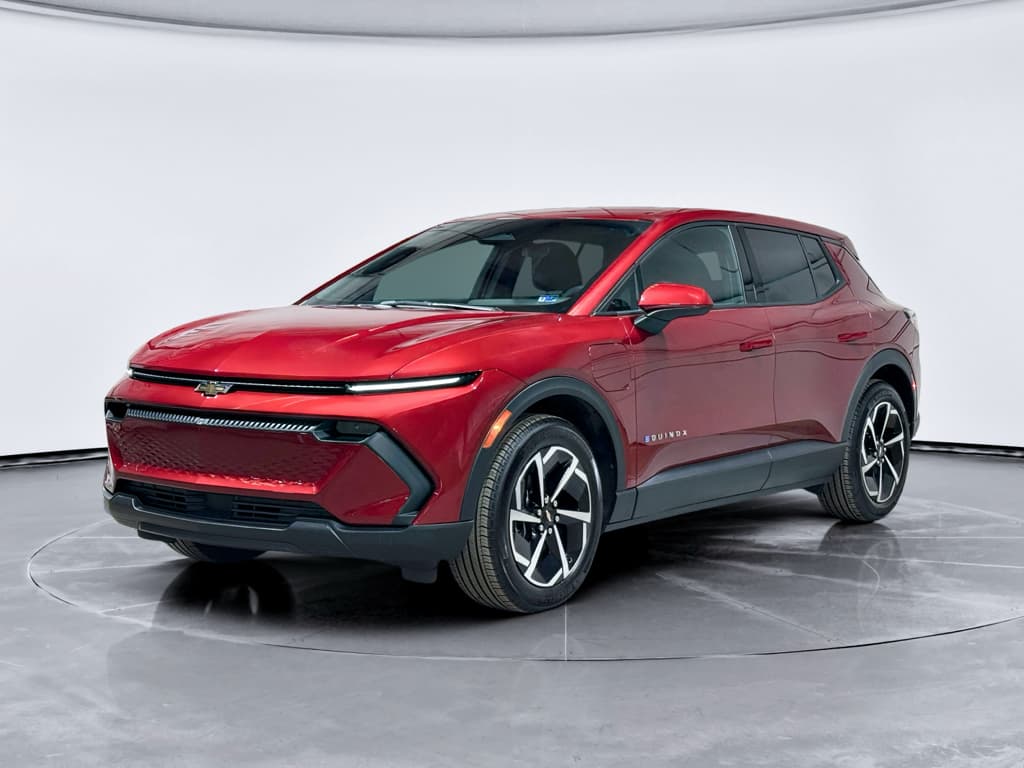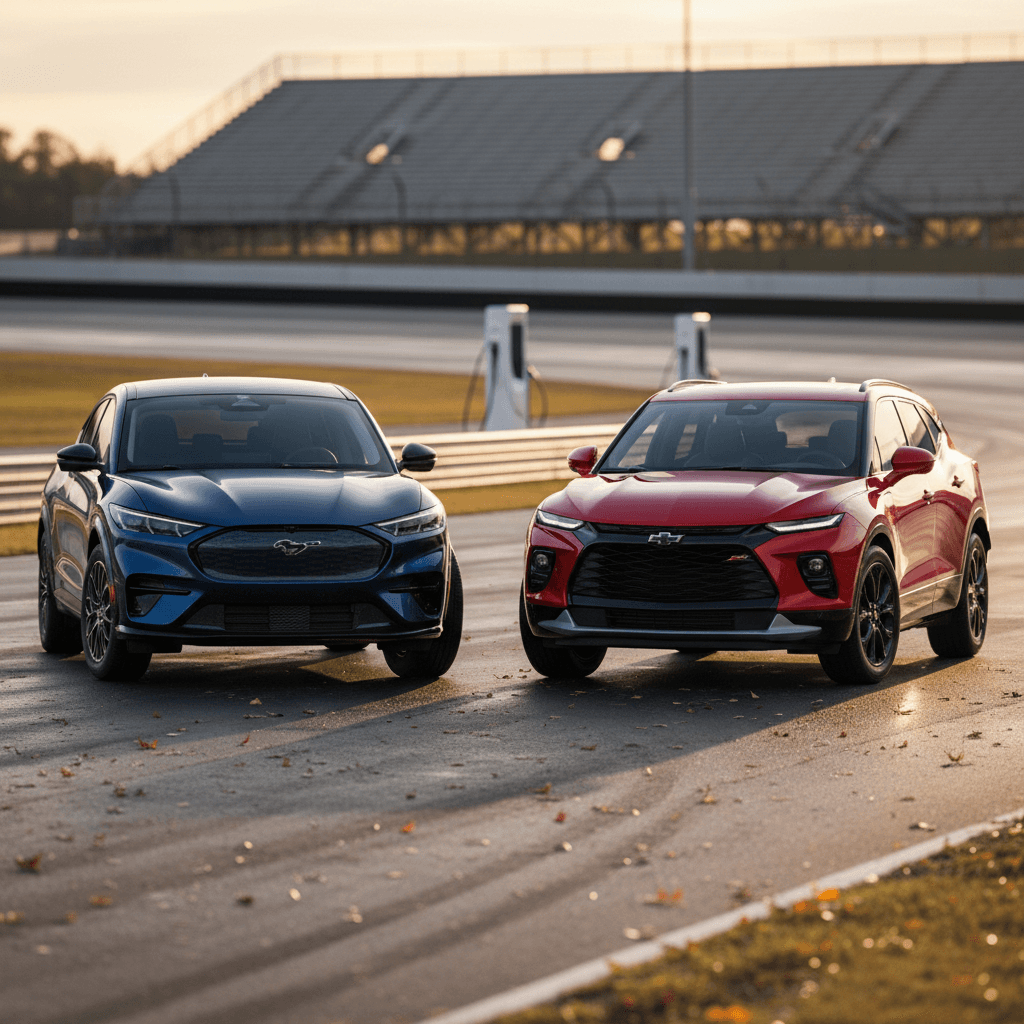
If you’re cross-shopping the Ford Mustang Mach-E vs Chevy Blazer EV, you’re already looking in the right neighborhood: stylish, quick, all-electric SUVs with room for the family and enough range for real road trips. But these two don’t aim at exactly the same driver, and the differences start as soon as you look at the window sticker.
At a glance
Ford Mustang Mach-E vs Chevy Blazer EV: Who Are These For?
Ford Mustang Mach-E
- Size & vibe: Compact-to-midsize crossover with sporty Mustang cues and hatchback practicality.
- Best for: Daily commuters, first-time EV buyers, and drivers who want performance without luxury-SUV pricing.
- Strengths: Strong efficiency, competitive range, wireless Apple CarPlay/Android Auto, and broad availability on the used market.
Chevy Blazer EV
- Size & vibe: Larger two-row SUV with a muscular stance and more traditional SUV proportions.
- Best for: Families who want extra space, buyers drawn to bold styling, and drivers who value GM’s Super Cruise.
- Strengths: Bigger cabin, strong range in RS trims, powerful SS performance model, mature GM Ultium platform.
Used-market edge
Pricing & Trims: Where Each SUV Fits in Your Budget
2025 Ford Mustang Mach-E vs 2025 Chevy Blazer EV Pricing Snapshot
Approximate starting MSRPs for key trims before incentives or destination charges. Always confirm current pricing locally.
| Model | Trim example | Drive | Approx. new starting price | Positioning |
|---|---|---|---|---|
| Mustang Mach-E | Select | RWD | ~$40,000 | Value entry, good range, strong features |
| Mustang Mach-E | Premium ER | RWD or AWD | Mid–upper $40Ks | Longer range, more comfort and tech |
| Mustang Mach-E | GT | AWD | Low–mid $50Ks | High performance, still under many luxury rivals |
| Blazer EV | LT | FWD or AWD | Mid–high $40Ks | More expensive starting point than Mach-E |
| Blazer EV | RS | RWD or AWD | Low–mid $50Ks | Long-range and style-focused volume trim |
| Blazer EV | SS | AWD | $60K+ | High-performance, near-luxury pricing |
Pricing varies by region and options; this table is for comparison only.
Ford has kept the Mach-E’s pricing closer to mainstream family crossovers. A well-equipped Select or Premium often stickers thousands less than a comparable Blazer EV LT or RS, and incentives can widen that gap. Chevy positions the Blazer EV upmarket, especially the RS and SS, pushing into entry-luxury territory.
Budget check
Range, Battery & Efficiency: How Far Will You Really Go?
Headline Range & Efficiency Numbers
On paper, the Blazer EV RS slightly edges out the Mach-E for maximum EPA range, roughly 334 miles for the Blazer vs about 320 miles for the Mach-E’s extended-range rear-drive configuration. In the real world, that difference is small enough that weather, speed, and elevation matter more than the spec sheet.
- Most Mach-E trims land between roughly 240–320 miles of EPA range, depending on battery size and drivetrain.
- Blazer EV trims generally range from the high 200s into the low 300s, with RS models near the top of the lineup for range.
- Because the Blazer EV is larger and heavier, its efficiency (MPGe) is typically lower than the Mach-E’s, which can mean higher charging costs over time.
Daily-driving reality
Performance & Driving Feel: Electric Mustang vs Electric SS
How They Drive: Character, Not Just Numbers
Both are quick. They just go about it differently.
Ford Mustang Mach-E
- Power: From around the mid-200 hp range in base trims up to about 480 hp in GT models.
- 0–60 mph: As quick as the low-3-second range in GT Performance trims.
- Feel: More "sporty hatchback" than tall SUV, especially in the GT and Rally models, with responsive steering and playful balance.
Chevy Blazer EV
- Power: Up to about 615 hp in the SS, with huge torque from dual motors.
- 0–60 mph: Right around the mid-3-second range in SS trim, still ferociously quick.
- Feel: Feels like a higher-riding, muscular SUV, stable, heavy, and confident at speed more than flickable.
If you want something that drives like an electric hot hatch with a Mustang badge, the Mach-E GT is your ticket. It’s quick, eager to turn, and easy to place on a back road. The Blazer EV SS, by contrast, feels like a big-muscle SUV: loads of power, huge grip, and a more substantial, planted feel. Both are wildly quick for family haulers; you’re choosing flavor, not raw speed.
Everyday trims still move
Charging Experience & Road-Trip Confidence
Charging is where the ownership experience really separates the good EVs from the great ones. Both the Mach-E and Blazer EV offer DC fast charging and solid onboard AC charging for home use, but the ecosystems around them are different.
- DC fast charging speed: Long-range Mach-E models can charge at up to about 150 kW; the Blazer EV’s Ultium platform supports similarly competitive peak rates, especially on higher trims.
- Tesla Supercharger access: Newer Mach-E models can use adapters to plug into Tesla Superchargers, and Ford is rolling NACS compatibility into future hardware. That instantly opens up thousands of reliable fast chargers for road trips.
- GM’s Ultium network story: Chevy leans on a mix of third-party networks and partnerships. Coverage is improving, but in many regions, Ford’s access to the Tesla network is simply easier to live with right now.
- Home charging: Both SUVs are happy on a 240V Level 2 charger in your garage and will typically go from low battery to full overnight.
Plan your charger with the car
Interior Space, Comfort & Practicality
Space & Cargo: Mach-E vs Blazer EV
Key interior and cargo differences that matter to families and road-trippers.
| Category | Mustang Mach-E | Blazer EV |
|---|---|---|
| Passenger room | Comfortable for four adults, five in a pinch | Roomier back seat; more shoulder and legroom overall |
| Cargo behind 2nd row | About 29–30 cu ft | Roughly the same ballpark, high 20s |
| Max cargo (seats folded) | Around 59–60 cu ft | Around 59 cu ft as well |
| Front trunk (frunk) | Yes – extra storage up front | No frunk |
| Overall feel | Sporty, slightly cozier cabin | Airier, more traditional SUV feel |
Exact dimensions vary by model year and trim; this compares typical configurations.
On paper, total cargo volumes are surprisingly similar. In real life, the Blazer EV simply feels larger. Adults in the second row enjoy more stretch-out space, and if you routinely carry tall passengers or rear-facing car seats, you’ll notice the difference. The Mach-E fights back with a useful frunk that’s perfect for charging cables, muddy gear, or a couple of grocery bags you don’t want rolling around.
Family-usage note
Tech, Infotainment & Driver Assistance
Infotainment & Connectivity
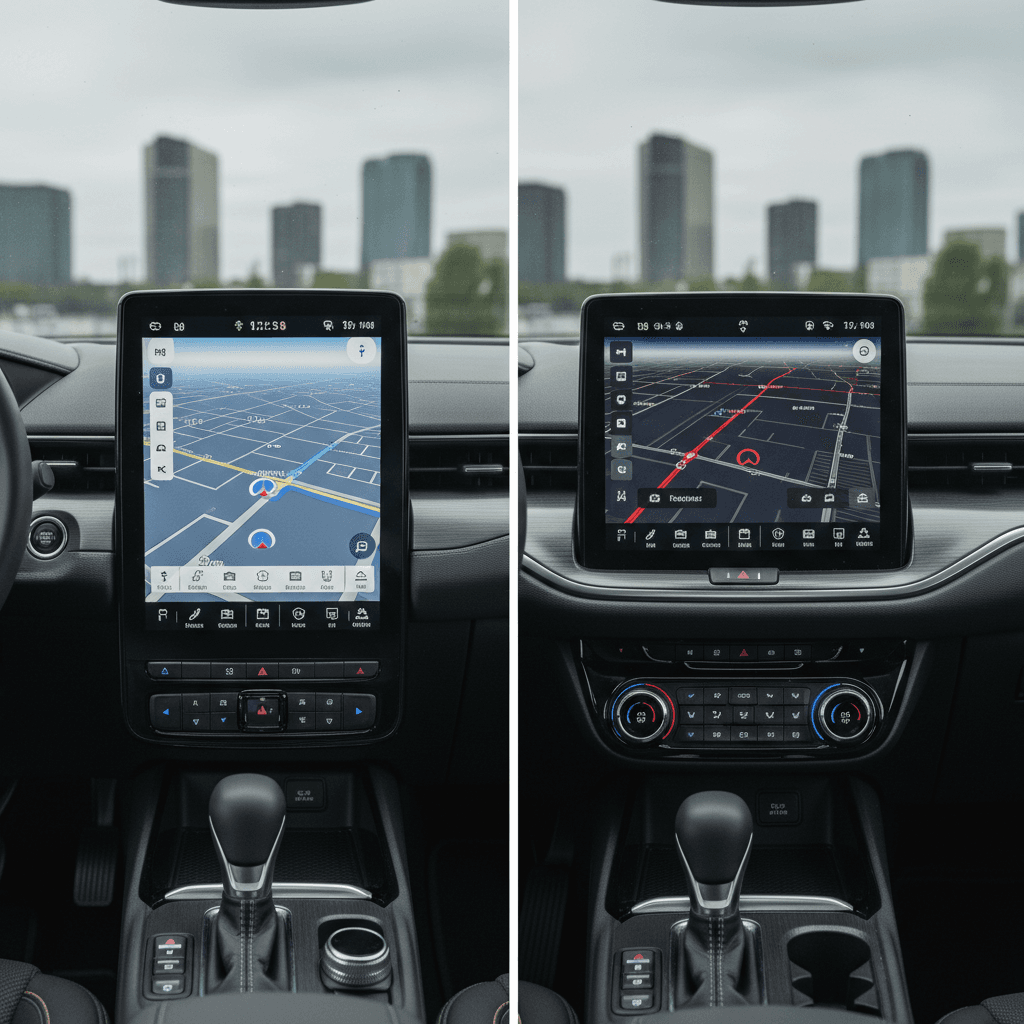
- Mach-E: 15.5-inch portrait touchscreen, digital cluster, and crucially, wireless Apple CarPlay and Android Auto. If you live out of your phone’s maps, music, and podcasts, this matters.
- Blazer EV: 17.7-inch landscape touchscreen with GM’s latest software and a sleek UI, but no Apple CarPlay or Android Auto. Chevy is betting you’ll accept its native apps and integrated Google services instead.
Driver Assistance
- Ford BlueCruise: Hands-free driving on designated highways, with over-the-air updates expanding coverage and features over time.
- GM Super Cruise: One of the most polished systems available, with hands-free lane changes and huge mapped-highway coverage. Especially strong on longer interstate slogs.
CarPlay dealbreaker?
Ownership Costs, Reliability & Resale (Especially Used)
Both Ford and Chevy cover their EV batteries with long warranties, typically 8 years or 100,000 miles on high-voltage components. That’s the safety net most used shoppers are looking for. Where things diverge is market maturity: the Mach-E has several model years under its belt, and Blazer EV production has had some growing pains and pauses as Chevy irons out software and charging issues.
Cost & Ownership Factors to Weigh
Beyond the sticker price, here’s what makes a difference over 5–8 years.
Depreciation & used pricing
Mach-E values have settled into a predictable used market with solid supply. The Blazer EV is newer and rarer; it may see steeper early depreciation but fewer choices if you’re buying used.
Service & support
Ford and Chevy both have large dealer networks, but EV-experienced technicians can vary store to store. Check for dealerships with proven EV service capability in your area.
Energy & maintenance costs
The Mach-E’s superior efficiency can shave meaningful dollars off your annual charging bill, especially if you road trip often. Both avoid oil changes and have minimal routine maintenance compared with gas SUVs.
Why Recharged focuses on battery health
Which EV SUV Should You Buy, Mach-E or Blazer EV?
Quick Recommendations by Buyer Type
Match your priorities to the SUV that fits you best.
Choose the Mustang Mach-E if…
- You want a sporty, fun-to-drive EV that still works for school runs and Costco trips.
- Your budget is tight and you’re value-conscious, especially on the used market.
- Wireless Apple CarPlay/Android Auto and a friendly tech experience matter a lot to you.
- You like the idea of tapping into the Tesla Supercharger network via adapters and NACS support.
Choose the Blazer EV if…
- You regularly fill the back seat with adults or teens and want more stretch-out space.
- You love bold styling and the SS performance vibe, and you’re willing to pay for it.
- Hands-free highway driving with Super Cruise is high on your wish list.
- You want a bigger-feeling SUV without stepping up to a three-row EV.
There isn’t a wrong choice here, only the wrong choice for your life. For many shoppers, especially first-time EV buyers or those focusing on value, the Mustang Mach-E is the easier recommendation. The Blazer EV is for the buyer who wants extra space, loves the look, and is comfortable paying more for a more premium-feeling SUV.
Test-Drive Checklist: How to Pick Your Winner
Must-Do Checks When Comparing Mach-E and Blazer EV
1. Sit in every seat
Bring the people who’ll actually ride in the back. Have them climb into both SUVs, check legroom and headroom, and try the middle seat. The Blazer EV usually wins on space; the Mach-E is easier to park.
2. Try your daily tech
Pair your phone, find your favorite playlist, and use navigation in each. See how you feel about living without CarPlay/Android Auto in the Blazer EV vs the Mach-E’s full smartphone integration.
3. Simulate your commute
On the test-drive route, drive the way you actually drive, highway, stop-and-go, and that one nasty merge you hate. Pay attention to visibility, steering feel, and how smoothly the driver-assistance systems behave.
4. Explore cargo tricks
Fold the rear seats, open the Mach-E’s frunk, and load a stroller or golf clubs into both. Don’t just trust the numbers; see how your real gear fits.
5. Ask about charging at home and on the road
Talk through home charging options, adapter availability, and your local fast-charging network. If you travel often on highways with strong Tesla coverage, that’s a point in the Mach-E’s favor.
6. For used shoppers: demand a battery health report
On a used EV, a detailed battery report is non-negotiable. With Recharged, every listed Mach-E or Blazer EV comes with a <strong>Recharged Score</strong> and diagnostics so you know exactly what you’re getting.
Ford Mustang Mach-E vs Chevy Blazer EV: FAQ
Frequently Asked Questions
When you line them up, the Ford Mustang Mach-E and Chevy Blazer EV tell two slightly different stories about the same future. One is a sharp-handling, tech-friendly electric Mustang that makes EV ownership feel familiar and affordable; the other is a bold, bigger SUV that leans into space, power, and highway-gliding composure. If you’re shopping used, and especially if battery health and pricing transparency matter, put the Mach-E at the top of your list and let the Blazer EV play the wildcard. And when you’re ready to see real cars with real data instead of just spec sheets, Recharged is built to make that next step simple.