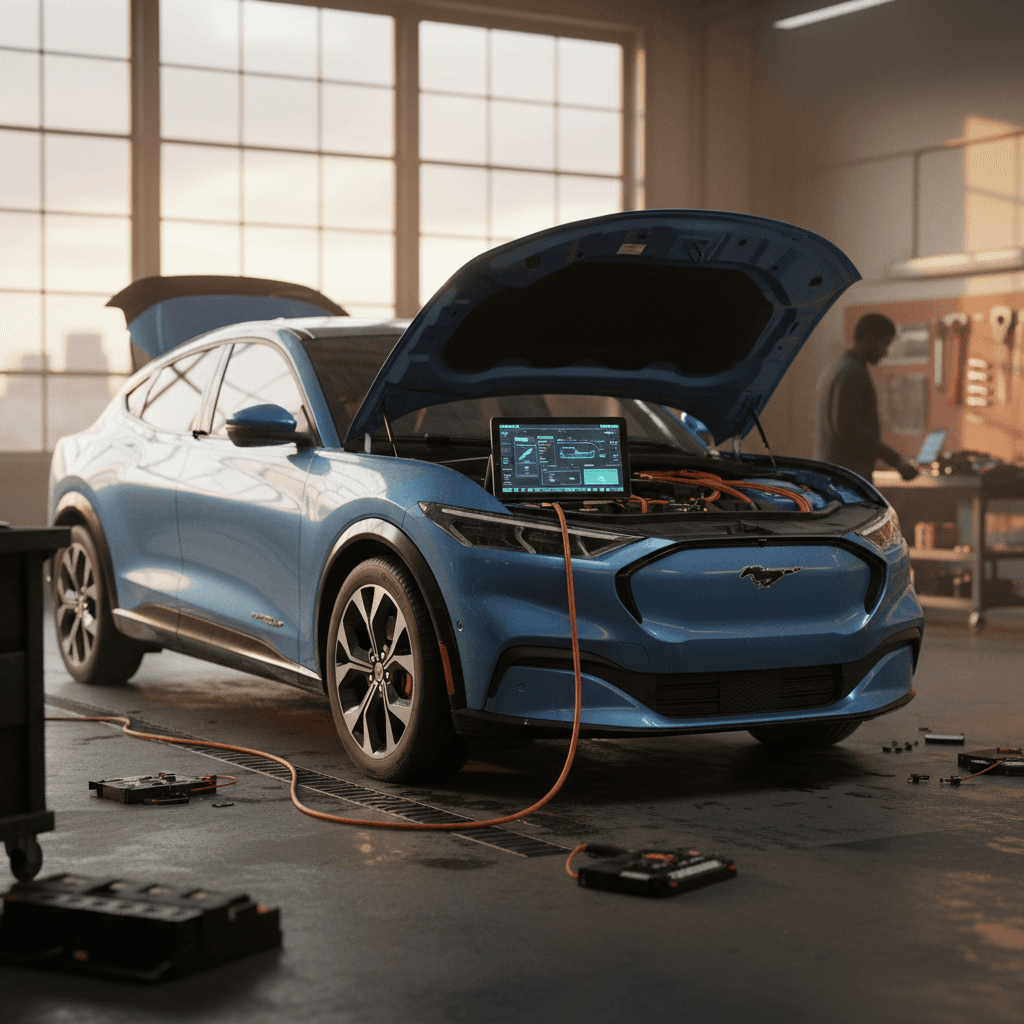
If you’re weighing a Ford Mustang Mach-E against other electric SUVs in 2026, **reliability** is probably near the top of your list. The Mach-E has earned strong owner loyalty and some eye‑opening high‑mileage stories, but it has also racked up a stack of recalls, especially on early model years. This guide pulls together what those issues actually mean, how the battery and motors are holding up, and what to look for if you’re shopping used.
Key takeaway for 2026 shoppers
Ford Mustang Mach-E reliability in 2026: the short version
Mustang Mach-E reliability snapshot for 2026
Pulling those pieces together, **Ford Mustang Mach-E reliability in 2026** looks something like this: - **Battery & motors:** Better than many skeptics expected, with multiple documented six‑figure‑mileage cars still running their original packs and drivetrains. - **Electronics & software:** A clear weak spot. The car has seen several large recalls tied to software logic, door latches, rear camera behavior, and contactors. - **Build quality:** Mixed early on, improving with later model years. Owners report fewer wind noise, trim, and infotainment glitches on 2024–2026 builds. For a used buyer, that means the Mach-E can be a **solid long‑term EV** if you’re deliberate about model year, recall status, and how the previous owner treated the car.
How Mach-E reliability has changed from 2021 to 2026
2021–2022: promising but recall‑heavy
- Launch years with more production variability and supplier learning curve.
- High‑voltage battery contactor failures triggered limp‑mode events and safety investigations.
- Software glitches, 12‑volt issues, and occasional charging faults more common.
- More reports of fit‑and‑finish gripes: wind noise, misaligned trim, infotainment freezes.
2023–2026: maturing product
- Refinements to contactor hardware and control software significantly reduced pack‑related complaints.
- Stability improvements for SYNC software and charging behavior.
- Still subject to new recalls (door latches, rear camera, roll‑away risk), but these tend to be fix‑once, done items.
- Owner feedback points to better overall quality and fewer random bugs on 2024+ builds.
Model‑year rule of thumb
Major Ford Mustang Mach-E recalls affecting reliability
One reason search results for **Ford Mustang Mach-E reliability 2026** can look scary is the sheer number of recalls. The question isn’t just, “Has the Mach-E been recalled?”, it’s, “Did the recalls fix the underlying risk on this specific car?” Here are the big ones that matter most for a used buyer in 2026.
Key Mustang Mach-E recalls to verify on a used car
Always confirm recall status by VIN with a Ford dealer or the federal safety database before you buy.
| Issue | Model years impacted | Risk if not fixed | What the fix does |
|---|---|---|---|
| High-voltage battery main contactor overheating | Primarily 2021–2022 | Car may lose power or enter a reduced‑power mode, especially under hard acceleration or DC fast charging. | Revised software and, in some cases, hardware updates to protect the contactor from overheating and failure. |
| 12-volt battery / low-voltage behavior trapping passengers | 2021–2025 | Faulty logic could leave electronic door latches inoperative at the same time the 12‑volt system is low, making it difficult for occupants to exit using the usual interior releases. | Software updates change how the latches behave and add protections for low‑voltage scenarios. |
| Electronic rear door latches | 2021–2025 | Rear doors may remain locked in certain low‑voltage conditions, again creating an egress concern for rear passengers. | Revised latch components and/or firmware to ensure mechanical operation even in edge cases. |
| Rear-view camera software glitch | 2021–2023 | Rear camera may display a blank or frozen image, reducing rear visibility and raising the risk of back‑up crashes. | Software updates (often over-the-air) correct how the camera wakes and communicates. |
| Roll-away risk (park system) | Select 2024–2026 | On certain builds, a control logic issue can allow unintended vehicle movement if park is not fully engaged. | Updated software to improve detection of park state and prevent roll‑away events. |
Recall coverage varies by year and trim. A clean report, with campaigns shown as "completed", is a good sign of previous‑owner diligence.
Why recalls matter on a used EV
Battery and drivetrain durability: is the Mach-E’s pack holding up?
Behind the headlines, the Mach-E’s **battery and motors are one of its strongest reliability stories**. Real‑world high‑mileage cars are now old enough to tell us more than lab projections, and so far the data looks encouraging.
What we’re seeing from real-world Mach-E batteries
High mileage examples and aggregated data paint a more nuanced picture than early fears.
Documented 250k–300k+ mile cars
Most owners stay above ~90% health
Drivetrain failures are rare
Habits that protect Mach-E battery health
- Use **AC Level 2 home charging** for most energy, with DC fast charging as a convenience, not a lifestyle.
- Keep daily charging in the **20–80%** window for routine use.
- Avoid letting the car sit for days at 0–5% or 100% state of charge.
- Make sure all battery‑related recalls and software updates have been completed.
If you’re comparing **used Mach-E battery reliability** to other EVs, the Mach-E now sits in a reassuring middle ground: not immune to issues, but clearly capable of very high mileages without catastrophic pack loss when maintained and updated properly.
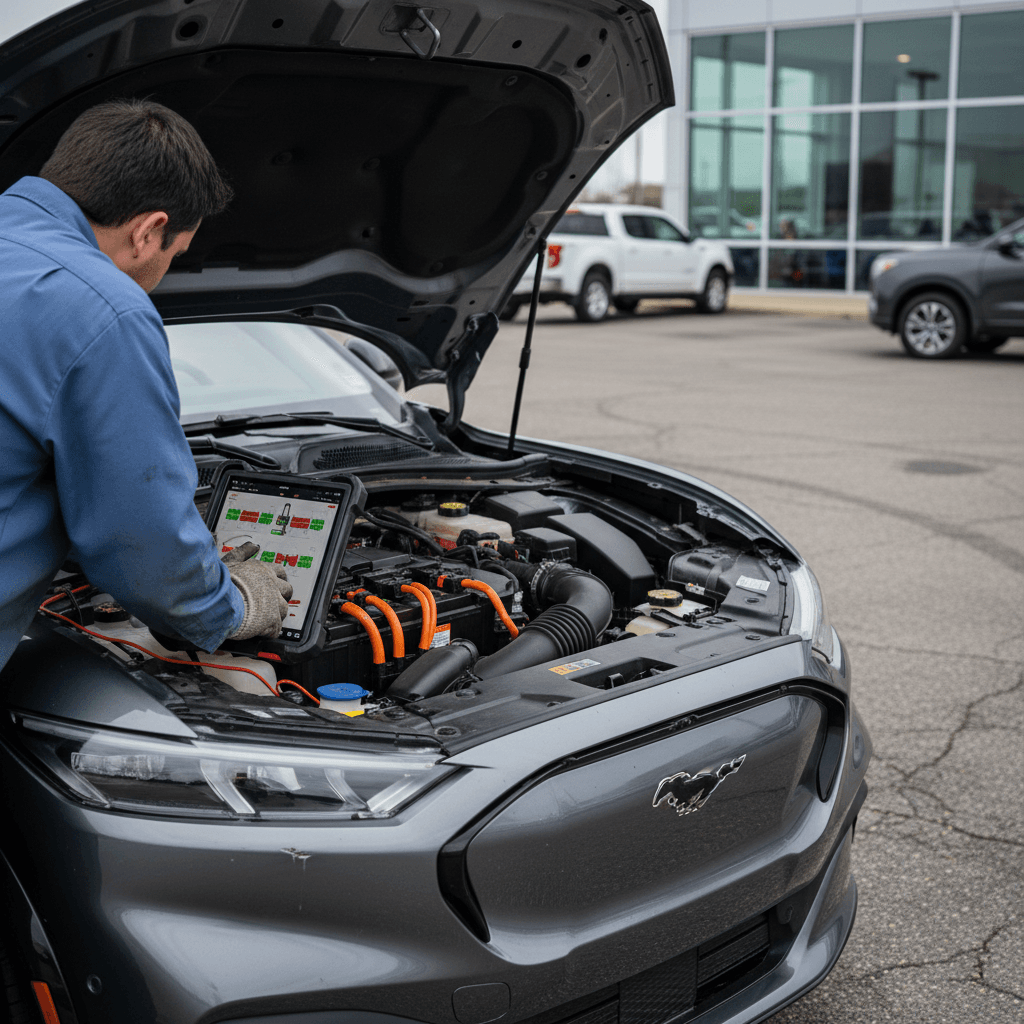
Everyday Mach-E issues owners still report
Not every reliability story is a spectacular failure. A lot of what will shape your experience with a Mach-E are the **small annoyances** that either get fixed quickly… or never quite go away.
- **Charging quirks:** Occasional DC fast‑charging sessions that start slowly, stall at low power, or fail to initiate cleanly. Often it’s the station or network, but drivers experience it as a "car problem."
- **SYNC/infotainment glitches:** Frozen screens, laggy voice control, or intermittent Bluetooth issues, especially on early software builds. Over‑the‑air updates have improved this but not eliminated every edge case.
- **Door handles and electronic latches:** Mach-E’s electronic door releases can feel odd coming from a conventional car. When paired with 12‑volt or latch‑related issues, they can cause real frustration.
- **Wind noise & trim creaks:** Some early cars exhibit more wind noise at highway speeds and squeaks from interior trim or glass seals than later builds.
- **Parts and service delays:** For certain components and specific fast‑charging adapters, owners have reported multi‑month waits. That’s less about the car’s failure rate than the current state of EV‑specific parts logistics.
How much this matters day-to-day
Mustang Mach-E reliability by model year
Treating every Mach-E as if it shares the same risk profile is a mistake. Early launch builds, mid‑cycle updates, and ongoing recalls mean that **model year matters a lot** when you’re assessing reliability.
How reliability risk shifts by model year
General patterns to consider, always verify details by VIN.
2021–2022 Mach-E
- Most recall activity (high‑voltage contactors, software, various latch and camera campaigns).
- Higher reports of random software bugs and minor build issues.
- Best deals on the used market, but **requires careful due diligence** on recall completion and charging history.
2023 Mach-E
- Benefits from early production learning and hardware tweaks.
- Still affected by some broader recalls (door latches, low‑voltage logic, rear camera), but fewer one‑off quality complaints.
- Good balance of price and refinement for many used shoppers.
2024 Mach-E
- Shows **clear improvement** relative to launch years, with a more mature software stack.
- Some campaign coverage (e.g., latch and roll‑away related) still applies but is easier to address early in the car’s life.
- Strong candidate if you want newer tech and warranty coverage without paying brand‑new money.
2025–2026 Mach-E
- Too new to have deep long‑term data but benefit from accumulated fixes and process improvements.
- May still be involved in broad software or safety campaigns; monitor for new notices over the next few years.
- Best pick if you want maximum remaining warranty and are less focused on upfront price.
Where the sweet spot often is
Used Ford Mustang Mach-E reliability checklist
If you’re cross‑shopping used EVs, the Mach-E requires a slightly different inspection mindset than a comparable gas SUV. Here’s a **reliability‑focused checklist** to use before you buy.
Mustang Mach-E reliability checklist for 2026 shoppers
1. Pull a full recall and service history by VIN
Ask for a dealer‑printed service history and run the VIN through the official recall lookup. Every major campaign, especially battery contactor, latch, camera, and roll‑away fixes, should show as **completed**, ideally not all bunched into a single rushed visit.
2. Get objective battery health data
Battery range guesses from a seller are not enough. A **professional battery health report**, like the Recharged Score, uses diagnostics and real‑world data to estimate remaining capacity and spot red flags from hard use or repeated deep fast‑charging.
3. Test DC fast charging and Level 2 behavior
If possible, observe at least one **DC fast‑charging session** and a standard Level 2 session. Look for obvious problems: charging refusing to start, frequent error messages, or power that ramps down sharply without the pack being near full or overheated.
4. Check every door and latch in low-voltage scenarios
With the car in accessory mode and various states of charge, confirm that **all doors open and close normally** from inside and outside. Given the Mach-E’s reliance on electronic releases, this is more than a convenience check, it’s a safety and livability check.
5. Inspect for water leaks, trim issues, and glass problems
Run water over the roof and hatch, then check for drips or damp carpet. Listen for **wind noise** on a highway test drive. These issues are fixable but can be annoying and expensive to chase out of warranty.
6. Drive it like you will actually use it
On the test drive, mimic your real life: highway merges, hill climbs, rough pavement. Note any **hesitation, power loss, or warning lights**, and pay attention to how stable and predictable the car feels, especially in hard acceleration where contactor issues once showed up.
Don’t ignore “it just did that once” stories
How Recharged evaluates Mustang Mach-E reliability and battery health
Because Recharged focuses specifically on used EVs, including the Mustang Mach-E, we spend a lot of time separating **normal EV behavior** from real reliability risks. That’s built into every Recharged vehicle through our **Recharged Score Report**.
What Recharged looks at on every used Mach-E
You don’t have to be an EV engineer to buy confidently.
Verified recall & software status
Battery health & charging behavior
Fair market pricing & history context
Ready to find your next EV?
Browse VehiclesOn top of the report, Recharged offers **financing, trade‑in options, instant offers or consignment, and nationwide delivery**, all supported by EV specialists who know what can actually go wrong with a Mach-E, and what’s just normal EV behavior that looks odd if you’re used to gas cars.
So, should you buy a Mustang Mach-E in 2026?
Looking at **Ford Mustang Mach-E reliability in 2026**, the picture is nuanced but ultimately encouraging. Early years were weighed down by contactor and software‑driven recalls, and the car is still more recall‑prone than the most boringly reliable gas SUVs. At the same time, the core EV hardware, battery pack, motors, and drivetrain, is aging better than many skeptics expected, with high‑mileage examples and real‑world data pointing to long service lives when cars are updated and cared for.
If you want a set‑and‑forget appliance and have zero tolerance for recalls or software quirks, a late‑model hybrid crossover may fit your temperament better. But if you’re looking for a **quick, fun‑to‑drive electric SUV** with a growing track record of durable battery and drivetrain performance, and you’re willing to be methodical about model year, recall status, and battery health, a used Mustang Mach-E can absolutely make sense in 2026.
Working with a specialist like Recharged tilts the odds further in your favor. Between verified recall closure, battery diagnostics via the Recharged Score, fair pricing, and EV‑savvy support from first click to delivery, you don’t have to guess whether the Mach-E you’re eyeing is one of the good ones, you can see it in the data before you buy.