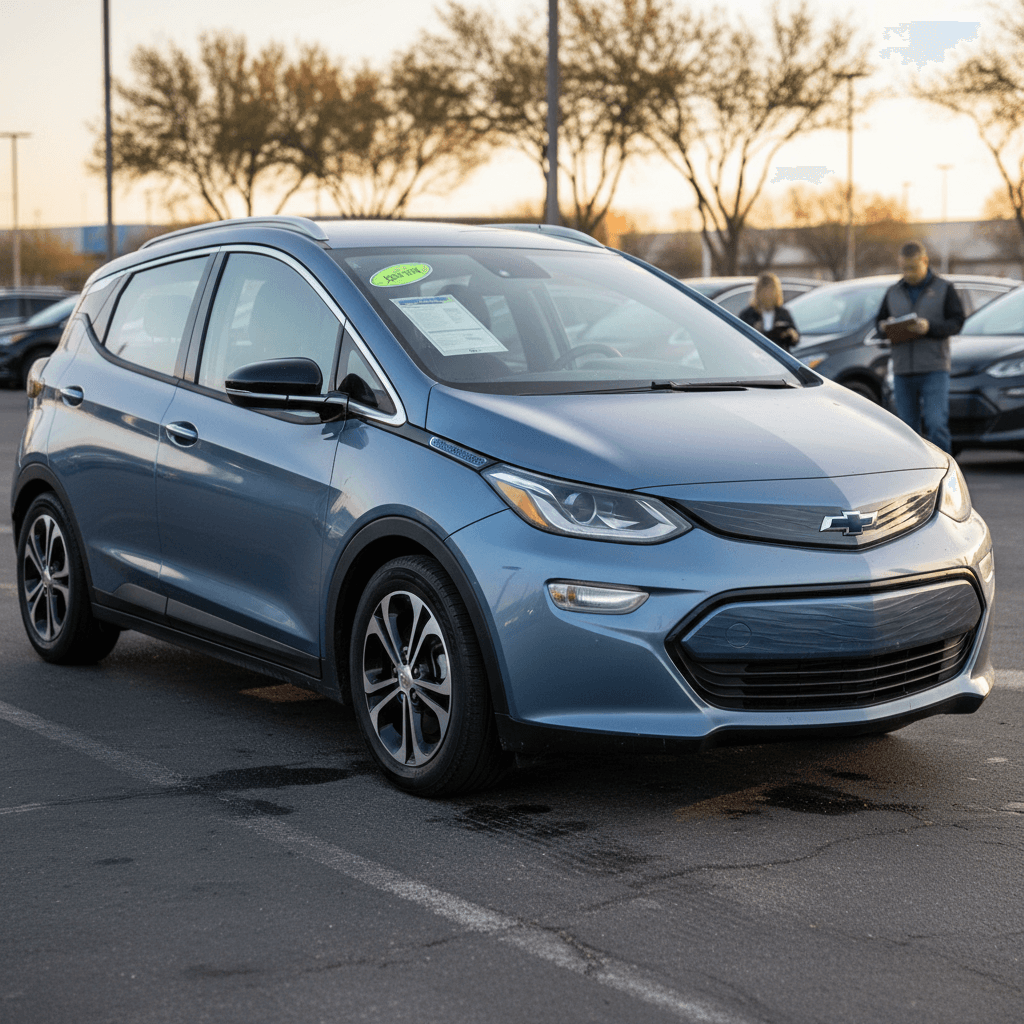
If you’re shopping for an affordable, practical electric car, a 2023 Chevrolet Bolt EV should be on your short list. It was one of the last, and best, years of the original Bolt hatchback, with long range, updated styling, and prices that now make it one of the smartest used EV buys in the country.
Quick take
Why the 2023 Bolt EV is such a smart used buy
2023 Chevy Bolt EV at a glance
By 2023, Chevrolet had already done the hard work of debugging the Bolt. Earlier cars went through a widely publicized battery recall; by the time the 2023 Bolt EV rolled off the line, production was using updated battery packs and the car had the refreshed interior, better seats, and modern driver‑assist tech many shoppers wanted.
- Strong range for the size and price (around 259 miles EPA rated)
- Compact footprint that’s easy to park but still useful for families
- Simple, low running costs compared with gas or plug‑in hybrids
- Heavily improved interior vs. 2017–2021 Bolts, especially front seats
- DC fast charging standard, plus 11.5 kW Level 2 capability for quick home charging
Who the 2023 Bolt EV fits best
2023 Bolt EV key specs you should know
Core 2023 Chevrolet Bolt EV specs
These are the headline specs most used‑EV shoppers care about when comparing the Bolt EV to other options.
| Spec | 2023 Bolt EV |
|---|---|
| Battery capacity (gross) | ~65 kWh lithium‑ion |
| EPA range | 259 miles (new) |
| Drivetrain | Single front motor, FWD |
| Power | 200 hp (150 kW) |
| Torque | 266 lb‑ft |
| 0–60 mph | Low‑6‑second range (manufacturer estimates & road tests) |
| Level 2 AC charging | Up to 11.5 kW (about 0–100% in ~7 hours with 48‑amp charger) |
| DC fast charging | Roughly 100 miles in ~30 minutes under ideal conditions |
| Onboard charger | 11.5 kW |
| Seating | 5 passengers |
| Cargo space | 16.6 cu ft (seats up), 57 cu ft (seats folded, approx.) |
2023 Chevrolet Bolt EV technical highlights
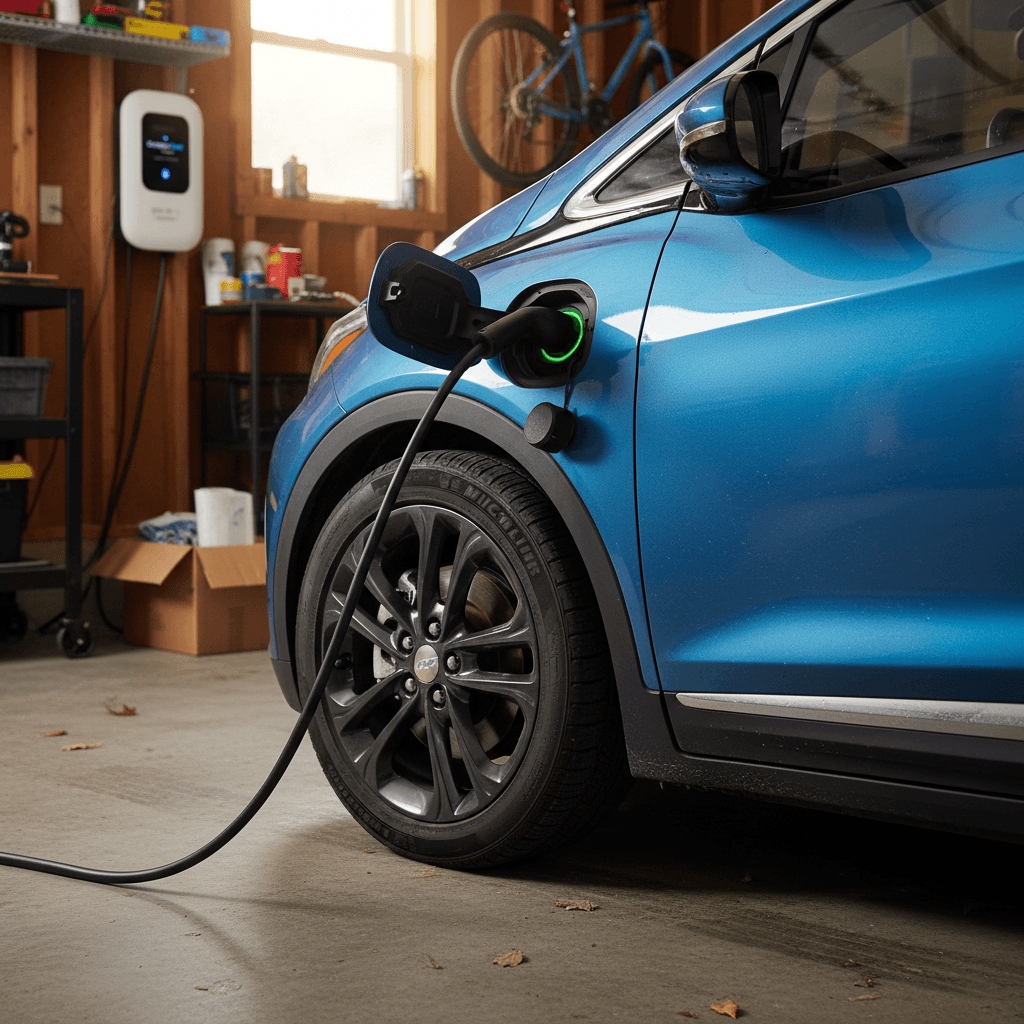
You don’t need to memorize every number, but you should understand what they mean for your daily life. The 65 kWh battery and ~259‑mile rating make the 2023 Bolt EV perfectly happy doing weekday commuting plus errands without nightly range anxiety, and the 11.5 kW onboard charger means that, if you install a capable Level 2 charger at home, you can refill a mostly empty battery overnight.
2023 Bolt EV trims: 1LT vs 2LT
For 2023, Chevrolet simplified the Bolt EV lineup into two trims: 1LT and 2LT. Both share the same battery, motor, and range. The differences are mostly comfort and technology features that can matter a lot in day‑to‑day use.
Bolt EV 1LT vs 2LT highlights
Same drivetrain, different comfort and tech packages.
Bolt EV 1LT
The 1LT is the entry trim, but it’s not bare‑bones.
- Cloth seats (heated front seats often bundled in option packages).
- 10.2‑inch central touchscreen with wireless Apple CarPlay and Android Auto.
- Standard Chevy Safety Assist (automatic emergency braking, lane keep assist, etc.).
- DC fast charging and 11.5 kW Level 2 capability.
Great if you’re price‑sensitive and find a car with the right options.
Bolt EV 2LT
The 2LT adds more comfort and convenience:
- Leather‑appointed seats, typically heated front and sometimes rear.
- Heated steering wheel, huge for cold‑weather EV driving.
- Available surround‑view camera, rear park assist, and more active safety features.
- Some cars have additional packages like Bose audio or adaptive cruise on the EUV; the EV sticks with standard cruise.
If you plan to keep the car for years, the 2LT’s upgrades are usually worth the modest used‑price premium.
Trim shopping tip
Bolt EV vs Bolt EUV: which fits you better?
You’ll see a lot of 2023 Bolt EUVs on the same lot as 2023 Bolt EVs. They share the same battery and motor, but the EUV stretches the body and cabin. Before you fall in love with the first Bolt you test‑drive, decide whether the hatchback EV or the slightly larger EUV actually suits your life.
Bolt EV (hatchback)
- Shorter overall length, easier to street‑park in tight cities.
- Nearly identical cargo volume to the EUV with seats up.
- Slightly better efficiency and range in the real world.
- Rear seat is fine for kids or occasional adults, but tighter than the EUV.
Ideal if you live in an urban area, drive mostly alone or with one passenger, and want the lowest purchase price.
Bolt EUV (small crossover)
- About 6 inches longer with roughly 3 extra inches of rear legroom.
- More rear‑seat comfort for adults, easier to install bulky child seats.
- Very similar cargo area, but a bit more rear overhang.
- Often slightly higher used prices than same‑year Bolt EVs.
Ideal if you regularly carry passengers in the back seat or want a more crossover‑like stance.
Test‑drive them back‑to‑back
Real-world range and charging expectations
On the window sticker, a 2023 Bolt EV is rated for about 259 miles of EPA range. In the real world, what you see depends on speed, weather, and how often you crank the heat or AC.
What range to expect in different conditions
These are ballpark numbers for a healthy battery; your results will vary.
City & suburban
260–290 miles on a full charge isn’t unusual at low speeds.
Stop‑and‑go traffic actually suits EVs thanks to regenerative braking.
Highway at 70–75 mph
Expect more like 190–230 miles depending on wind and temperature.
Above 65 mph, aerodynamic drag eats into range quickly.
Cold weather
In deep winter, especially below freezing, range can drop by 25–40%.
Heated seats and wheel use less energy than blasting the cabin heat.
Don’t panic about the numbers
- Plan home charging around 40–80% daily use, with full charges for trips.
- Use DC fast charging mainly for road trips, not every single day.
- If you do a lot of highway driving, test‑drive and watch the projected range at your normal cruising speed.
Battery warranty, recalls and Bolt safety
Battery health is the heart of any used EV purchase, and the 2023 Bolt EV is no exception. The good news: 2023 cars benefit from updated packs and sit near the start of their warranty life, not the end.
2023 Bolt EV warranty basics (from original sale)
Exact terms can vary slightly by region, so always confirm details for a specific VIN.
| Component | Typical coverage |
|---|---|
| Battery & electric drive components | 8 years / 100,000 miles (whichever comes first) |
| Bumper‑to‑bumper | 3 years / 36,000 miles |
| Powertrain (gas engines only) | Not applicable, Bolt EV is fully electric |
| Corrosion (perforation) | 6 years / 100,000 miles (region‑dependent) |
Factory warranty coverage when new
What this means on a 2023 today
Earlier Bolt EVs (2017–2022) were part of a large high‑voltage battery recall, which involved full pack replacements in many cars. By 2023, production had shifted to updated packs and the recall work was largely behind the model. Still, it’s worth confirming that any software updates and campaigns are complete.
Battery & safety due diligence
Confirm open recalls
Ask the seller for a printout of completed recalls and check the VIN with a franchised Chevrolet dealer. All open campaigns should be done before you buy.
Review battery warranty start date
The 8‑year/100,000‑mile clock starts on the original in‑service date, not model year. A late‑sold 2023 can have warranty coverage into 2031.
Look for battery or charging warnings
On a test‑drive, check for warning lights or messages, slow DC charging behavior, or dramatic range swings. Those are reasons to pause and investigate.
Ask about charging habits
If possible, find out whether the previous owner mostly charged at home on Level 2 or hammered DC fast chargers daily. The former is easier on the pack.
Walk‑away signs
What a used 2023 Bolt EV costs today
Used pricing moves quickly, but by late 2025 and early 2026 many buyers are seeing 2023 Bolt EVs land well below what a comparable‑range new EV costs. Deep depreciation is your friend, as long as the individual car is healthy.
Typical 2023 Bolt EV used pricing (United States, late 2025–early 2026)
These are broad ballpark figures for retail transactions at reputable dealers. Local supply, incentives and vehicle history will push real prices up or down.
| Condition & mileage | Trim | Typical asking price |
|---|---|---|
| Low miles (under ~15,000), very clean history | 2LT | Upper teens to low $20Ks |
| Low–moderate miles (~15,000–30,000) | 1LT or 2LT | Mid‑teens to high‑teens |
| Higher miles (~30,000–45,000) or minor cosmetic issues | Mostly 1LT | Low‑ to mid‑teens |
| Heavily used, prior damage or sketchy history | Any | Discounted, but buy only with an expert battery health report |
Approximate price ranges for 2023 Bolt EVs
Think total cost, not just purchase price
Inspection checklist for a 2023 Bolt EV
You don’t need to be an engineer to shop for a used EV, but you do need a clear, repeatable process. Here’s a focused checklist for test‑driving and inspecting a 2023 Bolt EV.
2023 Bolt EV used‑buy inspection checklist
1. Check battery health and range estimate
With the car fully or mostly charged, compare the displayed range to what you’d expect for the state of charge. Big unexplained gaps, or estimates that bounce wildly, deserve a closer look. A professional battery‑health scan, like the <strong>Recharged Score</strong>, is even better.
2. Inspect charging behavior
If possible, plug into a Level 2 charger during your visit. The car should ramp up to ~11 kW on a capable 240‑volt station. On a short DC fast‑charge test, watch that speeds reach expected levels and don’t immediately throttle way down.
3. Look for recall and service records
Ask for a full service printout. You want to see recall work recorded, regular maintenance, and any warranty repairs documented instead of hidden.
4. Examine tires, brakes and suspension
Uneven tire wear can hint at alignment issues or past curb hits. Take a slow test‑drive over broken pavement and listen for clunks or rattles.
5. Test all EV‑specific features
Check one‑pedal driving, regen modes, charge‑port door operation, scheduled charging, and any app‑based features the car supports. You want these to feel intuitive and glitch‑free.
6. Evaluate interior wear and electronics
Try every window switch, door lock, camera view, speaker and USB port. A car that’s been treated kindly inside usually tells a better story about how it’s been treated mechanically.
Don’t skip a pre‑purchase inspection
Financing and incentives for a used Bolt EV
Financing a used EV works a lot like financing any used car, but there are a few extra perks you don’t want to leave on the table. The 2023 Bolt EV often qualifies for used‑EV incentives that can tilt the math firmly in your favor.
- In the U.S., some buyers can claim a federal used EV tax credit of up to 30% of the sale price (capped at $4,000) when buying a qualifying used EV from a dealer at $25,000 or less, subject to income and other limits.
- States and utilities may offer additional rebates for buying a used EV or installing a home charger.
- Used‑vehicle interest rates can be higher than new‑car rates, so it pays to shop lenders or use in‑house EV‑friendly financing.
How Recharged helps on the money side
How Recharged evaluates and prices Bolt EVs
Not all used Bolts are created equal. Two 2023 Bolt EVs with the same mileage can live very different lives, one pampered on a garage Level 2 charger, the other battered by curb strikes and daily DC fast‑charge abuse. That’s why the details behind the windshield sticker matter so much.
What you get with a Bolt EV from Recharged
Beyond a clean title and a quick test drive.
Recharged Score battery health report
Every Bolt EV on Recharged comes with a Recharged Score, which includes battery‑health diagnostics. You see how the pack is performing compared with expectations for its age and mileage, not just a guess based on the range estimate.
Transparent history & fair pricing
Recharged tracks live market data for Bolts nationwide and bakes that into pricing. You see how a car’s mileage, trim, accident history and equipment compare, so it’s clear why one 2023 Bolt costs more than another.
EV‑specialist support & delivery
From virtual walk‑throughs to nationwide delivery and trade‑in options, Recharged is built around EV ownership. You don’t have to educate a traditional salesperson about kilowatts and kWh just to get straight answers.
Ready to find your next EV?
Browse VehiclesWant to see one in person?
2023 Bolt EV FAQ
Frequently asked questions about buying a 2023 Chevy Bolt EV
Is a 2023 Chevy Bolt EV right for you?
If you want a quiet, quick, low‑drama commuter that shrugs off gas prices, the 2023 Chevrolet Bolt EV deserves a serious look. It’s one of the few used EVs that offers genuinely useful range, modern safety tech and a still‑active battery warranty at prices that undercut many hybrids.
The homework is straightforward: confirm recalls and software updates, have the battery and high‑voltage system evaluated, and pay attention to how the previous owner used and charged the car. From there, you can shop based on trim, color and options instead of fear. And if you’d rather have an EV specialist do the heavy lifting, browsing Bolt EV listings on Recharged, with Recharged Score battery reports, transparent pricing and available nationwide delivery, is an easy way to start your search on the right foot.