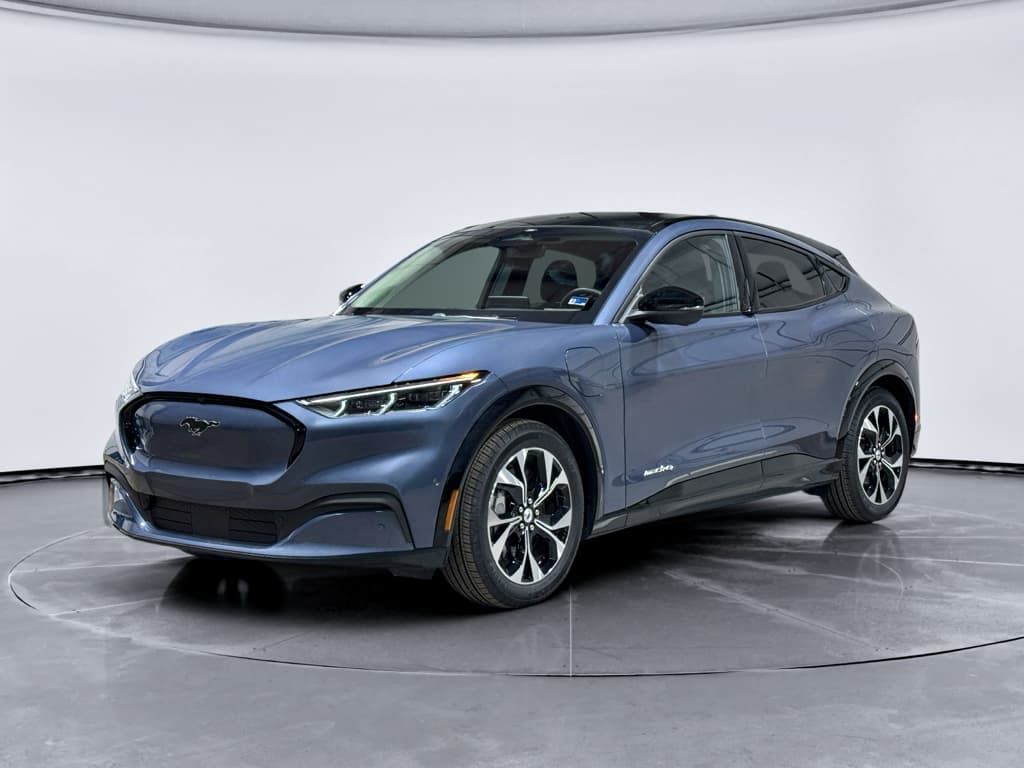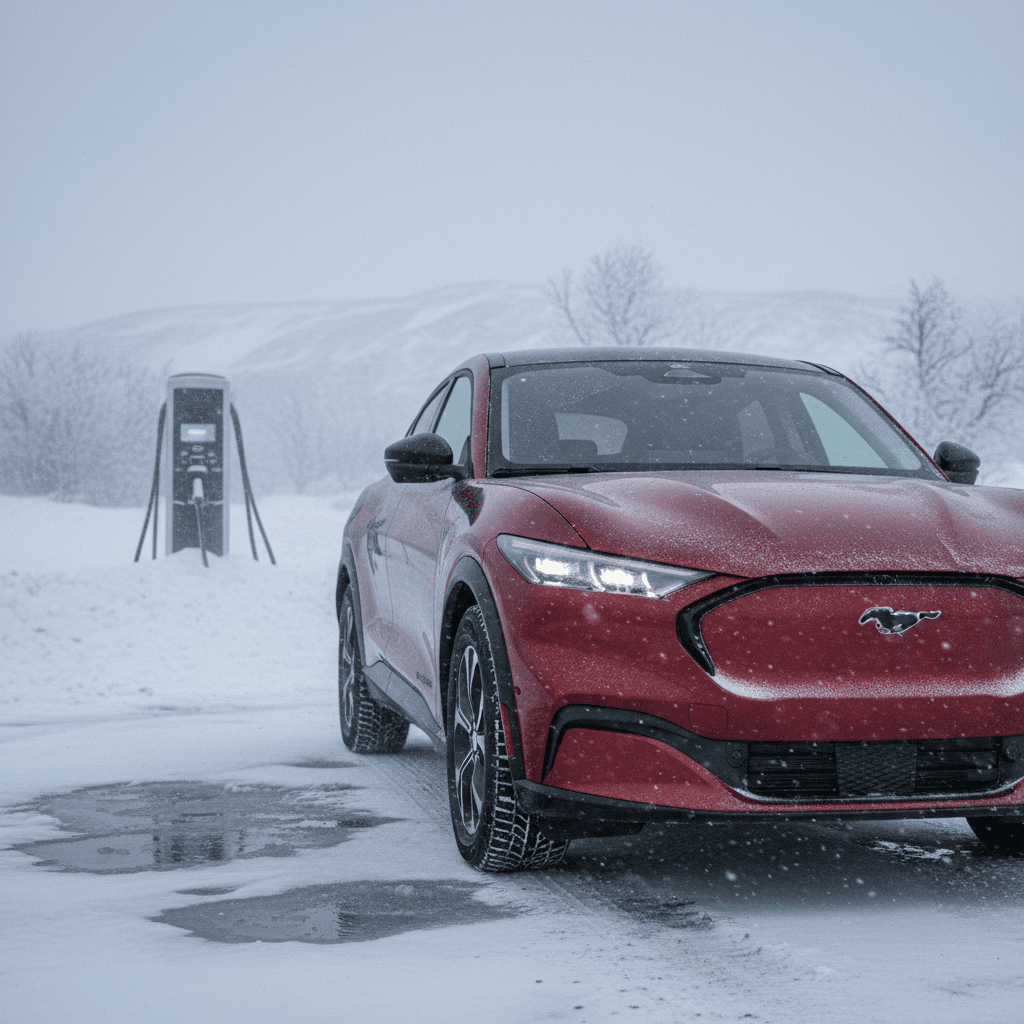
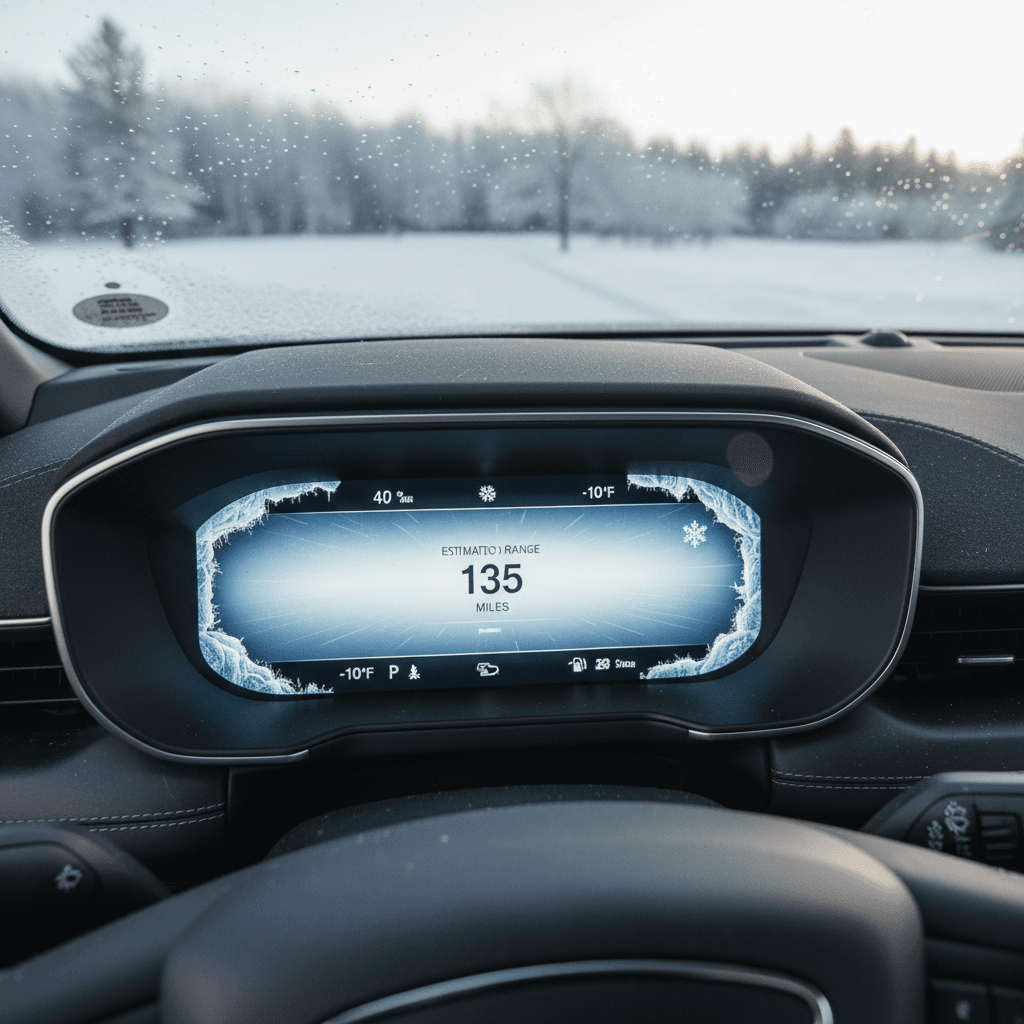
You don’t buy a Ford Mustang Mach‑E for beige, anonymous commuting. You buy it because you like a little drama with your electrons. Then winter shows up, the temperature drops into the 20s, and your 290‑mile estimate quietly becomes 190. If you’re wondering what the Ford Mustang Mach‑E range in cold weather really looks like, and whether it’s still a good daily or road‑trip companion in winter, this guide is for you.
Quick answer
Ford Mustang Mach-E winter range at a glance
Typical Mustang Mach-E winter range loss
Across recent winter tests and owner reports, the Mustang Mach‑E tends to sit in the middle of the EV pack. It’s not the worst offender, but it’s also not the winter‑range hero some drivers hoped for. In Recharged’s own testing, a Mach‑E with a roughly 270‑mile EPA rating landed in the mid‑180‑mile range in controlled cold‑weather runs, and broader data sets put average loss around the low‑30% mark in real‑world winter use.
Don’t panic at the first cold-morning estimate
Why EVs, and the Mach-E, lose range in the cold
Cold weather attacks range from three directions at once: the battery chemistry, the cabin heater, and your right foot. Lithium‑ion cells simply can’t move ions as efficiently at low temperatures, so your usable battery capacity shrinks and charging slows. On top of that, an EV like the Mustang Mach‑E has to generate cabin heat electrically; there’s no waste heat from an engine to recycle, so the heater becomes a major energy hog.
- Battery chemistry: Below about 40°F, internal resistance goes up and usable energy goes down. The colder it gets, the worse this effect becomes.
- Cabin heating: Cranking the HVAC to 75°F in a frozen car can use several kilowatts on its own, like running a strong space heater while you drive.
- Tire and drivetrain losses: Winter tires, cold gear oil and slushy roads all add drag.
- Driver behavior: Short trips, lots of stops, and frequent pre‑heats can be brutal for efficiency.
Use the ‘little heaters,’ not the big one
EPA range vs. real winter range by trim
Ford has steadily tweaked the Mach‑E lineup since 2021, but you can think of it in two broad buckets: standard‑range (around mid‑60s kWh usable) and extended‑range (mid‑80s kWh usable) batteries, with either RWD or eAWD. EPA figures for newer models (2024–2026) generally run from a bit over 200 miles up to about 320 miles, depending on trim and wheel size.
Approximate Mustang Mach-E winter range by configuration
These rough estimates assume highway‑heavy driving around freezing temperatures (20–30°F) starting with a warm battery. Individual results will vary with speed, wind, elevation, and how you use the heater.
| Mach-E configuration (recent model years) | EPA-rated range (approx.) | Typical cold-weather loss | Rough winter highway range |
|---|---|---|---|
| Select / Premium SR RWD (LFP standard-range) | ≈ 230–250 mi | −25–30% | ≈ 160–185 mi |
| Select / Premium SR eAWD | ≈ 210–230 mi | −30–35% | ≈ 135–165 mi |
| Premium ER RWD | ≈ 300–320 mi | −25–30% | ≈ 210–235 mi |
| Premium ER eAWD | ≈ 260–290 mi | −30–35% | ≈ 175–205 mi |
| GT / GT Performance (ER eAWD) | ≈ 250–280 mi | −30–40% | ≈ 150–195 mi |
| Rally / off-road‑oriented trims | ≈ mid‑200s mi | −30–40% | ≈ 150–180 mi |
Use this table as a planning tool, not a promise. Always build in extra margin in winter.
LFP vs. NCM batteries in the cold
How driving style and speed change winter range
Once you’re below freezing, speed is destiny. Aerodynamic drag climbs with the square of your speed, and winter air is denser. Combine that with a cold pack and a toasty cabin and you have a recipe for disappointment if you set the cruise control at 80 mph and hope for EPA numbers.
What really kills Mach-E winter range?
Same battery, same weather, three very different outcomes.
City & suburban slog
Speed: Mostly 25–45 mph, lots of lights.
Result: Surprisingly decent efficiency once the pack and cabin are warm. You may only lose ~20–25% vs. EPA if you’re doing longer urban trips.
70 mph interstate cruise
Speed: 65–75 mph, steady.
Result: Where most drivers see 25–35% winter range loss. This is the use case to plan for if you’re road‑tripping.
Fast & frigid
Speed: 75–80 mph in sub‑freezing temps.
Result: Now you’re stacking the deck against the car; losses of 35–45% aren’t unusual, especially with wind or snow.
The easiest free range extender: 5 mph
Heat pump, preconditioning, and key Mach-E winter features
Ford has been steadily improving the Mach‑E’s cold‑weather hardware and software. Newer model years add a heat‑pump‑based thermal system on many trims, smarter battery preconditioning for DC fast charging, and more refined range estimation. Older cars rely more on a resistive (PTC) heater, which is simple but power‑hungry.
Heat pump vs. PTC heater
- Heat pump works like a reversible A/C, moving heat instead of creating it. It can cut winter HVAC consumption significantly in mild to moderate cold.
- PTC heater is basically an electric space heater for your car. Reliable, but it draws more power, especially at highway speeds in deep winter.
- Below ~20°F, even a heat pump starts to lose its magic, and all systems rely more heavily on resistive elements.
Battery and cabin preconditioning
- Using the FordPass app or in‑car schedules, you can pre‑heat the cabin and battery while plugged in. That moves the energy load off the pack.
- When you set a DC fast charger as your destination in navigation, the Mach‑E can pre‑warm the battery to improve charging speed.
- Short winter trips without preconditioning are the worst‑case scenario: the car spends most of the drive just trying to get up to temperature.
Good news for used buyers
Planning winter trips in a Mustang Mach-E
A Mach‑E can absolutely be a winter road‑trip car, but you have to plan with winter range, not the window sticker. Think like a pilot, not a passenger: work backward from the leg you’re worried about, add a margin, then choose your charging stops accordingly.
How much buffer should you plan in winter?
Suggested planning margins for a Mach‑E in cold conditions, assuming healthy tires and a battery in good shape.
| Scenario | Outside temp | Driving profile | Suggested buffer on arrival |
|---|---|---|---|
| Mild winter day commute | 35–45°F | Mixed city/highway, 10–20 miles | 10–15% is fine |
| Weekend highway trip | 25–35°F | 65–70 mph, 80–120 miles leg | Arrive with 15–25% |
| Long interstate run | 10–25°F | 70+ mph, 150–180 miles leg | Aim to arrive with 20–30% |
| Deep cold or strong headwind | Below 10°F or heavy wind | Highway, any distance | Plan shorter legs and 25–35% arrival |
When in doubt, stop earlier and top off. Winter is not the time to arrive at a DC fast charger with 2% remaining.
Watch your charging expectations in the cold
Owning a Mach-E in cold climates: new vs. used
If you live somewhere with real winter, Great Lakes, New England, upper Midwest, Rockies, the Mach‑E’s cold‑weather behavior should be part of your buying decision, especially on the used market where you have multiple model years and battery chemistries in play.
Newer vs. older Mach-E in the cold
How the experience changes if you’re cross‑shopping model years.
Newer Mach-E (recent model years)
- More trims with heat‑pump‑based thermal systems.
- Refined software for range estimation and battery preconditioning.
- Updated EPA ranges and, in some cases, quicker fast‑charging profiles.
- Better match between on‑screen estimates and what you actually see in winter.
Earlier Mach-E (2021–2022 era)
- Greater reliance on PTC cabin heat, which can eat into range on the highway.
- More conservative cold‑weather behavior unless updated with later software.
- Still perfectly livable in winter with good planning and pre‑conditioning.
- Often priced attractively on the used market, especially with higher mileage.
Where Recharged fits in
Winter range tips checklist for Mach-E owners
Practical steps to stretch your Mach-E’s winter range
1. Always precondition while plugged in
Use departure schedules or FordPass to warm the cabin and battery before you leave, especially on mornings below freezing. That gets the thermal hit out of the way using grid power instead of your battery.
2. Rely on seat and wheel heat
Keep the cabin set a bit cooler and let the heated seats and steering wheel do the comfort work. They deliver much more warmth per kilowatt than blowing hot air at the windshield.
3. Manage speed and spacing between chargers
On road trips, plan for winter range, not EPA. Knock 25–35% off the EPA figure when you do your math, keep speeds moderate, and arrive at DC fast chargers with 15–30% in the pack.
4. Use Eco/Whisper modes when it’s slick
Calmer throttle mapping, softer regeneration and AWD logic tuned for slippery surfaces all help you conserve energy and stay in control when roads are icy or snow‑covered.
5. Keep tires properly inflated and consider winters
Cold air drops tire pressure; under‑inflated tires increase rolling resistance and hurt range. In true snow country, quality winter tires improve safety and can reduce the traction‑control energy tax.
6. Avoid strings of short, cold trips
A series of five‑minute drives in 20°F weather never lets the pack and cabin stabilize. If you can, combine errands into longer runs so you’re not paying the warm‑up penalty over and over.
7. Don’t obsess over the guess‑o‑meter
Watch your <strong>mi/kWh consumption</strong> over the last 15–30 minutes instead of staring at the remaining‑miles estimate. It’s a lagging indicator and will drift as your driving and temperature change.
FAQ: Ford Mustang Mach-E range in cold weather
Frequently asked questions about Mach-E winter range
Bottom line: Is the Mach-E good in winter?
If you expect your Ford Mustang Mach‑E to deliver EPA window‑sticker range on a 15°F interstate slog with a roof box and winter tires, winter will disappoint you. But that’s not a Mach‑E problem, it’s a physics problem, and every EV has to pay the same cold‑weather tax. Where the Mach‑E lands is solidly in the middle: not the most efficient winter warrior on the market, but entirely capable if you play to its strengths.
Treat EPA range as a summer‑ideal scenario, knock off a quarter to a third for winter planning, and use the tools Ford gives you, preconditioning, intelligent range, efficient comfort features, and the Mach‑E is an excellent four‑season EV. And if you’re cross‑shopping used examples, a Recharged Score Report and EV‑savvy guidance can help you pick the right battery, trim and model year so your winter range feels predictable, not like a gamble every time the forecast shows snow.