If you’re searching for a Ford Mustang Mach-E owner review after 1 year, what you really want to know is simple: does the excitement last once the new-car smell wears off, or do the quirks start to outweigh the EV grin? After watching thousands of owner reports, long-term tests, and used-market data, a clear picture emerges of what year-one Mach‑E ownership is really like, especially for buyers considering a used example.
Who this review is for
Ford Mustang Mach-E After 1 Year: At a Glance
Mach-E Year-One Snapshot (Typical Owner Experience)
Used-market bonus
What Changes After the Honeymoon Period?
For the first few months, most Mach‑E owners gush about effortless acceleration, silent cruising, and that big central touchscreen. Around the 12‑month mark, patterns shift: the "wow" factor is still there when you floor it, but owners become more focused on charging convenience, software behavior, and small quality issues than on performance specs.
What owners still love after a year
- Instant power and one‑pedal driving that make traffic less tiring.
- Low running costs vs. a comparable gas crossover.
- Roomy cabin, hatchback practicality, and family‑friendly ride height.
- Available BlueCruise hands‑free driving that reduces fatigue on long highway stretches.
What starts to annoy some owners
- Occasional software glitches or lag in the SYNC system.
- Door latches and charge‑port door behavior, especially in cold or wet climates.
- Public DC fast chargers that don’t always cooperate, even when the car is fine.
- Range estimates that jump around, leading to perceived range loss.
Model-year differences matter
Real-World Range After 12 Months
On paper, the Mustang Mach‑E spans roughly 230–320 miles of EPA range depending on battery size, drive configuration, and model year. After one year, most owners aren’t seeing meaningful battery degradation; instead, they see the normal EV reality that weather, speed, and driving style matter more than the brochure number.
Typical Year-One Real-World Range (Full Charge, Mild Weather)
Approximate highway-plus-city ranges owners commonly report after 12 months, assuming 70 mph highway cruising and moderate temperatures.
| Model / Battery | Drivetrain | EPA Rating (mi) | Typical Real Range (mi) | Owner Impressions |
|---|---|---|---|---|
| Standard Range | RWD | 240–250 | 200–220 | Fine for commuting; road trips require more planning. |
| Standard Range | AWD | 224–236 | 190–210 | Extra traction but noticeable range penalty. |
| Extended Range | RWD | 300–320 | 250–280 | Best choice for frequent highway driving. |
| Extended Range | AWD / GT | 260–290 | 220–250 | Performance is addictive; range still workable. |
Expect winter, high speeds, aggressive driving, or heavy cargo to trim these numbers by 15–30%.
LFP vs. NCM batteries
Where many owners get spooked in year one is when the car suddenly shows less predicted range than before. In a lot of cases, the culprit isn’t the battery, it’s the guess‑o‑meter (GOM). If you’ve been doing short, cold‑weather trips or fast driving, the Mach‑E’s range estimator updates to reflect that history. A few slow, mild‑weather drives and an occasional 100% charge (especially with LFP packs) usually brings predictions back in line.
Range-calibration routine
Charging Experience: Home vs. Public Networks
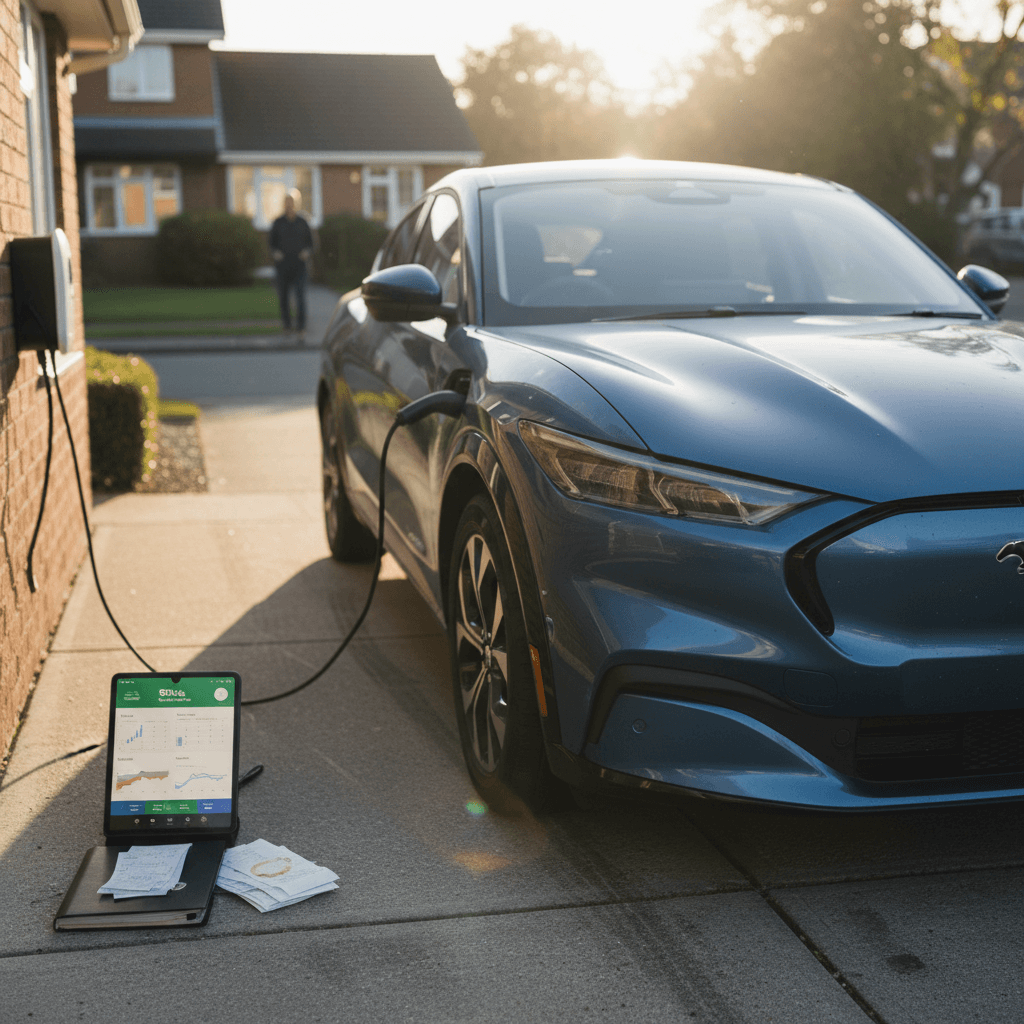
By the end of year one, the owners who are happiest with their Mach‑E overwhelmingly share one thing: reliable home Level 2 charging. Plugging in at night and waking up to a full battery makes the car feel like a smartphone on wheels. Folks relying on public charging only tend to have a more mixed experience.
How Mach-E Owners Actually Charge After a Year
Most drivers settle into a predictable pattern once the novelty wears off.
1. Home Level 2 (Primary)
The sweet spot is a 32–48A Level 2 charger on a 240V circuit. Many owners set the car to charge to 80–90% nightly and schedule sessions for off‑peak utility rates.
2. DC Fast Charging (Occasional)
Used mostly for road trips. Charging speeds are respectable but can dip at high state of charge or in very hot/cold weather. The car is usually ready to go before you finish a meal break.
3. Workplace / Public Level 2
A nice bonus if available, but rarely the primary source of energy. Many owners treat it as a way to top up when running errands.
Public charging reality check
After 12 months, most Mach‑E drivers learn their local fast chargers’ personalities: which stations run reliably, which ones to avoid, and how early to stop charging to get moving again. Many report that targeting 10–80% on DC fast charge gives the best balance of speed and battery friendliness.
Plan your first road trip early
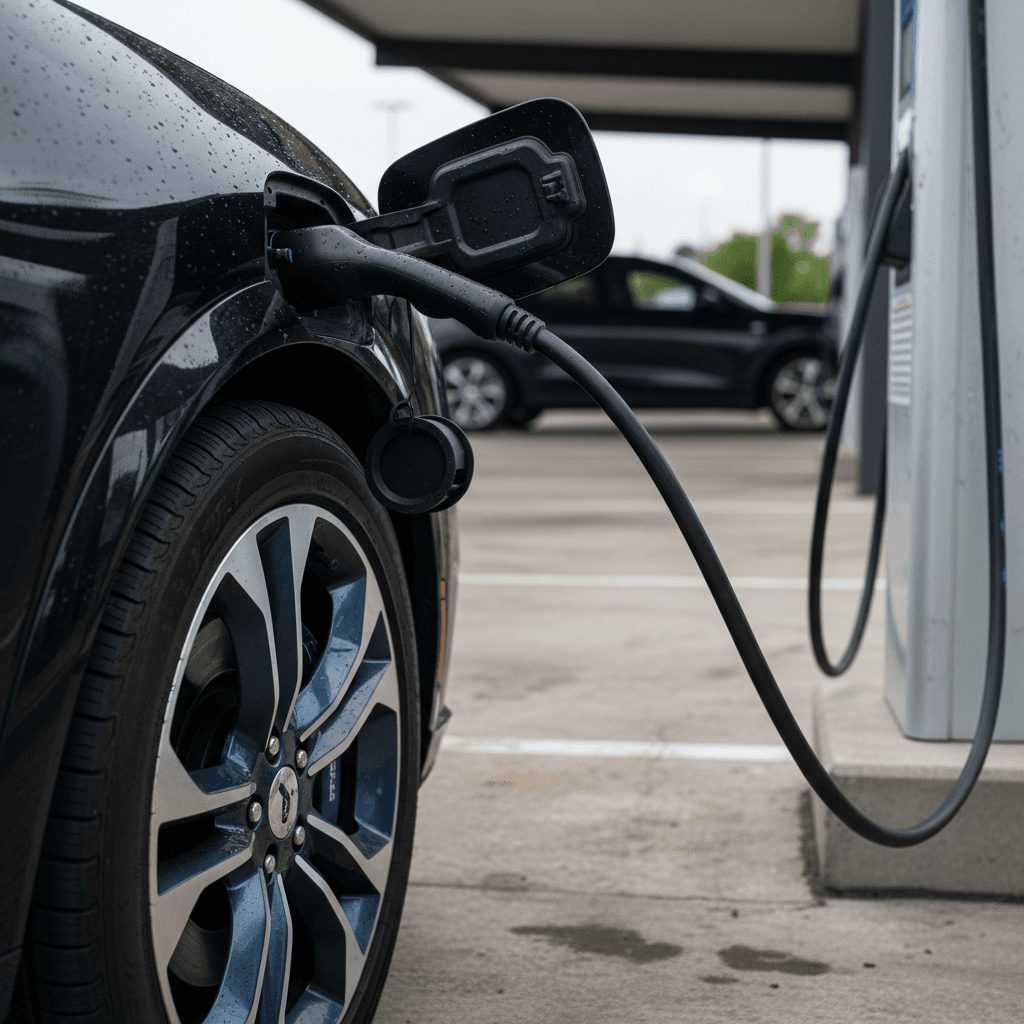
Reliability, Warranty, and Recalls
The Mustang Mach‑E isn’t a problem‑free EV, no modern electric SUV is, but after a year, most owners report that the core battery and drive unit have been solid. Where more issues creep in is with software, minor body hardware, and a series of recalls that you should understand before buying used.
- Battery & electric components: covered by Ford for 8 years or 100,000 miles, including excessive capacity loss.
- Bumper‑to‑bumper: typically 3 years/36,000 miles for most non‑consumable components.
- Powertrain: around 5 years/60,000 miles on drive components not covered under the high‑voltage warranty.
What owners actually experience in year one
- Charging quirks: Cars that refuse to start a charge at specific public stations, or stop early, often needing a different stall or a reboot of the charger app.
- Software bugs: Frozen or laggy SYNC screens, Bluetooth phone issues, or navigation misbehavior, usually addressed via over‑the‑air (OTA) or dealer software updates.
- Door latches and locks: Multiple recalls have addressed electronic latch behavior that could, in rare conditions, keep doors from unlocking properly.
- Battery contactor recall: Early extended‑range and GT models saw a recall for potential power loss after DC fast charging or aggressive acceleration, again addressed with updated hardware/software.
Used buyers: verify recall status
Ownership Costs: Insurance, Maintenance, and Depreciation
One reason many owners stick with the Mach‑E after year one is that, despite software annoyances, the ongoing costs are predictable and relatively low compared with a similarly quick gas SUV.
Where the Money Goes in Year One
How Mach-E ownership costs typically stack up for U.S. drivers.
Energy (Charging)
At U.S. average residential electricity prices, many owners spend around $55–$75/month for ~1,000 miles if they charge mostly at home. Heavy DC fast charging can raise that number significantly.
Maintenance & Repairs
No oil changes, fewer moving parts, and simple inspections typically keep year‑one maintenance minimal, tire rotations, cabin air filter, and fluid checks are common.
Depreciation
Early Mach‑Es have seen notable price drops, which hurts first owners but creates strong value for second owners shopping certified or used.
Insurance expectations
Because the Mach‑E’s high‑voltage components are protected for up to 8 years/100,000 miles, the first year is rarely when you’ll see major EV hardware expenses. Most owners’ unexpected bills, when they happen at all, typically stem from wheels, tires, glass, or accident damage, the same things that plague any modern SUV.
How Recharged can help on costs
Comfort, Tech, and Everyday Livability
After a year, the Mach‑E proves itself to be a genuinely practical family vehicle. Owners repeatedly praise the comfortable seats, quiet cabin at city speeds, and flexible cargo area. It’s not a full‑size SUV, but for many households it replaces a compact or midsize crossover without drama.
Comfort & space
- Adults fit comfortably in both rows; rear legroom is competitive for the class.
- Hatchback layout and folding rear seats make Costco runs and weekend trips easy.
- Ride quality leans firm but not punishing, sportier than a soft-riding mainstream SUV.
Tech & user experience
- 15-inch center screen feels modern and allows over‑the‑air feature updates.
- Some owners report infotainment lag or freezes that improve after software updates.
- Ford’s BlueCruise hands‑free system, when equipped and updated, earns strong marks for easing highway drives.
Noise and small annoyances
Buying a Used Mustang Mach-E After Someone’s First Year
If you’re shopping the used market, many Mach‑Es you’ll see are right around that 12–36 month window, often coming off leases or being traded as owners switch brands or upgrade batteries. That’s an opportunity, if you know what to inspect.
Key Checks for a Used Mach-E
1. Confirm battery warranty status
Look at mileage and in‑service date to estimate how much of the <strong>8‑year/100,000‑mile battery and EV component warranty</strong> remains. A younger, lower‑mileage car is safer for your long‑term plans.
2. Review recall and software history
Ask for a printout showing completed recalls, especially for <strong>door latches and high‑voltage battery contactors</strong>. Updated cars are less likely to surprise you with early‑life bugs.
3. Check charging behavior
Test both AC and, if possible, DC fast charging. Make sure the car initiates a session promptly, shows realistic range estimates, and doesn’t throw error messages during the process.
4. Inspect build quality
Walk around the car and look for misaligned panels, wind noise on a test drive, and interior trim rattles. A few squeaks are common, but excessive noise could signal prior damage or rushed repairs.
5. Evaluate tires and brakes
The Mach‑E’s torque can be hard on tires. Uneven wear may reveal alignment issues or overly aggressive driving, and it also means you’re budgeting for new rubber sooner.
6. Ask for a detailed battery health report
With Recharged, every car comes with a <strong>Recharged Score</strong> that includes verified battery health. If you’re buying elsewhere, push for as much battery data as the seller or dealer can provide.
Why consider a Recharged Mach-E
One-Year Mach-E Ownership Checklist
If you already own a Mach‑E and you’re hitting the 12‑month mark, this is a good time to reset and make sure you’re set up for a smooth second year.
Year-One Maintenance & Settings Tune-Up
Optimize your charging routine
If you have an extended‑range (NCM) battery, set daily charge limits around <strong>80–90%</strong> and save 100% charges for trips. For LFP packs, regular 100% charges are fine and can help calibration.
Schedule software and recall checks
Ask your Ford dealer to confirm you’re on the latest software and that all <strong>open recalls</strong> have been addressed. OTA updates help, but they don’t always cover every campaign.
Document your real-world range
Spend a few weeks tracking miles driven vs. energy used in different conditions. If your range suddenly falls far below expectations, you’ll have notes to discuss with the dealer.
Rotate tires and inspect alignment
EV torque can chew through front tires. Regular rotations and a quick alignment check prevent premature wear and help handling.
Back up profiles and settings
Once you’ve dialed in drive modes, driver profiles, and BlueCruise settings, make sure they’re saved and synced in case of future software updates or resets.
FAQs: Ford Mustang Mach-E After 1 Year
Frequently Asked Questions About 1-Year Mach-E Ownership
Bottom Line: Is a Mustang Mach-E Worth It After a Year?
After a year on the road, the Ford Mustang Mach‑E largely delivers on its promise: a genuinely quick, practical, and relatively affordable electric SUV that fits easily into everyday life, especially if you have home charging. The trade‑offs are real: software hiccups, recall headlines, and a public charging landscape that still isn’t as seamless as it should be.
For first owners, year one is often about learning how EVs behave in different seasons and refining charging habits. For second owners shopping used, that first year is your opportunity: someone else absorbed the steepest depreciation and wrestled with early software updates, while you step into a more mature, better‑understood product with a lot of warranty left.
If you’re ready to make that leap, a carefully vetted used Mach‑E, backed by a Recharged Score Report and expert EV guidance, can be one of the most satisfying ways to go electric without paying new‑car money. And one year in, most Mach‑E drivers would tell you they aren’t eager to go back to pumping gas.