If you’re considering a Ford Mustang Mach-E, or already drive one, you’re probably wondering what the real-world Mach-E maintenance schedule looks like. The good news: compared with a gas SUV, the Mach-E’s service needs are simple, predictable, and generally less expensive over time.
At-a-glance takeaway
Mustang Mach-E maintenance overview
Ford’s own EV care guidance emphasizes that all-electric models like the Mustang Mach-E need far less scheduled maintenance than comparable gas vehicles. There’s no engine oil, spark plugs, or transmission fluid to worry about, and regenerative braking dramatically slows traditional brake wear.
Core Mustang Mach-E service intervals (typical)
Where to see your exact schedule
Do Mustang Mach-E SUVs need oil changes?
No. A Mustang Mach-E does not need engine oil changes because it uses one or two electric motors instead of an internal-combustion engine. There are no pistons, valves, or crankshaft to lubricate with motor oil, and no traditional automatic transmission fluid changes tied to gear shifts.
- No engine oil or oil filter changes
- No spark plugs, timing belt, or fuel filter service
- No exhaust system, emissions system, or catalytic converter to maintain
- Still uses some fluids: brake fluid, battery coolant, and electric drive unit fluid at long intervals
Ignore generic oil-change reminders
Ford Mustang Mach-E maintenance schedule by mileage
Below is a simplified version of the commonly recommended Ford Mustang Mach-E maintenance schedule based on Ford EV guidance and dealer service charts. Exact intervals can vary by model year, driving conditions, and region, so treat this as a realistic planning guide, not a substitute for your owner’s manual.
Typical Ford Mustang Mach-E maintenance schedule
Major recurring services for most Mustang Mach-E models used in normal driving conditions.
| Mileage / Time | Key Services | Notes |
|---|---|---|
| Every 7,500–10,000 miles (about yearly for many drivers) | Rotate tires; basic inspection of brakes, steering, suspension, and fluid levels | Heavy city driving or aggressive acceleration can justify the shorter end of the range. |
| 20,000 miles or ~2 years | Tire rotation; replace cabin air filter; multipoint inspection | The cabin filter keeps your HVAC efficient and your cabin air clean. |
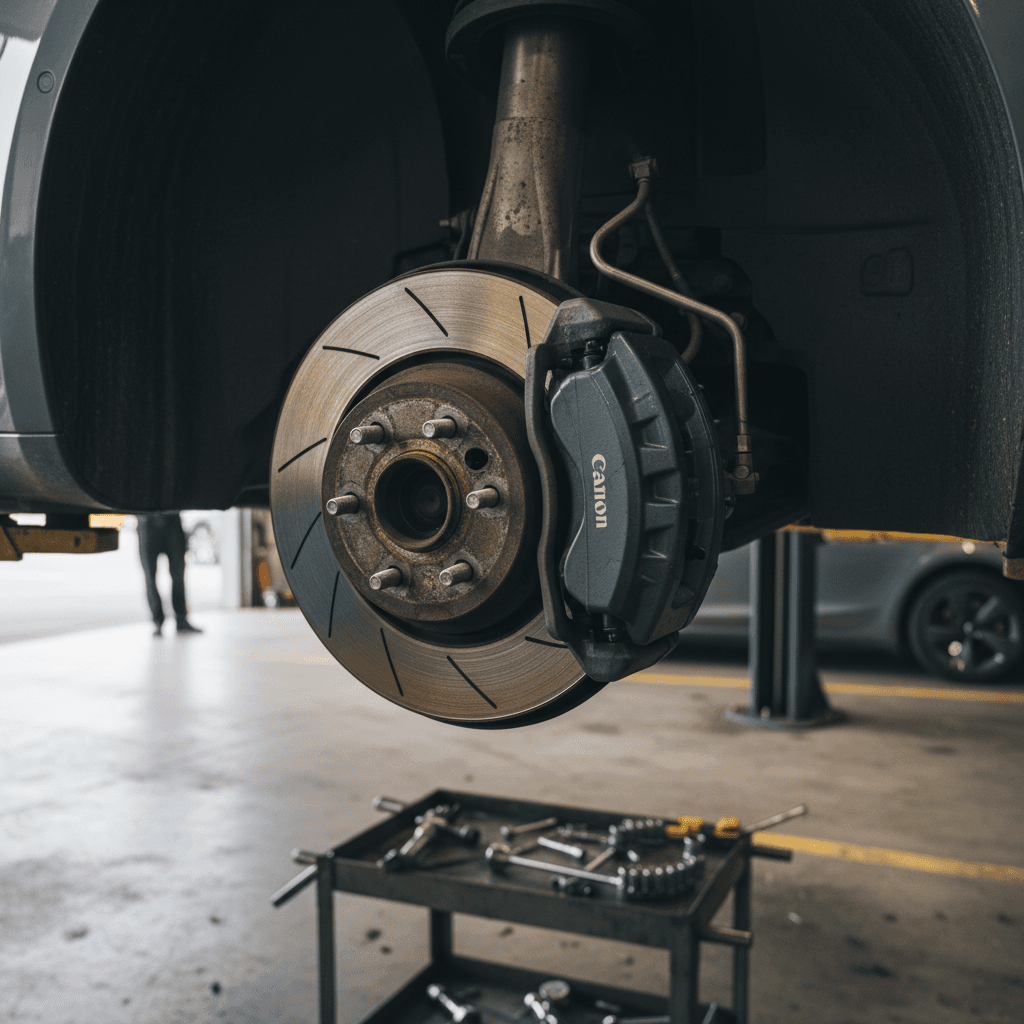
| 30,000 miles or ~3 years | Tire rotation; inspect or replace brake fluid; full brake inspection | Many Ford sources recommend replacing brake fluid roughly every 3 years even if mileage is low. |
| Every 10,000 miles after 30k | Tire rotation; visual checks of brakes, suspension, steering, and high-voltage components | EVs are hard on tires; staying on top of rotations protects range and safety. |
| As needed | Wiper blades, 12-volt battery, wheel alignment, software updates | Wheel alignment is especially helpful if you notice pulling or uneven tire wear. |
Always confirm the exact intervals for your model year in FordPass or your printed owner’s manual.
Why mileage matters more than time
Long-term Mach-E maintenance: 100k–200k miles
One of the biggest EV advantages is that many of the traditional “big-ticket” services simply don’t exist. Instead, the Mustang Mach-E has a few very long-interval fluid services that usually appear only once, if ever, in a typical ownership period.
Long-interval Ford Mustang Mach-E services
Approximate long-term service items for the Mach-E under normal use.
| Mileage / Time | Service | What it does |
|---|---|---|
| ~100,000 miles | Replace electric drive unit fluid | Helps ensure long-term durability of the gearbox portion of the drive unit. |
| ~200,000 miles | Replace battery coolant | Refreshes the thermal management system fluid that keeps the high-voltage battery in its ideal temperature window. |
| Ongoing | High-voltage battery and drive unit health monitoring | Software continuously tracks performance; issues typically show up as warnings long before catastrophic failure. |
These items generally occur well beyond the warranty period; many first owners never reach them.
Battery maintenance is mostly driving habits
What does Mach-E maintenance actually cost?
Because the Mach-E’s schedule is light, annual maintenance costs are generally lower than for a comparable gas SUV. You’re mostly paying for tire rotations, the occasional cabin filter, and periodic brake fluid service.
Typical Mach-E maintenance costs at independent shops or dealers
Real-world ranges will vary by region and dealer, but these ballparks help you budget.
Tire rotation
Estimated cost: $30–$70 per visit
Several Ford dealers include rotations as part of maintenance packages or coupons. On a performance‑oriented EV like the Mach-E, rotations are cheap insurance against premature tire replacement.
Cabin air filter
Estimated cost: $70–$150 installed
The filter itself is inexpensive; most of the cost is labor. Many owners DIY this in 15–30 minutes using an OEM or quality aftermarket filter.
Brake fluid change
Estimated cost: $150–$250
Fortunately, this is typically a once-every‑3‑years job, not an every‑visit expense, because regenerative braking reduces heat and contamination in the fluid.
Total cost over 5 years
Mach-E maintenance vs. a gas SUV
Typical gas SUV (similar size)
- Oil and filter change every 5,000–10,000 miles
- Transmission fluid changes and possible pan service
- Engine air filter and spark plug replacement
- Exhaust, emissions, and fuel system components to maintain
- More moving parts, more gaskets and seals that can leak
Ford Mustang Mach-E
- No engine oil, spark plugs, or fuel system maintenance
- Simple single‑speed gearbox instead of multi‑gear transmission
- Regenerative braking dramatically extends pad and rotor life
- Maintenance focused on tires, brake fluid, cabin filter, and software
- Fewer fluids, filters, and failure points overall
Where Mach-E owners still spend money
Maintenance tips that protect range and resale value
A Mach-E that’s been maintained on schedule will feel better to drive and hold its value far better, especially if you eventually sell or trade it as a used EV. Here are practical ways to take care of yours beyond just showing up for service appointments.
Smart Mach-E care habits
1. Rotate tires on time
EV torque can scrub the outer edges of your front tires and the inner edges of your rears, depending on alignment and driving style. Keeping up with rotations evens that out and can add thousands of miles to a set of tires.
2. Watch tire pressures monthly
Underinflated tires cut range and accelerate wear. Check pressures when tires are cold and set them to the door‑jamb recommendation; consider bumping a couple psi for sustained highway driving within safe limits.
3. Don’t ignore brake fluid age
Even with regenerative braking, brake fluid absorbs moisture over time, which can lead to corrosion and soft pedals in an emergency. Replacing it roughly every 3 years is cheap insurance.
4. Keep software up to date
Ford regularly issues over‑the‑air updates that can improve efficiency, charging behavior, and safety systems. Install updates when prompted, preferably overnight when the vehicle is parked and plugged in.
5. Treat the battery kindly
For daily use, try to live mostly between about 20% and 80–90% state of charge. Reserve frequent 100% charges for longer trips, and don’t leave the car sitting at 0% or 100% for days at a time.
6. Schedule an alignment when needed
If the steering wheel is off‑center, the car pulls, or you see uneven tread wear, a professional alignment can restore range and keep those expensive EV tires from wearing prematurely.
Don’t skip inspections on a quiet car
Maintenance checklist for used Mustang Mach-E shoppers
If you’re shopping for a used Mustang Mach-E, a clear maintenance history is a major plus. EVs don’t have as many wearable engine parts as gas vehicles, but a neglected Mach-E can still surprise you with tires, brakes, or alignment problems.
Key maintenance questions to ask about a used Mach-E
Has it had regular tire rotations?
Ask for service records or tire shop invoices at roughly 7,500–10,000‑mile intervals. Uneven tire wear can point to skipped rotations, hard driving, or alignment issues.
When was the cabin air filter last replaced?
A clogged filter can strain the HVAC system and reduce defrost performance. It’s a small item, but evidence of recent replacement suggests an owner who stayed on top of basics.
Has the brake fluid ever been changed?
On early‑build Mach-E models, you may already be at or past that first 3‑year mark. A documented brake fluid service is a good sign; if there’s no record, plan to do it soon after purchase.
Any records of alignment or suspension work?
Minor suspension and alignment adjustments are normal over the life of an SUV. What you don’t want to see is repeated repairs from curb hits or collision damage.
Are there any open recalls or software campaigns?
Ford issues software fixes and safety recalls over time. Make sure they’ve been completed, or plan a visit to have them addressed at no cost.
What does the battery health look like?
On a platform like Recharged, you’ll see a <strong>Recharged Score Report</strong> with verified battery health data, so you’re not guessing about range or pack condition before you buy.
When you buy through Recharged, every used Mach-E comes with a Recharged Score battery health report, expert guidance on upcoming maintenance, and transparent pricing. That means you can factor real service needs, not guesswork, into your total cost of ownership.
Ford Mustang Mach-E maintenance FAQ
Ford Mustang Mach-E maintenance schedule: common questions
The bottom line is that the Ford Mustang Mach-E maintenance schedule is simpler and often less expensive than what you might be used to with a gas SUV. Stay on top of tires, brake fluid, and software updates, and your Mach-E should deliver strong range and performance for years. And if you’re shopping used, buying through Recharged means you get verified battery health data, transparent pricing, and expert EV guidance, so you can enjoy the benefits of an electric Mustang with far fewer maintenance surprises.