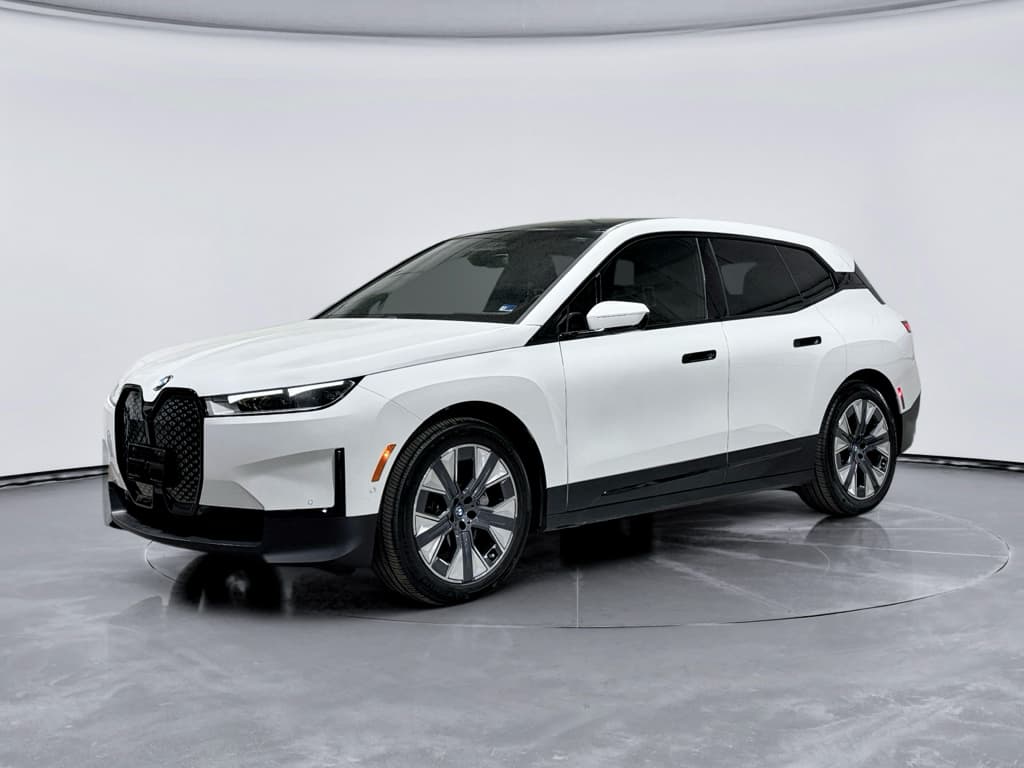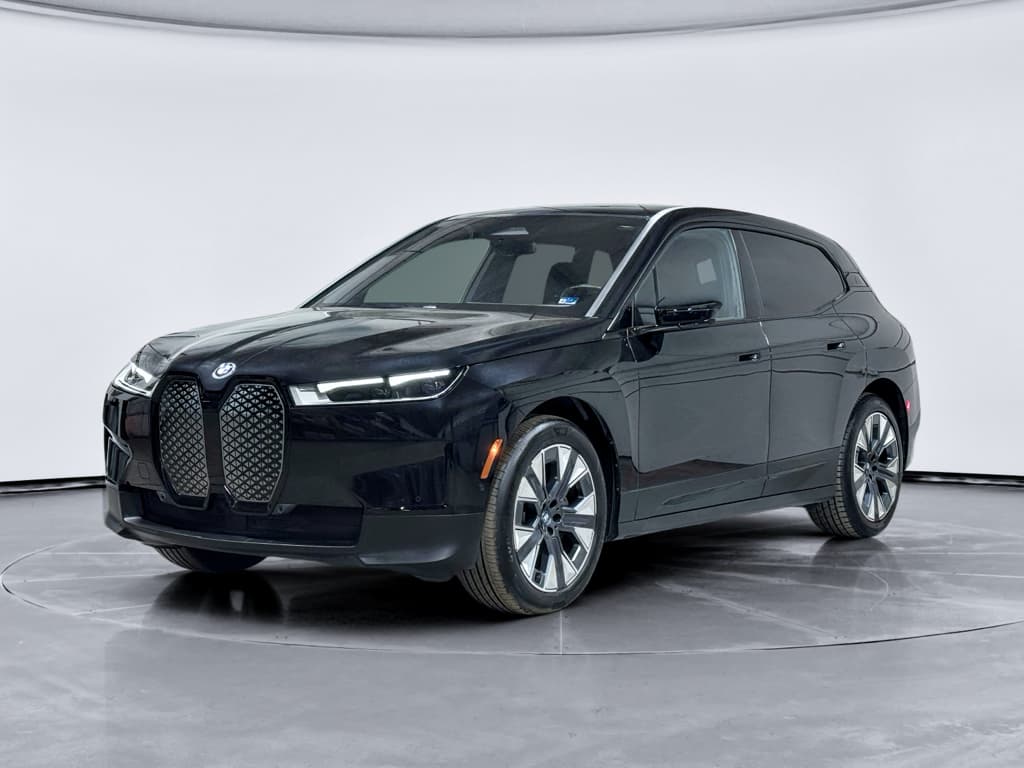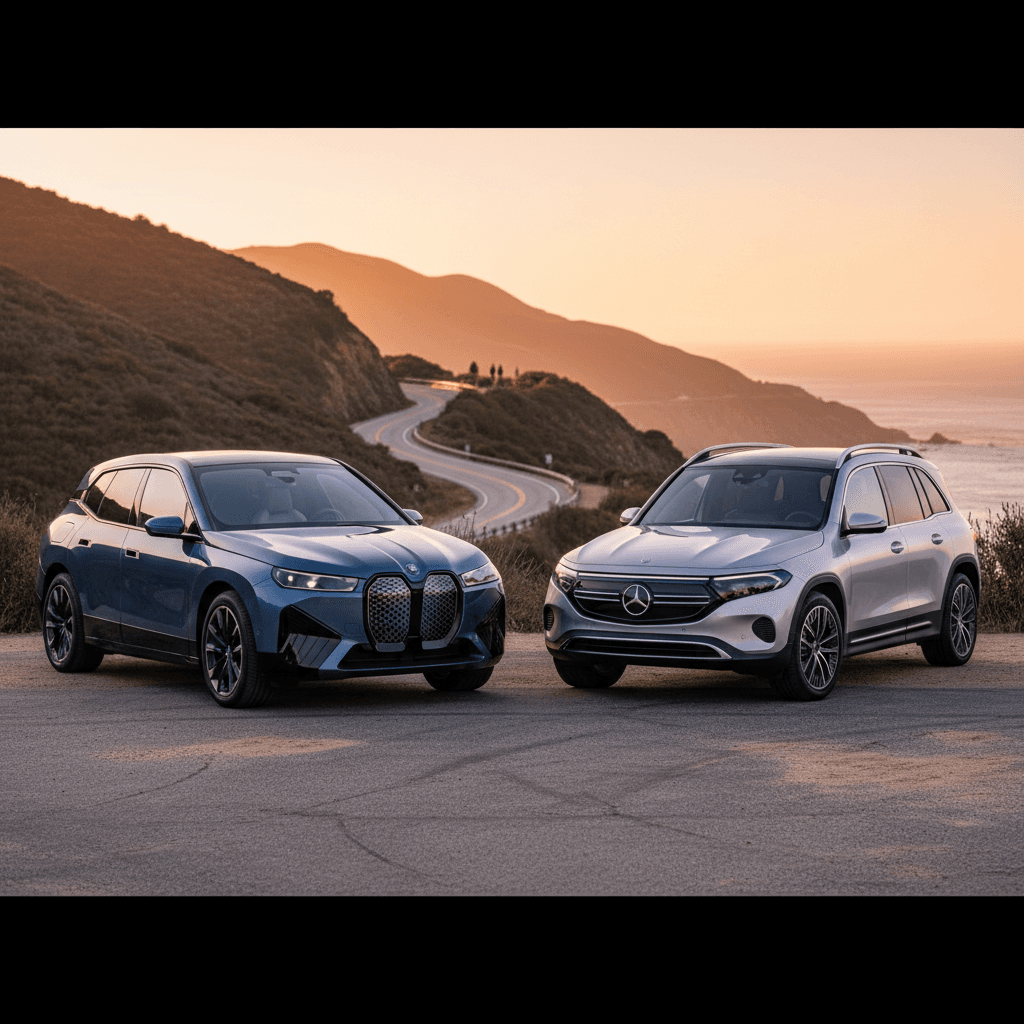
Putting the BMW iX vs Mercedes EQB in the same sentence is a little like comparing a five‑star resort to a very nice boutique hotel. They’re both electric SUVs with luxury badges and five seats, but they answer different questions: the iX asks, “How far can we push the luxury EV thing?” while the EQB asks, “How can we make a compact family hauler that just happens to be electric?” If you’re cross‑shopping them, especially on the used market, you’re not crazy, but you do need to be clear about what you actually want from an EV.
Same segment, very different missions
BMW iX vs Mercedes EQB: quick overview
Headline differences at a glance
Think of the iX as the electric X5, and the EQB as an electric GLB.
BMW iX – the big, quiet spaceship
- Size & class: Midsize luxury SUV, roughly BMW X5 footprint.
- Power: Dual motors; common trims around 516–610 hp, with huge torque.
- Battery & range: Large pack (up to ~111 kWh usable) and strong EPA range, especially in xDrive50 trims.
- Experience: Ultra‑quiet, lounge‑like cabin, lots of tech, serious highway comfort.
Mercedes EQB – the compact family cube
- Size & class: Compact SUV, basically an electric GLB.
- Power: 188–288 hp depending on 250+, 300 4Matic, or 350 4Matic.
- Battery & range: ~70.5 kWh battery, EPA range up to about 251 miles for the EQB 250+.
- Experience: Easy to park, upright seating, optional third row in some markets, more conventional Mercedes vibe.
Typical U.S. spec highlights (recent model years)
Model‑year details matter
Size, space, and practicality
Your first big decision is physical: do you want something that feels like a long‑distance luxury lounge, or a tidy urban family box? The BMW iX is simply a much larger, roomier vehicle than the Mercedes EQB, and you feel that immediately.
BMW iX: electric living room
- Footprint: Similar to a BMW X5 in length and width, with a long wheelbase and wide stance.
- Interior feel: Flat floor, no transmission tunnel, and a minimalist "lounge" design make the cabin feel huge for five people.
- Cargo: Roughly mid‑30s cubic feet behind the rear seats and close to 78 cu ft with them folded, so road‑trip gear and Costco runs are easy.
- Comfort: Generous legroom front and rear; it feels like it was designed for cross‑continent work and family trips.
Mercedes EQB: boxy and efficient with space
- Footprint: Compact SUV proportions, shorter and narrower than the iX, easier to thread through city streets and garages.
- Interior feel: More upright, traditional seating position; good headroom thanks to the boxy roofline.
- Cargo: Think compact SUV rather than wagon, good for strollers, daily errands, and luggage, but not a moving van.
- Optional 3rd row (in some versions): Occasionally you’ll see EQBs with a tiny third row, kid‑only territory, but a plus if you carpool.
Garage‑fit reality check
Power, performance, and driving feel
There’s no polite way to say this: in a straight fight, the BMW iX absolutely overwhelms the Mercedes EQB on power and refinement. That’s not really a criticism of the EQB; it’s just playing in a different league.
Typical performance snapshot (recent trims)
Exact figures vary by model year and market, but this gives you the flavor of each SUV.
| Model | Drivetrain | Approx. Power | 0–60 mph (approx.) | Driving character |
|---|---|---|---|---|
| BMW iX xDrive40/50 | Dual‑motor AWD | ~300–516 hp | ~4.4–6.0 sec | Surging, quiet, effortless; built for long highway days. |
| BMW iX M60 | Dual‑motor AWD | ~610+ hp | ~3.6 sec | Bonkers quick; feels like a performance sedan in a tall body. |
| Mercedes EQB 250+ | Single‑motor FWD | 188 hp | ~8.5 sec | Relaxed, adequate for city and suburban use. |
| Mercedes EQB 300 4Matic | Dual‑motor AWD | 225 hp | ~7.5 sec | More confident merging and passing, still not a hot rod. |
| Mercedes EQB 350 4Matic | Dual‑motor AWD | 288 hp | ~5.8 sec | Respectably quick, still tuned for comfort over drama. |
Always confirm the power and 0–60 mph specs for the exact trim and year you’re shopping.
On the road, the iX feels heavy but composed, with an eerily quiet cabin and a big, torque‑rich shove whenever you need to pass. The steering is light but precise; it’s more of a gliding luxury ship than a canyon‑carver. The EQB, by contrast, feels like a well‑mannered compact SUV: upright seating, good visibility, and much easier to place in traffic or tight parking decks. It never feels slow in 300 or 350 form, but it also never eggs you on.
Traction and weather
Range and charging: daily use vs road trips
Range and charging speed are where the BMW iX’s larger battery really pays off, but the EQB isn’t hopeless, especially if most of your life happens within 30–50 miles of home.
Range and charging comparison (recent U.S. models)
Key specs for typical trims you’ll see on the used market.
| Model | Battery (usable, approx.) | EPA range (best trims) | AC charging | DC fast charging |
|---|---|---|---|---|
| BMW iX xDrive50 | ~105–111 kWh | Mid‑300‑mile range possible in efficient specs | Up to 11 kW Level 2; full charge overnight on a 240V circuit | High peak DC rates; 10–80% often in ~35 minutes under ideal conditions |
| BMW iX xDrive40 (where offered) | Smaller pack | Shorter range, but still strong for daily use | Similar onboard charger | Similar DC fast behavior, shorter sessions due to smaller pack |
| Mercedes EQB 250+ | ~70.5 kWh | EPA rated about 251 miles | 9.6 kW onboard charger; full overnight charge on a typical 50‑amp home circuit | Up to ~100 kW DC; 10–80% in roughly 30–32 minutes |
| Mercedes EQB 300 / 350 4Matic | ~70.5 kWh | EPA around 205–207 miles | Same 9.6 kW AC | Same 100 kW DC peak, similar 10–80% times |
Figures are approximate and vary by wheel size, options, and model year; always check the window sticker or EPA data for the exact car.
Think in days, not just miles
- Home charging: Both vehicles are happiest on a 240V Level 2 setup. If you’re buying used, budget for a home charger or at least a properly installed 240V outlet if you don’t already have one.
- Public charging: The EQB uses CCS fast charging; the iX does as well on recent U.S. models. Adapters and the industry shift toward the NACS connector will expand your options over the next few years.
- Apartment life: If you rely heavily on public charging, the iX’s larger pack means you can stretch more days between sessions, but it also costs more to fill from empty. The EQB sips less energy per session but will need charging more frequently on road trips.
Price, value, and used‑market reality
Here’s where things get real. New, the BMW iX and Mercedes EQB are not remotely in the same price band, one is a flagship, the other is an entry point. On the used market, however, depreciation has pulled them closer together than you might expect.
BMW iX: luxury money, luxury feel
When new, a well‑equipped iX xDrive50 can easily crest into traditional high‑end luxury SUV pricing. On the used market, the upside is that you’re getting a serious discount on a very serious vehicle. The downside is that everything, from tires to insurance, still lives in the luxury tax bracket.
Think of the iX as a long‑term comfort investment. If you drive a lot of highway miles and want to arrive fresher than you left, it makes a credible case.
Mercedes EQB: the smaller, gentler buy‑in
The EQB starts much lower when new and typically stays more affordable used. You’ll often find it as one of the more attainable ways into a German luxury EV SUV, especially in 250+ trim.
Because it’s based on Mercedes’ compact architecture, running costs, tires, brake components, even some service items, tend to be closer to compact‑SUV territory than ‘flagship yacht.’ That matters over 5–8 years of ownership.
Where Recharged can help on price
Tech, comfort, and everyday livability
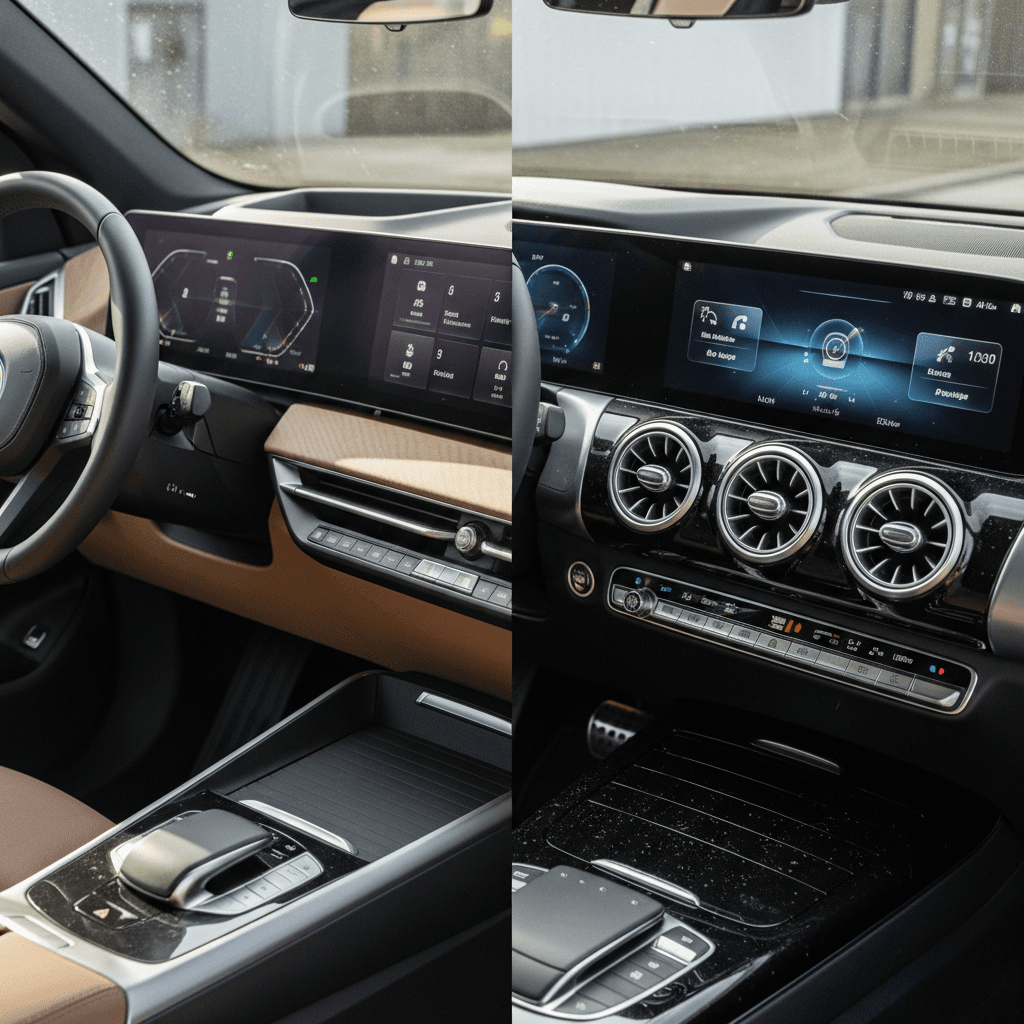
Both brands know how to do luxury, but they aim at different moods. The BMW iX interior is a concept car that accidentally made it to production, minimalist, airy, and a little avant‑garde. The Mercedes EQB, meanwhile, feels like a regular Mercedes SUV that quietly swapped out the gas bits for electric ones.
Cabin vibe and tech features
Two approaches to premium: spaceship vs familiar.
BMW iX: lounge and light show
- Huge curved display running BMW’s latest iDrive software, with slick graphics and plenty of configurability.
- Available crystal‑style controls, light wood, and a panoramic roof that can go from clear to frosted at the touch of a button.
- Excellent seats with optional massage, ultra‑quiet cabin, and a general sense of being in a rolling tech salon.
- Interface can feel dense at first, but once set up it fades into the background.
Mercedes EQB: neat, compact, familiar
- Dual‑screen layout running Mercedes’ MBUX system, with clear graphics and a more traditional control scheme.
- Ambient lighting, high‑quality materials, and the expected Mercedes switchgear and stalks.
- Seats are supportive, visibility is good, and the cabin feels simple to live with day to day.
- Smaller, more upright cabin means you’re closer to your passengers and windows, a plus for some drivers.
Family‑use lens
Safety, warranties, and long‑term ownership
Both the BMW iX and Mercedes EQB come loaded with modern safety tech, automatic emergency braking, lane‑keeping assistance, blind‑spot monitoring, and the usual alphabet soup of stability systems. At this level, the bigger differences in long‑term ownership are about warranty coverage, service cadence, and how the car fits your driving pattern.
- Battery warranties: Recent iX and EQB models typically carry around an 8‑year / ~100k‑mile high‑voltage battery warranty from new. When you’re buying used, check the in‑service date to see how much of that remains.
- Service: EVs need far less routine service than gas SUVs, but tires, brake fluid, cabin filters, and software updates still matter. Luxury‑brand parts and labor aren’t cheap, so factor dealer or specialist rates into your budget.
- Degradation and battery health: How a car was used and charged matters more than its badge. A gently used EQB that lived on Level 2 at home can age better than an iX that lived its life at DC fast chargers. This is exactly what Recharged’s battery‑health diagnostics are built to measure.
- Future‑proofing: Both models use today’s mainstream fast‑charging standards, and as more public chargers adopt the North American Charging Standard (NACS), adapter support will only grow. From a charging‑infrastructure standpoint, neither is a dead end.
Don’t ignore insurance and tires
BMW iX vs Mercedes EQB: who should buy which?
Once you strip away the brand loyalties and spec‑sheet battles, choosing between the BMW iX and Mercedes EQB is mostly about your life: where you drive, who you haul, and what kind of experience you want every day.
Match the SUV to the life you actually live
Choose the BMW iX if…
You routinely drive long highway distances, care a lot about cabin quiet and comfort, and want your EV to feel like a next‑generation luxury flagship. You’re okay with a physically larger vehicle, higher running costs, and a higher purchase price in exchange for more range, power, and serenity.
Choose the Mercedes EQB if…
You live in a city or suburb, park in tight spaces, and mostly run short to medium‑length trips. You want an approachable, compact luxury SUV that just happens to be electric, and you’d rather spend less on the buy‑in and on tires, insurance, and daily running costs.
You prioritize cargo and road‑trip comfort
Leaning iX. Its larger footprint, longer range, and lounge‑like cabin make it the better family road‑trip machine, especially if you drive to visit relatives several states away.
You prioritize easy parking and school‑run duty
Leaning EQB. The smaller footprint, good visibility, and simpler cabin make daily kid‑and‑errand duty easier, and you’re less likely to cringe at every parking‑garage scrape.
You’re EV‑curious but budget‑sensitive
Leaning EQB. On the used market, an EQB 250+ or 300 4Matic can be a smart first step into EV ownership without committing flagship‑SUV money.
You already love big German luxury SUVs
Leaning iX. If you’re used to an X5, GLE, or Q7, the iX feels like the natural electric evolution, only quieter and quicker.
Shopping used iX or EQB? How Recharged fits in
On the used market, the real wild card isn’t horsepower or screen size, it’s battery health and whether the price actually reflects the car’s remaining life. That’s where a little structure and data go a long way.
Why to shop a used BMW iX or EQB through Recharged
Transparency first, drama later (when you floor it).
Verified battery health
Fair‑market pricing
Specialist help and easy logistics
Ready to find your next EV?
Browse VehiclesIf you want the all‑out luxury EV experience, the BMW iX is the one that will keep surprising you years into ownership. If you want an approachable, compact, premium EV SUV for real‑world family life, the Mercedes EQB quietly gets the job done. The good news is that the used market now puts both within reach of more buyers, and with tools like the Recharged Score Report, you can choose with your eyes open instead of rolling the dice on battery health. Decide what kind of life you want your EV to serve, then let the specs (and your parking space) guide you the rest of the way.