If you own a Ford Mustang Mach‑E or you’re about to buy one, especially a used Mach‑E, picking the right home charger will quietly determine how easy (or frustrating) your EV life feels. This guide walks through Mach‑E charging basics, what to look for in a Level 2 unit, and which options are actually the best home chargers for a Mustang Mach‑E in 2025.
The short answer
Why home charging matters for your Mustang Mach‑E
Mustang Mach‑E home charging at a glance
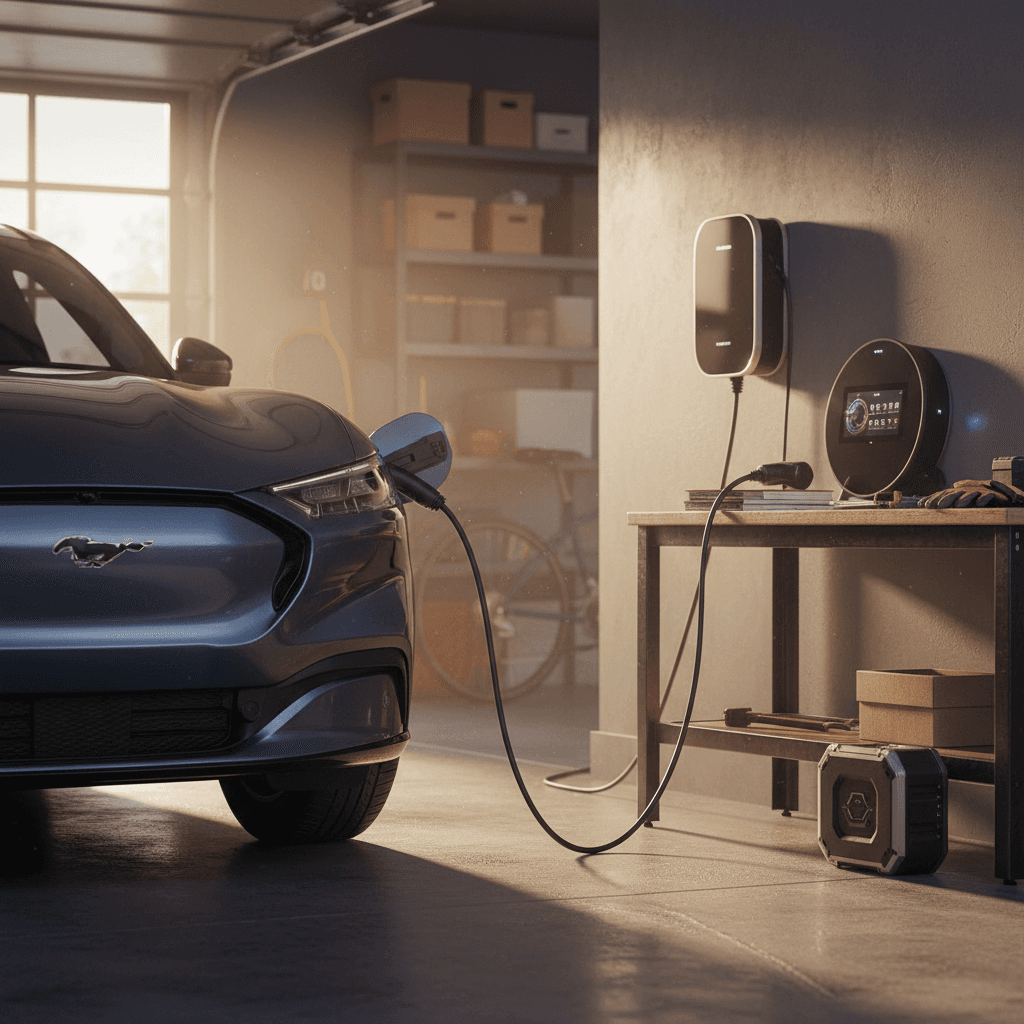
The Mach‑E is designed around the assumption that you’ll charge mostly at home. Public DC fast charging and Tesla Superchargers are great for road trips, but they’re too expensive and inconvenient to be your daily solution. A solid home setup means you plug in when you get home, wake up every morning with the range you need, and avoid fighting for public chargers or paying premium kWh prices.
Mach‑E charging basics: what you’re working with
Before you can choose the best home charger for a Mustang Mach‑E, you need to know what the car itself can handle. Recent U.S. Mach‑E models ship with an onboard AC charger rated around 11 kW on 240V power, which translates to a maximum of about 48 amps on a dedicated circuit. In other words, buying a home charger that can deliver roughly 40–48A at 240V lets you charge at the car’s full potential.
- Battery sizes: roughly 70 kWh (standard-range) and 90+ kWh (extended-range), depending on model year and trim.
- Onboard charger: ~11 kW AC, so there’s no benefit to a home charger rated far above that for a single Mach‑E.
- Connector: J1772 inlet for AC charging; you’ll use a CCS or NACS adapter only for DC fast charging, not for home Level 2.
Don’t confuse AC and DC numbers
Home charging options: Level 1 vs. Level 2 for Mach‑E
Level 1 (120V outlet)
- Uses a standard household outlet and the included Ford mobile cord.
- Adds roughly 3–4 miles of range per hour of charging.
- Good only if you drive very little or you’re waiting on a proper install.
- Can take 2–3 days to fully charge a depleted battery.
This is better than nothing, but for most Mach‑E owners it’s a temporary solution, not a long‑term plan.
Level 2 (240V circuit)
- Requires a 240V circuit (similar to an electric dryer).
- Typical units deliver 32–48 amps of current.
- Can add roughly 25–35 miles of range per hour, depending on amperage and conditions.
- Comfortably refills a low battery overnight, even on extended‑range Mach‑E trims.
Level 2 is what transforms Mach‑E ownership, from managing around public chargers to simply plugging in at home and forgetting about it.
Bottom line
How to choose the best home charger for a Mustang Mach‑E
There isn’t one universally “best” home charger; there’s the best match for your panel, driving habits, and budget. Here are the factors that matter most for a Mach‑E specifically.
Key criteria for Mach‑E home chargers
Match the charger to your car, panel, and lifestyle, not to marketing claims.
Amperage & speed
For the Mach‑E’s 11 kW onboard charger, aim for 40–48 amps if your electrical panel allows it. If your panel is tight, a 32A unit can still easily cover 40–60 miles of daily driving.
Plug‑in vs. hardwired
Hardwired units support higher amperage (up to 48A) but require an electrician. Plug‑in models (NEMA 14‑50/6‑50) cap out around 40A continuous but offer flexibility and easier replacement.
Smart features
App‑connected chargers let you track energy use and sometimes respond to utility rates. With a Mach‑E you can also schedule charging in the car, so a “dumb” but reliable charger is perfectly viable.
Durability & weather
If you’re mounting outdoors, look for NEMA 3R/4 enclosures, thick cables, and a solid connector holster. Cheap housings and flimsy cables tend to age poorly in real weather.
Total cost
Budget for both the charger and the installation. An affordable unit plus a modest electrical run often beats overspending on a fancy charger but skimping on a quality install.
Future‑proofing
Most third‑party J1772 chargers will work with other non‑Tesla EVs you might own later. If you expect your next EV to be NACS‑native, you can either use adapters or opt for a dual‑standard solution when they become common.
Check utility and automaker perks
Top home charger picks for the Ford Mustang Mach‑E
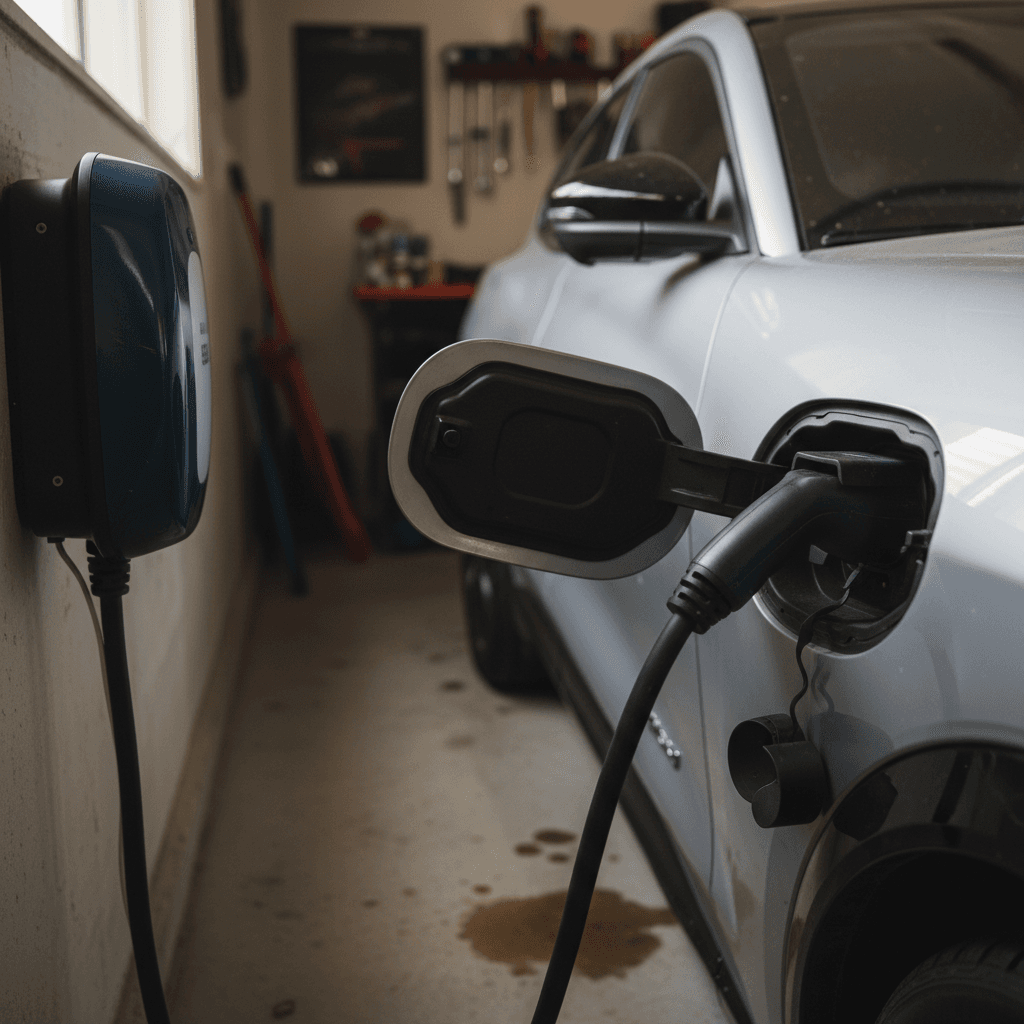
Based on Mach‑E‑specific testing and owner feedback, several Level 2 units consistently rise to the top. Below are categories rather than a single winner, because what’s “best” depends on whether you value price, durability, smarts, or ecosystem integration the most.
Comparison table: standout Mustang Mach‑E home chargers
Representative options Mach‑E owners commonly choose. Exact pricing will vary by retailer and utility rebates.
| Charger | Max Amps | Smart App | Mount/Plug | Typical Street Price | Best For |
|---|---|---|---|---|---|
| Ford Connected Charge Station | 48A | Basic (Ford ecosystem) | Hardwired | Higher | Brand‑matched, full‑power charging at home |
| Emporia Level 2 | 48A | Yes (robust energy data) | Hardwired or NEMA 14‑50 | Value‑oriented | Data nerds, tracking costs and solar integration |
| ChargePoint Home Flex | 50A (40A typical plug‑in) | Yes | Hardwired or plug‑in | Mid‑to‑high | Polished app, utility partnerships, widespread support |
| Grizzl‑E Classic | 40A | No (basic) | NEMA 14‑50/6‑50 | Budget | Durable, simple, outdoor‑friendly charging |
| Wallbox Pulsar Plus | 40–48A | Yes | Hardwired or plug‑in | Mid‑range | Compact design, strong smart‑charging features |
Always verify the latest pricing and availability before you buy, home chargers change less often than phones, but more often than wall ovens.
The Ford Connected Charge Station is designed with the Mach‑E in mind and can deliver the full 48A your car can accept, but many owners find third‑party chargers offer better apps or value for money. Honest Mach‑E owner polls tend to cluster around Emporia, ChargePoint, Grizzl‑E, and Wallbox as the default choices when they’re not taking a free or discounted Ford unit as part of a purchase program.
About Tesla Wall Connectors at home
Installation, electrical, and safety checklist
The smartest Mach‑E charger in the world won’t help you if it’s fed by an undersized or improperly installed circuit. Before you click “buy,” think about the wiring path, breaker capacity, and how long you plan to stay in the home.
Pre‑install checklist for Mach‑E home charging
1. Get a panel health check
Have a licensed electrician confirm your service size (e.g., 100A vs 200A), remaining capacity, and whether a 40–60A breaker for a charger is realistic without a costly upgrade.
2. Choose amperage based on capacity
If your panel is tight, a 32A charger on a 40A breaker may be better than chasing 48A. For most drivers, 32A overnight charging is still more than enough to cover daily use.
3. Decide on location and cable length
Plan for where your Mach‑E usually parks and which side the charge port lives on (front driver side). A 23–25 ft cable generally gives enough flexibility without being a tripping hazard.
4. Pick plug‑in vs. hardwired
Hardwiring is cleaner and supports higher current, but a NEMA 14‑50 outlet plus plug‑in unit can be easier to replace or take with you if you move.
5. Confirm permits and inspection
Many jurisdictions require a permit and inspection for a new 240V circuit. Skipping this may cause insurance or safety headaches later.
6. Keep safety first
Insist on GFCI protection where required, proper mounting hardware, and weather‑appropriate conduit. Don’t run a high‑amp EVSE through sketchy extension cords or DIY adapters.
Avoid this common shortcut
Smart charging, apps, and using FordPass
One quirk of the Mach‑E ecosystem is that a lot of the intelligence lives in the vehicle and FordPass app, not necessarily in the wallbox. That gives you some flexibility: you can lean on a smart charger app, FordPass, or a mix of both.
Using a smart charger app
- Track energy use per session or per month, helpful if you want to see exactly what your Mach‑E costs to run.
- Some apps can respond to time‑of‑use rates or utility signals automatically.
- Good if your household has multiple EVs and you want a unified view.
Relying on FordPass and the car
- Schedule charging and departure times directly in the Mach‑E or FordPass.
- Use Plug & Charge and public‑network links without involving the home charger.
- Works well with a simpler, non‑networked Level 2 unit.
Keep the car plugged in
Home charging costs and savings for Mach‑E owners
From a cost perspective, home charging is where the Mach‑E shines. Imagine a typical U.S. residential electricity rate of around $0.15 per kWh. If your Mach‑E uses roughly 30 kWh per 100 miles in mixed driving, that’s about $4.50 per 100 miles, the rough equivalent of driving a gas SUV at well over 60 mpg once you compare against current fuel prices.
- Public DC fast charging can easily cost 2× home rates, especially along highway corridors.
- Level 2 at home lets you rely on home pricing for 80–90% of your miles and save public fast charging for road trips.
- Smart charger or FordPass scheduling can push most of your charging into off‑peak windows, trimming costs even further if your utility offers time‑of‑use rates.
Think in years, not months
How home charging connects to battery health and resale
Home charging isn’t just about convenience and cost; it quietly shapes your battery’s long‑term health and the vehicle’s resale value. Frequent DC fast charging can heat the pack and accelerate wear, while regular, moderate‑power Level 2 sessions at home are closer to the ideal scenario battery engineers design for.
At Recharged, every used EV comes with a Recharged Score Report that includes objective battery health diagnostics and real‑world range estimates. When we see a Mach‑E that’s been mostly home‑charged on Level 2, with limited DC fast‑charging use, that often correlates with healthier long‑term battery performance, something future buyers increasingly care about.
Good charging habits pay you back
Ford Mustang Mach‑E home charger FAQ
Frequently asked questions about Mach‑E home charging
Key takeaways: choosing your Mach‑E home charger
If you remember nothing else from this guide, remember this: the best home charger for a Ford Mustang Mach‑E is a properly installed 40–48A Level 2 unit, on a dedicated 240V circuit, from a brand you trust. Whether that’s Ford’s own Connected Charge Station or a third‑party unit like Emporia, ChargePoint, Grizzl‑E, or Wallbox matters less than getting the fundamentals right, safe wiring, adequate amperage, sensible cable routing, and a setup you’re comfortable using every single night.
Home charging is the quiet backbone of EV ownership. It keeps your Mach‑E ready every morning, tames running costs, and supports healthier batteries and stronger resale value over time. And if you’re still in the shopping phase, exploring used Mach‑E listings on Recharged gives you not just a car, but expert guidance and a clear picture of battery health so you can build a smart, long‑term charging plan around the vehicle you actually buy.