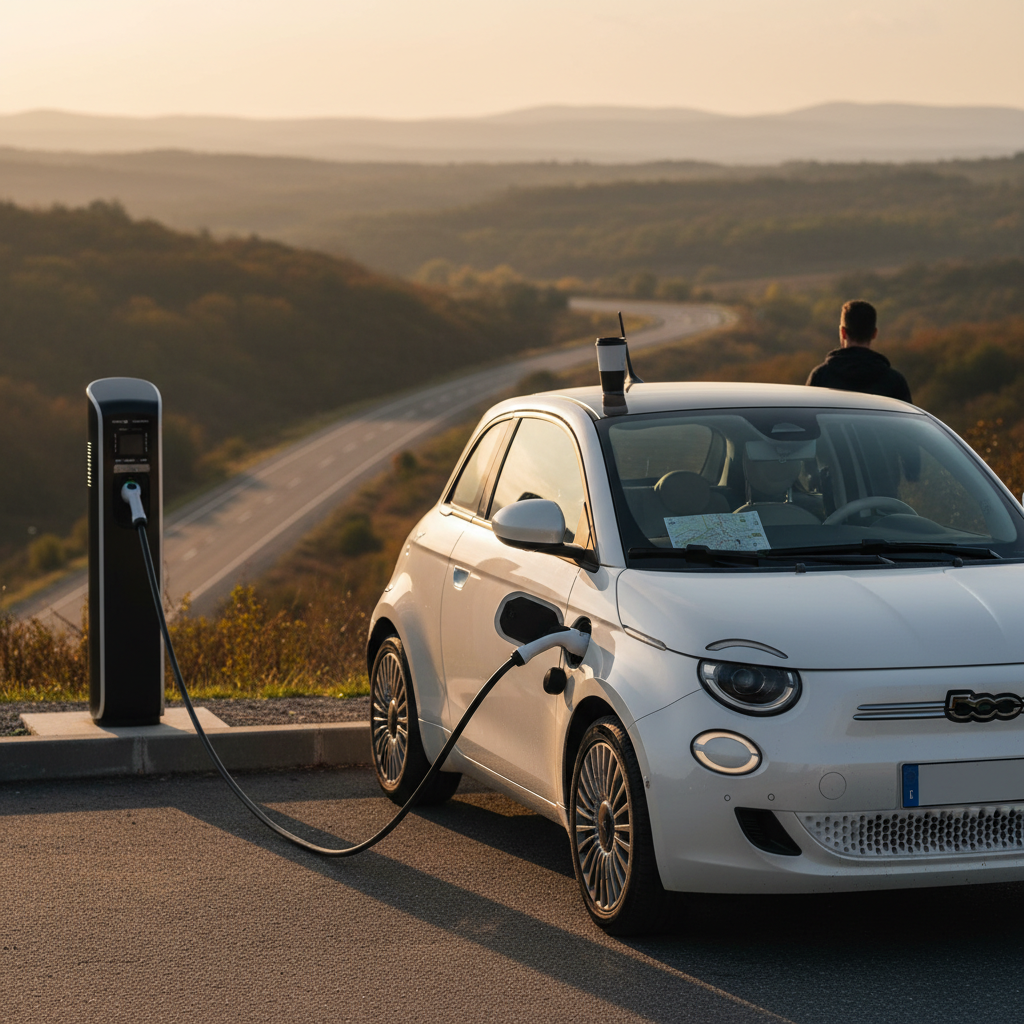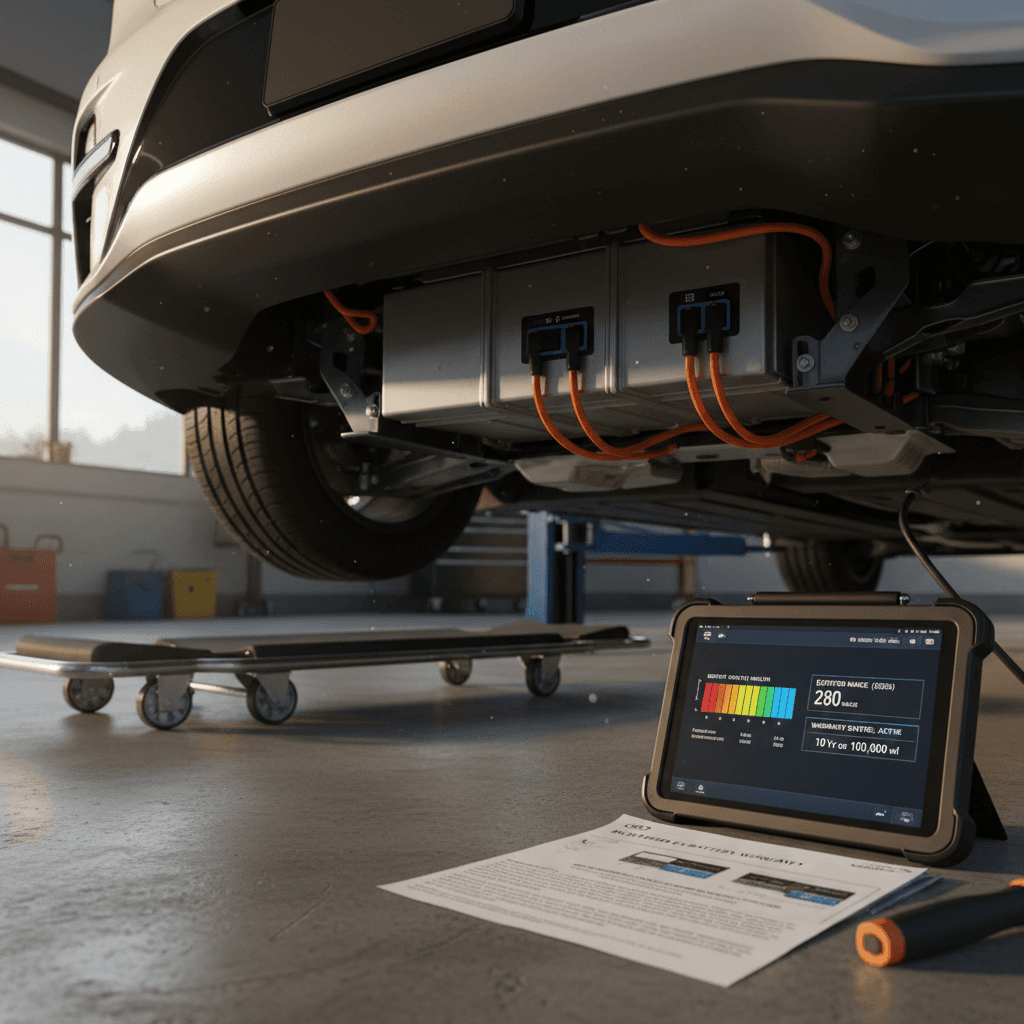
If you’re looking at a Ford Mustang Mach-E, especially a used one, the single most important thing to understand is its battery warranty. The high-voltage pack is the most expensive component in the car, and Ford’s warranty terms are your financial backstop if something goes wrong or the battery loses too much capacity too soon.
Quick answer
Overview of the Mustang Mach-E Battery Warranty
Ford structures the Mustang Mach-E warranty the way most legacy automakers handle EVs: a standard bumper-to-bumper warranty for the whole vehicle, plus a separate, longer warranty for electric-unique components, primarily the high-voltage battery pack and drive units. When people talk about “the Mach-E battery warranty,” they’re talking about this dedicated EV component coverage, not the basic warranty that covers paint, trim, and non-EV hardware.
Mustang Mach-E Warranty at a Glance
How the battery warranty fits into the bigger picture
High-voltage battery
8 years / 100,000 miles (U.S.) from the original warranty start date, covering defects and excessive capacity loss.
Electric-unique components
Electric drive units and other high-voltage components generally share the 8-year / 100,000-mile window.
Basic vehicle warranty
Separate 3-year / 36,000-mile (typical U.S.) bumper-to-bumper coverage plus powertrain and corrosion warranties, which are shorter than the battery term.
Country differences matter
How Many Years and Miles Does the Mach-E Battery Warranty Cover?
Ford’s own support documentation for hybrid and electric vehicles states that EV batteries are covered for 8 years or 100,000 miles from the warranty start date, whichever comes first, and that this includes “excessive capacity loss.” For a Mustang Mach-E sold new in the U.S., the warranty start date is typically the day it was first delivered to or registered by the original owner, not the model year printed on the window sticker.
Typical U.S. Warranty Terms for a New Mustang Mach-E
Approximate coverage windows you’ll see on a new Mach-E in the U.S. market.
| Coverage type | Years | Miles | What it generally covers |
|---|---|---|---|
| Bumper-to-bumper | 3 | 36,000 | Most non-wear items, electronics, interior, exterior defects |
| Powertrain (non-EV) | 5 | 60,000 | Engine & transmission on gas vehicles (less relevant to Mach-E) |
| Electric-unique components | 8 | 100,000 | High-voltage battery pack, drive units, and other EV-only hardware |
| Corrosion (perforation) | 5 | Unlimited | Rust-through of body panels |
| Roadside assistance | 5 | 60,000 | Towing, jump starts, lockouts (varies by year) |
Always verify exact terms for your model year in the official Ford warranty booklet.
When does the clock start?
Capacity Loss: When Will Ford Replace a Mach-E Battery?
Beyond outright defects, the most important part of the Ford Mustang Mach-E battery warranty is its protection against excessive capacity loss. All lithium-ion batteries lose some capacity over time, but Ford essentially promises that the Mach-E’s pack will retain at least around 70% of its original usable capacity over the 8-year / 100,000-mile warranty period under normal conditions.
How capacity-loss coverage works
- Ford monitors battery health through the vehicle’s battery management system (BMS).
- If the pack’s capacity falls below the internal threshold (often discussed as ~70% of original), within the warranty period, Ford may repair or replace modules or, in rare cases, the entire pack.
- Dealers use diagnostic tools to confirm degradation isn’t due to abuse or excluded conditions.
What you should document
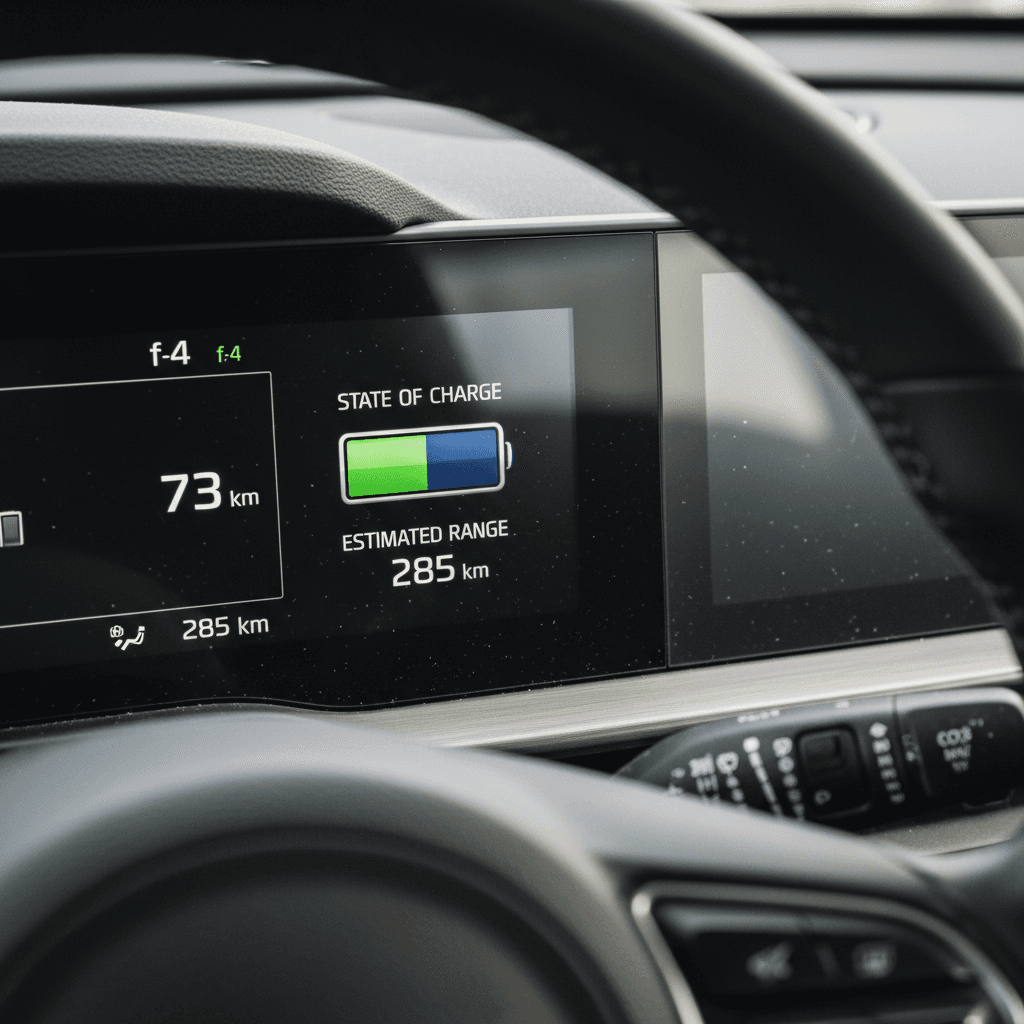
- Take periodic photos of your full-charge estimated range in similar conditions (same route, temperature).
- Keep records of your charging habits (home vs. DC fast charging).
- If you notice a sudden, large drop in range, schedule a visit with an EV-certified Ford dealer as soon as possible.
Range vs. capacity
What’s Covered, And What Isn’t, Under the Mach-E Battery Warranty
The Mach-E battery warranty is generous in duration, but it isn’t a blank check. Like every automaker, Ford draws a line between defects in materials or workmanship (their responsibility) and damage, misuse, or normal wear (your responsibility). Understanding where that line falls helps you avoid nasty surprises.
Mach-E Battery Warranty: Covered vs. Not Covered
Typical examples based on Ford EV warranty language
Generally covered
- Manufacturing defects in the battery pack or modules
- Internal battery failures not caused by an accident or misuse
- Excessive capacity loss within 8 years / 100,000 miles
- Defects in high-voltage wiring and EV-specific components
Generally not covered
- Damage from collisions, floods, or improper repairs
- Aftermarket modifications to the high-voltage system
- Abuse (e.g., deliberate overheating, racing usage that exceeds design intent)
- Normal, gradual capacity loss that still stays above the threshold
Don’t assume aftermarket mods are OK
New vs. Used Mustang Mach-E: How Battery Warranty Transfers
Unlike some extended warranties and dealer add-ons, the Ford Mustang Mach-E’s factory battery warranty is attached to the vehicle, not the owner. That’s good news if you’re shopping used or thinking about resale value: any remaining portion of the 8-year / 100,000-mile coverage typically transfers to the next owner automatically.
- If you buy a 2-year-old Mach-E with 25,000 miles, you still have roughly 6 years and 75,000 miles of original battery coverage left, assuming the car was first placed in service 2 years ago.
- If you buy a 6-year-old Mach-E with 90,000 miles, your coverage is limited by whichever comes first: you’ll hit the 100,000-mile mileage cap long before the 8-year time limit.
- If you buy a high-mileage Mach-E used for rideshare or delivery, check carefully: it’s common to see cars that are only 3–4 years old but already close to the 100,000-mile limit.
Get the in-service date
Real-World Mach-E Battery Longevity and Degradation
Warranty terms tell you what Ford is willing to back financially. Real-world stories tell you how often owners actually need that backstop. So far, early data for the Mustang Mach-E has been encouraging: packs are generally holding up better than many shoppers expect.
What We’re Seeing in the Real World
Those anecdotes line up with broader EV data: most modern packs, when cooled and managed properly, degrade slowly if you avoid the extremes. That doesn’t mean nobody will ever need a warranty replacement, but it does suggest the 8-year battery warranty is backing a pack that’s already quite robust.
How to Protect Your Mach-E Battery, and Its Warranty
The Mach-E’s liquid-cooled, actively managed battery is designed to be largely hands-off, but your habits still matter. Ford’s own guidance, combined with what we’ve seen from high-mileage owners, points to a few simple practices that protect both real-world range and your warranty position.
Battery Care Habits Ford Likes to See
1. Avoid living at 0% or 100%
Try to keep daily charging between about <strong>20% and 80%</strong>. Save full 100% charges for road trips, and don’t leave the car parked at 0% for long periods.
2. Use DC fast charging strategically
Fast charging is fine for road trips, but heavy daily reliance on it can accelerate wear. If possible, lean on <strong>Level 2 home or workplace charging</strong> for routine use.
3. Precondition while plugged in
In very hot or cold weather, precondition the cabin and battery while the Mach-E is still plugged in. This reduces stress on the pack and preserves range.
4. Keep software up to date
Over-the-air updates can refine thermal management and charging behavior. Staying current ensures you get Ford’s latest battery-management tweaks.
5. Document issues early
If you see sudden, unexplained drops in range or charging behavior, <strong>log what you see and visit an EV-certified dealer</strong> before the problem worsens, or your warranty expires.
Home charging is your friend
Ready to find your next EV?
Browse VehiclesShopping for a Used Mach-E? Battery Warranty Checklist
For used buyers, the Mach-E’s battery warranty is both a safety net and a negotiation tool. You want to know how much coverage is left, whether the car’s history supports Ford’s expectations, and how the pack is actually performing today.
Used Mustang Mach-E Battery & Warranty Checklist
Confirm in-service date and mileage
Ask for documentation or have a Ford dealer pull the <strong>warranty start date</strong> and odometer history by VIN. Subtract from 8 years / 100,000 miles to see how much coverage remains.
Review charging history and use case
Light commuter use with mostly home Level 2 charging is ideal. High-mileage rideshare or heavy DC fast-charging use isn’t a dealbreaker, but it raises the stakes on verifying battery health.
Check current range vs. original EPA rating
Compare the car’s real-world full-charge range (in similar temperature and driving conditions) to the original EPA rating for that trim. A modest drop is normal; a dramatic drop deserves deeper diagnostics.
Ask for a professional battery health report
A <strong>pack-level diagnostic</strong> is far more informative than a simple test drive. Every EV sold through Recharged includes a <strong>Recharged Score</strong> battery health report, so you’re not guessing about degradation.
Inspect for damage & modifications
Look for signs of flood, collision repairs near the battery, or aftermarket high-voltage mods. All of these can complicate or void warranty claims.
Leverage transparency when you finance
Ford Mustang Mach-E Battery Warranty FAQ
Common Questions About Mach-E Battery Coverage
Bottom Line: How Confident Should You Be in the Mach-E Battery?
On paper, the Ford Mustang Mach-E battery warranty looks a lot like the rest of the EV industry: 8 years or 100,000 miles, with explicit protection against excessive capacity loss. In practice, early high-mileage examples suggest Ford designed the pack to comfortably exceed that bar when owners follow reasonable charging and driving habits.
If you’re buying new, that warranty period likely covers your entire initial ownership window. If you’re buying used, the key is understanding how much warranty remains and how the pack has actually aged. That’s where data matters: odometer readings, in-service dates, charge histories, and real diagnostics, not just a salesperson’s assurance that “it drives fine.”
At Recharged, every used EV comes with a Recharged Score battery health report and transparent pricing, so the Mach-E’s long battery warranty isn’t a mystery, it’s another data point you can see and factor into your decision. Combine that transparency with Ford’s 8-year coverage and smart daily habits, and the Mach-E’s battery should be an asset you feel comfortable betting on, not a ticking time bomb to worry about.