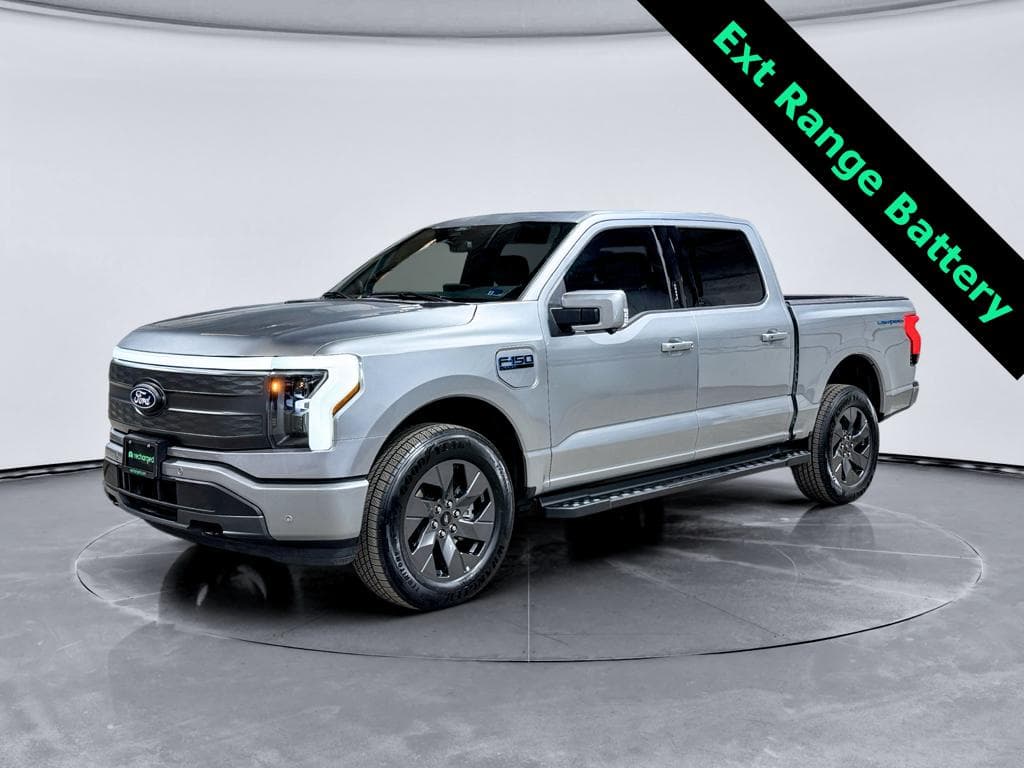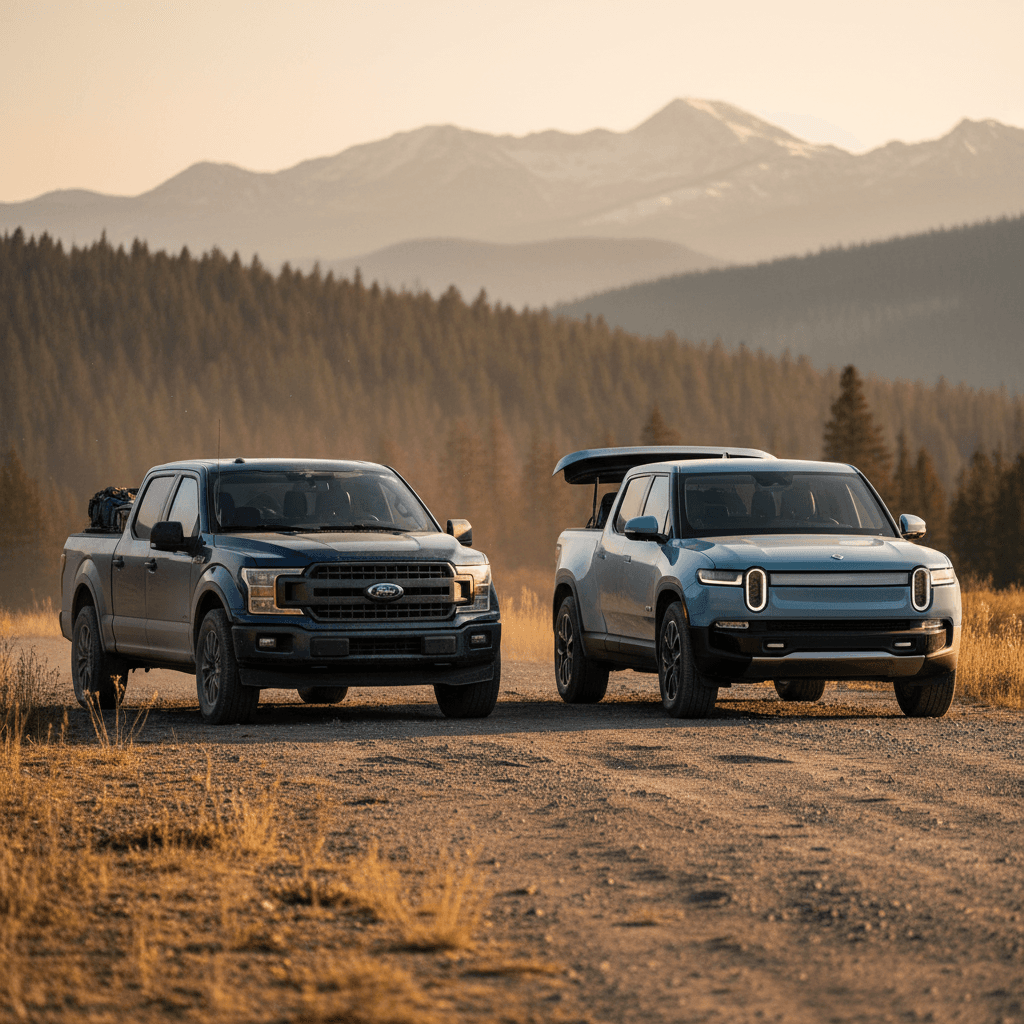
If you’ve spent years in a Ford F‑150, the idea of switching to a Rivian R1T can feel like trading your favorite work boots for a pair of space-age sneakers. Same basic job; totally different experience. This review is written for truck people first, looking at towing, payload, comfort, and real-world range from an F‑150 owner’s point of view, with a special eye toward buying a used R1T.
Context: Which F‑150 Are We Talking About?
Why F‑150 Owners Are Looking at the Rivian R1T
What Draws Ford F‑150 Owners to the Rivian R1T
Performance, tech, and the appeal of skipping gas stations
Shocking Performance
The R1T’s dual- and quad-motor setups deliver instant torque that makes even a strong EcoBoost F‑150 feel sleepy off the line. 0–60 mph can drop into the mid‑3‑second range in some trims, sports-car territory in a crew-cab pickup.
No Gas, Less Noise
If your F‑150 has lived on a steady diet of $4+ gas, the idea of plugging in at home, skipping oil changes, and cruising in near silence is a big part of the R1T’s appeal.
Adventure Hardware Built-In
An adjustable air suspension, serious off‑road modes, a lockable gear tunnel, and available camp kitchen mean the R1T shows up ready for weekends, not just job sites.
There’s also the intangible factor: Rivian has quickly become the enthusiast’s EV truck. Surveys of EV owners have consistently put the R1T near the top for overall satisfaction, performance, comfort, and perceived quality. For a lot of F‑150 owners, it feels less like “going green” and more like upgrading to the most interesting truck on the road.
Specs Face-Off: Ford F‑150 vs R1T
Ford F‑150 vs Rivian R1T: Key Numbers at a Glance
How a modern gas F‑150 stacks up against the Rivian R1T on the stuff truck owners care about.
| Spec | Typical Ford F‑150 (gas 4x4) | Rivian R1T (dual motor) |
|---|---|---|
| Horsepower | 325–400 hp | 533+ hp |
| Torque | 400–500 lb‑ft (turbo V6) | 610+ lb‑ft (instant) |
| Tow Rating | 9,000–13,000 lb | Up to 11,000 lb |
| Payload | ~1,500–2,200 lb | Up to ~1,760 lb |
| 0–60 mph | Around 6–7 sec | As quick as ~3.5–4.0 sec |
| Overall Length | ~231–243 in | ~217 in |
| Bed Length | 5.5–6.5 ft | 4.5 ft (with clever storage) |
Representative specs shown for a well-equipped 4x4 F‑150 and a dual‑motor Rivian R1T. Exact numbers vary by year and configuration.
Important Caveat on Range vs Tank
Daily Driving: How the R1T Feels After an F‑150
Ride, Handling, and Visibility
Coming from an F‑150, the first thing you notice is how planted and car-like the R1T feels. The battery pack’s low center of gravity kills a lot of the head toss and body roll you’re used to from a body‑on‑frame truck. In town, the shorter overall length makes parking lots and tight streets noticeably easier.
The flip side: the front end is higher and more sculpted, so the R1T’s "nose" can feel bulkier when you’re creeping into a tight spot. Most owners adapt within a week.
Power Delivery and Braking
Think of the R1T’s throttle like a big rheostat for torque. There’s no downshift, no turbo spool, just linear shove from a standstill. If you tow or haul, that control at low speed feels almost like cheating when backing a trailer or easing a heavy load up a steep driveway.
Regenerative braking is the other big difference. One‑pedal driving lets you roll off the accelerator and slow down without touching the brake pedal most of the time. Once you’re used to it, hopping back into a conventional F‑150 can feel oddly old‑fashioned.
Owner-Style Tip
Towing With a Rivian R1T (Coming From a Ford)
Realistic R1T Towing Range Expectations
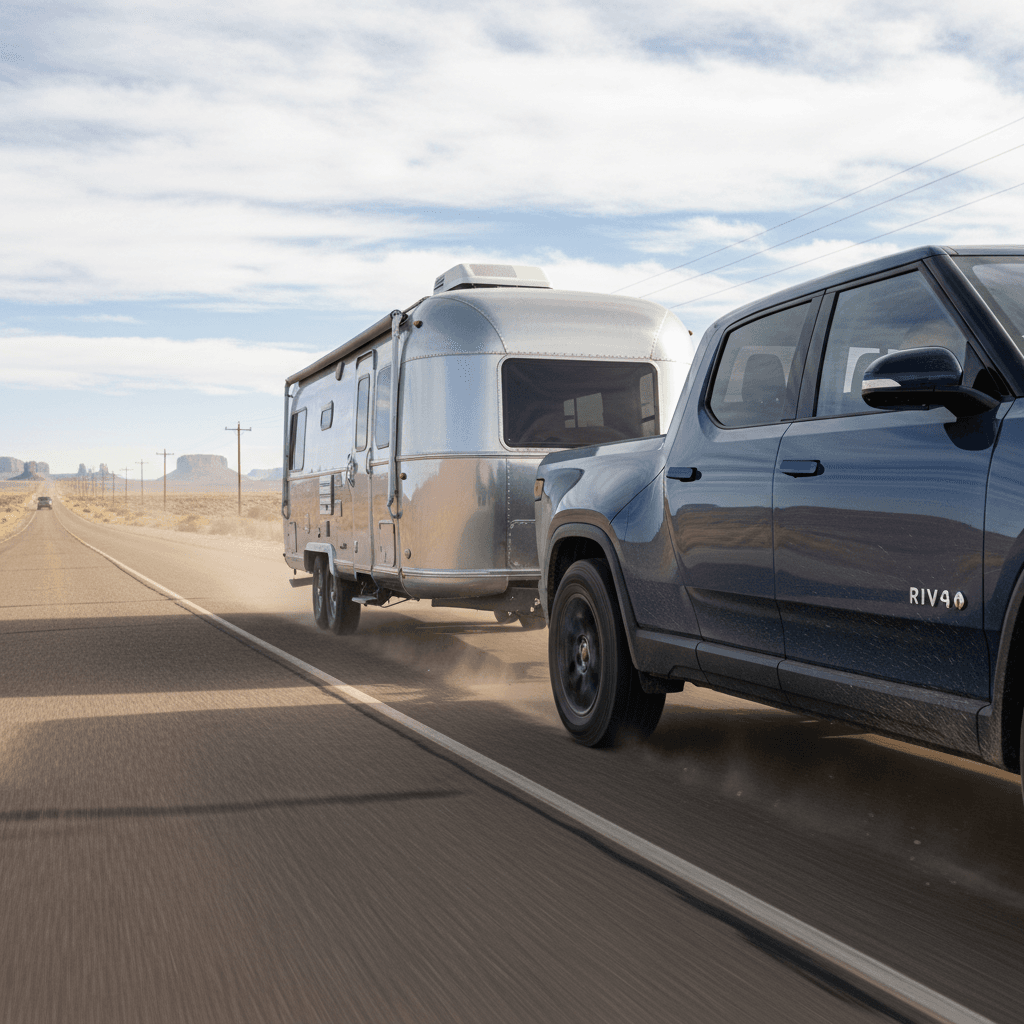
If you’re used to an F‑150, you already know the drill: loaded trailers add drag, kill mileage, and demand more planning. The Rivian R1T is no different there, except the fuel stops are now charging stops, and the hit to your usable range is front and center on the dash.
- With a mid-size, reasonably aerodynamic travel trailer, many owners see highway energy use around 1.3–1.6 kWh per mile and roughly half their normal solo range.
- Tall, boxy toy haulers, enclosed car trailers, or big fifth wheels can chew through range even faster; think more in terms of 80–100 mile legs between chargers.
- Light, low trailers, small boats, single‑axle utility trailers, small campers, hurt range much less and are where the R1T shines as a tow rig.
The Hard Truth for Long-Distance Towing
Range and Charging: What Changes When You Go Electric
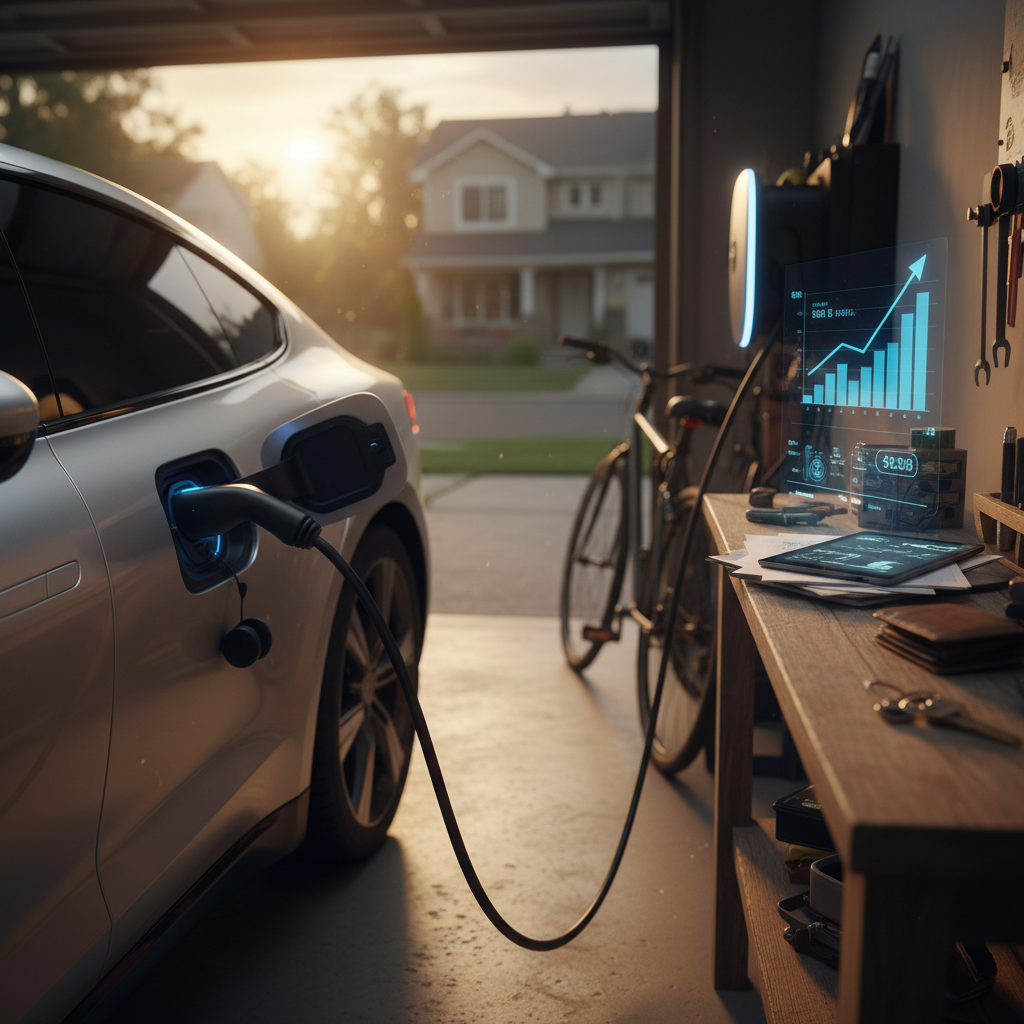
Think of the Rivian’s battery as your new fuel tank, and your driveway as the gas station. For many former F‑150 owners, the biggest lifestyle shift isn’t towing, it’s realizing they almost never have to visit a public charger during the workweek.
Living With R1T Range Day to Day
How it stacks up against your mental F‑150 fuel gauge
Daily Commutes
If your round-trip commute is under 80 miles, even the smaller packs will feel like overkill. You plug in at home, wake up to a full “tank,” and forget about it. Compared to pumping gas, this feels almost decadent.
Weekend Trips
For 200–300 mile day trips without towing, plan on one fast‑charge stop if you don’t leave home full. With towing, you’ll think more in terms of 2–3 shorter stops depending on terrain and weather.
Charging Networks
The R1T can use DC fast chargers from the major networks (and increasingly, NACS/Tesla-style plugs via adapters or native ports). Planning ahead with apps is part of the ownership experience, especially in rural areas.
Charging Strategy for Former Gas Truck Owners
Ownership Costs, Maintenance, and Depreciation
Fuel and Routine Maintenance
Switching from an F‑150 that averages 16–20 mpg to an electric truck is like getting a permanent fuel discount, especially if you can charge at home on a reasonable electricity rate. Even with occasional DC fast‑charge use on trips, most owners see meaningful annual savings on “fuel” alone.
On the maintenance side, there’s no oil, no transmission fluid, no spark plugs, no exhaust, and dramatically less brake wear thanks to regen. You’ll still buy tires and cabin filters, and you should plan for brake fluid and coolant service over time, but the high‑frequency, high‑cost line items of a gas truck mostly disappear.
Insurance and Depreciation
Insurance can be higher on an R1T than on an older F‑150 simply because the truck itself is more expensive and parts/repairs are still maturing. Depreciation has also been steep for early EV trucks, bad news if you bought new, good news if you’re shopping used.
This is where a marketplace like Recharged can help, because we factor real battery health, equipment, and market demand into pricing instead of just book values. That gives you a clearer sense of where the value really is on a used R1T.
Where a Used R1T Can Shine Financially
Comfort, Tech, and Utility: Cabin Life Compared
Ford has spent decades perfecting the F‑150’s interior for contractors, families, and everyone in between. The Rivian R1T takes a different tack: it feels more like a premium adventure rig than a work truck, but it still has most of what F‑150 owners expect, and then some.
Where the R1T Beats, and Trails, the F‑150
From storage nooks to screens and seats
Seats & Ride Comfort
The R1T’s seats are supportive and the ride is impressively smooth, especially with air suspension. Many owners who switch from an F‑150 report less fatigue at the end of a long day, thanks to the quieter cabin and lack of engine vibration.
Tech & Infotainment
Rivian’s big center screen and clean interface feel more like a high‑end tablet than a truck dash. Over‑the‑air updates regularly add features. The trade‑off: almost everything lives on the screen, so there are fewer hard buttons than you’re used to in a Ford.
Storage and Bed Use
The R1T’s bed is shorter than a 5.5‑ft F‑150, but you gain the gear tunnel, a deep front trunk, and clever under‑bed storage. For sheet goods and long lumber, you’ll rely more on racks and creative tiedown solutions than you would in a long‑bed F‑150.
Utility Reality Check
Used Rivian R1T Buying Tips for Truck Owners
If you’re a Ford owner poking around the used market, the R1T can look like a screaming deal next to its original MSRP. But an electric truck is only as good as its battery, software, and service history. Here’s how to shop it like a seasoned truck buyer, not just an EV tourist.
Checklist: What F‑150 Owners Should Check on a Used R1T
1. Battery Health and Pack Size
On an EV truck, battery health is like engine compression and fuel system rolled into one. Look for clear documentation of <strong>pack size (Standard / Large / Max)</strong> and real-world health. Every used EV at Recharged comes with a <strong>Recharged Score</strong> battery report so you’re not guessing about degradation.
2. Towing and Off-Road History
Ask how the truck has been used. Occasional boat towing is one thing; heavy travel trailer duty in extreme heat or cold is another. Check the hitch receiver, wiring, and underbody for signs of hard off‑road use.
3. Software Updates and Warranty
Confirm that the truck is up to date on software and ask what factory warranty remains on the battery and drive units. Over‑the‑air updates can change how the truck feels to drive, so staying current matters.
4. Tires, Wheels, and Range Trade-Offs
Those chunky all‑terrain tires and big wheels look great but cost you range. If you’re range‑sensitive, a used truck with more conservative tires (or a second wheel/tire set) can be a plus.
5. Charging History and Hardware
Inspect the included home charging cable and any adapters. If the previous owner regularly used high‑power DC fast charging, that’s not a deal‑breaker, but it’s another data point alongside the battery health report.
6. Fair Market Pricing
Because EV truck prices have been volatile, lean on marketplaces that track <strong>current nationwide pricing, battery condition, and options</strong> instead of just book values. Recharged does this legwork for you and backs it up with transparent pricing data.
Who the Rivian R1T Is, and Isn’t, for
Great Fit If You…
- Mostly drive under 80–100 miles a day and can charge at home or work.
- Use your current F‑150 more for family, hobbies, and road trips than constant heavy commercial hauling.
- Love the idea of instant torque, quiet cruising, and modern tech.
- Are willing to plan charging stops on long trips or towing adventures.
- Want a truck that feels special every time you walk up to it.
Might Want to Stay in a Gas or Hybrid F‑150 If You…
- Regularly tow tall, heavy trailers 300+ miles in a single day and can’t add time for extra stops.
- Live far from reliable fast‑charging corridors and can’t install home charging.
- Depend on maximum bed length for your work and prefer basic, easily repairable interiors.
- Are allergic to touchscreens and prefer traditional, knob‑and‑button dashboards.
FAQ: Ford F‑150 Owner Switch to Rivian R1T
Frequently Asked Questions for Truck Owners
Bottom Line: Should You Trade Your F‑150 for an R1T?
If your Ford F‑150 has been your faithful do‑everything partner, the Rivian R1T won’t feel like a downgrade, it’ll feel like a different species of truck. You gain staggering performance, near‑luxury comfort, and silent, low‑maintenance running. You give up some bed length, the simplicity of gas refueling, and a bit of that old‑school, hose‑it‑out work‑truck vibe.
The happiest switchers tend to be F‑150 owners whose lives now revolve more around families, bikes, boats, and backroads than job sites and 40‑foot goosenecks. If that sounds like you, a well‑chosen used Rivian R1T, backed by a transparent Recharged Score battery report, fair market pricing, and EV‑savvy support, can be one of the most satisfying upgrades you’ll ever make.
If you’re ready to see how an R1T stacks up against your current truck in the real world, explore used Rivian listings on Recharged, check the battery health and pricing for yourself, and run the numbers against your fuel and maintenance costs. You may find that the future of trucks doesn’t require giving up what you love about being a truck owner, just rethinking how you power it.