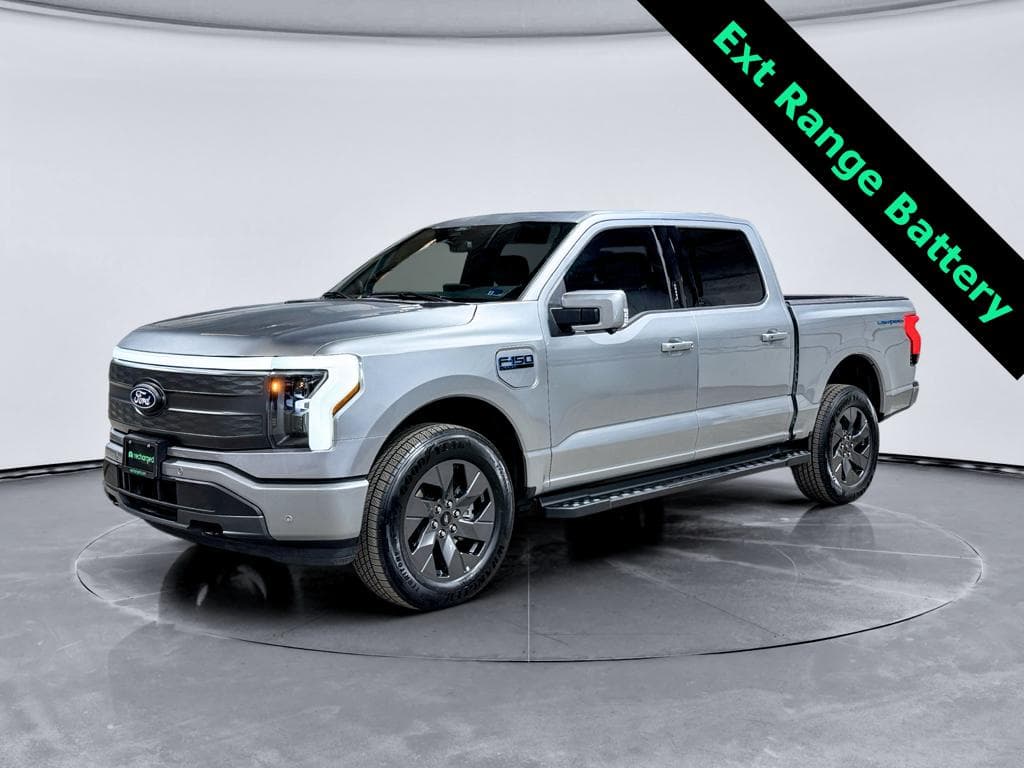
If you’re cross‑shopping the Ford F‑150 Lightning and Rivian R1T, sticker price is only half the story. The real question is total cost of ownership: energy, maintenance, insurance, depreciation, and how these electric pickups fit your life over five to ten years.
A note on timelines
Why total cost of ownership matters for electric pickups
Electric pickups are expensive to buy but relatively cheap to run. A well‑specced F‑150 Lightning or Rivian R1T can easily crest $80,000 when new, yet typical electricity costs can be the equivalent of driving a 60–90 mpg gas truck. Over 5–10 years, fuel savings, maintenance, and resale value can swing the math by tens of thousands of dollars compared with a gas F‑150 or Silverado.
- Both trucks can save you thousands in “fuel” versus a comparable gas truck, especially if you charge mostly at home.
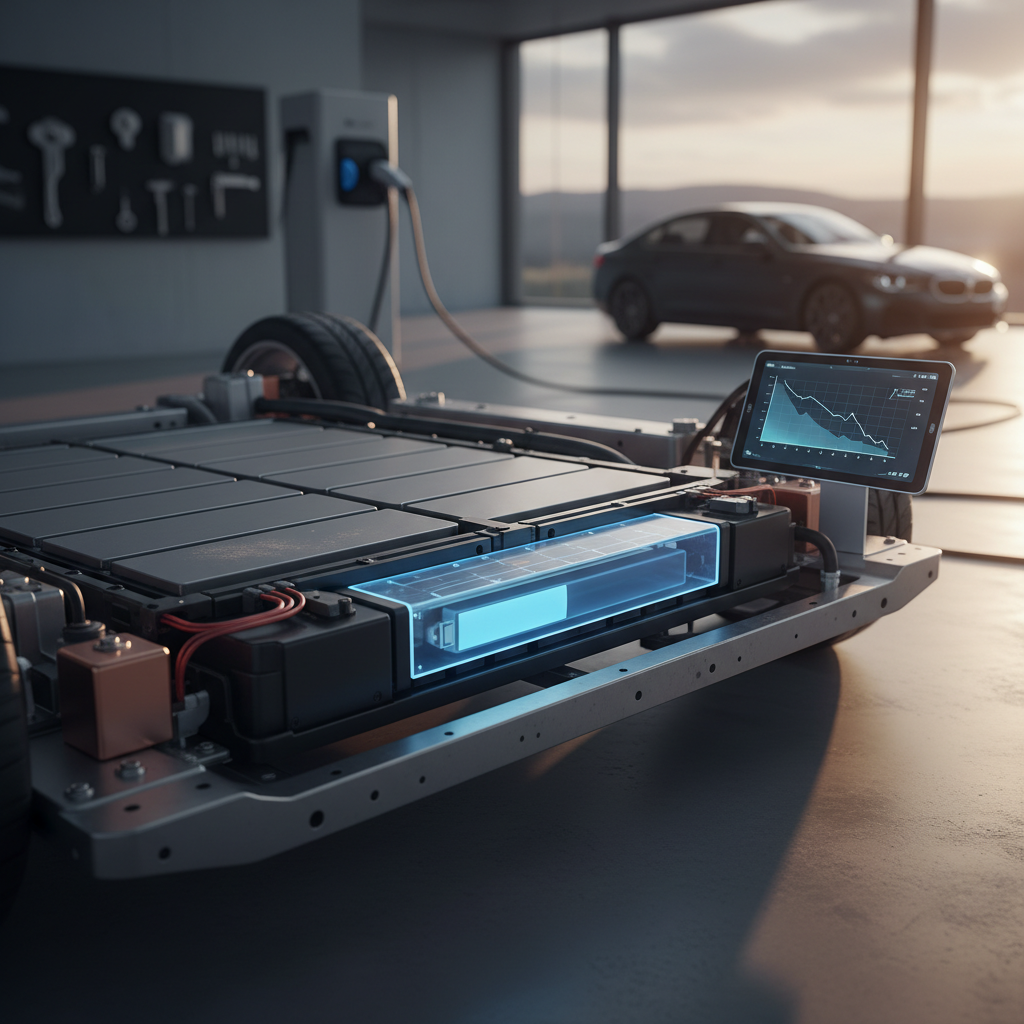
- Battery health and software support matter more to long‑term value than oil changes and spark plugs ever did.
- Because these are still new segments, resale values and depreciation patterns are evolving quickly, especially now that new F‑150 Lightning production is ending.
- Buying used can let you capture most of the fuel‑savings upside at a far lower upfront price, if you know how to assess battery health.
Think in cost‑per‑mile, not just monthly payment
Key specs that shape F-150 Lightning vs Rivian R1T costs
Before we dig into dollars, it helps to line up the basic specs that drive efficiency, running costs, and resale for the Ford F‑150 Lightning and Rivian R1T.
Core specs that influence total cost of ownership
Representative trims for U.S. buyers comparing battery size, range, and efficiency. Exact numbers vary by year, tire choice, and drivetrain.
| Spec | Ford F-150 Lightning (ER 4WD) | Rivian R1T (Large/Max pack, dual/quad) |
|---|---|---|
| Usable battery capacity | ~131 kWh | ~135–149 kWh (depending on pack) |
| Typical EPA range | ~300 mi (varies by trim) | ~350+ mi on many configs |
| EPA or guidebook consumption | ~49 kWh / 100 mi | Low‑ to mid‑40s kWh / 100 mi in many specs |
| Real‑world efficiency (mixed use) | ~2.0–2.6 mi/kWh in owner tests | ~2.1–2.5 mi/kWh in owner tests |
| Drive types | Dual‑motor AWD | Dual‑ and quad‑motor AWD |
| Towing impact | Range can roughly halve near max tow | Similar story, big range hit near max tow |
EPA data and real‑world tests suggest the R1T is slightly more efficient than the Lightning in many scenarios, but both are energy‑hungry compared with smaller EVs.
Beware of spec sheet optimism
Energy costs: what you’ll actually pay to power each truck
Energy is where both of these electric pickups quietly save you money. They’re heavy, brick‑shaped vehicles, but electricity is simply cheaper than gasoline on a cost‑per‑mile basis in most parts of the U.S.
Typical energy cost benchmarks (U.S. averages)
Ford F-150 Lightning: energy cost per mile
EPA and recent guidebook data put extended‑range F‑150 Lightning consumption around ~49 kWh per 100 miles in mixed driving, or roughly 2.0–2.1 miles per kWh. At a typical $0.15/kWh home rate, that works out to roughly:
- ~$7.35 per 100 miles of home charging (49 kWh × $0.15)
- ~$0.07–$0.08 per mile at home
- On public fast charging at $0.40/kWh, more like ~$19.60 per 100 miles, or ~$0.20 per mile
Keep it plugged in at home whenever you can
Rivian R1T: energy cost per mile
Real‑world logs from long‑term R1T owners show mixed‑use efficiency around ~2.0–2.4 miles per kWh, depending on tire choice, driving style, and climate. One 50,000‑mile ownership log, for example, averaged about 2.0 mi/kWh across highway, city, and off‑road use. With the same $0.15/kWh home rate, that implies:
- At 2.2 mi/kWh, roughly ~45 kWh per 100 miles → about $6.75 per 100 miles, or ~$0.07 per mile at home.
- On $0.40/kWh public fast charging, you’re closer to $18 per 100 miles, or ~$0.18 per mile.
Lightning vs. R1T: energy cost verdict
In real‑world use, the R1T is often slightly more efficient, but you’re talking about a penny or two per mile at typical home rates. Over 10,000 miles, that’s roughly $100–$200 either way, meaningful, but not a deal‑breaker.
Where the big savings really come from
The real win is vs. gas. Compared with a 17 mpg gas truck at $4/gal (about $0.24 per mile), both electric pickups can cut your “fuel” bill by half or more if you charge mostly at home.
Maintenance and repairs: EV truck reality check
Neither the F‑150 Lightning nor the Rivian R1T needs oil changes, spark plugs, or transmission fluid. But they’re still complex vehicles with cooling systems, suspension parts, brakes, and, for Rivian especially, lots of software‑driven hardware.
How Lightning and R1T maintenance stacks up
Broadly similar, with slightly higher unknowns on the Rivian side because it’s a newer brand.
Ford F-150 Lightning maintenance
- Ford dealers nationwide can handle basic service, but EV‑specific expertise still varies.
- Edmunds and KBB cost‑to‑own tools peg 5‑year maintenance in the low‑to‑mid $3,000s on recent model years, or around $600–$750 per year for typical service.
- Wear items: tires (often every 25–35k miles depending on driving), cabin filters, brake fluid, and the occasional alignment.
Rivian R1T maintenance
- Rivian operates a direct‑to‑consumer service model with mobile techs and service centers in larger markets.
- There’s less third‑party data, but early owner reports show modest scheduled maintenance and some out‑of‑warranty repairs (door, suspension, and trim fixes) that can be pricey without coverage.
- As with any heavy EV truck, expect to budget for tires more than anything else.
Battery and drivetrain durability so far
Insurance, tires, and other running costs
Energy and maintenance are just part of TCO. Insurance, tires, registration, and add‑ons like home charging all play a role, especially on high‑value EVs where repair costs can be steep after a collision.
Insurance
Data from lenders and insurance marketplaces suggest that full‑coverage premiums on both the Lightning and R1T typically run higher than on a basic gas F‑150, simply because repair costs and vehicle values are higher.
- F‑150 Lightning: In many U.S. ZIP codes, owners report premiums landing roughly in line with or slightly above a comparable gas F‑150 Platinum.
- Rivian R1T: As a luxury‑leaning, premium‑priced truck with more bespoke parts, premiums can be higher, though it’s very ZIP‑code and insurer dependent.
For apples‑to‑apples comparisons, it’s smart to get VIN‑specific quotes on a couple of trucks you’re actually considering before you sign anything.
Tires, brakes, and consumables
- Both trucks are heavy and powerful. Aggressive driving, towing, and off‑road use chew through tires quickly.
- Plan on premium truck tires running $1,200–$2,000 a set, often every 25–35k miles, sometimes less with off‑road rubber.
- Because regenerative braking does so much work, pads and rotors often last longer than on an equivalent gas truck, a quiet win for TCO.
Don’t forget the cost of home charging hardware
Depreciation, resale, and the end of new F-150 Lightning production
Depreciation is the single largest line item in most TCO calculations, especially on new electric trucks whose technology is evolving almost yearly.
How depreciation is likely to play out
There’s no crystal ball, but we can make some educated guesses based on today’s market.
Ford F‑150 Lightning depreciation
- New‑truck discounts and production pauses already pushed used prices down from early‑hype highs.
- Now that Ford has announced it will end fully electric Lightning production, scarcity could eventually stabilize values on desirable trims, but it may also dampen confidence for some buyers.
- In the near term, expect steeper depreciation from MSRP than many gas F‑150s, but potentially attractive value in the used market for savvy shoppers.
Rivian R1T depreciation
- Rivian prices were cut on new vehicles in 2024–2025, which pulled used values down, too.
- As the brand matures and more R1Ts hit 50,000+ miles with solid battery health, resale should stabilize more like a premium SUV or truck than an exotic startup product.
- Higher‑end quad‑motor and Max Pack trucks may hold value better with enthusiasts, but they also cost more up front.
Why used can be the TCO sweet spot
Five-year total cost of ownership: side‑by‑side estimates
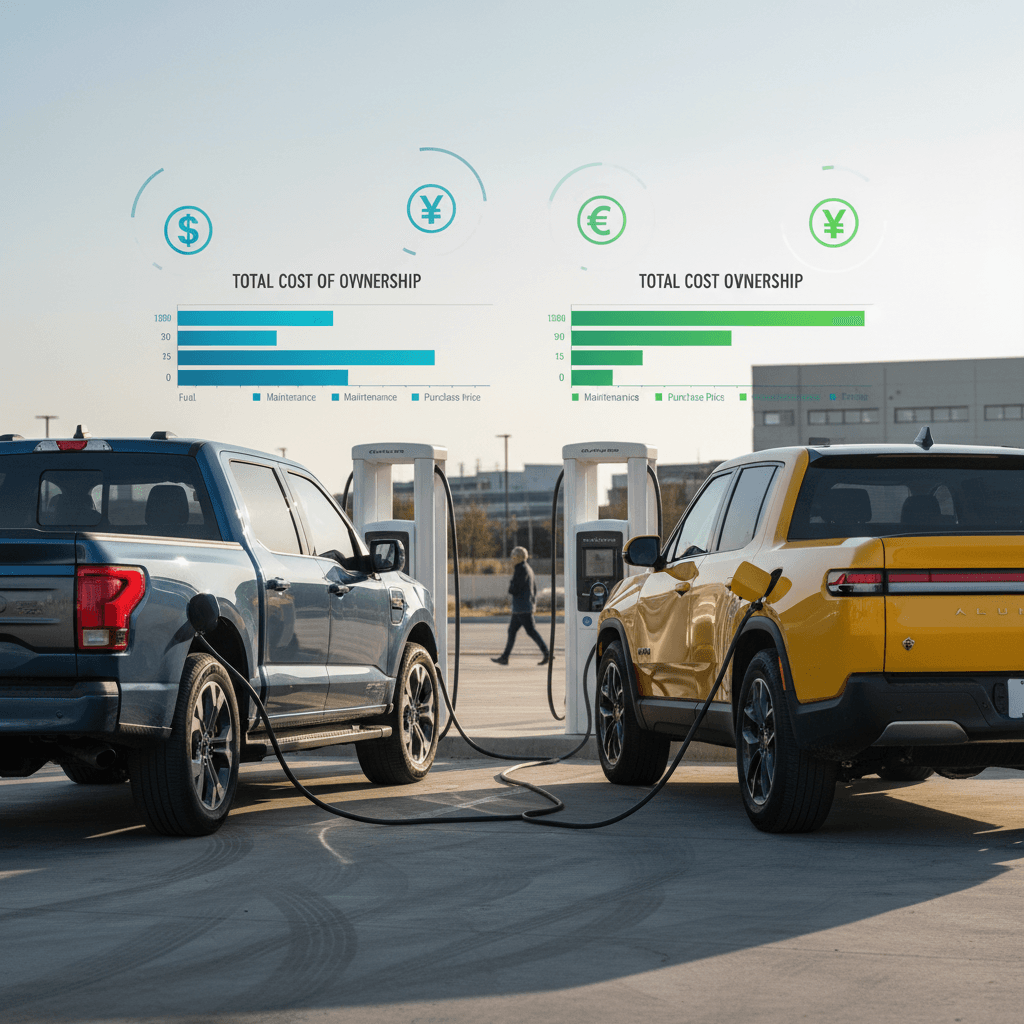
Total cost of ownership always depends on your actual purchase price, miles driven, electricity rates, and how hard you work the truck. But we can sketch out reasonable 5‑year, 60,000‑mile scenarios to compare directionally.
Illustrative 5‑year / 60,000‑mile TCO comparison (new purchase)
Assumes a typical suburban U.S. buyer, 12,000 miles per year, mostly home charging at $0.15/kWh, some DC fast charging on trips, and average insurance costs for full coverage. Numbers are rounded estimates to show relative patterns, not precise quotes.
| Category (5 yrs, 60k mi) | Ford F-150 Lightning | Rivian R1T |
|---|---|---|
| Purchase price (after dealer discounts, before any tax credits) | $70,000 | $80,000 |
| Estimated residual value after 5 yrs | $30,000 | $38,000 |
| Depreciation | $40,000 | $42,000 |
| Electricity (mostly home charging) | ~$4,500 | ~$4,200 |
| Maintenance & repairs (out of pocket) | ~$3,500 | ~$4,000 |
| Insurance | ~$10,000 | ~$11,000 |
| Tires & misc. wear items | ~$4,000 | ~$4,500 |
| Registration, fees, taxes (beyond purchase) | ~$2,000 | ~$2,000 |
| Approx. 5‑year TCO | ~$64,000 | ~$67,700 |
| Estimated cost per mile | ~$1.07/mi | ~$1.13/mi |
Your real costs will vary, but the pattern is consistent: depreciation dominates, energy is relatively cheap, and the two trucks sit closer together on TCO than their branding suggests.
About these numbers
Used vs. new: how buying used changes the math
Because depreciation is such a huge slice of TCO, used F‑150 Lightnings and Rivian R1Ts can be dramatically cheaper to own than new ones, especially if someone else already ate the first 30–40% of value loss in the first three years.
Used F-150 Lightning
- 2022–2024 trucks have already seen significant price corrections from early‑hype days.
- With Ford ending new production, well‑optioned Lightnings could become a value play for buyers who want a familiar truck brand with nationwide dealer support.
- A thorough battery health check and software update history are crucial before you commit.
Used Rivian R1T
- First‑wave R1Ts are now 3–4 years old and rolling past 40,000–60,000 miles, giving us real battery‑health and reliability data.
- Rivian’s over‑the‑air updates have added meaningful features and efficiency improvements, which can help support resale.
- As with the Lightning, a detailed battery and charging history is the difference between a smart buy and an expensive experiment.
Where Recharged fits in
Ready to find your next EV?
Browse VehiclesHow Recharged helps you shop electric trucks smarter
EV pickups aren’t cheap mistakes. Whether you end up in a Lightning or an R1T, you’re committing to a high‑value, high‑tech truck that will shape your finances and daily life for years. That’s exactly the problem Recharged was built to solve.
Tools to make the Lightning vs. R1T choice easier
Focused on the used EV market, with electric‑truck expertise built in.
Recharged Score battery diagnostics
Fair market pricing & financing
Trade‑in & nationwide delivery
Checklist: questions to decide between F-150 Lightning and Rivian R1T
Key questions before you pick a truck
1. How much do you tow and haul, really?
If you tow heavy trailers often, range under load and the availability of fast chargers on your routes may matter more than a few thousand dollars difference in TCO.
2. Where will you charge most of the time?
Mostly at home on cheap residential electricity? Either truck will shine. Rely heavily on DC fast charging? Expect your per‑mile cost to climb, slightly more so on the less‑efficient setups.
3. How far is your nearest service support?
Ford’s dealer network is larger, but not every store is EV‑savvy yet. Rivian’s mobile service is strong in many metros but thinner in rural areas. Factor travel time for major repairs into your ownership cost.
4. Are you buying new or used?
If you’re buying used, let depreciation do the work for you. A 2–3‑year‑old Lightning or R1T with a clean Recharged Score can undercut the TCO of new by a wide margin.
5. How long do you plan to keep the truck?
Short‑term (3–4 years) ownership puts more weight on depreciation and resale. Long‑term (8–10 years) lets low energy and maintenance costs compound in your favor.
6. Which features actually matter to you?
Rivian leans more adventurous with features like the gear tunnel and off‑road focus. The Lightning leans familiar, especially if you’re coming from an F‑Series. Pick the truck you’ll enjoy living with every day, that helps justify the dollars.
FAQ: Ford F-150 Lightning vs Rivian R1T ownership costs
Frequently asked questions about F‑150 Lightning vs Rivian R1T TCO
Bottom line: which electric truck is cheaper to own?
If you run the numbers with today’s prices, a typical Ford F‑150 Lightning often edges out the Rivian R1T on 5‑year total cost of ownership, thanks primarily to lower purchase prices and solid used‑market deals. The Rivian R1T pushes back with slightly better efficiency, a more adventurous feature set, and strong appeal in the premium truck crowd, which can help resale.
For most buyers, the real decision isn’t purely Lightning vs. R1T on a spreadsheet. It’s which truck you’ll use, enjoy, and keep long enough for those low energy and maintenance costs to compound. If you’re looking at the used market, pairing that decision with verified battery health, transparent pricing, and expert EV guidance, the core of Recharged’s model, is the best way to make sure your next electric pickup pays you back every mile you drive.