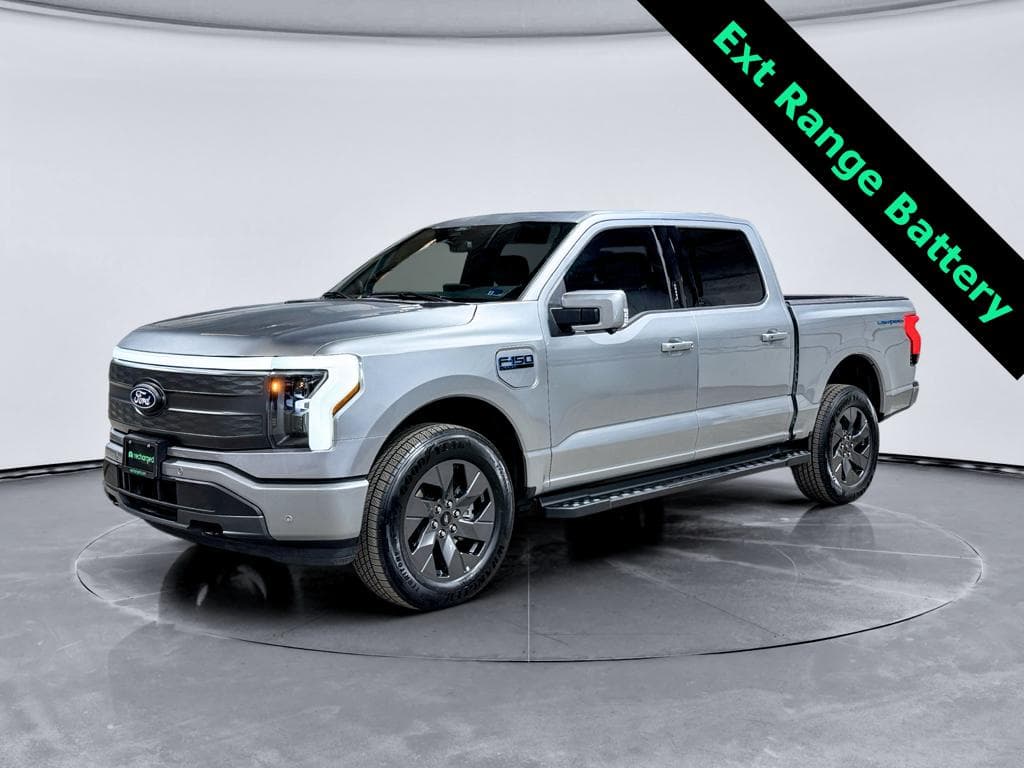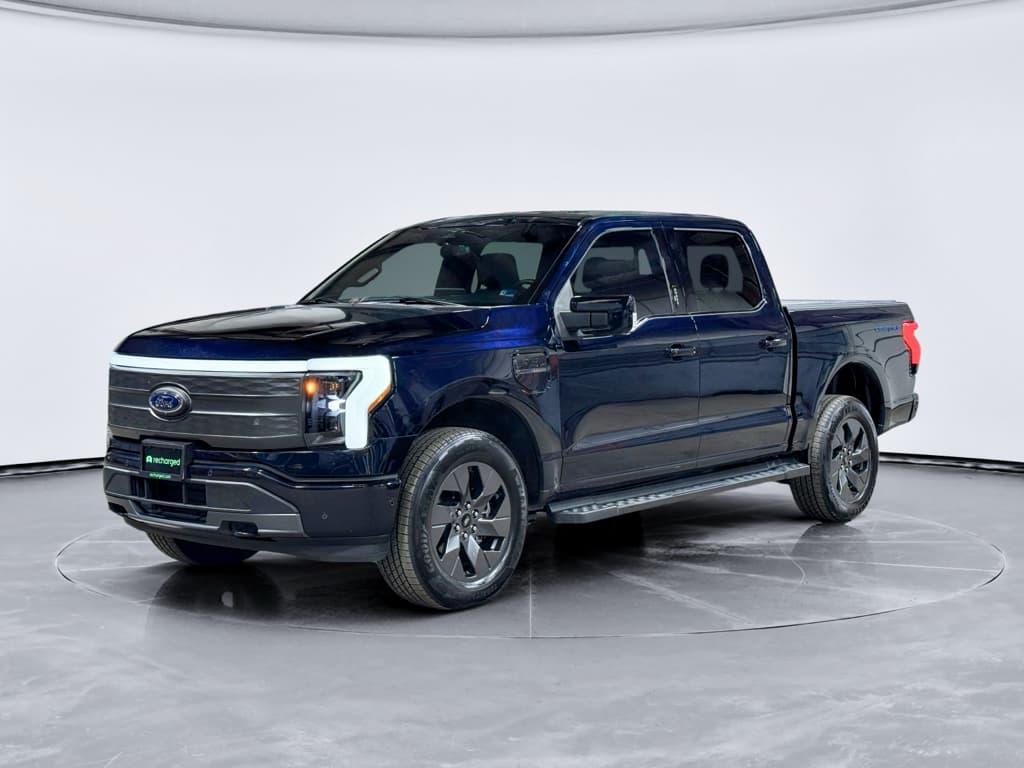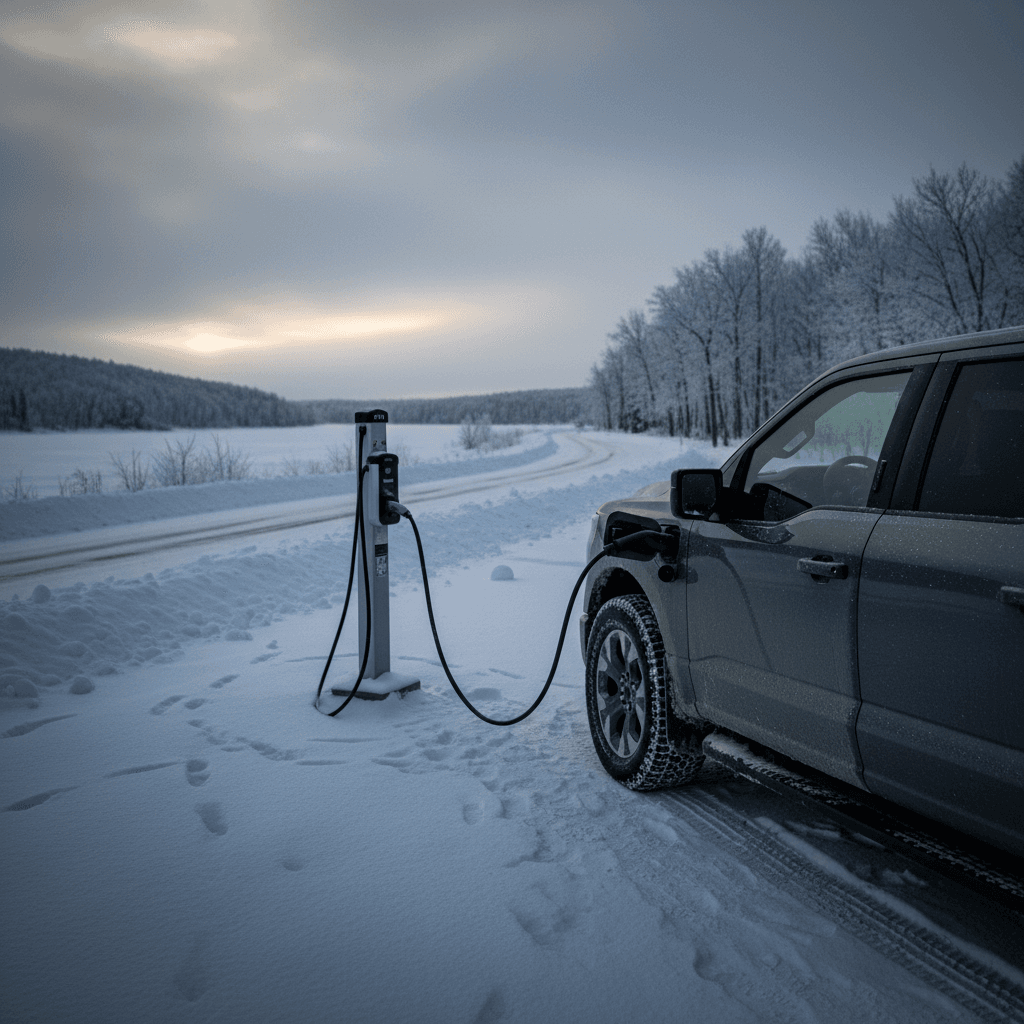
If you’re considering a Ford F‑150 Lightning and you live where snow, slush, and sub‑freezing temps are a fact of life, you’ve probably heard stories about winter range loss. Some owners say their truck loses a third of its range in the cold; others claim it’s not that bad. This guide pulls together independent test data, physics, and real‑world owner experience so you know what to expect from Ford F‑150 Lightning winter range loss, and what you can do about it.
Quick takeaway
Why winter hits EV trucks harder than cars
All EVs lose range in the cold, but electric pickups like the F‑150 Lightning tend to show bigger percentage drops. They’re heavy, tall, and have big frontal areas, so pushing them through dense cold air simply costs more energy. Add in wide all‑terrain tires, four‑wheel drive, and the expectation that a truck should still tow, haul and stay toasty warm inside, and you have a recipe for noticeable winter range loss compared with a smaller EV.
Why the Lightning starts at a disadvantage
- Big body, big drag: The F‑150’s boxy shape and large grille opening increase aerodynamic drag, especially at highway speeds.
- Heavy curb weight: Over 6,000 pounds to move, even before passengers, tools, or cargo.
- All‑season or A/T tires: More rolling resistance than low‑rolling‑resistance EV car tires.
Then winter piles on
- Cold battery chemistry: The pack can’t accept or deliver energy as efficiently.
- Cabin heat load: No waste heat like a gas truck, so all warmth comes straight from the battery.
- Snow and slush: Higher rolling resistance, more drag on the underbody.
No standard heat pump
How much range the F‑150 Lightning loses in winter
Let’s talk numbers. Instead of internet horror stories, we’ll lean on instrumented testing and then layer in what owners report. The goal isn’t to scare you, it’s to help you plan realistically.
Key F‑150 Lightning winter range findings
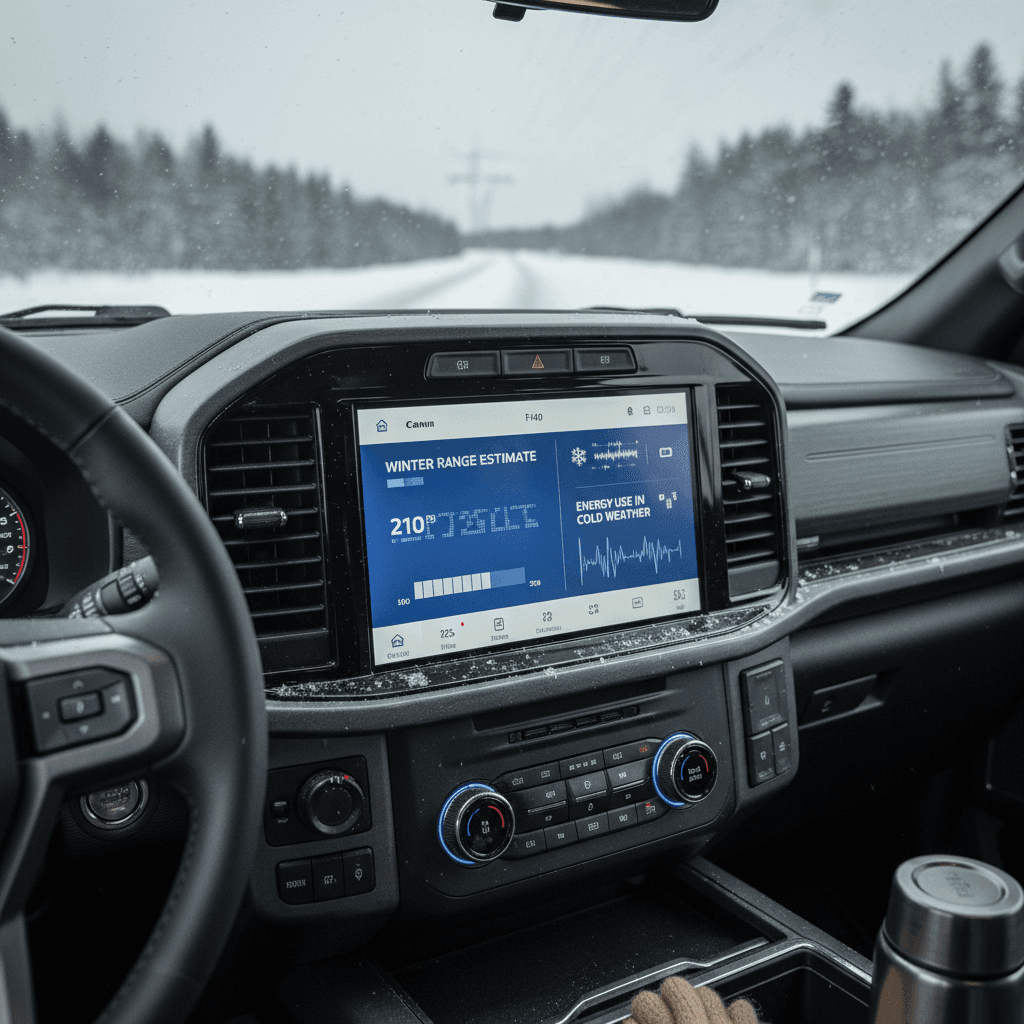
In Canadian winter testing using Natural Resources Canada range figures as the benchmark, an F‑150 Lightning covered about 296 km (184 miles) in deep cold versus a posted 515 km (320 miles), a reduction of about 35%. In another real‑world cold‑weather review of a 131‑kWh Extended Range truck, efficiency dropped from warm‑weather averages around 2.1–2.6 mi/kWh to about 1.5 mi/kWh over several hundred miles of mixed driving, again translating to roughly a one‑third hit to usable range.
Those are controlled tests, so your exact results will vary with speed, wind, snow depth, and how warm you keep the cabin. But they give a realistic ballpark: if your Extended Range Lightning can comfortably do 280–300 miles between charges in mild weather on the highway, in true winter conditions you should plan around 180–210 miles instead, and be pleasantly surprised if you beat that.
Real-world F-150 Lightning owner experiences
Scroll through owner forums and you’ll see wildly different winter stories. That’s because winter range is extremely sensitive to how and where you drive. Short hops at 20°F with a warm cabin can be brutal on efficiency, while a long, steady highway run at 30–35°F after a pre‑conditioned start looks much better.
Typical winter scenarios Lightning owners report
Your range will look more like one of these than a lab test
Short urban errands
Example: 3–8 mile trips around town at 20–30°F.
- HVAC has to re‑heat the cabin from cold over and over.
- Battery never really warms up.
- Reported loss: Often 30–40% vs. mild weather, sometimes more for very short trips.
Mixed suburban commute
Example: 20–40 mile round‑trip, mix of 35–60 mph roads.
- Cabin heat stays on, pack warms up.
- Moderate speeds are relatively efficient.
- Reported loss: Commonly 20–30% vs. warm weather estimates.
Highway plus cargo or trailer
Example: 65–75 mph highway with tools in the bed or a small trailer.
- High aero drag from truck body and trailer.
- More weight to move, less regen.
- Reported loss: 35–50% vs. EPA rating, depending on load and speed.
A typical forum datapoint
Towing, payload and winter: stacking the range penalties
If you’re buying a Lightning as a real truck, you care about how winter affects range when you’re actually using it like a truck, towing, hauling, or running with a bed full of gear. The short version: towing or near‑max payload can cut range dramatically by itself, and winter simply magnifies that impact.
How different loads can affect Lightning range in winter
Illustrative examples based on available testing and owner reports. Your results will vary, but the pattern is consistent: each added burden compounds the others.
| Use case | Payload / trailer | Weather | Typical real‑world highway range planning target |
|---|---|---|---|
| Daily driving, no load | Driver + light cargo | 35–45°F, clear | ≈220–240 miles |
| Heavier tools and gear | ≈1,000–1,400 lb in bed | 20–32°F, clear | ≈160–190 miles |
| Small camper or boat trailer | 3,000–5,000 lb, moderate frontal area | 20–32°F, mixed conditions | ≈120–160 miles |
| Tall enclosed trailer | 5,000–7,000 lb, big frontal area | Below 25°F, headwind / snow | Sometimes under 120 miles |
Assumes an Extended Range Lightning with a 320‑mile rating in mild conditions.
Don’t tow at the edge of your range in winter
The science behind F-150 Lightning winter range loss
Cold weather doesn’t just make the truck less comfortable, it changes how the battery works and how the truck uses energy. Understanding the basics will help you make smarter choices in winter.
- Battery chemistry slows down in the cold. Lithium‑ion cells don’t move ions as efficiently at low temperatures, which means more internal resistance and less usable energy until the pack warms up.
- Cabin heating is a big power draw. A gas truck uses “free” waste heat from the engine. The Lightning has to run an electric heater, which can draw several kilowatts when warming a cold cabin.
- Short trips are the worst case. You repeatedly spend energy warming a cold pack and cabin, then park and let them cool again. That overhead gets spread over very few miles.
- Cold air is denser. Highway aero drag increases as air density rises, so winter highway miles are slightly more expensive in energy terms than summer miles, especially for a tall truck.
- Snow, ice, and slush add drag. Rolling resistance increases dramatically in deep snow or heavy slush, and traction control may cut in more often, all of which eats into range.
Practical ways to cut F-150 Lightning winter range loss
You can’t change physics, but you can work with it. With a few smart habits, many Lightning owners trim winter range loss from “this is a problem” down to “this just requires planning.”
Winter efficiency checklist for your Lightning
1. Pre‑condition while plugged in
Use the FordPass app or your truck’s schedule to pre‑heat the cabin and battery while the Lightning is still on shore power. That way the high initial heating load comes from the grid, not the battery, and the pack is closer to its ideal temperature when you set off.
2. Use heated seats and wheel first
Heated seats and steering wheel use far less energy than blasting hot air. In milder cold, try running the cabin a bit cooler and relying on seat and wheel heat for comfort.
3. Dial back highway speed
Above about 60 mph, aerodynamic drag grows quickly. Dropping from 75 to 65 mph on a winter highway leg can easily save 10–15% of energy use, sometimes the difference between arriving with a cushion and arriving on “0.”
4. Consolidate short trips
Several short, cold starts in a day hammer range. When you can, batch errands into one longer outing so the pack and cabin only need to be warmed once.
5. Keep tires properly inflated
Tire pressure falls as temperatures drop. Check and set pressures when cold to the door‑jamb spec. Under‑inflated tires add rolling resistance and can shave a few more percentage points off range.
6. Clear snow and ice thoroughly
Heavy snow on the bed cover, roof, or in the wheel wells adds weight and aerodynamic drag. Knock it off before you drive, especially before a highway run.
Use Eco or a gentle drive mode
Trip-planning a Lightning road trip in winter
Long highway drives in the cold are where planning really matters. The trick is to think in terms of winter range, not the big warm‑weather number on the window sticker, and to build a buffer into every leg of the trip.
1. Adjust your mental range number
If your Extended Range Lightning is rated around 320 miles, plan winter legs around 180–210 miles between fast charges, less if you’re towing.
Think of that as your "planning range" and treat anything beyond it as bonus, not something you count on, especially below freezing.
2. Aim to arrive with a buffer
Try to reach each DC fast charger with at least 15–20% battery remaining in winter. That gives you margin for detours, closed chargers, or slower‑than‑expected charging speeds due to a cold pack.
Charging from about 10–60% is usually the sweet spot for fast charge speed, so short, more frequent stops often work better than trying to stretch fewer long ones.
Smart routing habits in cold weather
Especially important as infrastructure and connector standards evolve
Check multiple networks
Use apps like Ford’s built‑in route planner plus third‑party tools to see Ford, Tesla (with adapter), and other DC fast chargers along your route. Having a Plan B and Plan C matters more in winter.
Avoid near‑empty arrivals
Cold packs charge more slowly at very low state of charge. Arriving at 3–5% in winter can mean a long, slow recovery. A slightly shorter leg that ends at 15–20% is usually faster overall.
Know real‑world charge speeds
On a cold day, your Lightning may not hit its peak advertised DC charging power until the battery warms up. Don’t be surprised if your first stop takes longer than a later stop on the same trip.
Buying a used F-150 Lightning if you live in a cold climate
If you’re shopping the used market, winter performance is something you should actively evaluate, not just assume. Two Lightnings with the same model year and odometer can behave differently in the cold depending on how they were driven, charged, and stored.
Cold-climate shopping checklist for a used Lightning
Confirm battery health, not just odometer
Ask for an objective battery health report, not just “looks good.” At Recharged, every used EV comes with a <strong>Recharged Score Report</strong> that includes verified pack health, so you’re not guessing how much real‑world range is left on the table.
Test drive in realistic conditions
If possible, arrange a drive on a cold day with the cabin at your normal comfort temperature. Watch the truck’s efficiency readout and projected range over 15–20 miles rather than a 2‑mile spin around the block.
Check charge speeds when cold
On a DC fast charger, see how quickly the truck ramps from low state of charge to 50–60% when the pack is cold. A healthy Lightning should still deliver reasonable speeds once warmed, though the first 10–15 minutes may be slower.
Look at tires and wheels
Aggressive all‑terrain tires or oversized wheels look great but can add meaningful rolling resistance. If you’ll do a lot of winter highway driving, consider whether a more efficient wheel/tire setup makes sense.
Consider your daily pattern
Map your actual winter usage, commute, errands, occasional trips, against a conservative winter range estimate. If your longest regular day is 80–100 miles, even a reduced winter range in a healthy Lightning is usually workable.
Plan support beyond the sale
Make sure you have access to EV‑savvy support. Recharged’s specialists can help you understand winter behavior, home charging options and road‑trip planning before and after you buy.
How Recharged helps de‑risk winter range
Ready to find your next EV?
Browse VehiclesFord F-150 Lightning winter range loss: FAQ
Common questions about F-150 Lightning winter range
Bottom line: Can the F-150 Lightning handle winter?
If you expect your Ford F‑150 Lightning to deliver its EPA range on a bitter January day with a trailer hooked up and the cabin set to 75°F, you’re going to be disappointed. Physics and battery chemistry simply don’t cooperate. But if you size your expectations correctly, planning for roughly one‑quarter to one‑third less range in true winter conditions, and adopt a few smart habits, the Lightning can be an entirely workable year‑round truck.
For current owners, that means preconditioning when you can, consolidating short trips, moderating highway speeds and giving yourself extra buffer on cold road trips. For shoppers, especially in the used market, it means looking past the marketing numbers to verified battery health and honest real‑world expectations. That’s exactly where a partner like Recharged helps, with transparent Recharged Score battery diagnostics, fair pricing, and EV‑savvy guidance so your next truck fits your climate and your life, not just your driveway.