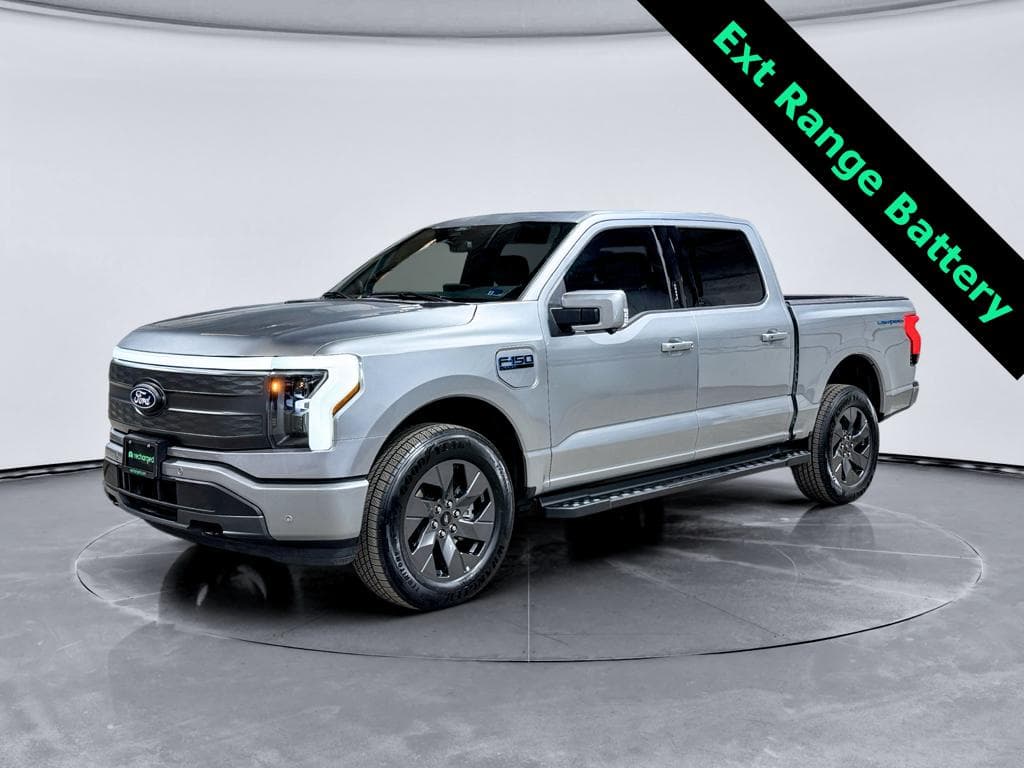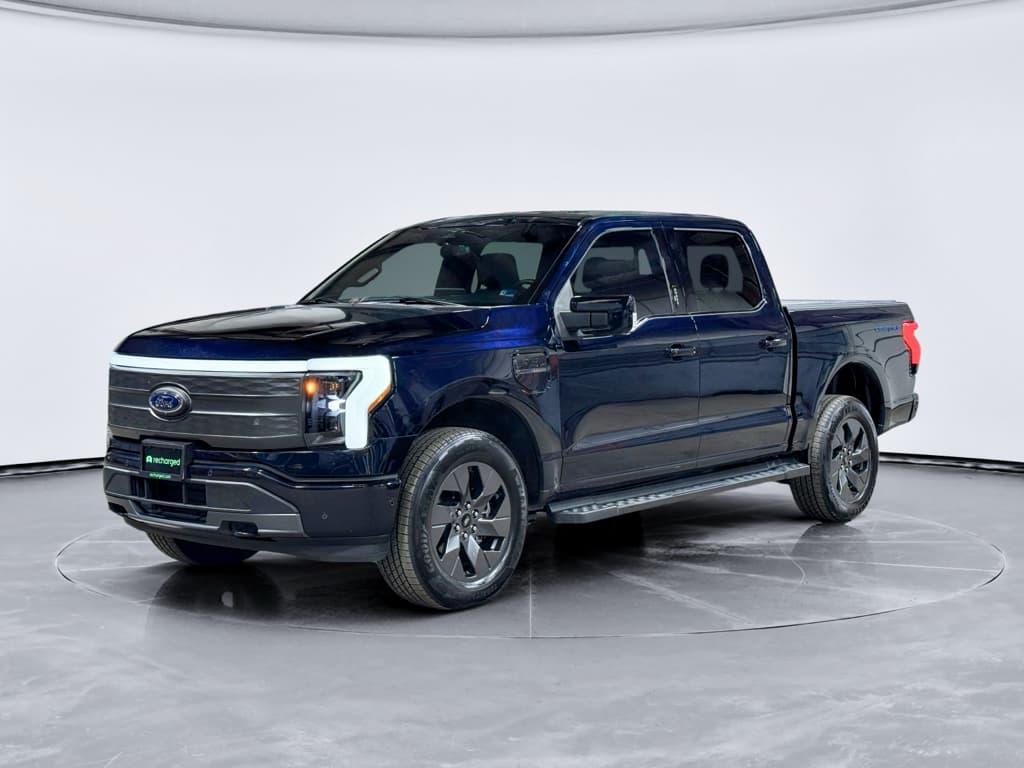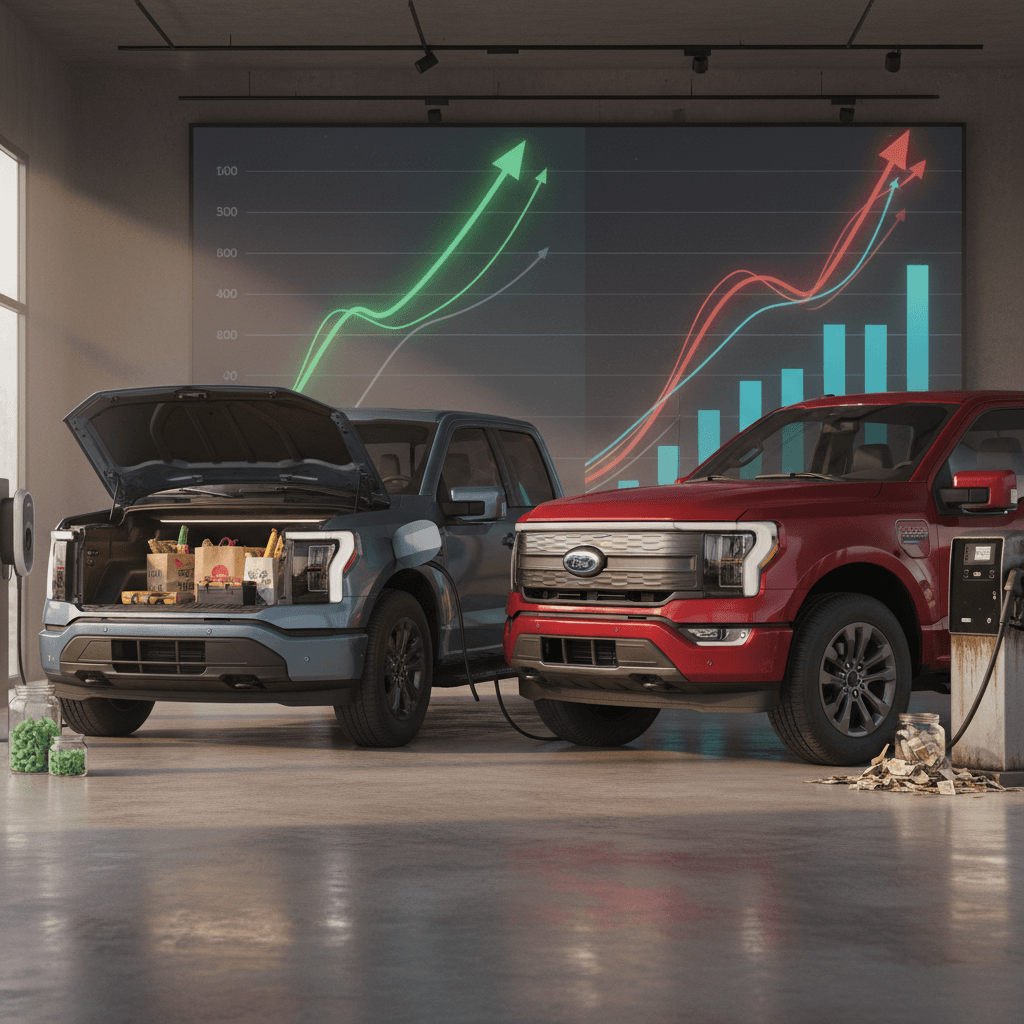
When you compare a Ford F-150 Lightning’s total cost vs a gas F-150 equivalent, the electric truck often looks more expensive at first glance. Bigger sticker price, new technology, worries about batteries. But if you follow the money over five or six years, the story changes, and for many drivers, the Lightning quietly becomes the cheaper truck to own.
Total cost of ownership, in plain English
Why total cost matters more than sticker price
Walk into a showroom and the Lightning’s MSRP will usually land higher than a comparable gas F-150. If you stop the math there, the gas truck wins. But you don’t pay that price just once, you live with fuel bills, oil changes, repairs, and resale every single year. That’s why fleet managers obsess over total cost of ownership, and why you should, too. Trucks are tools first, and tools are about what they cost to own, not just what they cost to buy.
F-150 Lightning vs gas F-150: 5-year snapshot (illustrative)
About the numbers in this guide
The gas equivalent: what are we comparing to?
To make a fair F-150 Lightning total cost vs gas truck comparison, you need an honest gas “twin.” For most shoppers, that’s a well-equipped F-150 with the 3.5L EcoBoost V6 or 5.0L V8, similar cab, similar trim level, similar capability. Think crew cab, 4x4, nicely optioned, not a bare-bones work truck and not a six-figure Raptor.
Electric: F-150 Lightning XLT/Flash
- Battery: ~98–131 kWh, dual-motor AWD
- EPA range: roughly 240–320 miles depending on battery and wheels
- Tow rating: up to 10,000 lbs (properly equipped)
- MSRP new: often mid‑$60Ks with options, before incentives
Gas: F-150 3.5L EcoBoost or 5.0L
- Engine: twin‑turbo V6 or V8, 10‑speed auto
- Real‑world mpg: ~18–22 mpg combined for most owners
- Tow rating: similar or higher depending on configuration
- MSRP new: usually a bit lower than Lightning with similar trim
We’ll assume similar equipment levels so the trucks do the same job in your life.
Five-year cost summary: Lightning vs gas F-150
Let’s put some numbers on the table. Imagine you drive 15,000 miles per year (pretty typical in the U.S.) and keep the truck for five years. You buy new, finance over 72 months with a modest down payment, and do a mix of city and highway driving.
Illustrative 5-year cost of ownership comparison (new trucks, 75,000 miles)
Rounded numbers to show how big expenses stack up for a Ford F-150 Lightning vs a comparable gas F-150.
| Cost category (5 years) | F-150 Lightning (example) | Gas F-150 (example) |
|---|---|---|
| Purchase price (out the door, before incentives) | $67,000 | $60,000 |
| Federal / state incentives | - $7,500 federal credit (if eligible), plus any state incentives | Usually none (some states offer small clean‑vehicle perks) |
| Net purchase (before interest) | ≈$59,500 | ≈$60,000 |
| Fuel / electricity | ≈$5,000 (mostly home charging) | ≈$12,500 (gas at $3.50/gal, 21 mpg) |
| Maintenance & repairs | ≈$2,000 | ≈$4,000 |
| Insurance (five years) | ≈$9,000 | ≈$8,500 |
| Registration / fees | Similar | Similar |
| Estimated resale after 5 years | ‑$30,000 | ‑$28,000 |
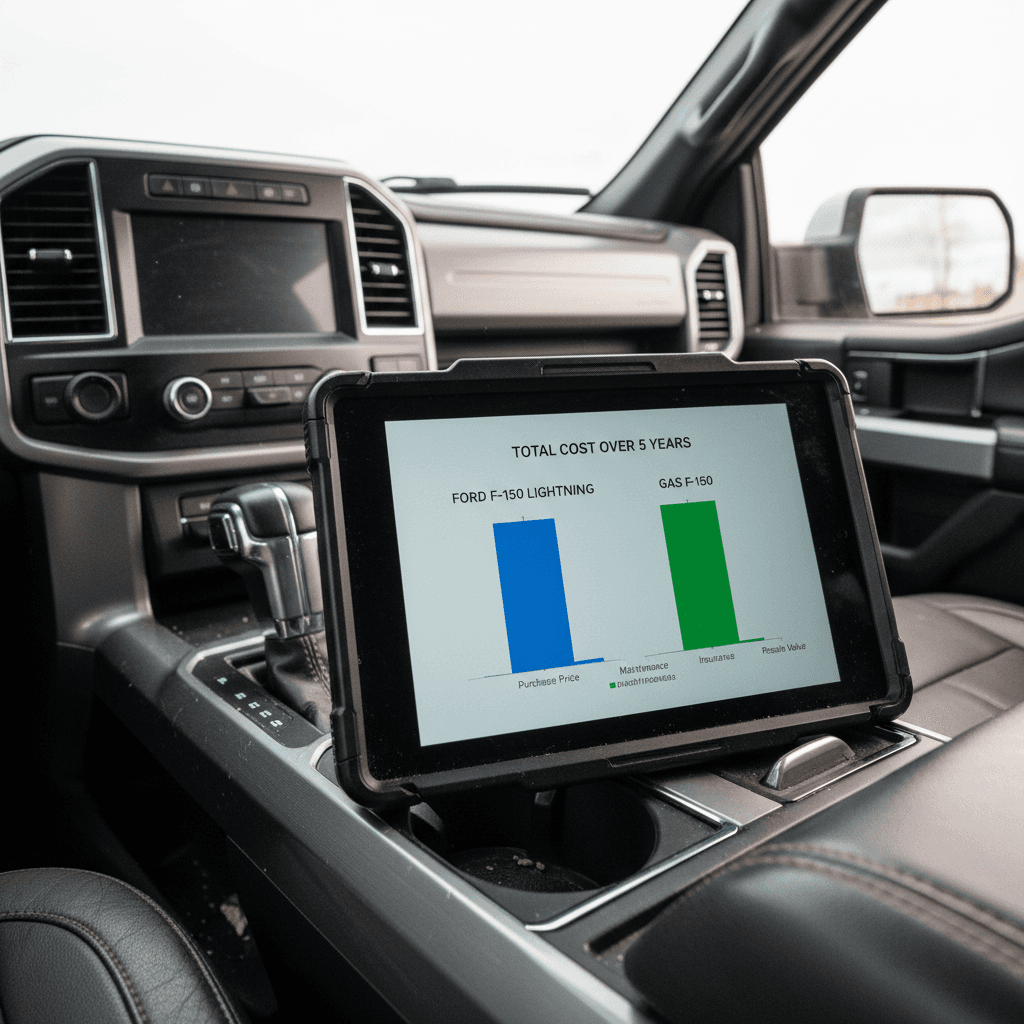
| Approximate 5‑year total cost | ≈$63,000 | ≈$67,000 |
Actual costs will depend on your trim, local power rates, gas prices, driving style, and incentives.
Where the Lightning quietly wins
Purchase price, incentives, and financing
Ford has reshuffled Lightning trims and pricing more than once, but the pattern holds: on paper, the Lightning costs more than a similar gas F-150. The gap can be anywhere from a few thousand dollars to $10,000+, depending on trim, options, and dealer discounts.
- New F-150 Lightning: often mid‑$60Ks transaction price for a well‑equipped truck.
- Comparable gas F-150: more likely in the high‑$50Ks to low‑$60Ks with similar creature comforts.
- Financing: same interest rate, but you’re paying interest on a slightly higher principal with the Lightning if incentives don’t offset it.
Don’t forget EV incentives
If those incentives bring the Lightning’s effective price down near the gas truck, or even below it, the rest of the cost comparison starts heavily favoring electrons over gasoline.
Fuel vs electricity costs: how much you really save
Fuel is where the Lightning can make you grin quietly every time you pass a gas station. Trucks are thirsty; electricity isn’t free, but it’s usually much cheaper per mile, especially if you can charge at home.
Gas F-150: 15,000 miles/year
- Real‑world mpg: assume ~21 mpg combined.
- Annual fuel use: about 715 gallons.
- At $3.50/gal, that’s ≈$2,500 per year.
- Over 5 years: roughly $12,500, not counting price spikes.
F-150 Lightning: 15,000 miles/year
- Energy use: ballpark ~2.2–2.5 miles per kWh in mixed driving.
- Annual energy: ~6,000–6,800 kWh for 15,000 miles.
- Home power at $0.15/kWh: ≈$900–$1,000 per year.
- Over 5 years: roughly $4,500–$5,000 if you mostly charge at home.
Frequent DC fast charging, especially at higher rates, can narrow this gap, but for most owners, home charging is the main story.
When the Lightning’s fuel savings shrink
Maintenance and repairs: truck workhorses vs wires and software
Take a modern gas F-150 and put it on a lift. There’s a lot going on, engine, transmission, exhaust system, fluids everywhere. The Lightning strips that complexity down to motors, inverters, and a big battery pack. You still have a chassis, brakes, and suspension to care for, but the oily bits disappear.
Where Lightning saves you shop visits
Same truck silhouette, very different wear items.
No oil changes
Fewer moving parts
Similar tires, brakes, and suspension
Dealer service data is still maturing for the Lightning, but early patterns match other EVs: regular maintenance bills are typically lower than for comparable gas trucks. Budget a couple of grand over five years for tires, inspections, and the odd replacement part, versus something closer to twice that on a gas F-150 if you follow the maintenance schedule and keep it long enough to need more than basics.
Insurance, registration, and other overlooked costs
Insurance is where many Lightning shoppers are caught off guard. The truck is heavier, packed with electronics, and still relatively new in the repair ecosystem. Insurers price in higher replacement costs and sometimes longer repair times.
- Many owners report slightly higher premiums on a Lightning than on a comparably priced gas F‑150.
- Shopping quotes aggressively and taking advantage of telematics or EV‑friendly discounts can narrow that gap.
- Registration and taxes are largely driven by price; if the Lightning is more expensive on paper, expect a bit more there too, though some states cut EV owners a break.
How to keep Lightning insurance in check
Resale value and battery health: what your truck is worth later
The final chapter in the Lightning vs gas F-150 total cost story is what you get back when you sell or trade. Gas F-150s are known quantities; they’ve held value well for decades. Electric trucks are newer ground, and the Lightning has seen some price swings in the new and used market as Ford adjusts strategy and EV sentiment ebbs and flows.
Gas F-150 resale
- Strong, predictable demand across trims and engines.
- Buyers understand what a 5‑year‑old, 75k‑mile gas truck looks like.
- Resale sensitive to fuel prices and truck supply, but historically solid.
F-150 Lightning resale
- Early EV depreciation has been steeper in some markets as prices and incentives changed.
- Battery health is a key confidence factor for used buyers.
- As more owners and fleets gain experience, values can stabilize, especially for well‑cared‑for trucks.
This is exactly where a trusted battery report and transparent pricing make a used Lightning easier to sell or buy.
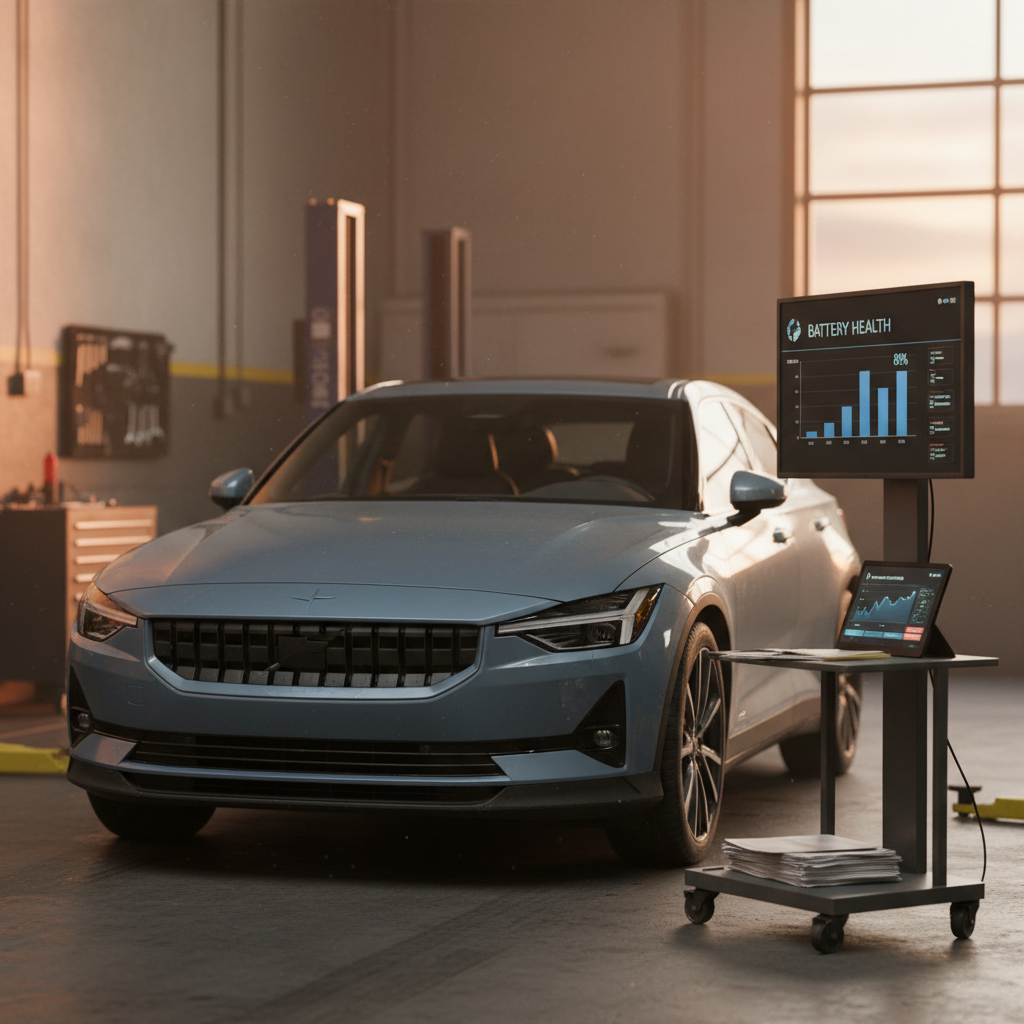
Why battery health matters for your wallet
On Recharged, every used EV comes with a Recharged Score battery health report, so you can see how the pack is actually performing, not just hope the gauge is telling the whole truth. That kind of transparency turns a question mark into a line item in your total cost math.
Towing, hauling, and road trips: how usage changes the math
If your truck life is mostly empty‑bed commuting and weekend errands, the Lightning will sip energy and look like a hero at your electricity meter. But trucks are bought for hard work, not just school runs, and how you use the truck can swing total cost.
Three common usage patterns, and what they mean for cost
Same trucks, different lives, very different math.
Suburban commuter
Weekend towers
Frequent heavy towing
Range and time are part of total cost
Who actually comes out ahead?
In the real world, the F-150 Lightning wins the total cost race for a surprising chunk of drivers, but not everybody. The patterns are getting clearer as more trucks hit the road.
Lightning usually wins for…
- Drivers putting 12,000–20,000 miles a year on mostly paved roads.
- Owners who can charge at home overnight at reasonable power rates.
- Households that value quiet, smooth driving and strong acceleration.
- Buyers who qualify for EV incentives and plan to keep the truck at least 5 years.
Gas F-150 often wins for…
- Drivers who tow heavy and far, often, especially in rural areas with sparse fast charging.
- Owners without reliable home or workplace charging.
- Shoppers who trade out of trucks quickly (2–3 years) and worry about early EV depreciation.
- Those who prefer familiar fueling and service networks over new tech.
How a used F-150 Lightning changes the equation
If you’re looking at a lightly used Lightning rather than a brand‑new one, the math can tilt even further in your favor. Early depreciation and market jitters have already done some of the heavy lifting on price drops, so you avoid the steepest part of the curve without giving up the fuel and maintenance savings.
Why a used Lightning can be the cost sweet spot
Lower entry price, same cheap electrons.
Depreciation already “baked in”
Battery health you can verify
On Recharged, every used EV, Lightning included, comes with verified battery diagnostics and fair‑market pricing, so you can build a cleaner total cost picture than you’ll get from a traditional classified listing.
Checklist: is a Lightning right for your budget?
Quick budget gut‑check before you go electric
1. How many miles do you actually drive?
Add up your typical weekly driving. If you’re in the 12,000–20,000 miles‑per‑year range and not towing at max weight every weekend, the Lightning’s lower energy and maintenance costs are more likely to shine.
2. Do you have a good place to charge?
Home Level 2 charging (a 240V outlet or wallbox) is the single biggest factor in making the Lightning cheaper to run than gas. If that’s possible where you live, your total cost math improves immediately.
3. Will you keep the truck at least 4–5 years?
The longer you own it, the more time savings have to overcome any upfront price gap. If you’re a quick flipper, pay extra attention to resale trends in your area.
4. What’s your towing and hauling reality?
Be honest. If you tow a big camper across three states every other weekend, a gas F‑150 may still be cheaper and easier. If heavy towing is rare, the Lightning’s strengths will matter more day to day.
5. Have you priced insurance for both?
Before you fall in love with either truck, get real quotes on a Lightning and a gas F‑150 using your actual driving profile. Build those numbers into your total cost spreadsheet.
6. Are you open to buying used?
A used Lightning with a clean battery bill of health can deliver new‑truck capability at a significantly lower total cost, especially when you skip that first big depreciation hit.
Ford F-150 Lightning total cost FAQ
Frequently asked questions about F-150 Lightning vs gas F-150 costs
Bottom line: Lightning vs gas F-150
If you only look at window stickers, the Ford F-150 Lightning can seem like a splurge next to a gas F-150. But once you factor in electricity instead of gasoline, simpler maintenance, potential incentives, and real‑world resale, the math turns out to be a lot tighter, and for many everyday drivers, the electric truck quietly wins the long game.
The key is to match the truck to the life. If you drive a lot of miles, have a good place to charge, and mostly use your F‑150 as a family and work commuter with occasional towing, a Lightning can be the cheaper truck to own over five years. If you live on the road with a trailer in tow and public fast chargers are your lifeline, today’s gas F‑150 still has powerful cost and convenience arguments.
If you’re curious what the numbers look like with real trucks you could buy right now, a used F-150 Lightning listed on Recharged comes with verified battery health, fair pricing, and EV‑specialist support to walk you through the total cost picture, so you’re not just picking a truck, you’re picking the smartest way to pay for it.